

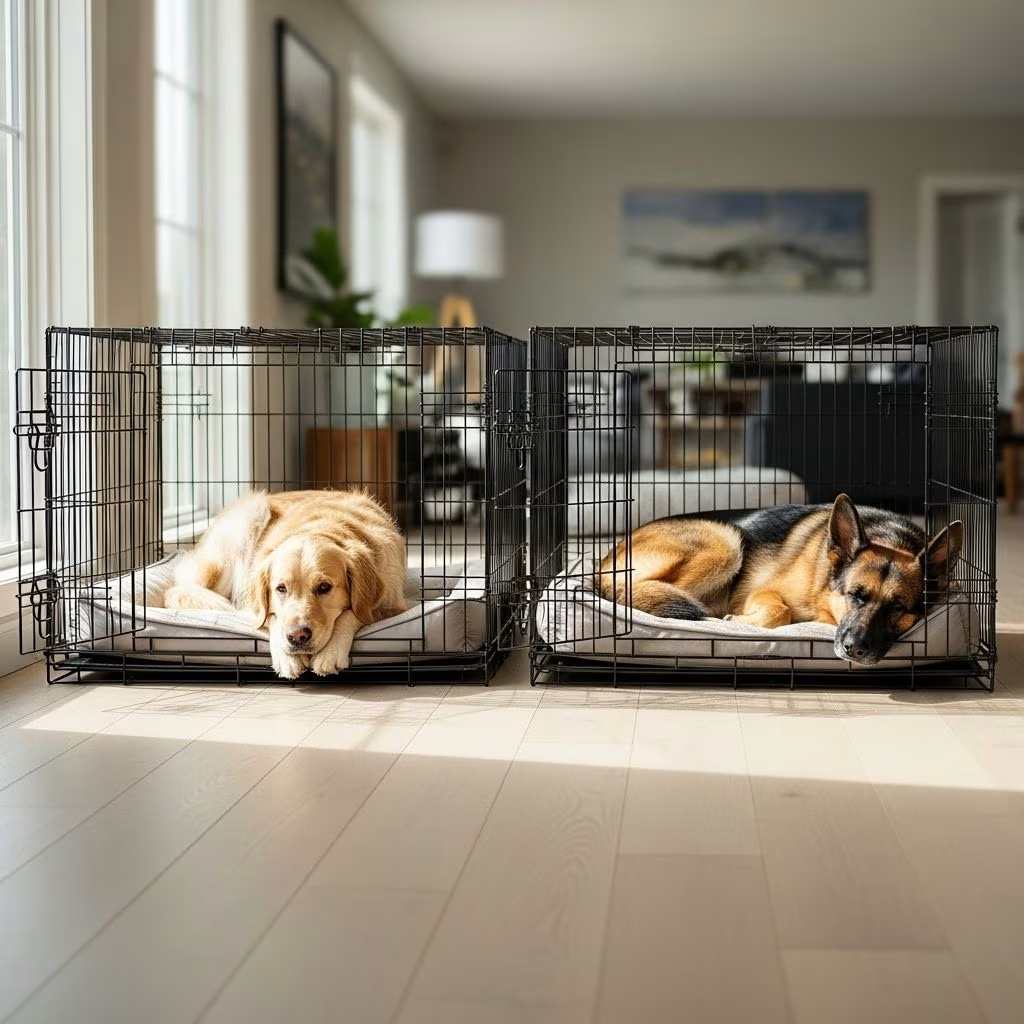
Extra Large Dog Crates for Large Breed Dogs
If you share your home with a giant breed dog such as a Great Dane, Mastiff, Newfoundland, or Saint Bernard, you understand the unique challenges of providing appropriate containment and training spaces. Extra large dog crates are essential tools for house training, creating safe spaces, and managing your large breed dog’s behavior. Unlike standard crates designed for smaller dogs, XXL crates are specifically engineered to accommodate dogs weighing 110 pounds or more, providing adequate space for these gentle giants to stand, turn around, and lie down comfortably.
Selecting the right extra large dog crate requires careful consideration of your dog’s specific measurements, the crate’s construction quality, and features that match your lifestyle. This comprehensive guide explores everything you need to know about choosing and using extra large dog crates for your large breed companion.
Understanding Extra Large Dog Crates
Extra large dog crates, commonly referred to as XXL crates, are designed specifically for giant breed dogs that exceed 110 pounds. These crates are substantially larger than standard sizes, typically measuring 54 inches in length, 35 inches in width, and 45 inches in height. The increased dimensions provide ample space for large breed dogs to move naturally and comfortably within the confined area.
Extra large crates serve multiple purposes in dog ownership and training. They provide a secure space where your dog can rest undisturbed, create a safe area during times when you cannot supervise your pet, facilitate house training by establishing designated bathroom locations, and help manage separation anxiety by providing a familiar, secure environment. When properly introduced and maintained, crates become a place of comfort rather than punishment for your dog.
Choosing the Right Size Crate for Your Large Breed Dog
Proper sizing is absolutely critical when selecting an extra large dog crate. A crate that is too small will restrict your dog’s natural movements and cause physical and emotional stress, while a crate that is excessively large reduces containment effectiveness and may encourage your dog to use one area for sleeping and another for bathroom needs. The goal is finding a crate that is appropriately sized for comfortable standing, turning, and lying down without excessive wasted space.
Measuring Your Dog Correctly
To determine the correct crate size, measure your dog using the following method recommended by veterinary behaviorists and dog training professionals:
- Length measurement: Measure from the tip of your dog’s nose to the base of their tail while they are standing in a natural position
- Add four inches: Add 4 inches to this measurement to ensure adequate space for movement
- Height measurement: Measure from the top of your dog’s head to the floor while they are standing naturally
- Compare to crate dimensions: Match these measurements to the interior dimensions of the crate you are considering
For example, if your Great Dane measures 43 inches from nose to tail, you would want a crate that is at least 47 inches long. If your dog measures 26 inches in height, the crate should be at least 26 inches tall to allow them to stand with their head upright.
Accounting for Bedding and Accessories
When measuring for your extra large dog crate, remember to account for additional items you plan to include inside the crate. Orthopedic dog beds, crate mats, blankets, and other comfort accessories reduce the available interior space. If you plan to use a thick orthopedic pad, you may need to add several additional inches to your crate dimensions to ensure your dog still has adequate space. Calculate the thickness of any bedding you plan to use and adjust your crate selection accordingly.
Types of Extra Large Dog Crates
Extra large dog crates come in several different styles and materials, each offering distinct advantages and disadvantages depending on your specific needs and living situation.
Wire Dog Crates
Wire crates are the most popular choice for large breed dogs and offer several significant advantages. These crates are constructed from sturdy metal wire panels secured by corner joints or drop-pin construction, providing excellent visibility and airflow for your dog. Wire crates typically feature collapsible designs that fold flat for storage or transportation, making them convenient for owners who need portability. Double-door configurations allow dogs to enter from either end, providing flexibility in placement within your home. Wire crates are easy to clean, durable, and relatively affordable compared to other crate types.
Plastic Crates and Airline Kennels
Plastic crates offer an alternative to wire construction, providing a more den-like environment that many dogs find comforting. These crates are typically more portable than wire versions and provide better privacy for anxious dogs. However, plastic crates do not collapse for storage, require more space when not in use, offer less airflow than wire crates, and may be more difficult to clean thoroughly.
Heavy-Duty and Escape-Proof Crates
For large breed dogs that are particularly strong, destructive, or prone to escape attempts, heavy-duty indestructible crates provide maximum security. These crates are constructed from high-grade steel with reinforced joints, dual locks, and escape-proof design features. While substantially more expensive than standard wire or plastic crates, heavy-duty crates offer superior durability and peace of mind for owners of powerful dogs that might otherwise damage or escape from conventional crates.
Furniture-Style Crates
Furniture-style crates blend functionality with aesthetics, integrating crate design into decorative furniture pieces such as end tables or TV stands. These options work well for owners who want their dog’s crate to complement their home decor rather than appearing as utilitarian pet equipment. Furniture-style crates are typically made from wood or composite materials and provide a more integrated appearance within living spaces.
Features to Look For in Extra Large Dog Crates
When evaluating specific extra large dog crate models, consider the following important features that enhance functionality, durability, and your dog’s comfort:
Construction and Durability
Look for crates constructed from heavy-gauge steel wire or reinforced plastic materials that can withstand the weight and power of large breed dogs. Check that corner joints are securely welded or riveted rather than merely spot-welded. The electro-coat finish on wire crates provides rust resistance and durability. Crates with corner drop-pin construction offer enhanced stability and security compared to other joint designs.
Door Configuration
Double-door crates provide greater flexibility in placement and entry options, allowing your dog to enter from either side of the crate. This is particularly useful in multi-room homes and apartments where placement options may be limited. Secure slide-bolt latches prevent accidental opening while remaining easy for owners to operate. Spring-loaded latches should be durable enough to withstand repeated use by large, powerful dogs.
Included Accessories
Many extra large crates come with useful accessories that enhance functionality. Removable, washable pans make cleaning significantly easier and can be removed with doors closed for convenient maintenance. Divider panels allow you to adjust the interior space, which is particularly useful if you plan to use the same crate as your dog grows from puppy to adulthood. Some crates include coordinated crate mats or beds designed to fit their exact dimensions, eliminating the guesswork of finding properly-sized bedding.
Portability and Storage
Collapsible wire crates fold down to minimal dimensions for transportation or storage when not in use. This feature is invaluable for owners who travel frequently or have limited storage space. Crates that fold to approximately 3.25 inches in thickness can fit easily in car trunks, closets, or under beds when collapsed.
Crate Training Your Large Breed Dog
Simply providing a properly-sized extra large crate is not sufficient; your dog must be properly introduced and trained to view the crate as a positive, safe space rather than a punishment or confinement tool. Effective crate training involves patience, consistency, and positive reinforcement.
Introduction Process
Begin by allowing your dog to explore the crate at their own pace with the door open. Place treats, toys, or a bed inside to create positive associations. Never force your dog into the crate or close the door while they are displaying fear or anxiety. Reward any voluntary entry into the crate with praise and treats. Gradually extend the time your dog spends in the crate with the door open.
Closing the Door
Once your dog enters the crate willingly and comfortably, begin closing the door for short periods while you remain nearby. Gradually extend the duration that the door remains closed while your dog is calm and relaxed. Only close the door after your dog is settled and calm; never use the crate as a punishment or reaction to negative behavior.
Establishing Crate Time Routines
Develop consistent routines around crate time, such as using the crate for naps, overnight sleeping, or designated rest periods. This consistency helps your dog understand crate time as a normal part of the daily schedule. Always provide opportunities for bathroom breaks and exercise before crating your dog for extended periods.
Maintenance and Cleaning
Proper maintenance of your extra large dog crate ensures hygiene, durability, and your dog’s health. Removable pans should be cleaned daily or as needed, particularly when house training puppies or dogs with health issues. Wire panels can be wiped down with pet-safe cleaning products. Plastic crates can be scrubbed with warm water and mild soap. Ensure the crate is completely dry before allowing your dog inside to prevent mold and mildew growth.
Combining Your Crate with Other Containment Options
Many manufacturers offer matching exercise pens that can be connected to your crate to create an expanded living and exercise space. A 48-inch matching exercise pen connected to your extra large crate creates a comfortable area where your dog can stretch out, play, and access both enclosed and open spaces. This combination is particularly useful for dogs that need containment but benefit from additional space and environmental enrichment.
Breed-Specific Considerations
Certain giant breed dogs have specific requirements and characteristics that influence crate selection. Great Danes are tall but relatively slender, requiring crates with generous height but potentially less floor space than equally-weighted but more compact breeds. Mastiffs are both tall and heavily muscled, requiring extremely sturdy construction and maximum floor space. Newfoundlands and Saint Bernards have thick coats and may benefit from wire crates that offer superior airflow compared to plastic alternatives. Irish Wolfhounds are exceptionally tall and long, requiring crates at the maximum end of the XXL range.
Common Extra Large Dog Crate Options
Several manufacturers produce well-regarded extra large dog crates suitable for giant breed dogs. The Midwest 1154U Big Dog Crate features corner drop-pin construction, durable black electro-coat finish, safe slide-bolt latches, and measures 54 inches long by 35 inches wide by 45 inches high. This crate is designed specifically for dogs 110 pounds and heavier. The Midwest Solutions SL54DD Double Door Dog Crate includes a removable pan and features two doors for flexible placement options. Both models are compatible with matching 48-inch exercise pens to create expanded living spaces.
Frequently Asked Questions
Q: What size crate do I need for a 110-pound dog?
A: For a 110-pound dog, you need a crate that provides adequate space based on your dog’s length and height measurements, not just their weight. Most 110-pound dogs require a 54-inch XXL crate measuring approximately 54 inches long, 35 inches wide, and 45 inches high. Always measure your specific dog and compare those measurements to crate interior dimensions.
Q: Can I use an extra large crate for a growing puppy?
A: Yes, you can use an extra large crate for a growing puppy by utilizing a removable divider panel. The divider reduces the interior space to an appropriate size for your puppy during early house training. As your puppy grows, you progressively remove the divider panel until the full crate space is available. This approach allows one crate to serve your dog throughout their entire lifespan.
Q: Are wire crates or plastic crates better for large breed dogs?
A: Wire crates are generally preferred for large breed dogs because they offer superior durability, excellent visibility, better airflow, collapsible design for storage, and easier cleaning. Plastic crates can work but are typically heavier, do not collapse, and may not be as durable for powerful large breed dogs. Heavy-duty escape-proof crates are best for particularly strong or destructive dogs.
Q: How long can I safely leave my large breed dog in a crate?
A: Adult dogs can typically remain in a crate for 4-8 hours depending on their individual needs and whether they have access to water. Most dogs benefit from crate time being interspersed with periods of exercise, play, and social interaction. Puppies have smaller bladders and should not be crated for more than 3-4 hours at a time. Always provide bathroom breaks immediately before and after crate time.
Q: What bedding should I use in an extra large dog crate?
A: Choose washable, durable bedding specifically designed for large dogs, such as orthopedic dog beds or quality crate mats. Avoid bedding that could easily be shredded or ingested. Ensure any bedding you select does not reduce interior crate space to the point where your dog cannot stand, turn around, or lie down comfortably.
Q: My dog tries to escape from their crate. What should I do?
A: Escape attempts often indicate your dog is not properly crate trained or experiences anxiety when confined. Slow down the crate training process and ensure your dog has positive associations with the crate. Consult with a veterinary behaviorist or professional dog trainer for guidance. For dogs that continue escape attempts, consider a heavy-duty escape-proof crate with dual locks and reinforced construction.
References
- XXL Midwest Dog Crates | 54 inch Crate — Midwest Pet Products. Accessed 2025-11-28. https://www.midwestpetproducts.com/midwestdogcrates/xxl-dog-crates
- The best dog crates for large breeds, tested and reviewed — Business Insider. https://www.businessinsider.com/guides/pets/best-large-dog-crate
- Heavy Duty Dog Crates & Indoor Kennels — Lilly and Max Pet Supplies. Accessed 2025-11-28. https://www.lillyandmax.com/dog/crates/heavy-duty/
- Large Dog Crates & Kennels — Chewy. Accessed 2025-11-28. https://www.chewy.com/b/large-dog-crate-and-kennels-10485
- Indoor Dog Crates For Large Dogs — Tractor Supply Co. Accessed 2025-11-28. https://www.tractorsupply.com/a/indoor-dog-crates-for-large-dogs



