Extending Dog Lifespans: Promising Drugs
Discover emerging medications like rapamycin and LOY-002 that could add healthy years to your senior dog's life through ongoing clinical trials.
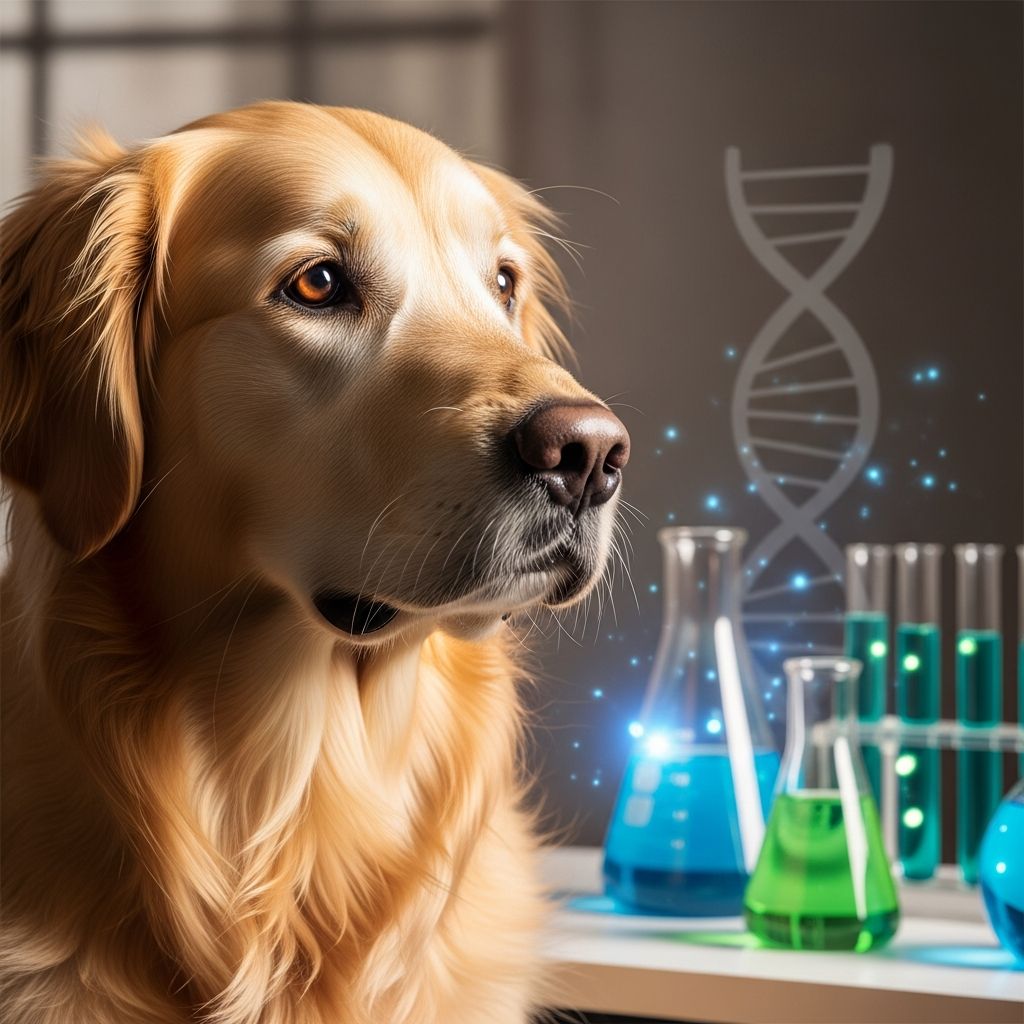
As our canine companions become cherished family members, pet owners increasingly seek ways to help them live longer, healthier lives. Recent advances in veterinary geroscience—the study of aging in animals—have spotlighted pharmaceutical interventions designed to combat age-related decline. Drugs like rapamycin and innovative compounds from companies such as Loyal are at the forefront, undergoing rigorous clinical trials to determine their ability to extend both lifespan and healthspan in dogs. These developments promise not only more playful years with our pets but also valuable insights into human aging, given the biological similarities between species.
The Science Behind Canine Aging
Dogs age at varying rates depending on breed, size, and genetics. Large breeds often have shorter lifespans due to accelerated growth hormone effects, while smaller dogs tend to live longer. Aging manifests in stiffened hearts, reduced mobility, cognitive decline, weakened immunity, and higher disease risks like arthritis and kidney issues. Translational geroscience leverages dogs’ natural genetic diversity and environmental exposures—mirroring human variability—to test interventions that could translate across species.
Key aging pathways, such as mTOR signaling (which regulates cell growth and metabolism) and insulin-like growth factor 1 (IGF-1), are prime targets. Inhibiting these pathways has shown lifespan extension in lab models, sparking interest in companion dogs for real-world validation.
Rapamycin: A Leading Anti-Aging Candidate
Rapamycin, originally an immunosuppressant for human organ transplants, has emerged as a potent geroprotector at low doses. By inhibiting the mTOR pathway, it enhances cellular cleanup (autophagy), improves energy processing, and reduces inflammation—hallmarks of healthy aging.
- Proven Benefits in Models: Extends lifespan in multiple mouse strains, boosts cardiac function, cognition, immunity, and reduces obesity and cancer.
- Dog-Specific Tolerance: Well-tolerated in prior veterinary studies, including for glycogen storage disease and osteosarcoma trials.
- Human Parallels: Short-term use improves elderly humans’ immune response to vaccines.
The Dog Aging Project (DAP), a large-scale longitudinal study, is pioneering rapamycin’s use in pet dogs through the TRIAD trial (Test of Rapamycin in Aging Dogs).
TRIAD Trial Details
Launched in 2021, TRIAD received a $7 million NIH grant in 2025 to expand, marking the first rigorous pharmacologic test against aging outside labs, with lifespan as the primary endpoint. It enrolls mature or senior dogs (over 7 years), administering weekly, weight-adjusted low doses in a randomized, double-blind design.
| Aspect | Details |
|---|---|
| Primary Endpoint | Lifespan extension |
| Secondary Endpoints | Heart function, mobility, arthritis, kidney health, cognition |
| Dose | Low, once-weekly, adjusted for weight |
| Side Effects | Minimal in prior dog studies |
Researchers hypothesize rapamycin will not only prolong life but reveal molecular mechanisms applicable to humans, as dogs share identical pathways. Initial data shows good tolerance, with potential improvements in heart stiffness—a common age-related issue where the organ fails to relax effectively.
Loyal’s Pipeline: Tailored Longevity Solutions
Biotech firm Loyal is developing dog-specific drugs addressing size-related aging vulnerabilities. Large dogs suffer from IGF-1 overexpression, accelerating mortality, so Loyal’s therapies normalize this.
- LOY-001: Long-acting injection every 3-6 months for dogs ≥40 lbs, ≥7 years. Reduces IGF-1 rapidly.
- LOY-003: Oral tablet for similar large senior dogs, owner-administered.
- LOY-002: Broader use for dogs ≥10 years, ≥14 lbs; targets metabolic dysfunction.
LOY-002 and the STAY Study
LOY-002 earned FDA acceptance for its Reasonable Expectation of Effectiveness in 2024, paving the way for conditional approval possibly by 2026. The STAY trial, launched late 2023, is the largest of its kind: 4 years, 1,000+ dogs at 50+ clinics. Half get beef-flavored LOY-002, half placebo, tracking lifespan, quality of life, and safety.
These drugs aim to enhance daily vitality—better mobility, sharper cognition, stronger immunity—beyond mere survival.
Comparing Key Longevity Drugs
| Drug | Target Mechanism | Administration | Trial Status | Target Dogs |
|---|---|---|---|---|
| Rapamycin (TRIAD) | mTOR inhibition | Weekly oral, low-dose | Ongoing, NIH-funded | Mature/senior all sizes |
| LOY-001 | IGF-1 reduction | Injection 3-6 months | Development | Large ≥40 lbs, ≥7 yrs |
| LOY-002 | Metabolic dysfunction | Daily oral tablet | STAY trial (FDA RXE) | Senior ≥14 lbs, ≥10 yrs |
| LOY-003 | IGF-1 reduction | Daily oral tablet | Development | Large ≥40 lbs, ≥7 yrs |
Potential Benefits and Risks
Health Gains
Beyond longevity, these drugs target multimorbidity: rapamycin may ease arthritis and kidney strain; Loyal’s compounds improve metabolism for sustained energy. Dogs in trials report enhanced heart function, mobility, and cognition, translating to more fetch games and cuddles.
Safety Profile
Low-dose rapamycin shows few side effects in dogs. Loyal’s trials monitor rigorously, with placebos ensuring unbiased safety data. Off-label rapamycin use is possible now via vets, but trial participation is ideal for monitoring.
Participating in Trials
Owners can join TRIAD via Dog Aging Project if their dog qualifies (healthy seniors). Loyal’s STAY study recruits through vet clinics nationwide. Participation aids science and provides free treatment/monitoring.
- Eligibility: Age, weight, health status.
- Benefits: Potential drug access, vet oversight, contribution to pet longevity.
Future Outlook for Canine Longevity
Success in these trials could revolutionize senior dog care, with approvals accelerating by 2026. Translational benefits may inform human therapies, as dogs model our aging uniquely. Combined with diet, exercise, and preventive care, these drugs herald an era of extended vitality.
Frequently Asked Questions (FAQs)
Can I give rapamycin to my dog now?
Vets may prescribe off-label for seniors over 7, but consult for risks/benefits. Trials offer structured use.
When will LOY-002 be available?
Conditional FDA approval eyed for 2026 post-STAY data.
Do all dogs benefit equally?
Large breeds gain from IGF-1 drugs; rapamycin suits broadly. Genetics influence response.
Are there side effects?
Trials report minimal; monitoring key.
How do these drugs extend life?
By targeting aging roots like mTOR/IGF-1, improving organ function and disease resistance.
References
- $7M grant rescues dog study investigating rapamycin for canine aging — AVMA. 2025-approx. https://www.avma.org/news/7m-grant-rescues-dog-study-investigating-rapamycin-canine-aging
- Dog Aging Project Receives $7 Million NIH Grant To Expand… — Texas A&M. 2025-01-06. https://stories.tamu.edu/news/2025/01/06/dog-aging-project-nih-grant-to-expand-trial-of-anti-aging-drug/
- The Dog Aging Project: Translational Geroscience… — PMC (NIH). 2016-approx. https://pmc.ncbi.nlm.nih.gov/articles/PMC4936929/
- The next leap in pet health: longevity drugs for dogs — Labiotech.eu. Recent. https://www.labiotech.eu/in-depth/longevity-drugs-for-dogs/
- Second drug for canine healthy lifespan extension… — dvm360. Recent. https://www.dvm360.com/view/second-drug-for-canine-healthy-lifespan-extension-receives-fda-support
- Upcoming Antiaging Drugs for Dogs… — GoodRx. Recent. https://www.goodrx.com/pet-health/dog/anti-aging-drugs-for-dogs
Similar Articles






Read full bio of Sneha Tete