

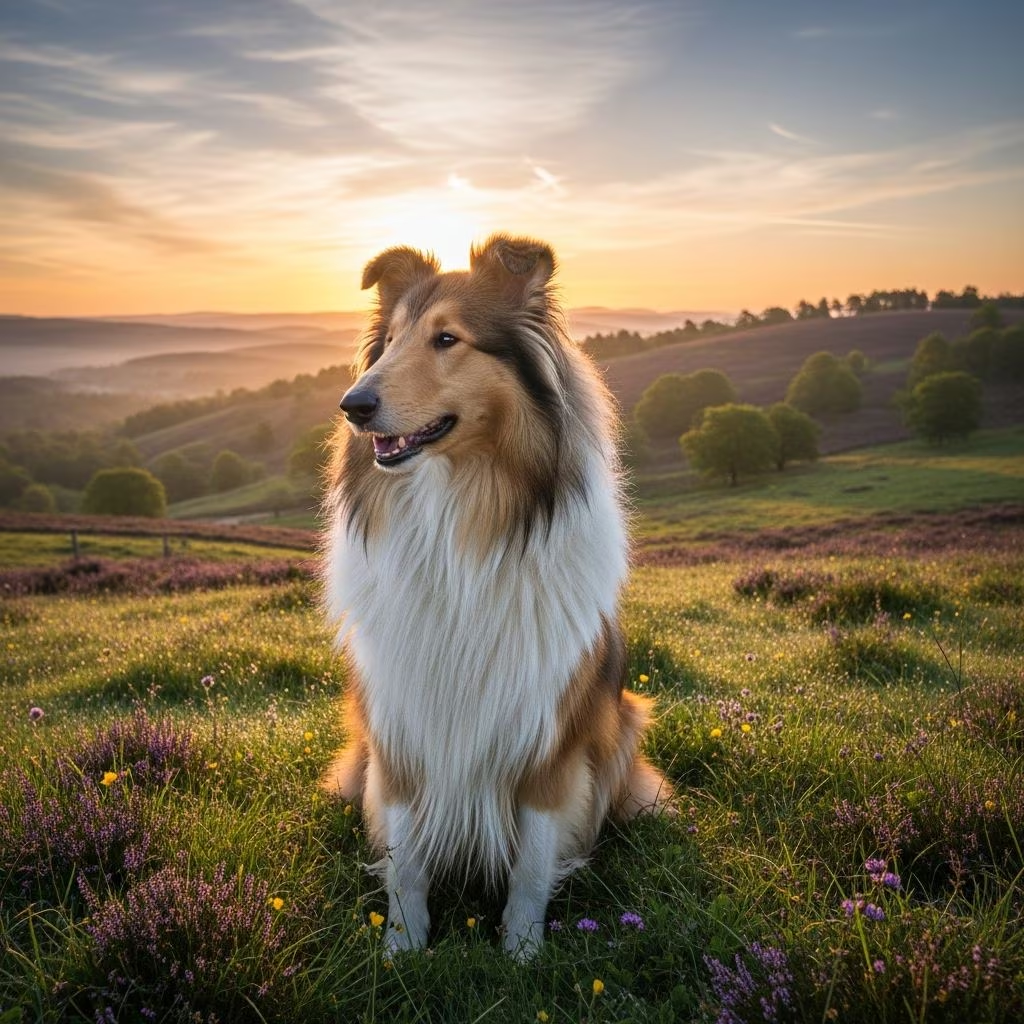
The Collie stands as one of the most iconic dog breeds, renowned for its intelligence, loyalty, and striking appearance. Originating from the rugged landscapes of Scotland, this herding dog has captivated hearts worldwide, evolving from a vital working companion to a cherished family pet.
Ancient Roots in the Scottish Highlands
The Collie’s story begins thousands of years ago in the challenging terrain of the Scottish Highlands. Bred specifically for herding sheep across vast, inaccessible mountains, these dogs were essential for shepherds navigating harsh weather and treacherous paths. Historical accounts trace their lineage back to around 4000 BC, linked to Celtic dogs used for livestock management.
Over centuries, invasions and migrations enriched the breed’s genetics. Anglo-Saxon herders from northern Europe introduced their working dogs around the 5th century, while Viking settlers in 793 AD brought Norwegian Spitz types, blending with local strains to form the resilient Scottish Collie. By the Norman conquest in 1066, selective breeding refined these dogs into unparalleled herders, adaptable to rapid weather shifts and flock protection during lambing seasons.
This environment demanded unique traits: endurance for long days, speed to outpace panicked sheep, and sharp instincts to anticipate dangers in rocky terrain. The result was a dog with a lithe frame, deep chest for stamina, and an expression of keen intelligence, as described in early breed standards.
Distinguishing Rough and Smooth Varieties
Collies come in two coat types: Rough and Smooth, each suited to different roles yet sharing core physique. The Rough Collie, with its long, abundant fur, dominated Highland herding, framing a noble head and expressive eyes. The Smooth Collie, featuring a short, dense coat, served as a drover’s dog in northern England’s lowlands, driving market-bound flocks.
Physically, both exhibit elegance over bulkiness. They possess sloping shoulders for agile movement, well-bent hocks for propulsion, and proportionate legs for a racy silhouette. Standing 20-24 inches at the shoulder, males typically weigh 60-75 pounds, females slightly less. Coat colors include sable and white, tricolor (black, tan, white), blue merle, and occasionally white.
| Feature | Rough Collie | Smooth Collie |
|---|---|---|
| Coat Length | Long, straight, harsh outer coat; dense undercoat | Short, flat, harsh topcoat; dense undercoat |
| Historical Role | Highland sheep herder | Northern England drover |
| Shedding | Heavy, especially seasonally | Moderate year-round |
| Grooming Needs | Weekly brushing; more during shedding | Occasional brushing |
Until 1994, interbreeding was common, producing mixed litters, but today they are distinct breeds in the UK, differing primarily in coat.
Royal Patronage and Rise to Fame
The Collie’s transition from farm dog to show star ignited in the 1860s. Queen Victoria, during visits to Balmoral, became enamored with these elegant herders, establishing a dedicated “Collie Court” in her kennels. Her enthusiasm sparked a national craze, elevating the breed’s profile.
First exhibited in 1860 at Birmingham’s dog show under “Scotch Sheep-Dogs,” Collies quickly dominated. English breeders around Birmingham refined show qualities, prioritizing aesthetics alongside work ethic. By 1870, pedigrees emerged, marking the breed’s formalization. This shift preserved their herding prowess while enhancing beauty, making them global favorites.
Signature Temperament and Intelligence
Collies embody loyalty, gentleness, and remarkable smarts. Described as sweet and family-oriented, they thrive on human interaction, often bonding deeply with children. Their herding heritage manifests as protective instincts, sometimes “herding” family members with gentle nudges.
- Intelligent: Quick learners, excelling in obedience, agility, and herding trials.
- Affectionate: Devoted companions who dislike solitude.
- Athletic: Energetic workers needing daily exercise.
- Sensitive: Respond best to positive reinforcement, wary of harsh training.
Early standards emphasize a “high intelligence” expression, reflecting their problem-solving skills honed in unpredictable Highlands.
Health Considerations for Collie Owners
While robust, Collies face breed-specific issues. Collie Eye Anomaly (CEA), a genetic condition affecting vision, impacts up to 70% of Rough Collies; regular vet checks are vital. Hip dysplasia, progressive retinal atrophy, and sensitivity to ivermectin (due to MDR1 gene mutation) also occur.
- Prioritize breeders screening for CEA, PRA, and hips via OFA or PennHIP certifications.
- Avoid flea products with high avermectins; genetic testing available.
- Expected lifespan: 12-14 years with proper care.
Balanced nutrition, avoiding overfeeding to prevent obesity, supports joint health. Recent studies underscore genetic diversity’s role in mitigating hereditary risks.
Grooming and Daily Care Essentials
Rough Collies require diligent grooming to manage their double coat, prone to heavy shedding twice yearly. Use a slicker brush weekly, increasing frequency during “blowing coat.” Smooth varieties need less, but regular baths prevent dirt buildup.
Exercise demands 1-2 hours daily: walks, fetch, or herding games. Mental stimulation via puzzles or training prevents boredom-induced behaviors like chewing.
- Feed high-quality, large-breed puppy food until 12-18 months.
- Transition to adult formulas supporting active lifestyles.
- Monitor weight; dental chews aid oral health.
Training the Versatile Collie
Leverage their eagerness to please with positive methods. Start socialization early to curb herding nips. Advanced training shines in sports:
- Agility: Their speed and focus dominate courses.
- Obedience: Precision handlers earn top titles.
- Herding: Instinctual mastery of livestock trials.
Consistent leadership prevents “shadow chasing” or anxiety. Puppy classes build confidence.
Collie in Modern Life: Family and Beyond
Beyond farms, Collies adapt to homes, therapy work, and search-and-rescue. Their calm demeanor suits apartments with ample exercise. Families value their watchful yet gentle nature.
Adopt from rescues emphasizing temperament testing. Responsible breeding preserves working heritage amid show lines.
Frequently Asked Questions
Are Rough and Smooth Collies different breeds?
In the UK, yes, since 1994; elsewhere, coat variants of one breed. Both share temperament and build.
Do Collies make good first-time dogs?
Yes, for active owners committing to training and exercise; their sensitivity suits patient handlers.
How much exercise does a Collie need?
At least 60-90 minutes daily, plus mental challenges to channel herding energy.
Are Collies hypoallergenic?
No, heavy shedding, especially Roughs, affects allergy sufferers.
What’s the origin of the name ‘Collie’?
Possibly from black-faced ‘colley’ sheep or Gaelic for ‘useful,’ tied to herding utility.
References
- Breed History — Scottish Collie Preservation Society. Accessed 2026. https://www.scottishcolliepreservationsociety.com/breed-history.html
- Collie Origins & History — Collie Club of America. Accessed 2026. https://thecollieclub.org/collie-origins-history/
- Collie Dog Breed Profile — Horse & Hound. 2023-10-12. https://www.horseandhound.co.uk/dogs/collie-dog-breed-profile-862442
- Breed Spotlight: Collie — Gator Kennels. Accessed 2026. https://www.gatorkennels.com/blog/breed-spotlight-collie/
- Collie History: From Queen Victoria to Lassie & Beyond — American Kennel Club. 2023-05-15. https://www.akc.org/expert-advice/dog-breeds/collie-history-queen-victoria-lassie-beyond/



