

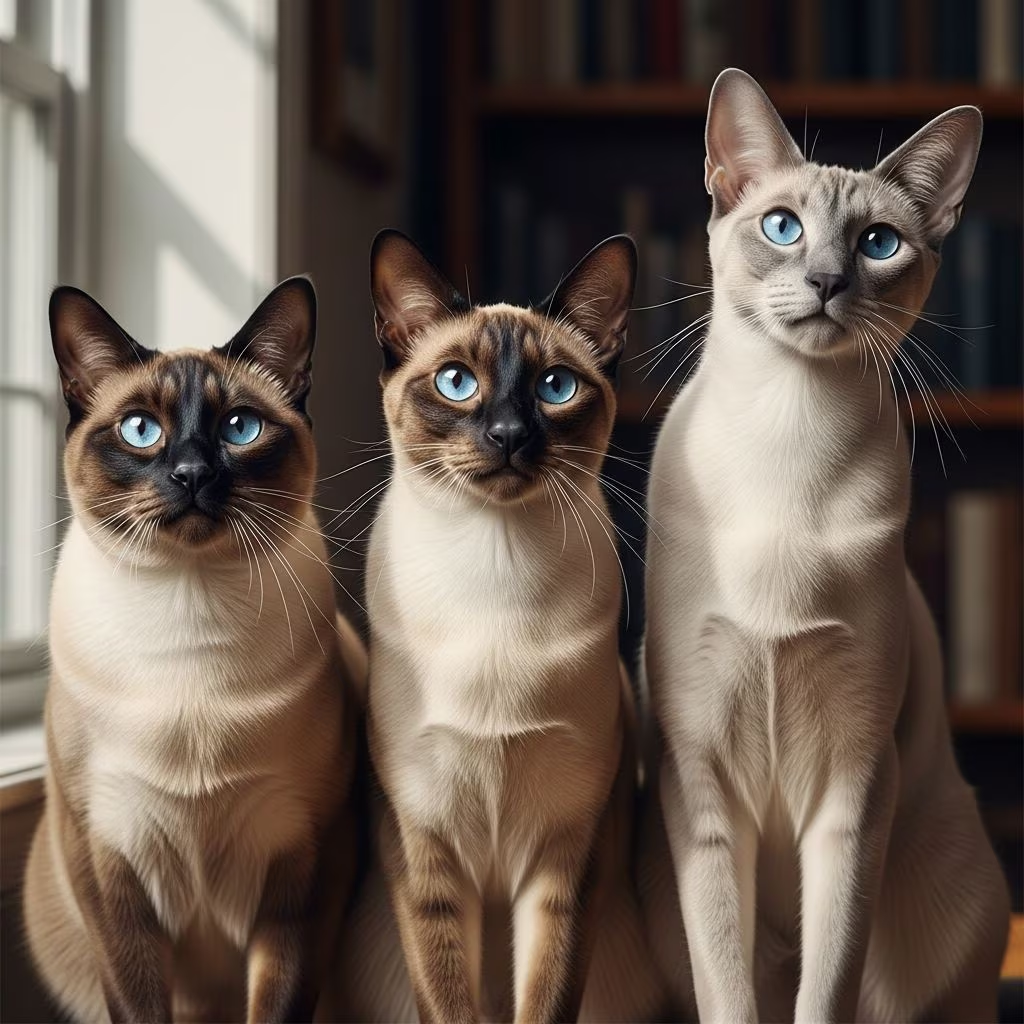
Siamese cats captivate with their striking appearances, vocal natures, and deep bonds with humans. Originating from Thailand, these felines come in distinct varieties shaped by centuries of selective breeding and cultural reverence. This guide delves into their evolution, physical distinctions, temperaments, and practical ownership advice.
Ancient Roots and Global Journey
Siamese cats trace their lineage to ancient Thailand, formerly Siam, where they held sacred status among royalty and temple guardians. Historical manuscripts from around 1350 mention these elegant creatures, reserved for elite families and punished severely if stolen. Legends describe them pointing tails around royal goblets, leading to kinked tails and crossed eyes in early specimens.
In the late 19th century, they reached Europe. In 1884, British consul Edward Gould gifted a pair named Pho and Mia to his sister, who showcased their offspring at London’s Crystal Palace in 1885. These imports formed the foundation of Western Siamese lines, with most modern British Siamese descending from about eleven originals. King Chulalongkorn also sent pairs to Europe in 1871, boosting their fame.
Early Siamese kittens born cream-colored developed dark points on cooler body areas like ears, faces, paws, and tails due to temperature-sensitive pigmentation—a form of partial albinism. This colorpoint pattern became their hallmark.
Distinct Types of Siamese Cats
Siamese varieties evolved through breeding preferences, yielding traditional, classic, and modern styles, plus related breeds. Each offers unique aesthetics and builds while retaining core Siamese charisma.
Traditional Siamese: The Original Guardians
Traditional Siamese represent the closest link to Thai ancestors. These sturdy cats feature round heads, robust bones, and apple-shaped faces with vivid blue eyes. Their bodies are muscular yet balanced, avoiding extremes. Vocal and loyal, they thrive in family settings, meowing expressively to communicate.
Preservation efforts countered show trends favoring slimmer forms, maintaining this type’s health and authenticity. They exhibit strong hunting instincts, ideal for active homes.
Classic Siamese: A Balanced Heritage
Slightly refined from traditionals, classic Siamese elongate mildly while preserving rounder contours. Imported later from Thailand, they blend original robustness with subtle grace. Their faces retain fullness, ears are prominent but proportionate, and coats display classic seal, chocolate, or blue points.
Behavior mirrors traditionals: highly social, intelligent, and affectionate, often following owners room-to-room. They adapt well to multi-pet households.
Modern Siamese: Sleek Showstoppers
From the 1950s-1960s, breeders emphasized elongation, creating the wedge-shaped modern Siamese. These cats boast tubular bodies, long slender legs, whip-like tails, and triangular heads with wide-set ears and almond-shaped blue eyes. The “Wedgie” nickname fits their sharp profile.
Selective breeding intensified points in seal, chocolate, lilac, and later red, cream, lynx, and tortie patterns via outcrosses. Prize-winning specimens highlight dramatic contrasts, though some critique health risks from extreme builds.
Related Breeds Stemming from Siamese
Siamese’s influence extends to hybrids. Balinese cats, long-haired Siamese variants, share short-haired siblings’ personalities with silky semi-long coats. Oriental Shorthairs and Longhairs mirror Siamese frames but sport solid colors or patterns.
Crosses produced Himalayans (Persian-Siamese for colorpoints), influencing Birmans and Burmese. These offshoots diversify the family while echoing Siamese vocal prowess and elegance.
Signature Physical Traits Across Varieties
All Siamese share almond eyes in brilliant blue, though emeralds appear rarely. Short, fine coats require minimal grooming but show dirt easily. Points darken with age or cold exposure.
| Variety | Head Shape | Body Type | Eye Color | Common Points |
|---|---|---|---|---|
| Traditional | Round/Apple | Robust, muscular | Deep blue | Seal, chocolate |
| Classic | Slightly elongated round | Balanced athletic | Blue | Seal, blue, lilac |
| Modern | Wedge/triangular | Tubular, slender | Almond blue | Varied: lynx, tortie |
Personality and Behavior Insights
Siamese are extroverts: talkative, demanding attention, and forming intense owner bonds. Intelligence shines in puzzle-solving and trainability, like fetch. They chirp, trill, and yowl distinctly.
- Social Butterflies: Greet guests warmly, dislike solitude.
- Playful Athletes: Need interactive toys to channel energy.
- Family Loyalists: Excel with children, wary of strangers initially.
- Vocal Communicators: “Meow” for food, play, or cuddles.
Multi-cat homes suit them if introductions are gradual; they bond deeply with dogs too.
Health Considerations and Lifespan
Siamese live 15-20 years with care. Common issues include:
- Hydrocephalus (brain fluid buildup, more in moderns).
- Amyloidosis (liver protein deposits).
- Dental problems from slender jaws.
- Cancer predispositions.
Annual vet checks, quality diet, and dental hygiene mitigate risks. Traditional types may fare better due to less extreme genetics.
Grooming, Nutrition, and Daily Care
Weekly brushing prevents hairballs; bathe rarely. Feed high-protein kibble supporting lean builds—avoid obesity.
- Diet: 300-400 calories daily, split meals.
- Exercise: Wand toys, climbing trees.
- Litter: Prefer covered boxes; train early.
Enrich environments with perches and windows for stimulation.
Bringing Home a Siamese: Adoption Tips
Seek reputable breeders or rescues emphasizing health testing. Kittens develop points by 4 weeks; adults show full personality. Budget $800-$2000 for pedigrees, plus ongoing costs.
Prepare vertically: tall scratchers suit their climbers’ nature.
Frequently Asked Questions
Are Siamese cats hypoallergenic?
No, but short coats shed less than longhairs, easing allergies somewhat.
Do Siamese get along with other pets?
Yes, with proper introductions; their confidence aids harmony.
How vocal are Siamese really?
Extremely—expect daily conversations!
What’s the difference between Applehead and Wedgehead Siamese?
Applehead (traditional) has round faces; Wedgehead (modern) features sharp triangles.
Can Siamese live outdoors?
Not recommended; their curiosity and vocalizations attract dangers.
Why Choose a Siamese?
These dynamic cats reward with devotion, smarts, and beauty. Whether traditional sturdiness or modern sleekness appeals, Siamese enrich lives profoundly.
References
- Siamese cat breed: History, personality and care of the Siam cats — Cozy Cat Furniture. 2023. https://www.cozycatfurniture.com/blog/siamese-cat
- Siamese cat – Wikipedia — Wikipedia. 2025-01-15. https://en.wikipedia.org/wiki/Siamese_cat
- Siamese Cat Breed Profile | Litter-Robot — Litter-Robot. 2024. https://www.litter-robot.com/blog/siamese-cat/
- Siamese Cat Facts | ASPCA Pet Health Insurance — ASPCA Pet Health Insurance. 2024. https://www.aspcapetinsurance.com/resources/siamese-cat-facts/
- Siamese – The Cat Fanciers’ Association — Cat Fanciers’ Association. 2025. https://cfa.org/breed/siamese/



