

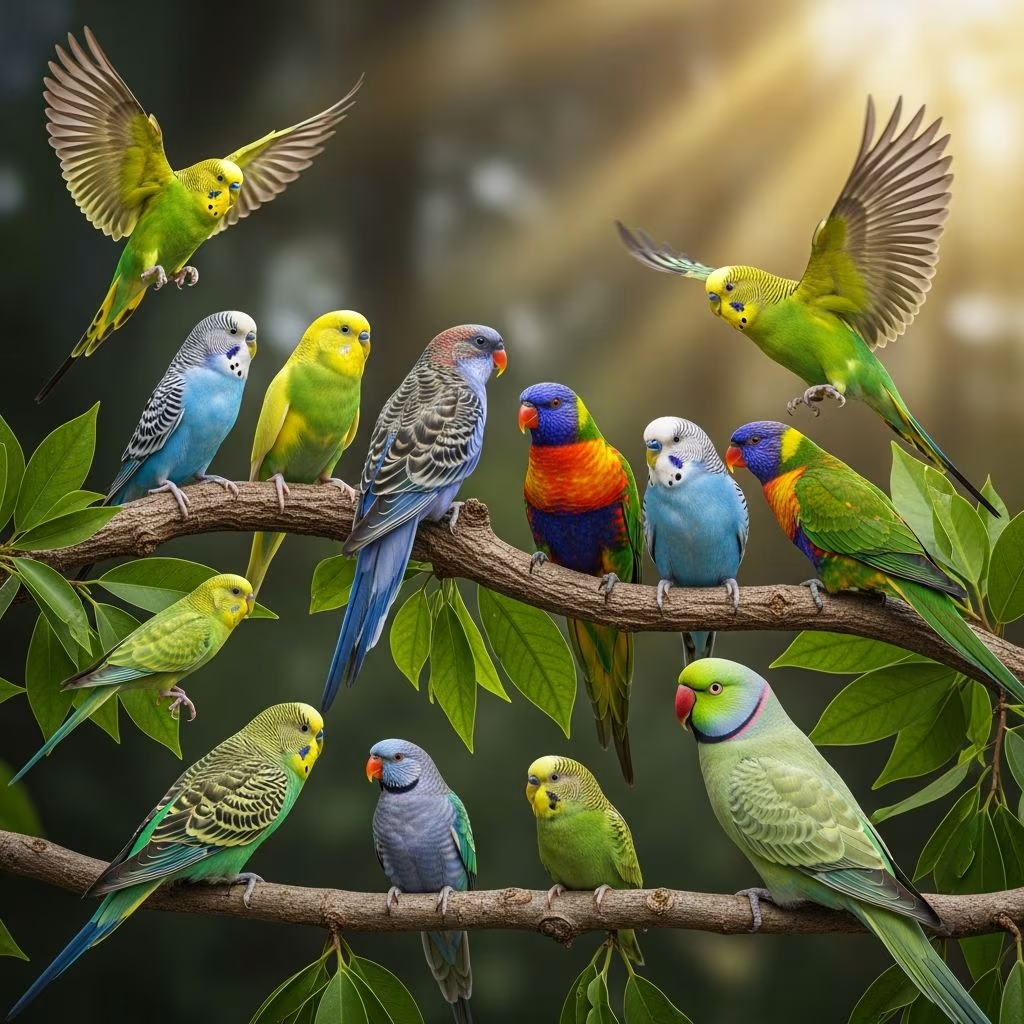
Parakeets captivate bird enthusiasts with their charming personalities, vivid colors, and adaptability as pets. While many associate the term with the familiar budgerigar, or budgie, the parakeet family encompasses over 115 species of small to medium parrots characterized by slender builds and long tails. This guide delves into popular varieties, color mutations in budgies, larger species, and practical care insights to help you choose the perfect companion.
The Budgerigar: Foundation of Pet Parakeets
The budgerigar, often simply called a budgie or parakeet in pet contexts, originates from Australia and stands as the most common household variety. These birds measure about 18-20 cm in length, boast lifespans of 5-10 years in captivity with optimal care, and display sexual dimorphism via cere color: blue in males and pinkish-brown in females once mature. Wild budgies feature green-yellow plumage, but selective breeding has produced a spectrum of hues.
Budgies thrive in flocks, mimicking speech to a degree, and require spacious cages, daily flight time, and a diet of seeds, pellets, fruits, and vegetables. Their playful nature makes them ideal for beginners, though they demand social interaction to prevent boredom-induced behaviors like feather plucking.
Color Mutations in Budgerigars
Genetic innovations have expanded budgie appearances beyond the wild type. Basic categories divide into green-series (yellow-based with green overlay) and blue-series (white-based). Here’s a breakdown of key mutations:
- Light Green and Dark Green: Standard wild-like with one or two dark factors intensifying the shade to olive green.
- Blue Variants: Lacking yellow pigment, ranging from sky blue to cobalt and mauve with added dark factors.
- Opaline: Reduced head and back barring, brighter pastels, and body color extending into wings (e.g., green-tinged black feathers).
- Spangle: Reversed wing markings—yellow edged black with one gene, or nearly solid yellow/white with two; minimal throat spots resembling targets.
- Yellowface: Blue birds with yellow facial pigment; subtypes like Yellowface I limit it to face and edges, while others blend into the chest.
- Clearflight (Texas/Easley): Pale grey primaries, two-tone look with color overtones; Texas shows violet cheeks.
- Anthracite: Rare dark grey monochrome mutation from 1990s Germany, retaining black wings and tail.
These mutations result from recessive or dominant genes, with breeders combining them for striking results like full-spectrum spangle opalines. Colors enhance flock appeal but don’t alter core care needs.
Larger and Exotic Parakeet Species
Beyond budgies, numerous parrot species bear the parakeet name, varying in size, origin, and temperament. Many hail from South America, Asia, and Africa, demanding experienced handling due to stronger personalities and space requirements.
| Species | Origin | Length | Lifespan | Key Traits |
|---|---|---|---|---|
| Red-Breasted (Psittacula alexandri) | Southeast Asia | 33-38 cm | Up to 25 years | Mustache-like markings, intelligent, playful. |
| Rose-Ringed (Psittacula krameri) | Africa, Asia | 38-42 cm | 30-35 years | Excellent talkers, invasive in some regions. |
| Slender-Billed (Enicognathus leptorhynchus) | Chile | 40 cm | 10-15 years | Elongated bill for soil foraging, energetic. |
| Plain (Brotogeris tirica) | Brazil | 23-25 cm | 15 years | Uniform green, friendly, intelligent. |
| White-Winged (Brotogeris versicolurus) | South America | 20-25 cm | 10-15 years | White wing patches, vocal, good mimics. |
| Brown-Throated (Eupsittula pertinax) | South America | 23-28 cm | Up to 25 years | Highly social, group-oriented. |
| Blossom-Headed (Psittacula roseata) | Asia | 30 cm | 20-30 years | Sexual dimorphism in head colors. |
| Green (Psittacara holochlorus) | Mexico | 28-31 cm | Up to 30 years | Red feather accents, curious. |
Additional notables include the Monk (Quaker) parakeet, prized for outgoing bonds, and Alexandrine, with bold green feathers and red beaks.
Care Essentials Across Parakeet Types
While specifics vary, universal needs include large aviaries (minimum 24x18x18 inches for budgies, larger for others), 10-12 hours of sleep, and UV lighting for vitamin D synthesis. Diets emphasize pellets (60-70%), seeds (20%), and produce (20-30%), avoiding avocado, chocolate, and caffeine.
- Housing: Horizontal bars for climbing, perches of varying diameters, toys for mental stimulation.
- Socialization: Flock birds; pair housing reduces loneliness but monitor breeding.
- Health: Annual vet checks for psittacosis, mites; signs include fluffed feathers, tail bobbing.
- Training: Positive reinforcement for stepping up, speech in talkers like rose-ringed.
Larger species like rose-ringed demand more space and commitment due to longevity.
Selecting Your Ideal Parakeet
Consider lifestyle: Budgies suit apartments; conure-like greens need experienced owners. Source from reputable breeders or rescues, checking for clear eyes, even feathers, and curiosity. Budget for $20-200 purchase, plus ongoing costs.
Common Challenges and Solutions
Screaming? Ensure routine and enrichment. Biting? Understand body language—puffed feathers signal aggression. Mutations like spangles may be pricier but offer visual delight.
FAQs
What is the easiest parakeet for beginners?
Budgerigars top the list for their size, affordability, and forgiving nature.
Do all parakeets talk?
No, but rose-ringed and some budgies excel; others like plain parakeets prioritize chirps.
How do I tell parakeet gender?
In budgies, cere color: blue for males, brown/pink for females post-maturity.
Are parakeets messy?
Yes, seed hulls and droppings require daily cleaning; liners help.
Can parakeets live alone?
Prefer pairs or human interaction to mimic flocks.
Parakeets enrich lives with their vibrancy and intelligence. Research thoroughly for a rewarding bond.
References
- Parakeet Varieties | Varieties and Types | Parakeets | Guide — Omlet. Accessed 2026. https://www.omlet.us/guide/parakeets/varieties_and_types/varieties/
- 20 Types of Parakeets: Info, Pictures, Facts & History (Vet-Reviewed) — Hepper. Accessed 2026. https://articles.hepper.com/types-of-parakeets/
- Parakeet | Training – Good Bird Inc — Good Bird Inc. Accessed 2026. https://www.goodbirdinc.com/parrot-profiles-parakeet.html
- Parakeet Color Types | Varieties and Types — Omlet. Accessed 2026. https://www.omlet.us/guide/parakeets/varieties_and_types/colors/
- Are There Different Types of Parakeets? — Dial A Vet. Accessed 2026. https://www.dialavet.com/blog/are-there-different-types-of-parakeets
- Parakeet — Wikipedia. Accessed 2026. https://en.wikipedia.org/wiki/Parakeet



