

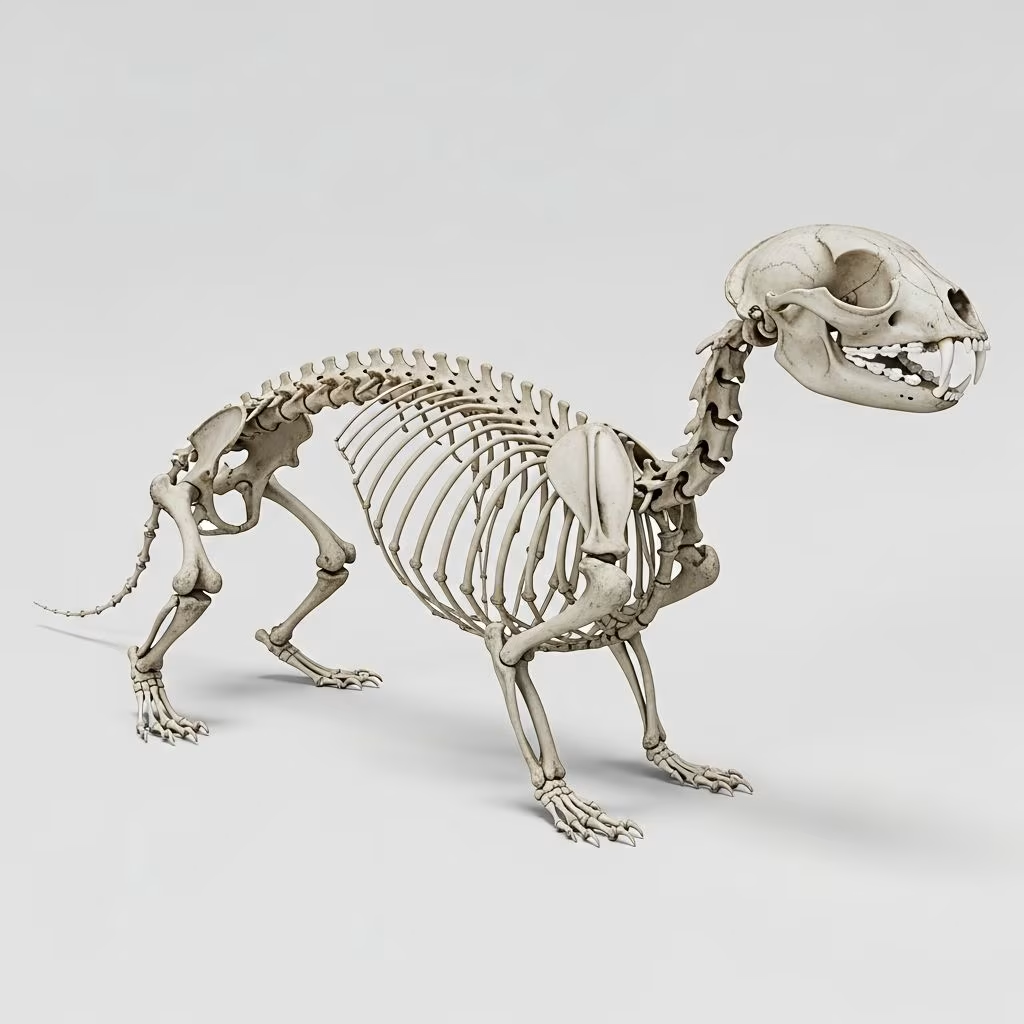
Explore the Ferret Skeletal System
The ferret skeletal system is a fascinating and intricate structure composed of approximately 200 bones that bear remarkable similarities to other mammals, including humans. However, ferrets possess several distinctive skeletal adaptations that set them apart and contribute to their unique body shape and extraordinary flexibility. Understanding the ferret skeleton provides valuable insight into these remarkable animals and their specialized physical capabilities. The skeletal structure of ferrets has evolved specifically to enable them to navigate through narrow burrows and tunnels with ease, making them highly efficient hunters and explorers in their natural environments.
Overview of the Ferret Skeletal System
The ferret skeleton can be systematically divided into three distinct anatomical categories based on their location and function within the body. Each section plays a crucial role in the ferret’s overall structure, movement capabilities, and survival instincts. The organization of these three skeletal divisions demonstrates how ferrets have adapted their bone structure to support their unique lifestyle and hunting behaviors. This tripartite system provides a comprehensive framework for understanding how ferret bones work together to create an animal of exceptional agility and flexibility.
The Three Main Parts of the Ferret Skeleton
The ferret skeletal system comprises three primary divisions: the axial skeleton, the appendicular skeleton, and the heterotopic skeleton. Each section contains specific bones designed to perform particular functions within the body. The axial skeleton forms the central support structure, the appendicular skeleton enables limb movement, and the heterotopic skeleton consists of specialized bones that develop independently within tissues. This classification system helps veterinarians, researchers, and pet owners understand the complexity and specialization of ferret anatomy.
The Axial Skeleton: Central Support Structure
The axial skeleton constitutes the core structural framework of the ferret body and includes four primary components: the skull, vertebrae, ribs, and sternum. This skeletal division provides protection for vital organs and serves as the attachment point for muscles that control movement and respiration. The axial skeleton is particularly remarkable in ferrets due to the extraordinary length and flexibility of the vertebral column, which distinguishes them from many other mammals.
The Ferret Skull
The ferret skull possesses several unique characteristics that differentiate it from other mammalian skulls. In adult ferrets, individual skull bones are firmly fused and do not have visible fusion lines connecting them together. The ferret’s skull is notably elongated, being approximately twice as long as it is wide. Unlike most mammals that have rounded skull tops, ferrets possess a distinctly flat upper skull surface. The skull itself is relatively small compared to the ferret’s brain case, and the jaw bones are exceptionally hard and difficult to separate. This robust skull structure protects the brain and sensory organs while remaining relatively compact to enable ferrets to squeeze through tight spaces when hunting or exploring.
The Vertebral Column: The Backbone of Flexibility
The vertebral column of the ferret is remarkably unique and represents one of the most distinctive features of their skeletal anatomy. The ferret possesses an exceptionally long and flexible neck, which is noticeably long when compared to the body size. This distinctive neck is composed of seven cervical vertebrae that are notably larger and longer than the vertebrae found in the chest region. This structural adaptation provides the ferret with tremendous neck mobility and allows them to turn their heads at angles impossible for many other mammals.
The chest region, known as the thorax, typically contains 15 vertebrae, each paired with corresponding ribs for a total of 30 ribs. However, there is considerable variation among individual ferrets. Some ferrets possess only 14 paired ribs, while others may have asymmetrical rib counts with 14 ribs on one side and 15 on the other. Normally, the first 10 pairs of ribs attach directly to the sternum (breastbone), while the final five pairs join together to form an arch. In some ferrets, the last pair of ribs may be shorter than the others and terminate in the side muscles. This last rib is often easily felt when palpating the end of the ferret’s rib cage. When compared to humans, who possess only 12 thoracic vertebrae with 12 pairs of ribs, ferrets have significantly more thoracic vertebrae and ribs, contributing to their elongated body structure.
The lumbar area, or lower back, typically contains six vertebrae, though variation exists in individual ferrets. Some ferrets possess only five lumbar vertebrae, while others have seven. The lumbar vertebrae characteristically increase in size progressively from the first vertebra to the last one. The sacrum, which sits below the lumbar region, consists of three fused vertebrae that form a solid triangular bone. The tail is composed of 18 separate vertebrae that gradually decrease in size toward the tip, contributing to the ferret’s distinctive tapered tail. The tail comprises approximately one-third of the ferret’s total body length.
The overall vertebral column is extraordinarily long and flexible, allowing ferrets to perform remarkable feats of contortion. This flexibility permits ferrets to enter narrow tunnels, execute sharp U-turns, and exit the same way they entered. The intervertebral discs between each vertebra are exceptionally elastic and provide cushioning while permitting multidirectional movement including rotation, compression, expansion, and lateral bending. While humans can rotate their spine through limited angles, ferrets can achieve far greater degrees of spinal rotation due to the elastic nature of their intervertebral discs and the reduced size of their vertebral processes.
The Ribs and Sternum
The rib cage of ferrets is structurally distinct from that of humans and other mammals in important ways. While the majority of mammalian ribs consist primarily of bone, ferret ribs contain a significantly higher proportion of cartilage. In ferrets, cartilage comprises nearly 50 percent of the rib structure, particularly in the cartilaginous portions that connect to the sternum. This abundant cartilage makes the ferret’s rib cage considerably more flexible and compressible than human rib cages. Combined with the elastic cartilage that joins the ribs to the spine at the back, ferrets can dramatically contract their rib cages around their hearts and compress their bodies to squeeze through remarkably small gaps. This remarkable flexibility is limited not by the size of the rib cage but rather by the size of the ferret’s skull, making the skull the determining factor in how small a space a ferret can navigate.
The Appendicular Skeleton: Limbs and Movement
The appendicular skeleton comprises the bones of the front limbs, rear limbs, shoulders (scapulae), and pelvis. These bones enable locomotion and support the ferret’s weight during movement and activity.
Front Limbs and Paws
The bones of the ferret’s front limbs are distinctly light and short, with a characteristically small diameter. The radius and ulna bones of the forearm display a slightly bowed appearance. The front paws are equipped with five clawed digits that enable grasping and climbing. These short, lightweight front limbs are adapted for digging and maneuvering through confined spaces rather than providing powerful propulsion during running.
Rear Limbs and Paws
The rear limb bones are similarly light in construction but are notably longer than the front limb bones. The femur (thighbone) is long and straight, while the tibia (shinbone) is the longest bone of the entire leg. The knee joint connecting the femur and tibia is remarkably complex and structurally similar to the human knee. The ferret’s knee contains two menisci (cartilage pads), cranial and caudal cruciate ligaments, and two collateral ligaments. The rear paws contain five non-retractable digits with nails, and ferrets characteristically walk on all five digits of their rear paws, distinguishing them from many other mammals that may walk on fewer digits.
The Heterotopic Skeleton: Specialized Bones
The heterotopic skeleton consists of bones that develop independently within tendons and tissues rather than being part of the main skeletal framework. This specialized skeletal division includes three primary structures: kneecaps (patellae), the fabella located on the back of the femurs within the rear leg tendons, and the os penis in males.
The Os Penis
The os penis, alternatively called a baculum, is a bone contained within the male ferret’s penis. This structure measures almost two inches in length and serves as an important anatomical feature. The os penis can be utilized to estimate the age of intact (non-neutered) male ferrets, providing veterinarians and researchers with a valuable diagnostic tool. This bone develops over time, and its characteristics change with the ferret’s age, making it useful for age determination in ferrets without comprehensive historical records.
Unique Adaptations of the Ferret Skeleton
The ferret skeletal system represents a remarkable example of evolutionary adaptation, with multiple specialized features that create the distinctive long, slender body with short limbs characteristic of the species. The elongated vertebral column reduces the risk of intervertebral disc injuries by distributing stress over a greater number of vertebrae and providing additional flexibility. However, ferrets remain prone to chordomas of the vertebrae, a type of tumor affecting the spinal column. The small bones of the ferret’s limbs, while advantageous for navigating tight spaces, are vulnerable to accident-induced fractures if ferrets experience falls or trauma. The skeletal system’s strength and flexibility work in concert, creating an animal admired for both its power and its elasticity.
Frequently Asked Questions About Ferret Skeletal System
Q: How many bones does a ferret have?
A: Ferrets have approximately 200 bones, which is comparable to other mammals including humans. However, their skeletal structure includes unique adaptations specific to their body plan and lifestyle.
Q: Why do ferrets have such flexible spines?
A: Ferret spines are exceptionally flexible due to their numerous vertebrae, elastic intervertebral discs, and the shape of their vertebral bodies. This flexibility allows them to navigate through narrow burrows and tunnels with ease and to perform remarkable contortions.
Q: How many ribs do ferrets have?
A: Ferrets typically have 15 pairs of ribs (30 total), though some have 14 pairs. Unlike human ribs, ferret ribs contain significant cartilage, making their rib cages more compressible and flexible.
Q: What is the os penis used for?
A: The os penis is a bone found in male ferrets that serves as a useful tool for estimating age in intact males. It measures almost two inches in length and changes over time as the ferret ages.
Q: Why are ferrets prone to certain skeletal injuries?
A: While the flexible vertebral column reduces disc injury risk, ferrets can be prone to chordomas affecting the vertebrae. Additionally, their small limb bones are vulnerable to fractures from falls or trauma due to their lightweight structure.
Q: How does the ferret skull enable them to squeeze through small spaces?
A: The ferret’s skull is the limiting factor for how small a space they can navigate, not their rib cage. With a compact, elongated skull and a highly compressible chest containing abundant cartilage, ferrets can compress their bodies through remarkably narrow gaps.
References
- Explore The Ferret Skeletal System — Chewy. Accessed 2025. https://www.chewy.com/education/small-pet/ferret/explore-the-ferret-skeletal-system
- Basic Anatomy of a Ferret — DIY Ferret. Accessed 2025. https://diyferret.com/anatomy-of-a-ferret-basic-ferret-anatomy/
- Ferret Breed Standard — American Ferret Association. https://www.ferret.org/pdfs/general/BreedStandard.pdf
- Basic Anatomy, Physiology, and Husbandry — Veterian Key. Accessed 2025. https://veteriankey.com/basic-anatomy-physiology-and-husbandry/
- Anatomy of the Ferret — Wiley Online Library. Accessed 2025. https://onlinelibrary.wiley.com/doi/abs/10.1002/9781118782699.ch2



