

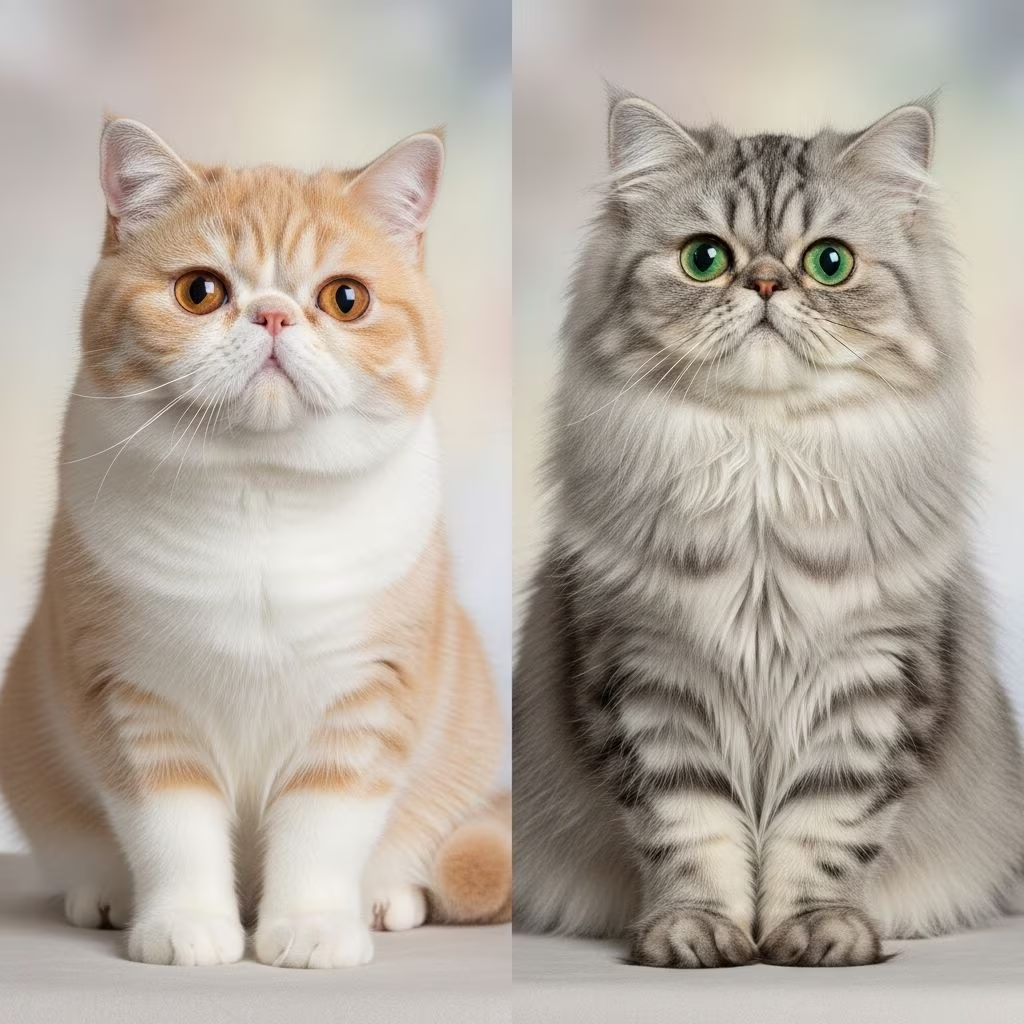
Exotic Shorthairs and Persians share striking similarities in their endearing flat faces and gentle dispositions, yet their coat lengths create profound differences in care requirements and lifestyle fit. This comprehensive guide breaks down every aspect to help you decide between these popular brachycephalic breeds.
Origins and Development of These Iconic Breeds
The Persian cat traces its roots to the 17th century, when long-haired cats from Persia (modern-day Iran) were imported to Europe, captivating aristocrats with their luxurious fur and regal demeanor. By the 19th century, selective breeding refined the breed’s signature round head, short legs, and flowing coat, establishing Persians as a staple in cat shows worldwide.
In contrast, the Exotic Shorthair emerged in the mid-20th century as a deliberate crossbreed. American breeders crossed Persians with American Shorthairs, and later Burmese and Russian Blues, aiming to capture the Persian’s facial structure and personality in a low-maintenance package. The Cat Fanciers’ Association (CFA) recognized the breed in 1967, often judging Exotics by nearly identical standards to Persians, except for fur length. Today, both breeds remain among the top 10 most popular in registries like CFA.
Physical Traits: What Sets Them Apart Visually
Both breeds boast the classic “peke-face” look: massive round heads, small ears, large expressive eyes, cobby bodies, and short sturdy legs. Persians amplify this with an ultra-long, silky double coat that flows dramatically, often in colors like cream, blue, or tabby patterns. Exotics mirror this body type but feature a dense, plush short coat resembling a teddy bear’s fur—soft, thick, and standing off the body.
Size-wise, adults of both weigh 7-13 pounds and stand 10-15 inches tall at the shoulder, with lifespans averaging 10-15 years. The coat is the standout differentiator, influencing everything from daily care to home dander levels.
Coat Types and Grooming Demands Compared
Grooming represents the most significant divide. Persians demand daily brushing to prevent matting in their fine, long undercoat and flowing topcoat. Without it, painful tangles form, potentially leading to skin infections or the need for professional shaving. Baths every 1-2 months help control oil buildup, adding to the time commitment.
Exotic Shorthairs, dubbed “lazy man’s Persians,” thrive on weekly brushing—more during seasonal sheds. Their short, plush fur resists matting, releases loose hairs easily, and requires occasional baths for cleanliness. This makes Exotics far more practical for busy owners.
| Feature | Exotic Shorthair | Persian |
|---|---|---|
| Coat Length | Short, dense, plush | Long, silky, flowing |
| Grooming Frequency | 1-2x/week | Daily + baths |
| Matting Risk | Low | High |
| Shedding | Moderate, seasonal | Heavy, continuous |
Temperament and Daily Behavior Profiles
These breeds share a core personality: sweet, affectionate, and low-key. Persians embody tranquility, preferring quiet laps and serene environments over high energy. They bond deeply with owners but tolerate solitude well.
Exotics retain this gentleness but inject subtle playfulness and sociability. They enjoy interactive toys, short play sessions, and mingling with family members or guests, making them slightly more engaging without being hyperactive. Both vocalize softly and avoid confrontation.
- Play Style: Exotics: Bursts of energy (under 1 hour/day); Persians: Gentle batting at toys from a relaxed position.
- Affection Level: Both crave pets and cuddles, but Exotics follow owners more eagerly.
- Noise Tolerance: Exotics handle moderate household bustle; Persians favor peace.
Health Considerations and Common Concerns
Brachycephalic (flat-faced) structure unites their health challenges: breathing difficulties, tear staining, dental malocclusion, and eye issues from shallow sockets. Responsible breeders select for moderate muzzles to mitigate these.
Persians face extra risks from their coat: urinary tract issues from obesity under heavy fur, skin folds infections, and heat sensitivity. Exotics dodge most coat woes, shedding seasonally rather than constantly, which reduces dander somewhat—but neither is hypoallergenic. Average vet costs run higher for Persians due to grooming-related interventions.
Key health verdict: Exotics edge out slightly due to simpler care, but both benefit from high-quality diets, dental routines, and annual checkups.
Lifestyle Compatibility: Families, Apartments, and More
Best for Busy Families
Exotics excel in dynamic homes with children or other pets. Their adaptability and forgiving nature handle noise and play without stress. Persians suit quieter, adult-only spaces where they can lounge undisturbed.
Apartment Living
Both adapt superbly to small spaces, needing minimal exercise. Provide scratching posts and window perches for enrichment.
Senior or Low-Energy Owners
Persians’ ultra-calm vibe pairs perfectly with relaxed lifestyles, while Exotics add gentle companionship without demands.
| Lifestyle | Best Breed | Why |
|---|---|---|
| Active Families | Exotic Shorthair | More playful, adaptable |
| Quiet Households | Persian | Prefers tranquility |
| First-Time Owners | Exotic Shorthair | Lower maintenance |
| Allergy Sufferers | Exotic (mildly) | Less dander trapping |
Cost Breakdown: Ownership Expenses
Initial purchase: $800-$2,500 for either from reputable breeders, higher for show-quality lines. Monthly costs differ:
- Food: $30-50 (similar).
- Grooming Tools: Exotics: $20 brushes; Persians: $50+ for combs, baths.
- Vet Care: Persians ~20% higher due to coat/skin issues.
- Litter: Comparable, as both are tidy.
Annual total: Exotics ~$800-1,200; Persians ~$1,000-1,800.
Training and Daily Care Tips
Both respond to positive reinforcement for litter use and basic commands. Harness training works for outdoor time, though indoor life suits their low energy. Persians need face fold cleaning daily to prevent infections; Exotics weekly.
Nutrition: High-protein, low-carb kibble supports their stocky builds. Portion control combats obesity risks.
Pros and Cons at a Glance
- Exotic Shorthair Pros: Easy grooming, playful yet calm, family-friendly.
- Exotic Cons: Still sheds, brachy health issues.
- Persian Pros: Stunning beauty, ultimate lap cat.
- Persian Cons: Intense grooming, higher health costs.
FAQs: Exotic Shorthair vs Persian
Which sheds less?
Exotics shed moderately and seasonally, easier to manage than Persians’ constant fine-hair fallout.
Are they good with kids?
Yes, both are patient, but Exotics handle rowdy play better.
Is one hypoallergenic?
No, but Exotics produce slightly less dander.
How much exercise do they need?
Less than 1 hour daily for both, via play.
Which is better for beginners?
Exotic Shorthair—minimal grooming commitment.
Final Thoughts: Choosing Your Perfect Flat-Faced Friend
If grooming time is scarce, opt for the Exotic Shorthair’s plush ease. For those enchanted by flowing luxury and committed to care, the Persian delivers unmatched elegance. Either way, prioritize ethical breeders focusing on health over extremes.
References
- Exotic Shorthair vs Persian: A Complete Comparison for Families — Almonte Cats. 2023. https://almontecats.com/exotic-shorthair-vs-persian/
- Exotic Shorthair Cat vs Persian Cat: Key Differences — Catster. 2024-01-15. https://www.catster.com/lifestyle/exotic-shorthair-vs-persian-cat/
- Exotic Shorthair vs. Persian Cats: Which Breed is Right for You? — Casa Purrs. 2023-05-20. https://www.casapurrs.com/posts/exotic-shorthair-vs-persian-cat
- Exotic – Breed Standard — Cat Fanciers’ Association (CFA). 2025-08-01. https://cfa.org/breed/exotic/



