

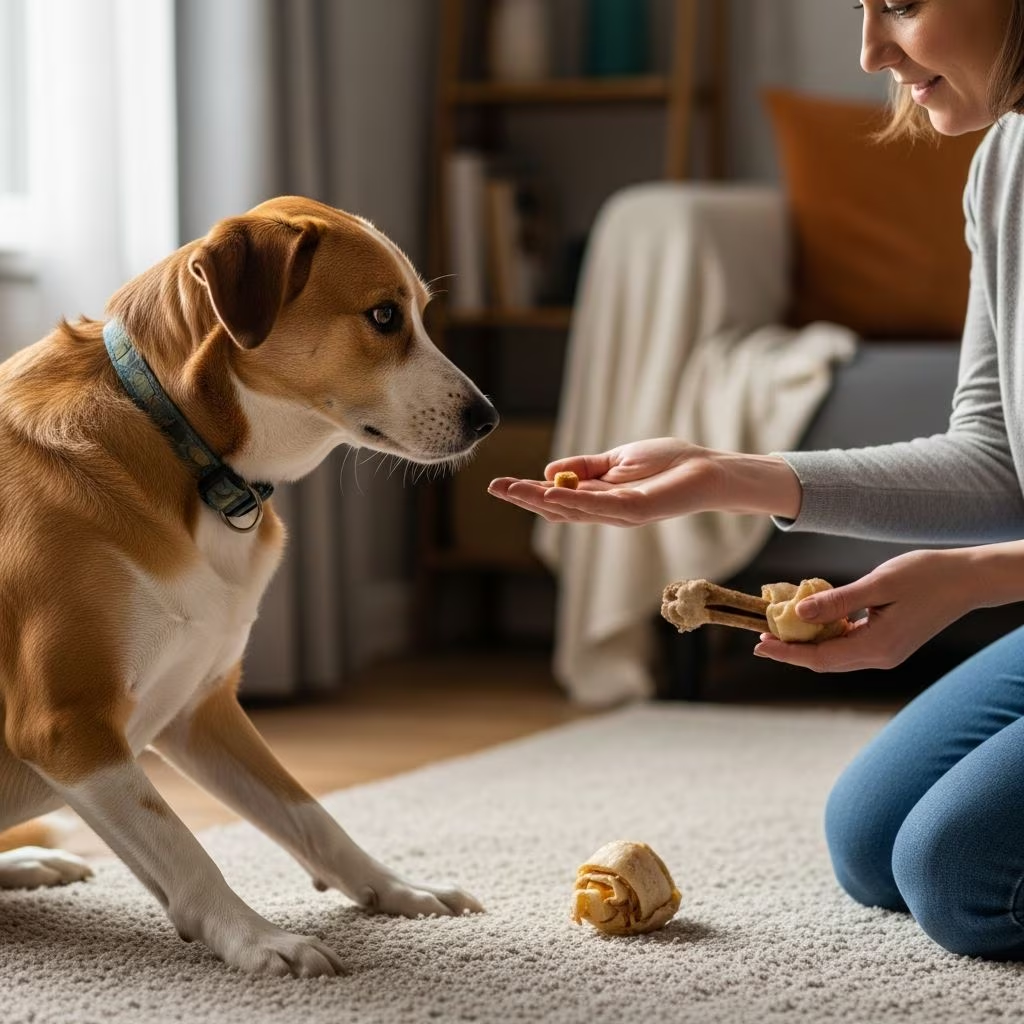
Resource guarding—when a dog exhibits possessive behavior over valued items—remains one of the most common behavioral challenges pet owners encounter today. This natural canine instinct, rooted in survival mechanisms, can manifest as growling, snapping, or biting when someone approaches what the dog considers their possession. Rather than escalating tension through confrontation, many professional trainers recommend employing exchange-based strategies that leverage positive reinforcement to fundamentally reshape how dogs perceive the approach and removal of their valued resources.
Understanding the Foundation of Possession Behaviors
Dogs naturally exhibit resource guarding because they are evolutionarily programmed to protect items essential for their survival and comfort. In domestic settings, these resources extend beyond food to include toys, sleeping areas, stolen items, and even their owner’s attention. The intensity of guarding behaviors varies considerably among individual dogs and depends on multiple factors including genetics, prior experiences, stress levels, and overall socialization history.
Recognizing that resource guarding stems from fear rather than dominance represents a critical shift in understanding how to address the behavior effectively. Dogs who engage in possessive aggression genuinely believe their valued items will be taken away, and this perceived threat triggers their defensive responses. This understanding forms the psychological foundation for why exchange-based training methodologies prove more effective than punishment-oriented approaches.
The Psychology Behind Exchange-Based Training
Exchange training works by teaching dogs that when a human or other animal approaches their resource, something positive occurs rather than loss. The fundamental principle involves creating a new association: instead of experiencing dread when someone nears their possession, the dog learns to anticipate something wonderful will happen.
This methodology directly addresses the emotional core of resource guarding by converting the dog’s fear response into positive anticipation. When implemented correctly, exchange training doesn’t simply suppress guarding behaviors; it actually modifies the dog’s underlying emotional state regarding resource loss. This distinction matters enormously because behavior suppression through punishment often leads to escalation or the emergence of new behavioral problems, while emotional reconditioning creates lasting change.
Establishing Prerequisites Before Beginning Exchange Training
Before initiating any exchange-based protocol, several preparatory steps ensure safety and success:
- Environmental Management: Implement physical barriers to prevent unsupervised access to triggering resources. This includes using gates, crates, and separate feeding areas to minimize opportunities for guarding incidents while training progresses.
- Professional Consultation: Work with qualified trainers or veterinary behaviorists, particularly when aggression appears severe or unpredictable.
- Health Assessment: Ensure underlying medical conditions aren’t contributing to behavioral changes, as pain, dental disease, or nutritional deficiencies can increase guarding intensity.
- Stress Reduction: Identify environmental stressors—new pets, household changes, or unpredictable situations—that may exacerbate guarding behaviors and implement calming measures.
Initiating the Exchange Protocol: Step-by-Step Implementation
The foundational exchange exercise follows a carefully structured progression designed to maintain the dog below their stress threshold throughout the training process.
Phase One: Establishing the Basic Exchange
Begin by identifying a resource with lower inherent value—items the dog guards less intensely. Start at a considerable distance from the dog while they possess this item. Approach slowly while simultaneously offering something substantially more valuable than what they currently hold. Success occurs when the dog voluntarily relinquishes their current possession to accept the superior offering.
The critical element involves ensuring the dog experiences this as an advantageous trade rather than a confiscation. This distinction prevents the creation of tension or resistance. Immediately after the exchange, return the original item along with enthusiastic praise to reinforce that trades result in beneficial outcomes.
Phase Two: Increasing Distance and Proximity Tolerance
Once the dog reliably exchanges lower-value items, systematically decrease the distance between yourself and the dog during exchanges. This gradual progression allows the dog to become increasingly comfortable with human approach while possessing valued items. Progress only when the dog demonstrates consistent relaxation at each distance threshold.
During this phase, observe subtle body language cues that might indicate growing anxiety—stiffening, freezing, or tracking your movements with intense focus. These signs indicate you’ve progressed too quickly and should return to the previous distance level before advancing further.
Phase Three: Introducing Higher-Value Resources
Once the dog successfully exchanges lower-value items across various distances and contexts, gradually introduce items with greater inherent value. Begin this phase by returning to larger starting distances to account for the increased value of the guarded item. This systematic progression prevents regression in the dog’s comfort level.
The specific order of resource introduction matters significantly. Food typically holds the highest inherent value for most dogs due to biological necessity, so reserve food-based exercises for later training stages after the dog has developed confidence and familiarity with the exchange protocol using toys and other objects.
Optimizing the Exchange Experience
Several tactical considerations enhance the effectiveness of exchange-based training:
| Element | Implementation Strategy | Expected Outcome |
|---|---|---|
| Reward Magnitude | Offer items substantially more valuable than what the dog currently possesses | Dog enthusiastically participates in exchanges |
| Timing of Praise | Deliver verbal reinforcement and physical affection immediately upon successful exchange | Dog learns to associate exchanges with positive outcomes |
| Item Return Protocol | Return relinquished items after exchange, demonstrating nothing is truly lost | Dog learns that exchanges don’t result in permanent loss |
| Context Variation | Practice exchanges in different locations, especially areas where guarding typically occurs | Dog generalizes learned behavior across environments |
| Consistency | Maintain the same exchange protocol across all household members | Dog develops reliable new response regardless of who initiates the exchange |
Managing Multiple-Dog Households
When resource guarding occurs between dogs, the exchange methodology requires modified implementation. The goal becomes teaching both dogs that the proximity of another dog to a valued resource predicts positive outcomes rather than competition or conflict.
Begin with substantial physical separation between dogs during training. Designate separate feeding areas, use gates to prevent access, and conduct initial exchange training individually with each dog. Once both dogs show confidence and comfort with the basic protocol, gradually reduce the physical distance between them while maintaining resource boundaries. Only when both dogs demonstrate relaxed responses should you begin introducing shared space with valued resources present.
This multi-phase approach prevents triggering intense guarding behaviors in either dog and allows each animal to build positive associations independently before navigating social complexity.
Addressing Common Training Obstacles
Inconsistent Response Patterns
Dogs sometimes perform exchanges successfully in one context but regress in others. This inconsistency typically indicates either premature progression to higher-value items or environmental factors triggering heightened anxiety. Return to earlier training stages and progress more gradually, allowing additional repetitions at each level before advancing.
Escalation During Training
If a dog’s guarding behaviors intensify despite exchange training efforts, cease current exercises immediately and reassess. Escalation often signals that the dog has become overwhelmed or that underlying medical issues require attention. Consult with veterinary professionals to rule out pain-related contributors before continuing behavioral modification.
Reluctance to Exchange
When dogs refuse to accept offered trades, the exchange reward likely lacks sufficient appeal. Experiment with different items—high-value treats, special toys, or interactive play—to identify what truly motivates your individual dog. What holds significant value varies among dogs, requiring personalized adjustment of training methodology.
Preventing Behavioral Regression
Maintain resource guarding improvements through ongoing management and periodic reinforcement training. Continue using gates and separate feeding areas even after the dog shows improvement, as this prevention continues reducing opportunities for guarding behaviors to manifest. Periodically practice exchange exercises to maintain learned associations and ensure the dog doesn’t revert to previous patterns.
Additionally, ensure the dog’s fundamental needs remain consistently met—adequate nutrition, fresh water, safe resting spaces, and appropriate play opportunities all contribute to reducing the perceived necessity for resource protection.
Frequently Asked Questions
How long does exchange-based training typically require?
Timeline varies based on the dog’s prior history, the intensity of original guarding behaviors, and training consistency. Most dogs show noticeable improvement within 4-8 weeks of regular training, though complete behavioral transformation may require several months of continued practice and management.
Can exchange training work for dogs with severe aggression histories?
Exchange training provides an effective foundation for most resource guarding cases, but severely aggressive dogs require professional supervision and may benefit from additional behavioral modification techniques beyond basic exchange protocols. Professional behaviorists can adapt the methodology to accommodate individual dog needs.
Should I physically punish my dog during guarding incidents?
Punishment fundamentally counterproductive when addressing resource guarding rooted in fear and perceived threat. Instead of reducing guarding behaviors, punishment increases anxiety and often escalates aggression. Calmly removing dogs from triggering situations and implementing management strategies proves far more effective.
Is exchange training appropriate for puppies?
Exchange-based training provides excellent preventive strategy for puppies before guarding behaviors establish. Early implementation creates foundational associations that make the dog naturally comfortable with human interaction during possession, effectively preventing resource guarding from developing.
Long-Term Success Factors
Successful management of resource guarding extends beyond initial training completion. Household members must understand and consistently apply exchange methodology, management strategies must continue indefinitely, and environmental stressors require ongoing attention. Dogs that learn through exchange training that possession loss brings positive outcomes develop fundamentally altered emotional responses to human approach, creating lasting behavioral change rather than temporary suppression.
The exchange-based approach represents a compassionate, science-backed methodology for addressing resource guarding while simultaneously building trust between dogs and their human families. By reframing the narrative from confrontation and potential conflict to cooperation and mutual benefit, this training method transforms what could become a dangerous behavioral problem into an opportunity for deepening bonds and improving overall household harmony.
References
- How to Prevent Resource Guarding in a Multiple-dog Household — Karen Pryor Academy at ClickerTraining.com. 2024. https://clickertraining.com/how-to-prevent-resource-guarding-in-a-multiple-dog-household/
- Why Resource Guarding in Dogs Is a Problem & What to Do About It — Johnson Animal Clinic. 2024. https://www.johnsonanimalclinic.com/services/dogs/blog/why-resource-guarding-dogs-problem-what-do-about-it
- Preventing Puppy Resource Guarding — American Kennel Club. 2024. https://www.akc.org/expert-advice/training/preventing-resource-guarding/
- Resource Guarding in Dogs: What to Do and NOT Do — Preventive Vet. 2024. https://www.preventivevet.com/dogs/resource-guarding-in-dogs
- Food Guarding — ASPCA. 2024. https://www.aspca.org/pet-care/dog-care/common-dog-behavior-issues/food-guarding
- Resource Guarding: Why does it happen and what are the next steps? — Animal Humane Society. 2024. https://www.animalhumanesociety.org/resource/resource-guarding-why-does-it-happen-and-what-are-next-steps



