

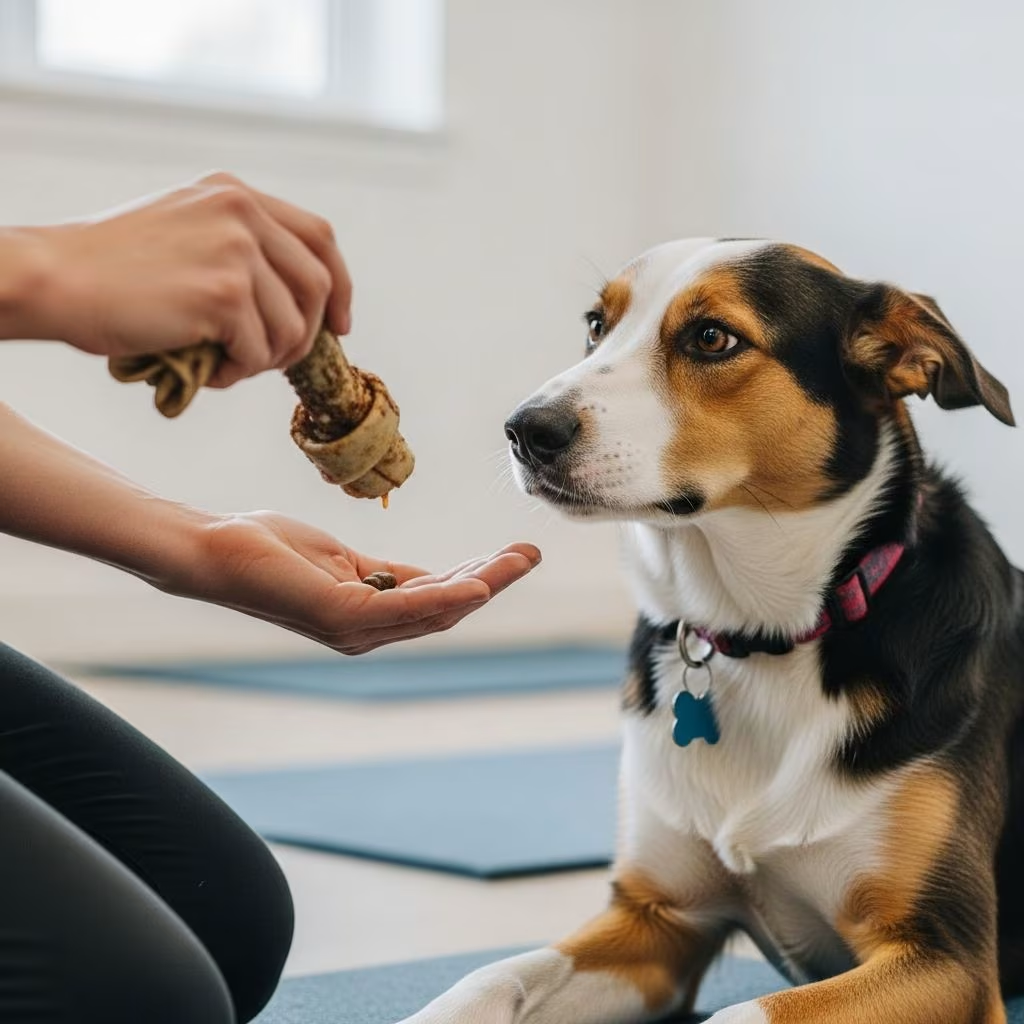
Understanding Resource Protection in Dogs
Resource protection represents one of the most common behavioral challenges dog owners encounter. When a dog displays resource guarding behavior, they are responding to what they perceive as a threat to something they value—whether that is food, toys, sleeping areas, or even their owner’s attention. This behavior ranges from mild displays such as moving away with an item to serious aggression including growling, snapping, or biting.
Dogs are naturally predisposed to protect things they consider valuable. This instinct developed over thousands of years and served important survival functions. In the modern domestic setting, however, resource guarding can create significant challenges for households, especially those with multiple pets, young children, or elderly family members. Understanding the root causes of this behavior is essential before implementing any training approach.
Why Dogs Develop Protective Behaviors Over Resources
Resource guarding stems from several interconnected factors. Early socialization plays a critical role—dogs who did not receive adequate exposure to other animals or people may view them as threats to their possessions. Additionally, puppies raised in competitive environments, such as litters where they had to compete with siblings for food and attention, may develop heightened protective instincts.
Past experiences significantly influence whether a dog develops resource guarding. Dogs with histories of resource scarcity, or those who have had items forcibly removed from them, often develop anxiety and fear-based aggression around valued items. Some dogs learn that guarding works—if growling or snapping has successfully deterred people or other animals in the past, the dog will likely repeat this strategy because it achieves the desired result.
Environmental factors also contribute to resource protection. An unpredictable environment where a dog cannot rely on consistent access to resources can trigger guarding behaviors. Furthermore, certain breeds or breed mixes may have genetic predispositions toward increased guarding behavior.
The Foundation: Prevention Through Environmental Management
Before implementing any training protocol, establishing solid management strategies forms the essential foundation. The first step involves identifying specific items, spaces, or situations that trigger your dog’s protective response. Create a detailed inventory of these triggers, then systematically eliminate opportunities for the unwanted behavior.
Practical management strategies include:
- Removing access to highly valued toys and items when supervision is not possible
- Feeding dogs in separate locations or rooms to prevent food-related guarding incidents
- Using physical barriers such as baby gates, crates, or pens to control access to spaces and prevent confrontations
- Creating predictable routines that help your dog feel more secure about resource availability
- Establishing designated resting areas for each dog to minimize territorial disputes
- Blocking off feeding areas during mealtimes to prevent unwanted approaches
Effective management does not punish the dog for guarding behavior. Instead, it prevents the behavior from occurring, which is far more efficient than attempting to correct it after the fact. In some cases, particularly severe resource guarding may require complete separation of dogs except during structured training sessions.
Building Security: Ensuring Abundant Resources
A fundamental principle in addressing resource guarding involves ensuring your dog never feels threatened by scarcity. Dogs that consistently experience food insecurity, limited access to water, or insufficient resting spaces are more prone to protective behaviors. By contrast, dogs with reliable access to their basic needs are far less likely to develop or maintain guarding behaviors.
Practical approaches to building resource security include:
- Maintaining constant access to fresh water throughout the day
- Providing regular, predictable feeding schedules with adequate portions
- Creating multiple resting areas so dogs have options for comfortable sleeping and lounging spots
- Offering various toys and enrichment items to reduce competition for any single object
- Ensuring each dog in a multi-dog household has their own toys, beds, and resources
When dogs understand that resources are consistently available and that their needs will be met, the underlying anxiety that drives guarding behaviors diminishes significantly.
The Exchange Training Method: Core Principles
Exchange-based training represents one of the most effective approaches to modifying resource guarding. This method teaches your dog that relinquishing a valued item results in receiving something even more desirable in return. The critical element distinguishing this approach from older punishment-based methods is that the dog maintains agency and choice throughout the process.
The fundamental principle operates on the premise of voluntary exchange rather than forced removal. Instead of taking an item away from your dog, you teach them to actively leave or trade the item while retaining the option to return to it if desired. This preserves the dog’s sense of control and safety, which is essential for building trust and confidence.
Key advantages of exchange training include:
- Dogs learn that giving up items leads to better outcomes rather than loss
- The method builds and strengthens the human-animal bond through positive interactions
- Dogs retain a sense of choice and control over their resources
- The approach addresses the underlying anxiety driving the guarding behavior
- Exchange training can be applied to any type of valued resource
Implementing Exchange Training: Step-by-Step Process
Successful exchange training requires patience, consistency, and careful progression. The process begins with identifying appropriate exchange items and establishing clear protocols.
Phase One: Establishing Basic Exchange Concepts
Begin with low-value items that your dog does not strongly protect. This might include a regular toy, a less-favored treat, or a piece of kibble. Present the low-value item to your dog, allow them to interact with it briefly, then immediately offer a higher-value reward. Repeat this cycle multiple times until your dog begins anticipating that good things happen when they engage with the exchange process.
Phase Two: Progressive Distance Work
Once your dog understands the basic concept, begin working with slightly more valuable items. Start at a considerable distance—perhaps several feet away—from where your dog is holding the item. Gradually decrease the distance over multiple sessions only when your dog remains calm and comfortable. This prevents the situation from becoming overwhelming and maintains the dog’s sense of safety.
Phase Three: Increasing Item Value
Progressively work with more valuable resources as your dog demonstrates confidence with lower-value items. Move through your dog’s hierarchy of valued possessions gradually, never jumping to items that provoke strong guarding responses until earlier phases are well established. The goal is to keep your dog consistently below their stress threshold throughout training.
Phase Four: Contextual Training
Once your dog demonstrates reliable exchange behavior with various items, practice in different locations, particularly spaces where your dog has historically displayed guarding behaviors, such as near their bed or favorite resting spots. Environmental variation helps ensure the behavior generalizes beyond the initial training context.
Choosing Effective Exchange Items
Success in exchange training depends heavily on selecting the right reward items. The exchange item must be genuinely more desirable to your dog than whatever they are currently holding. This requires experimentation and close observation of your individual dog’s preferences.
Effective exchange items might include:
- High-value treats such as cheese, chicken, or specially formulated training treats
- Access to activities the dog particularly enjoys, such as play sessions or walks
- Toys that generate significant excitement or engagement
- The opportunity to continue interacting with the item after the exchange (if appropriate)
- Special toys or objects reserved exclusively for exchange training
The value hierarchy may shift depending on your dog’s current state. A dog who has recently eaten may find food less motivating than play, while a tired dog might prioritize rest. Flexibility in reward selection improves training outcomes significantly.
Creating Household Consistency and Structure
Exchange training effectiveness depends on consistent implementation across all family members and caregivers. When different people respond inconsistently to resource guarding behaviors, the dog receives conflicting messages that undermine training progress.
Establishing household protocols includes:
- Educating all household members about resource guarding and appropriate responses
- Ensuring everyone uses identical techniques and reward systems during training
- Setting clear ground rules about how the dog should be handled during meals and play
- Creating designated feeding and play areas where everyone understands the boundaries
- Maintaining predictable routines that help the dog feel secure and in control
Inconsistent responses confuse dogs and make training significantly less effective. Taking time to align everyone’s approach produces dramatically better results.
Addressing Specific Resource Types
Different resources may require tailored approaches within the overall exchange training framework. Food represents the most common trigger for resource guarding, so specialized techniques may be particularly valuable in this area.
Food-Related Resource Guarding
For dogs who guard meals, building positive associations with human presence during feeding is essential. Hand-feeding your dog demonstrates that human hands approaching during mealtime signal positive outcomes rather than loss. You can gradually decrease the amount of hand-feeding while maintaining the positive association, eventually allowing your dog to eat independently while you remain nearby.
Toy and Object Guarding
Toys and contraband items (socks, tissues, stolen objects) benefit from exchange training alongside teaching formal commands like “drop it” and “leave it”. Positive reinforcement training that builds reliable response to these cues provides additional opportunities for voluntary relinquishment before resource guarding escalates.
Space and Territory Guarding
When dogs guard specific spaces such as furniture, beds, or sleeping areas, establishing clear access rules and rewarding calm behavior in shared spaces proves effective. Teaching your dog to move to designated locations on cue and rewarding compliance reinforces alternative behaviors to guarding.
What to Avoid During Training
Certain approaches actively undermine exchange training and can worsen resource guarding behaviors. Punishment-based techniques are particularly counterproductive, as they increase anxiety and fear around resource situations rather than resolving them.
Ineffective or harmful strategies include:
- Punishing or scolding the dog for guarding displays
- Physically confronting or intimidating the dog to force item relinquishment
- Forcing the dog to approach triggering situations before they are ready
- Rapidly introducing high-value items during training before foundational work is complete
- Allowing inconsistent responses from different family members
- Creating situations where the dog feels cornered or trapped with valued items
When guarding incidents occur, respond by calmly removing the dogs from the situation without excessive touching or aggression. Separating the dogs briefly allows everyone to calm down, after which you can analyze what triggered the behavior and adjust your training plan accordingly.
Building Positive Relationships in Multi-Dog Households
In homes with multiple dogs, strengthening the relationship between dogs reduces overall guarding behavior. Providing opportunities for dogs to engage in enjoyable activities together—walks, play sessions, or training exercises—creates positive associations that extend to other interactions.
Multi-dog household management involves:
- Conducting exchange training sessions individually before combining dogs
- Practicing controlled interactions where both dogs can observe each other displaying calm behavior around resources
- Gradually reducing distance between dogs during training as both demonstrate comfort
- Rewarding calm behavior from all dogs involved in shared space situations
- Maintaining separate resources to prevent competition-based guarding
Professional guidance proves invaluable in multi-dog households, as the complexity of managing interactions between multiple animals with potentially different guarding triggers requires expertise to navigate safely.
Measuring Progress and Adjusting Approach
Exchange training requires patience, as behavioral modification typically unfolds gradually over weeks or months. Progress manifests in several ways: dogs may begin approaching you willingly rather than moving away with items, display reduced tension in their body language, or maintain calm demeanor when you approach them during resource possession.
If progress stalls or situations worsen, reassess your approach by:
- Returning to earlier training phases where your dog was succeeding
- Using even higher-value rewards or modifying the reward type entirely
- Increasing distance again to reduce the dog’s anxiety level
- Examining whether family members are implementing strategies consistently
- Consulting a professional trainer or veterinary behaviorist if the behavior is not improving
Individual dogs respond to training at different rates. Factors such as age, previous experiences, genetics, and overall temperament influence the pace of improvement. Maintaining realistic expectations and celebrating incremental progress keeps both you and your dog motivated throughout the training process.
When Professional Support Becomes Necessary
While many resource guarding cases respond well to owner-implemented exchange training combined with management strategies, some situations warrant professional intervention. Serious aggression, multiple trigger items, or lack of progress despite consistent effort indicate the need for professional assistance.
Certified professional dog trainers and veterinary behaviorists possess expertise in assessing individual cases and designing customized protocols. They can evaluate whether resource guarding stems from anxiety, learned behavior, or other factors requiring specialized intervention.
Long-Term Success and Maintenance
Once exchange training produces meaningful improvement, consistent maintenance prevents regression. Continuing periodic exchange training sessions maintains the behavior and strengthens the positive associations your dog has formed. Additionally, maintaining robust management strategies—separate feeding areas, controlled access to valued items, and structured household routines—supports long-term success.
The goal extends beyond simply eliminating guarding displays to fundamentally changing how your dog feels about resource situations. When dogs develop confidence that their needs will be consistently met and that human interaction around resources brings positive outcomes, the underlying anxiety motivating guarding behaviors dissipates.
References
- How to Prevent Resource Guarding in a Multiple-dog Household — Clicker Training. https://clickertraining.com/how-to-prevent-resource-guarding-in-a-multiple-dog-household/
- Why Resource Guarding in Dogs Is a Problem & What to Do About It — Cincinnati Family Vet. https://www.cincinnatifamilyvet.com/services/dogs/blog/why-resource-guarding-dogs-problem-what-do-about-it
- Preventing Puppy Resource Guarding — American Kennel Club. https://www.akc.org/expert-advice/training/preventing-resource-guarding/
- Resource Guarding in Dogs: What to Do and NOT Do — Preventive Vet. https://www.preventivevet.com/dogs/resource-guarding-in-dogs
- Resource Guarding in Dogs — Humane World for Animals. https://www.humaneworld.org/en/resources/resource-guarding-dogs
- Food Guarding — ASPCA. https://www.aspca.org/pet-care/dog-care/common-dog-behavior-issues/food-guarding
- Resource Guarding in Dogs — PetMD. https://www.petmd.com/dog/behavior/resource-guarding-dogs



