

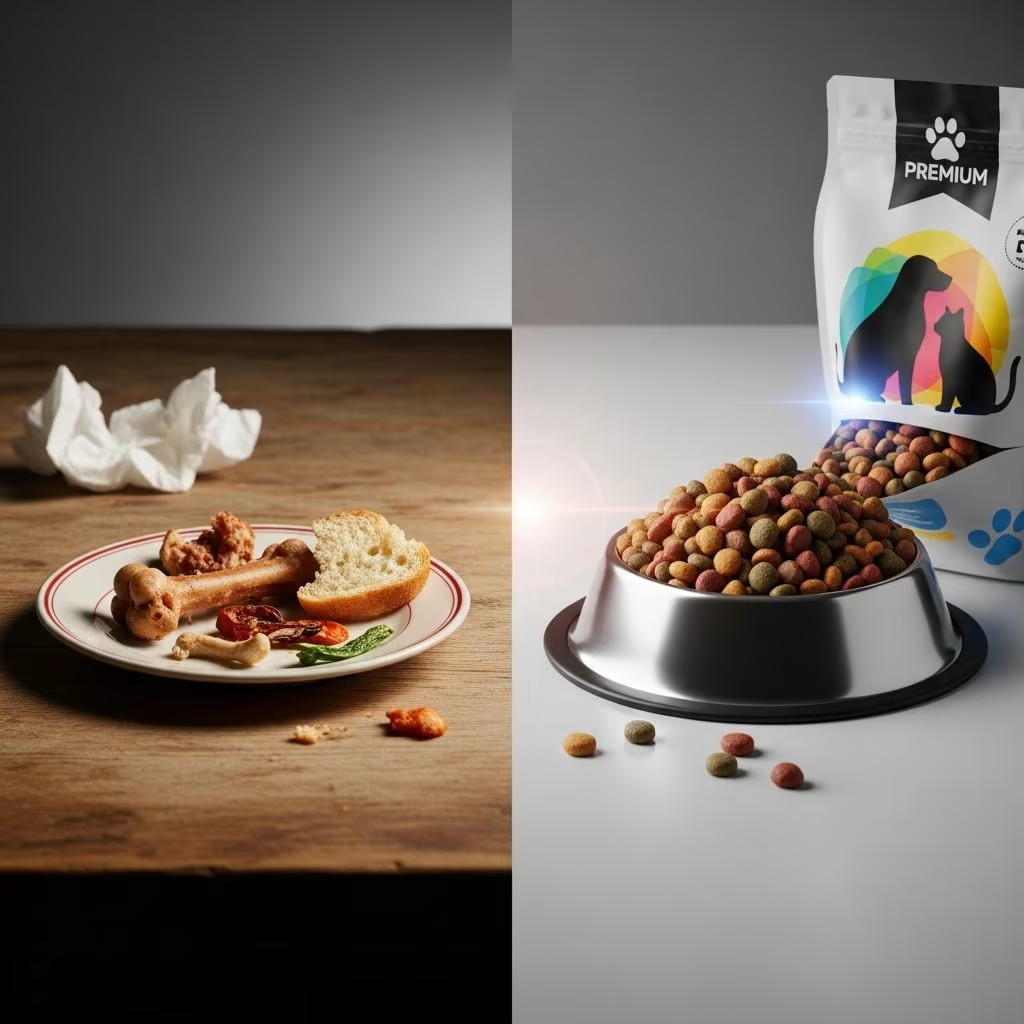
The relationship between humans and their pets has evolved dramatically over the past two centuries, and nowhere is this transformation more evident than in the food we provide for our furry companions. What began as a simple solution to feed leftover scraps has become a sophisticated, scientifically-informed industry worth billions of dollars annually. The story of commercial pet food is not just about nutrition—it is a narrative that intertwines innovation, marketing genius, industrial advancement, and changing cultural attitudes toward our animal companions.
The Accidental Invention: The 1860s Foundation
The birth of commercial pet food represents one of history’s most unexpected entrepreneurial moments. In 1860, an Ohio-based electrician named James Spratt found himself traveling to England to sell lightning rods—a venture that would prove far less profitable than the business opportunity he stumbled upon at London’s docks. Spratt observed dogs congregating near the riverbanks, eagerly consuming hardtack, the dried biscuits that sailors relied upon during extended maritime voyages. These hard crackers, composed of nothing more than flour, water, and occasionally salt, presented the inspiration Spratt needed.
Rather than simply replicate the sailors’ biscuits, Spratt innovated by incorporating additional ingredients that would appeal to pet owners. His creation, the Fibrine Dog Cake, combined wheat flour with vegetables, beetroot, and beef blood, transforming a basic sailor’s staple into what he marketed as a complete meal for dogs. What distinguished Spratt’s approach from earlier informal feeding practices was his recognition that pet owners—particularly those with sporting dogs—would pay premium prices for a professionally prepared product.
Spratt’s marketing strategy proved revolutionary for the era. He employed early advertising techniques including billboards and targeted promotions toward wealthy individuals with sporting dogs, establishing the Fibrine Dog Cake as one of the most heavily advertised products of the 1800s. His business model demonstrated that pet owners would embrace commercially prepared foods if marketed effectively, a lesson that would shape the industry for generations to come.
Expansion and Early Competition: 1880s to 1920s
The success of Spratt’s product in England prompted expansion to the American market around 1890, when British operations began manufacturing the dog cakes in the United States. This transatlantic move marked the beginning of commercial pet food as an international industry. The growing presence of dogs as household companions, rather than merely working animals, created sustained demand for convenient feeding solutions.
During the early twentieth century, competition intensified considerably. In 1908, the F.H. Bennett Biscuit Company entered the market with Milk Bones for dogs, challenging Spratt’s dominance. Throughout this period, biscuit-based foods remained the primary commercial option, with manufacturers refining recipes and marketing messages to appeal to pet owners seeking convenience and perceived nutritional benefits.
The market landscape shifted dramatically after World War I ended in 1918. Technological advances including automobiles and tractors had rendered horses obsolete for transportation and farming purposes, creating an enormous surplus of horses across North America. This economic circumstance presented a significant opportunity for entrepreneurs willing to embrace an unconventional ingredient source.
The Canned Food Revolution: 1920s Forward
In 1922, PM Chapel recognized the business potential inherent in the horse meat surplus and introduced Ken-L-Ration, the first commercially canned dog food in the United States. The product’s marketing strategy carefully emphasized that it contained “lean, red, government-inspected meat,” with the less appetizing disclosure that this meat came from horses relegated to smaller font on packaging. Ken-L-Ration achieved remarkable market penetration, commanding approximately 90% of the commercial pet food market by the early 1940s.
The popularity of Ken-L-Ration and competing canned products reflected broader American economic and cultural trends. The Great Depression, beginning in 1929, made the convenience and perceived affordability of commercial pet food increasingly attractive to families experiencing financial hardship. Additionally, the successful marketing campaigns—including sponsorship deals and celebrity endorsements such as those featuring film star Rin Tin Tin—normalized the concept that pet owners should purchase specialized commercial products rather than relying on table scraps.
The demand for canned pet food proved so robust that by 1941, domestic horsemeat production became insufficient to meet industry needs. Pet food manufacturers began breeding horses specifically for commercial purposes, with approximately 50,000 horses slaughtered annually for pet food production. This scale of production demonstrated the remarkable transformation of pet feeding from domestic practice to industrialized enterprise.
Technological Innovation: The Extrusion Process
The post-World War II era witnessed a fundamental shift in pet food manufacturing technology. During the 1940s, as both meat and aluminum faced rationing due to wartime demands, cereal companies recognized an opportunity to enter the pet food market by developing dry food products from leftover grain mill by-products and manufacturing scraps. These new dry formulations, though less premium than canned alternatives, offered manufacturers significantly higher profit margins.
The most transformative innovation emerged in 1956 when Purina introduced the first commercially produced kibble manufactured through “extrusion,” a mechanical process that would become the industry standard. The extrusion process involves forcing moistened dough through high-pressure, high-temperature machinery that shapes the material into individual kibble pieces while simultaneously sterilizing the product. General Mills had acquired Spratt’s operations in 1950, and by 1956, Purina—which had previously specialized in farm animal feed—entered the dog food market with this revolutionary technology.
In 1959, Purina further expanded its product offerings by acquiring the American Crab Meat Company and their pet food brand 3 Little Kittens, extending the company’s reach into the feline market. Carnation Company simultaneously developed Little Friskies cat kibble in 1950, with wet food options following in 1955. By 1962, Purina had begun manufacturing cat-specific kibble, indicating that commercial pet food had achieved market penetration across multiple pet species.
Marketing and Industry Consolidation: 1960s Onward
The efficiency and cost-effectiveness of extrusion technology enabled rapid industry expansion throughout the 1960s and 1970s, with manufacturers utilizing the process to develop an expanding array of flavors and specialized formulations. Yet perhaps the most significant development occurred in 1964 when the Pet Food Institute—an industry lobbying organization—launched comprehensive advertising campaigns designed to convince American consumers that commercially prepared kibble represented the only appropriate way to feed dogs.
These marketing efforts proved extraordinarily successful, fundamentally reshaping pet owner attitudes and behaviors. The campaigns echoed the promotional strategies James Spratt had pioneered a century earlier, but with greater sophistication and broader reach. By the 1970s and 1980s, feeding dogs and cats table scraps had become socially stigmatized, while commercial kibble consumption became normalized as the standard practice for responsible pet ownership.
Modern Diversification and Specialized Nutrition
Contemporary commercial pet food encompasses far greater diversity than the limited options available to consumers just decades ago. Modern manufacturers produce specialized formulations targeting specific health conditions, life stages, body sizes, and dietary preferences. Wet food, dry kibble, semi-moist formulations, and refrigerated options all occupy shelf space in contemporary pet food aisles.
The emergence of premium and alternative feeding approaches reflects evolving consumer attitudes toward pet nutrition. In 1998, Steve Brown pioneered the commercial raw pet food movement in the United States, developing formulations based on European nutritional standards and the BARF (Biologically Appropriate Raw Food) diet philosophy. Rather than relying on traditional mass-market advertising, Brown utilized educational outreach to build market demand, particularly among holistic veterinarians and health-conscious pet owners. This development indicated that some consumers increasingly questioned whether conventional kibble represented optimal nutrition for their animals.
The Business of Pet Feeding: Economic and Industrial Perspectives
| Era | Primary Product Type | Key Characteristic | Market Driver |
|---|---|---|---|
| 1860s-1890s | Biscuits | Premium positioning, targeted advertising | Sporting dog owners, novelty |
| 1920s-1940s | Canned food | High market penetration, meat-based | Depression-era convenience, horsemeat surplus |
| 1950s-1970s | Kibble | Cost-effective, technology-driven | Extrusion innovation, industry consolidation |
| 1980s-Present | Specialized formulations | Diverse options, segmented markets | Health consciousness, premium positioning |
The transformation of pet food from luxury item to mass-market commodity reflects broader industrial and economic trends. Each major shift in product type corresponds to technological capability and cost-effectiveness improvements that allowed manufacturers to capture larger market shares. The consolidation of pet food production among major corporations—General Mills, Purina, Carnation, and others—created industrial structures that persist today.
Understanding Modern Pet Food Production
Contemporary commercial pet food production involves multiple complex steps designed to ensure shelf stability, consistent quality, and extended storage capability. The extrusion process remains fundamental to dry kibble manufacturing, though modern equipment incorporates computerized controls and quality monitoring systems absent from 1950s machinery. Wet foods undergo sterilization through pressure cooking, while raw food products employ freezing technology to maintain safety.
Ingredient sourcing has evolved considerably from the early days when horsemeat and grain mill by-products formed the primary basis of commercial pet foods. Modern manufacturers source proteins from poultry, beef, fish, and plant-based alternatives, with premium brands emphasizing whole ingredients over by-products or meal sources. Regulatory frameworks, including those established by the Association of American Feed Control Officials (AAFCO), now govern nutrient content and ingredient labeling standards.
Frequently Asked Questions
- When was the first commercial pet food created?
- James Spratt developed the Fibrine Dog Cake in England in 1860, marking the birth of commercial pet food.
- Why did canned dog food become so popular in the 1920s and 1930s?
- Canned pet food achieved rapid market adoption due to a surplus of horsemeat following World War I, combined with economic circumstances during the Great Depression that made convenient, affordable food options attractive.
- What was the extrusion process, and why did it matter?
- Extrusion is a manufacturing technology introduced in 1956 that forces moistened dough through high-pressure, high-temperature machinery to create kibble. This innovation reduced production costs dramatically and allowed manufacturers to achieve higher profit margins.
- How did marketing influence the pet food industry?
- James Spratt pioneered sophisticated advertising strategies in the 1860s, and this approach intensified throughout the twentieth century, culminating in the Pet Food Institute’s 1964 campaigns that successfully convinced Americans that commercial kibble was the standard way to feed pets.
- When did specialized pet foods for cats emerge?
- Cat-specific commercial foods appeared in the 1930s from Spratt’s, though the market did not expand significantly until the 1950s when companies like Carnation and Purina began producing cat kibble and wet foods.
Conclusion: From Innovation to Industry Standard
The history of commercial pet food represents a remarkable journey from a chance observation at London’s docks to a multi-billion dollar global industry. Beginning with James Spratt’s simple biscuit innovation in 1860, the sector has continuously evolved in response to technological advancement, economic circumstance, and consumer attitudes. The introduction of canned foods in the 1920s, the revolutionary extrusion technology of the 1950s, and the sophisticated marketing campaigns of subsequent decades each transformed how pet owners understood their responsibilities toward their animals.
Contemporary pet food diversity would astound the early pioneers of the industry. Modern consumers navigate choices between kibble, wet food, raw diets, and specialized formulations that address specific health conditions and nutritional philosophies. Yet this modern landscape remains rooted in the fundamental principles established by nineteenth-century innovators: that pet owners will invest in convenient, professionally-prepared food products if effectively marketed and positioned as essential to animal welfare.
Understanding this history provides valuable context for evaluating current claims about pet nutrition and feeding practices. As consumers continue to make informed choices about their pets’ diets, recognizing how the industry developed and evolved helps distinguish marketing innovation from genuine nutritional advancement—a distinction James Spratt would surely have appreciated.
References
- The Surprising History of Commercial Pet Food — Steve’s Real Food. 2018-10-31. https://stevesrealfood.com/2018/10/31/the-surprising-history-of-commercial-pet-food/
- The History of Commercial Pet Food: Invention & Timeline — Catster. https://www.catster.com/nutrition/history-of-commercial-pet-food/
- The unlikely history of commercial pet food — Animal Wellness Magazine. https://animalwellnessmagazine.com/commercial-pet-food/
- History of Commercial Pet Food: A Great American Marketing Story — The Farmer’s Dog. https://www.thefarmersdog.com/digest/the-history-of-commercial-pet-food-a-great-american-marketing-story/
- Keto And Kibble: The History Of Dog Food — The Bones & Co. https://www.thebonesandco.com/blog/the-history-of-dog-food-and-kibble
- A Brief History Of Dog Food: When Was Dog Food Invented? — FreshPet. https://www.freshpet.com/blog/history-of-dog-food
- The History of Pet Food — Pet Food Institute. https://www.petfoodinstitute.org/the-history-of-pet-food/



