

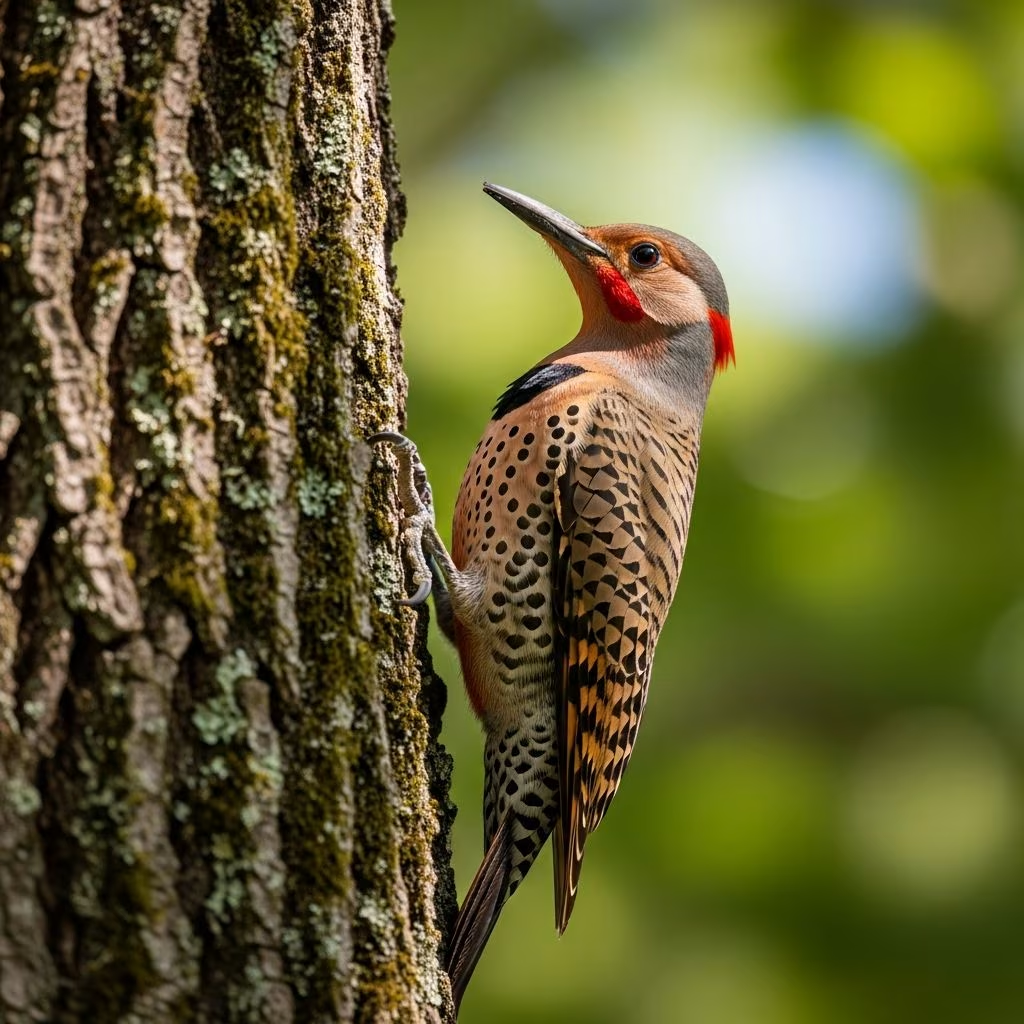
Everything to Know About Woodpeckers: Where They Live and What They Eat
Woodpeckers are among nature’s most fascinating avian species, renowned for their distinctive pecking behavior and remarkable ability to extract insects from wood. These specialized birds belong to the family Picidae and have evolved exceptional physical and behavioral adaptations that allow them to thrive in forested environments across most continents. Understanding woodpeckers requires exploring their unique characteristics, habitat preferences, feeding strategies, and ecological significance.
What Makes Woodpeckers Special: Remarkable Adaptations
Woodpeckers possess an extraordinary collection of physical adaptations that make them perfectly suited to their specialized lifestyle. These features have evolved over millions of years to enable their signature wood-drilling behavior and tree-dwelling existence.
Physical Characteristics
The most distinctive feature of woodpeckers is their strong, chisel-like bills designed specifically for drilling into wood. These powerful beaks deliver repeated impacts that would cause severe brain damage in other birds. To prevent injury, woodpeckers have evolved a shock-absorbing skull structure with specialized tissues that protect their brains from the constant pounding. Their skulls feature a relatively small and smooth brain, narrow subdural space, and little cerebrospinal fluid surrounding the brain to prevent it from moving back and forth during pecking.
Another critical adaptation is their zygodactyl feet, which consist of four toes arranged with two toes pointing forward and two pointing backward. This unique foot configuration provides exceptional gripping power on vertical surfaces, allowing woodpeckers to walk up tree trunks with remarkable agility. Additionally, their stiff, pointed tail feathers act as props or a third point of contact, forming a tripod-like support system that braces them against the trunk while they work.
Woodpeckers possess exceptionally long tongues, often extending far beyond their bills and frequently equipped with barbed tips or sticky surfaces. The structure of these specialized tongues allows them to spear and extract insect larvae from deep within wood or collect ants and small insects using sticky saliva. This combination of extreme length and specialized surface features represents one of their most impressive adaptations for their ecological niche.
Woodpecker Habitats: Where Do They Live?
Woodpeckers are forest-dependent species found on most continents, with habitat preferences varying by species. Understanding where woodpeckers live is essential for appreciating their ecological role and conservation needs.
Geographic Distribution
Woodpeckers inhabit diverse forested environments worldwide, from temperate forests to tropical woodlands. While they are primarily tree-dependent, some specialized species have adapted to alternative habitats. For example, the Gilded Flicker and Ladder-backed Woodpecker excavate holes in cacti where trees are scarce, while the Andean Flicker and Ground Woodpecker dig holes in earth banks. This habitat flexibility demonstrates the adaptability of certain woodpecker species to environmental challenges.
Nesting and Roosting Behavior
All members of the Picidae family are cavity nesters, nearly always selecting tree trunks and branches well away from foliage. Woodpeckers prefer areas of rotten wood surrounded by sound timber, as these locations provide the ideal balance of material that is soft enough to excavate but structurally sound enough to maintain nest integrity. Most woodpeckers roost at night inside holes and crevices, often within the same cavity they use for nesting during breeding season, though some species maintain separate roosting and nesting sites.
Most woodpeckers are solitary roosters, vigorously defending their chosen site from intruders. However, some species like the Magellanic Woodpecker and Acorn Woodpecker engage in cooperative roosting, sharing shelter with other individuals. This behavioral variation reflects different ecological strategies adapted to their specific environments and food availability.
What Do Woodpeckers Eat? Feeding Strategies and Diet
Woodpeckers are primarily insectivorous birds, though some species have developed specialized feeding strategies that extend beyond simple insect foraging. Their feeding habits directly influence their ecological impact and habitat requirements.
Primary Diet and Foraging Techniques
The primary diet of most woodpeckers consists of insects found within tree bark and wood, particularly wood-boring beetles and their larvae. When foraging, woodpeckers employ both visual cues and acute hearing to locate insect tunnels beneath the bark. Some species can even hear the movement of larvae inside the wood, allowing them to pinpoint prey with remarkable precision. Once prey is located, the woodpecker positions itself securely and drills precisely to reach the insect, then uses its specialized tongue to extract the meal.
This feeding strategy makes woodpeckers highly efficient pest controllers in forest ecosystems. By targeting wood-boring insects, they help maintain forest health and prevent excessive damage to living trees from insect infestations.
Specialized Feeding Strategies
Different woodpecker species have evolved unique feeding strategies that diversify their diet and reduce direct competition with other woodpeckers. These specialized approaches showcase the remarkable behavioral diversity within the Picidae family.
Acorn Storage: Acorn Woodpeckers create “granaries” by drilling small holes in trees where they store thousands of acorns for winter food. This behavior allows them to maintain a reliable food source during seasons when insects are scarce, demonstrating sophisticated planning and food storage capabilities.
Aerial Hunting: Red-headed Woodpeckers catch insects in flight, departing from the typical wood-drilling behavior. This adaptation allows them to exploit insects not accessible to other woodpecker species.
Sap Feeding: Sapsuckers drill orderly rows of holes to feed on tree sap and the insects attracted to the flowing sap. This strategy provides both nutrition from the sap itself and access to insects drawn to the feeding site.
Foraging Niche Specialization: Male and female Downy Woodpeckers divide foraging territories seasonally, with males feeding more on small branches and weed stems while females feed on larger branches and trunks. This niche partitioning reduces competition between sexes and allows both to find adequate food resources.
Woodpecker Behavior and Communication
Woodpeckers exhibit complex behaviors centered around drumming, territorial defense, and breeding activities. These behaviors reflect their social structure and ecological strategies.
Drumming and Territorial Communication
The most distinctive woodpecker behavior is drumming—the rhythmic pecking and tapping males perform against wood to communicate with other birds. Drumming serves multiple functions: establishing territorial ownership, warning rival males away from feeding resources, and attracting mates during breeding season. Males use dead trees specifically for drumming, as the resonance projects the sound over greater distances. Some woodpeckers even drum on man-made structures such as pipes and telegraph poles.
Social Structure and Aggression
Most woodpeckers live solitary lives, defending feeding resources such as termite colonies or fruit-laden trees until they are exhausted. Their behavior ranges from highly antisocial species that are aggressively territorial toward their own kind, to species that live in groups. Aggressive behaviors include bill pointing and jabbing, head shaking, wing flicking, chasing, drumming, and vocalizations. Ritual actions typically do not result in physical contact, and birds may “freeze” for a while before resuming their dispute.
Breeding and Pair Formation
Woodpeckers engage in monogamous breeding practices, with pairs working together to excavate nest cavities and raise young. The drumming behavior of males plays a crucial role in attracting mates and establishing breeding territories.
Woodpecker Movement and Flight Patterns
Woodpeckers possess distinctive movement patterns both on trees and in flight. Their posture and movements are notably different from most other bird species. They tend to hitch themselves up tree trunks while maintaining an upright posture, with movements that often appear jerky or herky-jerky. When woodpeckers fly, many species exhibit a bounding or undulating flight path, where they rise as they flap their wings and fall slightly between bursts of flapping. This energy-efficient flight pattern allows them to move effectively between food sources and nesting sites.
Ecological Importance of Woodpeckers
Woodpeckers play crucial ecological roles that extend far beyond their own survival. As primary excavators of tree cavities, they create nesting sites used by numerous other bird species, mammals, and insects. Their feeding behavior controls insect populations, preventing outbreaks of wood-boring pests that could damage forests. Additionally, their activities help create structural complexity in forests that benefits many other organisms.
Conservation Challenges and Habitat Needs
Many woodpecker species face significant conservation challenges due to habitat loss. These forest-dependent species require mature forests with dead trees—the very habitat features often removed in human forestry management. The preservation of dead and dying wood is essential for woodpecker survival, as these trees provide both food sources and nesting opportunities. Conservation efforts must prioritize maintaining structural diversity in forests and protecting old-growth woodlands where woodpeckers can thrive.
Woodpecker Species Diversity
The Picidae family encompasses tremendous species diversity, with woodpeckers adapted to various ecological niches. Common North American species include the Downy Woodpecker, Red-bellied Woodpecker, Pileated Woodpecker, and Hairy Woodpecker, each with specialized habitat preferences and feeding strategies. Some species, like Downy Woodpeckers, are frequent members of mixed species flocks during winter, gaining advantages from having multiple sets of eyes watching for predators and increased food-finding success.
Comparing Woodpecker Adaptations
| Adaptation | Function | Benefit |
|---|---|---|
| Chisel-like Bill | Drilling into wood | Access to insect prey and nest excavation |
| Shock-Absorbing Skull | Protect brain during pecking | Sustained drilling without brain damage |
| Zygodactyl Feet | Gripping vertical surfaces | Climbing trees and accessing food sources |
| Stiff Tail Feathers | Support and stability | Tripod formation for balanced pecking |
| Long Barbed Tongue | Extracting prey from wood | Efficient insect capture and consumption |
Frequently Asked Questions About Woodpeckers
Q: How do woodpeckers avoid brain damage from constant pecking?
A: Woodpeckers have evolved multiple protective features including a shock-absorbing skull structure with specialized tissues, a relatively small brain, minimal cerebrospinal fluid, and optimal brain orientation within the skull that maximizes contact between the brain and skull during pecking.
Q: What is drumming and why do woodpeckers do it?
A: Drumming is the rhythmic pecking against wood that woodpeckers use for communication. Males drum to establish territory, warn away rivals, and attract mates during breeding season. The sound carries over considerable distances through the resonance of dead trees.
Q: How do woodpeckers find insects inside trees?
A: Woodpeckers use both visual inspection of bark and their acute hearing to locate insects. Many species can actually hear the movement of larvae inside the wood, allowing them to pinpoint exact drilling locations.
Q: Do all woodpeckers eat insects?
A: While most woodpeckers are primarily insectivorous, some species have specialized feeding strategies. Acorn Woodpeckers store acorns, sapsuckers feed on tree sap, Red-headed Woodpeckers catch insects in flight, and some species supplement their diet with seeds and fruits.
Q: Where do woodpeckers make their nests?
A: All woodpeckers are cavity nesters, excavating holes in tree trunks and branches, usually in areas of rotten wood surrounded by sound timber. Some species adapt to available materials, drilling into cacti or earth banks where trees are scarce.
Q: How are male and female woodpeckers different?
A: Many woodpecker species show sexual dimorphism in plumage, with males often displaying brighter colors or distinctive markings. Behaviorally, males are typically responsible for drumming and territorial defense, while some species like Downy Woodpeckers show foraging niche specialization between sexes.
Q: Why are dead trees important for woodpeckers?
A: Dead trees provide ideal nesting material that is soft enough to excavate yet structurally sound enough to maintain nest integrity. They also harbor the wood-boring insects that form the primary food source for most woodpecker species.
Q: How can I attract woodpeckers to my yard?
A: Woodpeckers are attracted to areas with dead or dying trees that harbor insects, as well as suet feeders. Maintaining native trees and leaving some dead wood for wildlife benefits woodpeckers and numerous other species that depend on tree cavities for shelter.
References
- Woodpecker Characteristics, Habitat & Facts — Study.com. Accessed 2025-11-28. https://study.com/academy/lesson/woodpecker-characteristics-habitat-facts.html
- Woodpecker — Wikipedia. Accessed 2025-11-28. https://en.wikipedia.org/wiki/Woodpecker
- Woodpeckers – The Science of Birds — The Science of Birds. Accessed 2025-11-28. https://www.scienceofbirds.com/blog/woodpeckers-picidae
- Great Spotted Woodpecker (D. major) — Woodland Trust. Accessed 2025-11-28. https://www.woodlandtrust.org.uk/trees-woods-and-wildlife/animals/birds/great-spotted-woodpecker/
- Downy Woodpecker Overview — Cornell Lab of Ornithology, All About Birds. Accessed 2025-11-28. https://www.allaboutbirds.org/guide/Downy_Woodpecker/overview
- Five things to know about those wacky and wonderful woodpeckers — Reconnect with Nature. Accessed 2025-11-28. https://www.reconnectwithnature.org/news-events/the-buzz/5-things-to-know-about-woodpeckers/



