

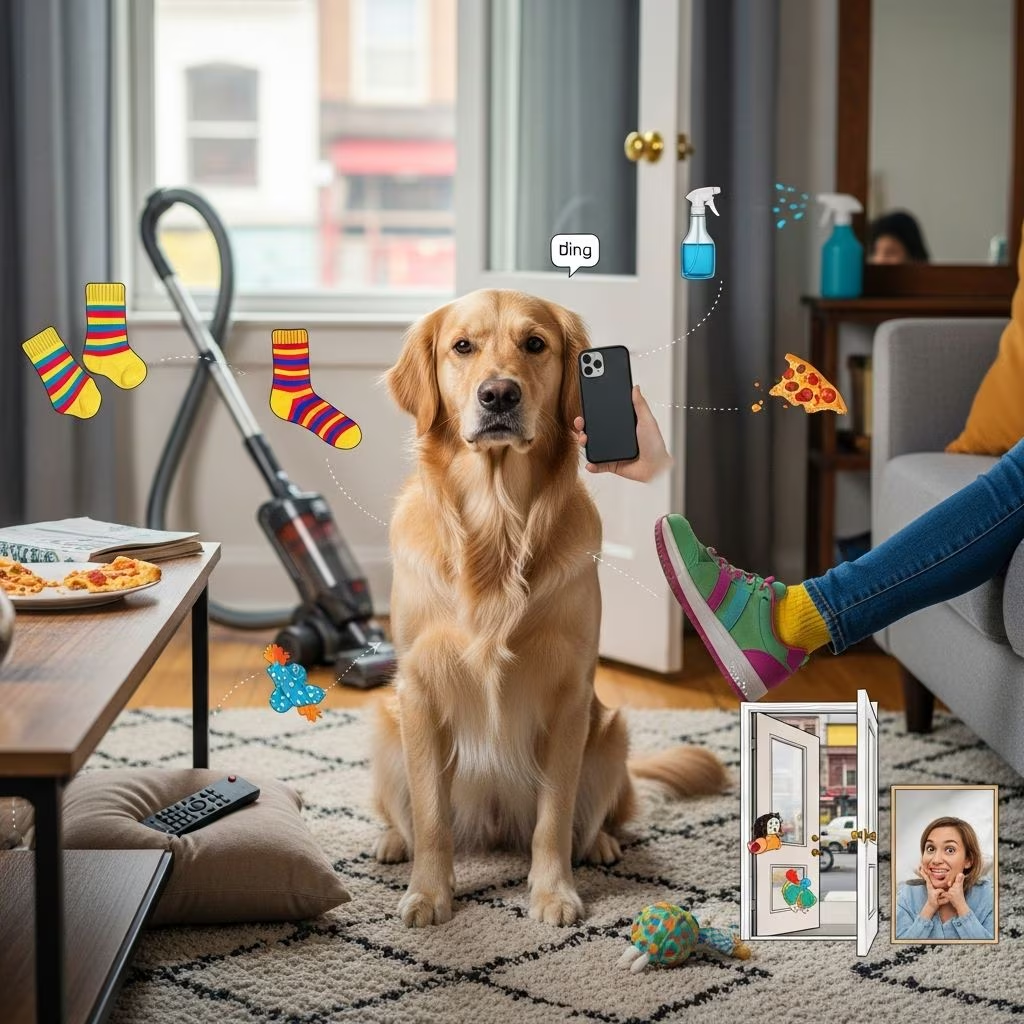
Dogs are endlessly forgiving, but that does not mean they enjoy everything we do. Many well-meaning behaviors humans see as loving, funny, or harmless can actually confuse, stress, or annoy our dogs. Understanding how dogs experience the world allows you to change small habits that make a big difference in their comfort and trust.
This guide walks through 11 common ways people accidentally annoy their dogs, why these habits are a problem from a canine-behavior perspective, and what to do instead using humane, reward-based methods backed by veterinary and behavioral science.
1. Interrupting Their Sleep
It is hard to resist a cute, twitching, softly barking dog in the middle of a dream. But repeatedly waking a sleeping dog can be deeply unpleasant for them and, in some cases, unsafe for you.
Dogs, like humans, cycle through stages of sleep, including REM (rapid eye movement) sleep associated with dreaming and memory processing. Disturbing this sleep can:
- Startle your dog and trigger a defensive reaction, including growling or snapping.
- Increase irritability and stress over time, just as sleep deprivation does in humans.
- Interrupt important brain processes involved in learning and emotional regulation.
If your dog appears to be dreaming—paddling their paws, twitching, whining, or quietly barking—this is usually normal and not a sign they need to be woken.
What to do instead
- Let your dog finish their nap unless there is an emergency.
- Teach children a simple rule: “Never bother the dog on their bed, in their crate, or when they are sleeping.”
- If you must wake them, do it gently with a soft voice from a short distance instead of direct touch.
2. Practicing “Exposure Therapy” the Wrong Way
When a dog is afraid of something—like strangers, bikes, nail trims, or other dogs—people sometimes try a “sink or swim” approach: forcing the dog to face the scary thing over and over until they “get used to it.” This is often called flooding.
In human psychology, exposure therapy is carefully structured and controlled. In dogs, unstructured forced exposure can easily backfire, increasing fear instead of decreasing it.
Why this annoys and stresses dogs
- Repeated exposure at a level that triggers fear can sensitize your dog, making the fear worse over time.
- Your dog learns they cannot escape or avoid scary things, which erodes trust in you as a safe partner.
- Chronic fear and stress are associated with behavior problems and reduced welfare.
What to do instead
- Use desensitization and counterconditioning: introduce the trigger at a distance or intensity where your dog stays relaxed, then pair it with something they love, such as treats or play.
- Increase difficulty very gradually—closer, louder, or longer exposures only when your dog remains comfortable.
- Work with a certified behavior professional or veterinary behaviorist for serious fears or aggression.
3. Scolding Instead of Teaching What You Want
Many dogs hear “No!” far more often than they hear clear guidance about what they should do. From a dog’s perspective, unpredictable scolding is confusing and stressful, especially when they were never taught an alternative behavior.
Dogs repeat behaviors that are reinforced. If barking, jumping, or stealing food reliably gets you to look at them and talk to them, even angry attention can work like a reward.
Why constant scolding is annoying and ineffective
- Dogs are poor at understanding what behavior the word “no” refers to, especially if it comes late.
- It does not tell them what to do instead (sit, go to bed, pick up a toy, etc.).
- Punishment-based methods are linked to increased fear, anxiety, and some aggression in dogs.
What to do instead
- Decide the behavior you want (for example, “sit when guests enter” instead of “don’t jump”).
- Teach and reward that behavior generously so it becomes your dog’s default choice.
- Redirect: if your dog is barking at the window, call them away, ask for a simple cue like “sit,” and reward that calm response.
4. Letting Strangers Approach Without Warning
Many people assume all dogs enjoy being touched and approached by strangers. In reality, even social dogs have boundaries, and many find sudden, uninvited contact stressful or scary.
How this annoys or frightens dogs
- Strangers leaning over, staring, or reaching toward a dog’s head can feel threatening.
- Shy or nervous dogs may feel trapped, especially on a tight leash, with no way to move away.
- If their subtle signals are ignored, they may escalate to growling, snapping, or biting to make the interaction stop.
What to do instead
- Advocate for your dog: it is acceptable to tell people “Please don’t pet her; she’s uncomfortable with strangers.”
- Watch your dog’s body language—if they lean away, lick their lips, yawn, freeze, or tuck their tail, that is a clear “no.”
- Teach strangers to ask you first, then let your dog decide by approaching or staying back.
5. Not Letting Them Sniff on Walks
Dogs experience the world primarily through scent. A neighborhood walk is not just physical exercise; it is their version of reading the news, checking messages, and exploring. Rushing your dog past every interesting smell because you want a “perfect heel” can be very frustrating for them.
Why restricting sniffing is annoying
- Sniffing and exploring are core natural behaviors for dogs and contribute to good welfare.
- Studies show that allowing more sniffing opportunities on walks can reduce signs of stress and promote calmer behavior afterward.
- Constant leash corrections or dragging your dog away from smells can make walks stressful instead of enriching.
What to do instead
- Build “sniff breaks” into every walk: allow your dog to explore a patch of grass or a tree line for a few minutes.
- Use a cue like “go sniff” to signal that this portion of the walk is for them.
- Practice loose-leash walking between sniff spots so you still have structure when you need it.
6. Not Giving Them Enough One-on-One Attention
Dogs are social animals who often form strong attachments to their human family. Being physically present but mentally elsewhere—on your phone, laptop, or TV all evening—can leave them feeling ignored.
How this can frustrate your dog
- Many dogs seek eye contact, play, or physical contact as social bonding. Being repeatedly brushed off can increase attention-seeking behaviors like pawing, barking, or stealing objects.
- Inadequate mental and social enrichment is linked to boredom, destructive behavior, and some anxiety-related issues.
What to do instead
- Schedule short, focused “dog time” every day: 10–15 minutes of play, training, or cuddling with no phone.
- Use interactive games such as scent work, puzzle feeders, or simple trick training to engage their brain.
- Look for and respond to your dog’s invitations to connect—bringing a toy, nudging your hand, or quietly leaning against you.
7. Coddling Them Constantly
There is nothing wrong with loving your dog intensely. But when affection turns into overprotection—carrying them everywhere, never letting them interact with other dogs or people, or rescuing them from every mildly uncomfortable situation—you may unintentionally limit their confidence.
Why over-coddling can be a problem
- Dogs build resilience by having safe opportunities to explore and recover from small, manageable challenges.
- If a dog is always picked up or shielded when they are uncertain, they never practice coping skills.
- Overdependency on one person can contribute to separation-related issues in some dogs.
What to do instead
- Let your dog walk, sniff, and interact at their own pace while you supervise.
- Provide gradual exposure to new environments with lots of praise and treats, instead of either forcing or avoiding them entirely.
- Teach independent skills like relaxing on a mat or enjoying a chew toy away from your body.
8. Ignoring Their Body Language
Dogs communicate with their whole body—ears, tail, posture, eyes, and movement. When humans miss or dismiss early signs of stress, the dog has few options left besides more intense signals like growling or snapping.
Common stress signals people overlook
- Lip licking or quick tongue flicks when there is no food present.
- Yawning in a situation that is not sleep-related.
- Turning the head away, showing the whites of the eyes (whale eye), freezing, or slowly backing away.
- Sudden scratching, sniffing the ground, or shake-offs during tense moments (displacement behaviors).
These are your dog’s polite ways of saying, “I am not comfortable with this.” Ignoring them is not only annoying; it puts your dog in a position where their subtle communication does not work.
What to do instead
- Learn the basics of canine body language from reliable, science-based resources.
- When you see early stress signs, reduce the pressure: give your dog space, stop the interaction, or move them away.
- Reward relaxed body language to help your dog feel safer in similar situations in the future.
9. Talking at Them Like They Understand Every Word
Many people use long, complex sentences with their dogs—explaining why they should not chew shoes or how disappointed they are about the trash incident. Dogs can learn words, but they do not understand language like humans do.
Research suggests dogs can learn to associate dozens or even hundreds of specific words or sounds with actions or objects, but always through repetition and context, not conversation-style explanations.
Why this can be confusing or annoying
- Long speeches with no clear, repeated cues are just background noise to most dogs.
- If emotional tone and body language do not match the words, the dog may feel uncertain.
- Repeating cues over and over without helping the dog succeed can make the word meaningless.
What to do instead
- Use short, consistent cue words (like “sit,” “down,” “bed,” “come”) paired with clear actions and rewards.
- Focus on timing: deliver praise or treats immediately after the behavior you want.
- Use your tone of voice and body posture to give your dog extra information—cheerful and loose for play, calm and steady for settling.
10. Rough or Unwanted Physical Contact
Many dogs tolerate being hugged, kissed, or squeezed, but that does not mean they enjoy it. In many behavioral assessments, hugging ranks as one of the human behaviors most likely to cause signs of stress in dogs, such as lip licking, turning away, or trying to escape.
How physical affection can annoy dogs
- Restraining hugs limit a dog’s ability to move away, which can feel threatening.
- Many dogs dislike hands suddenly reaching over their heads or touching sensitive areas like paws and tail.
- Rowdy roughhousing, especially with children, can easily cross a line into overwhelming.
What to do instead
- Let your dog choose contact: notice if they lean into you, nudge your hand, or voluntarily climb into your lap.
- Pet in ways many dogs prefer: gentle strokes on the chest, shoulders, or side of the neck, while watching for relaxed body language.
- Teach kids to invite rather than grab: “Ask the dog, then pet gently for three seconds, then pause and see if they want more.”
11. Inconsistent Rules and Routines
Dogs thrive on predictability. When rules and routines change daily—sometimes they are allowed on the couch, sometimes they are yelled at for it; sometimes jumping up is greeted with laughter, sometimes with anger—life becomes confusing and stressful.
Why inconsistency is irritating and stressful for dogs
- Dogs cannot understand unspoken context like “only when I am wearing nice clothes” or “only with certain guests.”
- Inconsistent responses make it hard for them to learn which behaviors lead to good outcomes.
- Unpredictable punishment can damage trust and increase anxiety.
What to do instead
- Agree as a household on a few clear rules: furniture access, greeting behaviors, feeding times, and walking routines.
- Make those rules consistent for everyone: if the dog is not allowed to jump, no one should encourage it.
- Use regular schedules for meals, walks, and rest whenever possible; predictable routines are associated with better welfare for many animals.
Quick Comparison: Human Intent vs. Dog Experience
| Human Behavior | Human Intent | Common Dog Experience |
|---|---|---|
| Waking a dreaming dog | Concern, curiosity, wanting to play | Startle, stress, disrupted rest |
| Forcing contact with strangers | Teaching sociability, being friendly | Fear, loss of control, need to escape |
| Scolding for bad behavior | Discipline, correction | Confusion, anxiety, attention-seeking |
| Over-coddling | Protection, love | Reduced confidence, dependency |
| Long verbal lectures | Explaining, reasoning | Noise with unclear meaning |
Frequently Asked Questions (FAQs)
Q: My dog growls when I wake them up. Is this normal?
A: Growling when startled from sleep is relatively common and usually a reflex, not a sign your dog is “bad.” Avoid touching a sleeping dog directly; instead, call their name softly from a short distance and give them a moment to fully wake. If the reaction is intense or escalating, consult your veterinarian or a behavior professional.
Q: How can I tell if my dog actually likes being petted or hugged?
A: A dog who enjoys contact typically has loose muscles, a softly wagging tail at mid-height, and may lean into you or nudge for more. Signs they are not enjoying it include freezing, lip licking, yawning, turning their head away, or trying to move off. Pause every few seconds; if they come back or lean in, that is a good indicator they want more.
Q: Is it really that bad to use punishment if it “works” quickly?
A: Harsh or confrontational methods can suppress behavior in the moment but are associated with increased fear, stress, and some forms of aggression, and they can damage the human–dog bond. Reward-based methods are recommended by major veterinary and animal welfare organizations because they are safer and more humane long term.
Q: How much sniffing time should I allow on a walk?
A: There is no universal rule, but many behavior professionals recommend including dedicated “sniff breaks” during at least part of each walk. Even 5–10 minutes of relaxed, unhurried sniffing can provide significant mental enrichment and help reduce stress.
Q: What if my dog is afraid of strangers or other dogs despite my best efforts?
A: Fearful behavior is not your fault, and many dogs need a tailored plan. Talk with your veterinarian to rule out medical issues, then work with a qualified behavior professional who uses reward-based methods and structured desensitization and counterconditioning.
References
- Sleep and circadian rhythms in dogs — K. Zanghi & A. Shepherd. 2019-06-01. https://pubmed.ncbi.nlm.nih.gov/30928200/
- AVSAB Position Statement on Humane Dog Training — American Veterinary Society of Animal Behavior. 2021-05-15. https://avsab.org/resources/position-statements/
- Use of punishment in dog training and its effects on welfare — A. Vieira de Castro et al., PLOS ONE. 2020-09-08. https://journals.plos.org/plosone/article?id=10.1371/journal.pone.0225023
- Environmental enrichment and its effects on the welfare of companion animals — RSPCA Knowledgebase. 2022-04-01. https://kb.rspca.org.au/knowledge-base/what-is-environmental-enrichment/
- Canine body language and signs of stress — American Kennel Club (AKC). 2022-09-10. https://www.akc.org/expert-advice/training/how-to-read-dog-body-language/



