

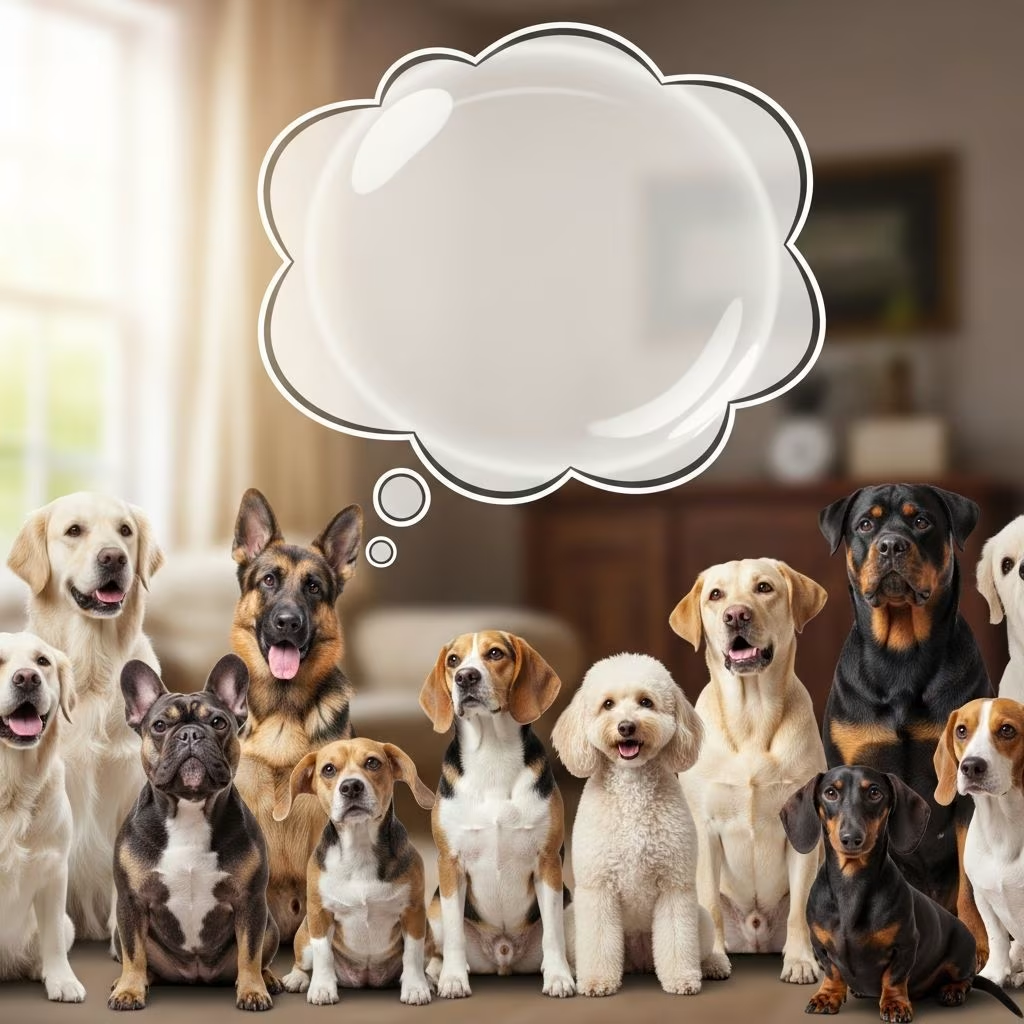
Every Dog’s Biggest Need, According to Their Breed
Different dog breeds often share common instincts and tendencies, shaped by the work they were originally bred to do. While every dog is an individual, understanding your pup’s breed can highlight one core need that, when met, makes daily life calmer, easier, and more fulfilling for both of you.
Modern research shows that genetics explain only part of a dog’s behavior, and that environment, training, and socialization are hugely important. Still, breed history offers powerful clues about what type of enrichment, exercise, and interaction a dog is most likely to thrive on.
This guide walks through some of today’s most popular breeds and mix types and focuses on the single biggest need for each, plus practical ideas for meeting that need in everyday life.
Why Breed History Still Matters
Even though many dogs now live as companions, most breeds were developed for a job: hunting, pulling sleds, guarding, herding, or comforting humans. Those jobs required specific behaviors—digging, tracking, running, barking, or staying close to people—that are still very visible today.
- Studies find that about a quarter of behavioral traits in dogs are inherited, while the rest are shaped by environment and learning.
- Owners who understand breed-typical traits are more satisfied and better prepared to meet their dog’s needs.
- Failing to meet a dog’s core needs often shows up as chewing, barking, reactivity, or anxiety rather than as simple “disobedience.”
Think of breed as a starting point, not a rulebook: it helps you predict what is most likely to matter to your dog and how to channel their instincts productively.
Small Companion & Toy Breeds
These breeds were usually created to live very close to humans. Their biggest needs often center on connection, routine, and safe outlets for their surprising energy.
Dachshund: Mental Digging & Scent Work
Dachshunds were bred to track and flush badgers underground. That means they combine a bold personality with a powerful nose and intense digging instincts.
Biggest need: rich mental stimulation that taps into searching, digging, and problem-solving.
- Use food puzzles, snuffle mats, or scatter feeding in safe digging areas.
- Create “dig boxes” with sand, soil, or crumpled paper where they can safely burrow.
- Rotate toys and games so their brilliant little brain is always working.
Without that mental outlet, a bored Dachshund may turn to barking, shredding, or tunneling through your garden instead.
Shih Tzu: Daily Human Connection
Shih Tzus were royal lap dogs, bred mainly to be adored. Their job was to stay close and soak up attention, not to herd sheep or flush birds.
Biggest need: consistent, calm human interaction.
- Keep predictable cuddle, grooming, and play routines.
- Use low-key enrichment like gentle training games or short sniffy walks.
- Avoid long periods of isolation; arrange pet sitters, daycare, or trusted family visits if you’re away often.
Because many people treat small dogs like children, they often live very closely with families, which can deepen the bond but also increase dependency if alone time isn’t introduced carefully.
Chihuahua: Quality Time and Confidence
Chihuahuas may be tiny, but many have huge personalities and surprisingly high energy. They are also very attached to their favorite humans.
Biggest need: daily one-on-one time that blends rest, play, and gentle training.
- Schedule short but frequent play sessions and training bursts throughout the day.
- Support them with confidence-building experiences instead of constant carrying.
- Offer soft, warm rest spots near you so they can relax while still feeling secure.
When their social and exercise needs go unmet, Chihuahuas may bark excessively, become fearful, or develop separation-related issues.
French Bulldog: Social Play & Interaction
French Bulldogs are sturdy, playful companions who were bred to be sociable city dogs. Many are highly people-oriented and enjoy other friendly dogs.
Biggest need: frequent, safe social interaction with people and well-matched dogs.
- Provide regular playdates or supervised dog daycare with dogs of similar size and play style.
- Mix in structured games, like fetch or simple obedience, to keep their mind engaged.
- Watch closely for overheating or breathing difficulty during play, and keep sessions short in hot weather.
Because many brachycephalic (short-nosed) dogs tire more quickly, their exercise must be carefully managed, even if their social appetite feels endless.
Working, Herding & Guardian Breeds
These breeds were developed to get big, demanding jobs done—sometimes all day, in tough conditions. The common thread is that they rarely thrive on a low-activity, low-stimulation lifestyle.
Siberian Husky: Freedom to Move
Huskies were bred to pull sleds over long distances in harsh Arctic conditions. They are athletic, independent, and often less “people-pleasing” than some other breeds.
Biggest need: space and movement, ideally with chances for semi-independent exploration.
- Prioritize secure, fenced areas or long-line walks where they can trot and explore safely.
- Provide structured outlets for running, such as canicross, bikejoring, or sledding where appropriate.
- Combine physical exercise with problem-solving games to help them decompress.
Without enough movement and freedom, Huskies are more likely to attempt escape, vocalize intensely, or show frustration behaviors.
Summary of Core Needs by Breed
| Breed | Original Role | Biggest Need Today | Ideal Activities |
|---|---|---|---|
| Dachshund | Underground hunting (badgers) | Mental stimulation & digging outlet | Snuffle mats, dig boxes, scent games |
| Shih Tzu | Companion to royalty | Consistent human connection | Cuddles, gentle training, calm walks |
| Chihuahua | Companion/watchdog | Daily quality time & confidence | Short play sessions, basic training |
| French Bulldog | Urban companion | Social interaction | Playdates, supervised dog park time |
| Siberian Husky | Sled pulling | Space and movement | Running sports, long walks, exploration |
How to Use Breed Needs in Everyday Life
Knowing your dog’s biggest need is only helpful if you turn that insight into daily habits. Most dogs benefit from a predictable mix of:
- Physical exercise: walks, runs, play, or sports matched to their breed and health.
- Mental work: puzzle feeders, training, scent games, and problem-solving tasks.
- Social time: with humans, dogs, or both, tailored to what your dog actually enjoys.
- Rest and safety: quiet spaces where they can sleep undisturbed and feel secure.
Small shifts—like swapping one regular food bowl meal for a puzzle toy or scheduling a weekly social outing—can dramatically reduce unwanted behaviors and improve overall wellbeing.
Frequently Asked Questions (FAQs)
Q: If behavior is not fully determined by breed, why think about breed needs at all?
A: Large genetic studies show that breed explains only a modest share of behavioral differences between dogs, but inherited traits still exist. Breed gives you clues about which activities and environments your dog is most likely to enjoy, so you can meet their needs more efficiently.
Q: Can a Dachshund, Chihuahua, or French Bulldog be happy in an apartment?
A: Yes, many small or moderate-energy breeds do well in apartments if their core need is met—mental enrichment for Dachshunds, quality time for Chihuahuas, and social interaction for French Bulldogs—plus appropriate exercise and toilet breaks.
Q: How much exercise does a Husky really need?
A: There is no single number, but Huskies were bred for long-distance work, so they usually need more sustained movement than a typical pet dog. Many thrive on at least one longer daily session of running, hiking, or fast walking, alongside mental enrichment.
Q: What if my dog is a mix of several breeds?
A: For mixed-breed dogs, look at the main breeds in their background and focus on overlapping themes—such as herding, guarding, or companionship—then test which activities your individual dog actually enjoys. Behavior and preference matter more than a label.
Q: Can meeting breed needs reduce behavior problems?
A: Yes. Research shows that many common behavior problems are linked to unmet activity, social, or environmental needs. When you give a dog appropriate outlets for their natural drives, frustration decreases and training becomes more effective.
References
- More Evidence That Breed Does Not Equal Behavior — Kinship. 2022-04-28. https://www.kinship.com/dog-behavior/breed-behavior-study
- Born This Way: How to Meet The Needs of Your Dog’s Breed — Kinship UK. 2024-02-01 (approx.). https://www.kinship.com/uk/dog-behaviour/dog-breed-fulfilment
- Dogs: Owner Practices vs. Canine Behavior Problems — de Assis LS et al., Animals (Basel). 2023-07-28. https://www.ncbi.nlm.nih.gov/pmc/articles/PMC11557872/
- Dogs’ Child-Like Role in Western Parenting and Families — Purewal R et al., International Journal of Psychology. 2018-11-29. https://econtent.hogrefe.com/doi/10.1027/1016-9040/a000552
- Genetic Testing Predicts Appearance but Not Behavior in Dogs — Morrill K et al., PNAS. 2025-01-06. https://www.pnas.org/doi/10.1073/pnas.2421752122



