

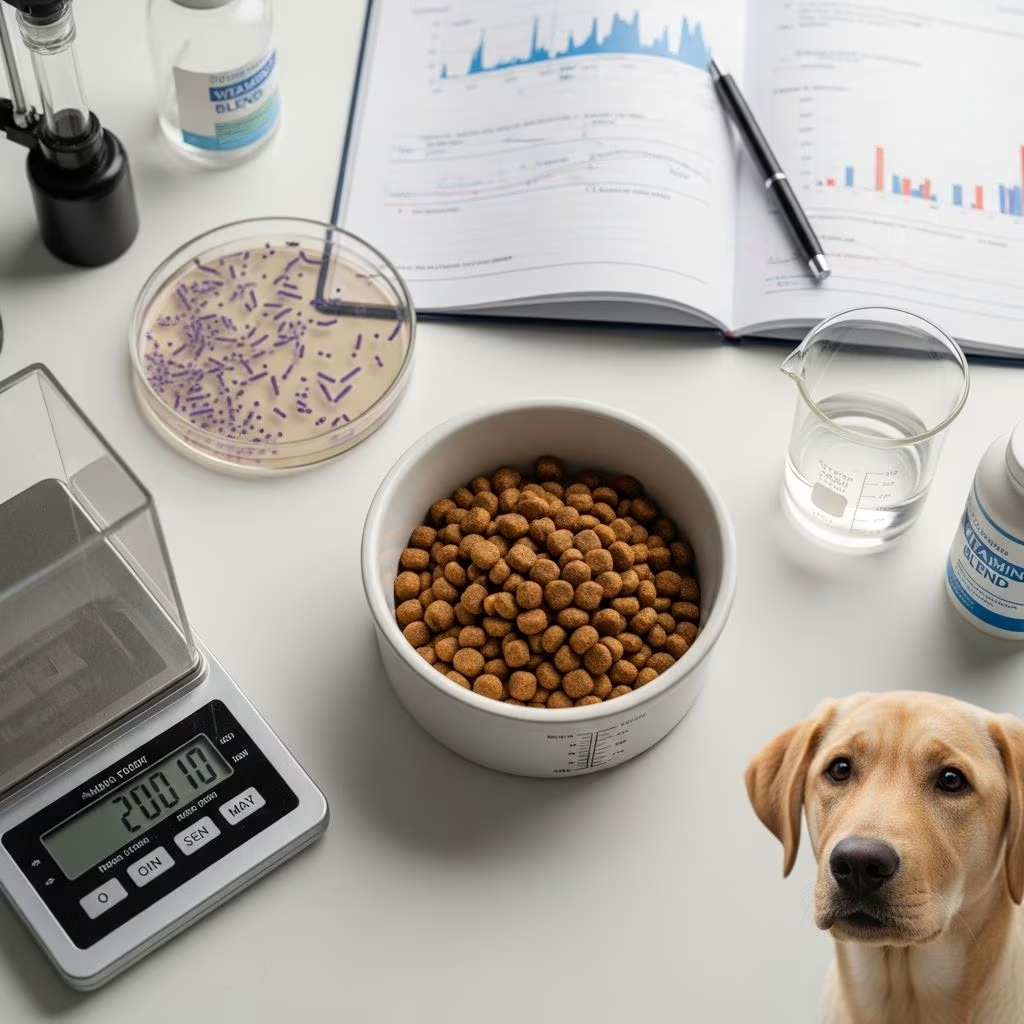
Selecting appropriate nutrition for companion dogs requires understanding the regulatory frameworks and scientific standards that govern pet food production. Pet owners face numerous choices when shopping for dog food, yet many lack knowledge about how to distinguish between genuinely nutritious options and marketing-driven products. Understanding the fundamentals of nutritional evaluation empowers dog owners to make informed decisions that directly impact their pets’ long-term health and vitality.
Understanding the Foundation: Regulatory Bodies and Their Role
The pet food industry operates under specific regulatory oversight designed to protect animal health. The Association of American Feed Control Officials (AAFCO) establishes the primary nutritional standards used in the United States for dog food formulation and labeling. Similarly, the World Small Animal Veterinary Association (WSAVA) provides globally respected guidelines that help veterinarians and pet owners evaluate the credibility of dog food manufacturers.
These organizations maintain manufacturer evaluation criteria checklists that assess how companies formulate products, conduct testing, and ensure safety and consistency. Understanding these frameworks provides the foundation for evaluating any dog food product critically.
The Nutritional Adequacy Statement: Your First Checkpoint
The nutritional adequacy statement represents the most critical piece of information on any dog food label. Located typically in small print on the back or side of packaging, this statement confirms whether a food is complete and balanced for a specific life stage. Pet owners should always locate and read this statement carefully, as it indicates whether the product has undergone proper nutritional evaluation.
The statement appears in one of two formats:
- Laboratory formulation verification: “[Product Name] is formulated to meet the nutritional levels established by the AAFCO Dog Food Nutrient Profiles for [life stage].”
- Feeding trial validation: “Animal feeding tests using AAFCO procedures substantiate that [Product Name] provides complete and balanced nutrition for [life stage].”
While both statements indicate compliance with AAFCO standards, the feeding trial approach represents the gold standard for nutritional validation. Feeding trials involve monitoring dogs over 26 weeks while consuming the product as their sole food source, with measurements tracking weight maintenance and bloodwork.
Decoding the Guaranteed Analysis Section
The guaranteed analysis section provides quantifiable nutritional information that allows meaningful comparison between different products. AAFCO mandates that pet food labels include four core nutrients:
- Minimum crude protein percentage
- Minimum crude fat percentage
- Maximum crude fiber percentage
- Maximum moisture percentage
Understanding these values helps owners assess whether a food meets their dog’s specific needs. Adult dogs require minimum fat content of at least 5.5 percent, while puppies and pregnant dogs need a minimum of 8.5 percent.
If a manufacturer makes additional nutritional claims—such as “high in calcium,” “contains taurine,” or “rich in omega-3s”—those nutrients must also appear in the guaranteed analysis section with specific percentages. This transparency allows owners to verify marketing claims against actual nutritional content.
Validation Methods: Laboratory Analysis Versus Feeding Trials
Manufacturers can validate nutritional adequacy through two distinct methods, each offering different levels of assurance:
Laboratory nutrient content analysis involves sending a small food sample to an accredited laboratory where technicians analyze it to verify compliance with AAFCO nutrient profiles. This represents the more common validation route and provides reasonable assurance that the product meets established standards. Laboratory testing uses ISO 17,025 accredited methods based on AOAC protocols to measure dry matter, crude protein, crude fiber, ether extract, and crude ash.
AAFCO-established feeding trials provide superior validation by demonstrating real-world nutritional performance. These trials run several weeks with live dogs under strict AAFCO protocols, with researchers tracking weight maintenance and bloodwork to confirm the diet supports health as the animal’s sole food source. While more rigorous and expensive than laboratory analysis, feeding trials provide evidence that the food actually delivers the nutrition its label promises in practical feeding situations.
Ingredient Quality and Composition Standards
Understanding ingredient naming and listing requirements provides additional insight into food quality. AAFCO regulations establish the “3% rule,” which specifies that if a named ingredient appears in a product name or claim, it must constitute at least 3 percent of the total product by weight. For example, dog food labeled “with beef” must contain at least 3 percent beef by weight.
Ingredients must appear listed in descending order by weight. This ordering provides valuable information about which components predominate in the formula. However, pet owners should recognize that weight includes moisture content, which can artificially inflate the apparent proportion of certain ingredients. Professional nutritional evaluation considers not just ingredient presence but also ingredient digestibility and nutritional bioavailability.
Manufacturer Safety and Quality Protocols
WSAVA guidelines expect manufacturers to demonstrate rigorous safety and consistency measures. These protocols should encompass ingredient testing, pathogen screening, and shelf-life assessments. Reputable manufacturers maintain transparent communication about their quality control procedures and willingly provide information about ingredient sourcing and production methods.
Recent microbiological safety evaluations of commercial dry dog foods found that while most products remained microbiologically acceptable, aerobic microbial counts varied significantly between products. Independent testing of commercial dog foods detected no salmonella bacteria in samples tested, with aflatoxin contamination occurring in only isolated instances at levels well below regulatory action thresholds.
Label Information Requirements and What They Reveal
Comprehensive pet food labels contain specific information mandated by AAFCO and the U.S. Fair Packaging and Labeling Act:
- Product and brand name
- Species identification (dogs or cats)
- Net quantity statement
- Guaranteed analysis
- Complete ingredient list
- Nutritional adequacy statement
- Feeding directions with portion guidance
- Manufacturer name and location
All pet food labels must meet these regulatory requirements and conform to standardized information presentation. While similar labeling between products might suggest equivalent quality, significant performance differences can exist due to variations in ingredient digestibility and bioavailability.
Selecting the Appropriate Food for Your Dog’s Life Stage
Pet owners should select food specifically labeled for their dog’s life stage and condition. AAFCO recognizes distinct nutritional requirements for different life stages, including adult maintenance, growth and reproduction, and gestation and lactation. Selecting a product formulated for your dog’s specific life stage ensures the food contains appropriate nutrient ratios and concentrations for that developmental period.
Adult maintenance foods differ nutritionally from puppy growth formulas, which require higher protein and fat concentrations to support development. Likewise, foods for pregnant or nursing females contain elevated nutrient levels to support lactation. Using the correct life stage formula prevents nutritional inadequacy or excess that could compromise health.
Comparative Evaluation: What Makes a Premium Formula
A high-quality dog food exhibits several characteristics that extend beyond meeting minimum regulatory requirements:
- Complete and balanced nutritional profile meeting all AAFCO requirements
- High-quality, palatable ingredients with demonstrated nutritional value
- Natural preservation methods rather than artificial preservatives
- Transparent ingredient identification without anonymous or vague components
- No artificial colors or unnecessary additives
- Protein-rich formulation with appropriate fat-to-protein ratios
- Carbohydrate sources selected for low glycemic index to minimize blood sugar spikes
Premium formulations demonstrate attention to ingredient characteristics, nutritional synergy, and digestibility, providing dogs with nutrition that supports optimal health outcomes rather than merely meeting minimum standards.
Understanding Life Stage Considerations
Life stage represents a crucial factor in pet food selection that many owners overlook. Dogs have distinct nutritional requirements at different ages and physiological states. Growing puppies require substantially higher caloric density and protein for proper skeletal and muscular development. Senior dogs may benefit from formulations supporting joint health, cognitive function, and age-related physiological changes.
Reading the label’s life stage designation ensures the selected food appropriately matches your dog’s developmental needs. A food formulated for adult maintenance contains different nutrient concentrations than a growth formula, reflecting the distinct metabolic requirements of each life stage.
Frequently Asked Questions About Dog Food Quality
How do I verify that my dog’s food meets AAFCO standards?
Look for the nutritional adequacy statement on the back or side of the packaging. This statement confirms whether the food is complete and balanced for your dog’s life stage according to AAFCO standards.
What’s the difference between “formulated to meet” and “proven through feeding tests”?
“Formulated to meet” indicates laboratory analysis confirmed nutrient compliance. “Proven through feeding tests” indicates actual dogs consumed the food under controlled conditions with monitored health outcomes, representing superior validation.
Do all AAFCO-compliant foods perform equally well?
No. While all AAFCO-compliant foods meet minimum regulatory standards, performance differences exist based on ingredient quality, digestibility, and formulation sophistication.
What do the numbers in the guaranteed analysis represent?
These percentages represent the minimum or maximum amounts of key nutrients present in the food as analyzed. Minimum protein and fat indicate at least that amount is present; maximum fiber and moisture indicate no more than that amount is present.
How important is ingredient order on the label?
Ingredient order reflects descending weight proportions, providing insight into the primary components. However, this doesn’t account for moisture content variations, so it represents one consideration among many rather than a sole quality indicator.
References
- Understanding WSAVA Dog Food Guidelines and AAFCO Standards — Freshpet. https://www.freshpet.com/blog/understanding-wsava-dog-food-guidelines-and-aafco-standards
- Evaluation of nutritional value and microbiological safety in dry dog foods — PubMed Central. 2022. https://pmc.ncbi.nlm.nih.gov/articles/PMC8373756/
- How We Rate Dog Food — Dog Food Advisor. https://www.dogfoodadvisor.com/frequently-asked-questions/rate-dog-food/
- AAFCO-Approved Pet Food: Everything You Need to Know — PetMD. https://www.petmd.com/dog/nutrition/What-Is-AAFCO-and-What-Does-It-Do
- Evaluating Pet Food — NC State Veterinary Hospital. https://hospital.cvm.ncsu.edu/services/small-animals/nutrition/evaluating-pet-food/
- Pet Food Quality — Hubbard Feeds. https://www.hubbardfeeds.com/species/lifestyle/dog/tips-tools/food-quality
- What’s Really in Your Dog’s Food? — Consumer Reports. https://www.consumerreports.org/health/pet-food/whats-really-in-your-dogs-food-a1115304393/
- Selecting the Right Pet Food — AAFCO. https://www.aafco.org/consumers/understanding-pet-food/selecting-the-right-pet-food/
- How is the Nutritional Value of Your Pet’s Food Assessed? — Pet Food Institute. https://www.petfoodinstitute.org/how-is-the-nutritional-value-of-your-pets-food-assessed/



