

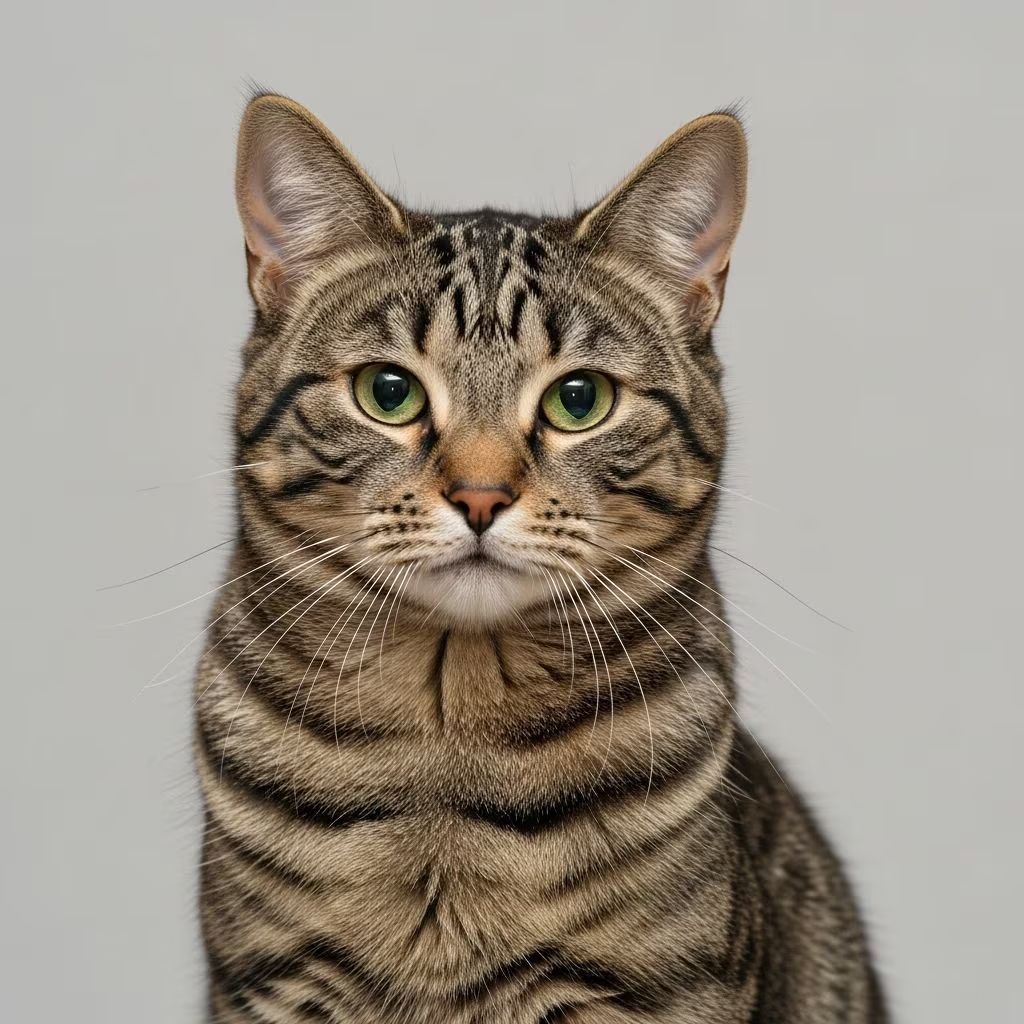
The European Shorthair stands out as a resilient, medium-to-large feline breed originating from Europe’s working landscapes, prized for its muscular frame and versatile personality. These cats blend hunting prowess with family-friendly traits, making them suitable for diverse living situations.
Origins and Historical Role
Emerging naturally across Europe, the European Shorthair developed from domestic cats that aided farmers by controlling rodent populations in barns and fields. Unlike selectively bred fancy cats, this breed represents the continent’s sturdy ‘common’ cat, later formalized by registries in the 1980s to preserve its traits amid purebred influxes.
Historically, these felines roamed rural areas, adapting to harsh climates through robust genetics. Their survival instincts honed a balanced physique ideal for agility and endurance, traits still evident today. Recognition by bodies like FIFe elevated their status from farm workers to pedigreed companions without altering core characteristics.
Physical Characteristics
European Shorthairs boast a solid, rectangular body with a broad chest, strong legs, and rounded paws suited for pouncing. Males often weigh 10-15 pounds, females 8-12 pounds, with heights around 9-11 inches at the shoulder.
| Feature | Description |
|---|---|
| Size | Medium to large; 80-100 cm head-to-tail |
| Weight | Males: 5-7 kg; Females: 4-6 kg |
| Head | Slightly rounded skull, prominent cheeks, straight nose |
| Ears | Medium-sized, wide at base, rounded tips (may have tufts) |
| Eyes | Large, round, set wide; green, amber, blue, or odd-eyed |
Their short, dense coat lies close to the body, glossy and low-shedding with minimal undercoat for easy maintenance. Colors span solids, tabbies, bicolors, and more—brindle tabby being common—but exclude pointed, sepia, mink, chocolate, lilac, cinnamon, or fawn patterns per standards.
Temperament and Behavior
Intelligent and loyal, European Shorthairs retain kitten-like playfulness lifelong, thriving on interactive toys and puzzles to channel their smarts. They form strong bonds with family, offering affectionate companionship while respecting personal space.
- Family-Friendly: Gentle with children and seniors; adaptable to busy or quiet homes.
- Social: Harmonizes with other cats, dogs, if introduced properly; shy initially with strangers.
- Hunter’s Drive: Instinctively stalks prey—keep small pets like rodents separate; excels at feathered toys.
- Independent Yet Devoted: Balances self-sufficiency with desire for human interaction.
These cats adjust swiftly to changes like moves or new pets, but early socialization curbs wariness. Boredom prompts mischief like scratching, so daily 15-20 minute play sessions prevent issues.
Ideal Living Environments
Versatile dwellers, European Shorthairs suit apartments with vertical spaces or homes with secure yards. Their outdoor heritage favors access to enclosed patios or catios for safe exploration.
In multi-pet homes, they integrate well with non-dominant animals but assert territory mildly. Not ideal for free-roaming due to traffic and predation risks—indoor life with enrichment mimics their natural urges effectively.
Grooming and Daily Care
Low-maintenance coats require weekly brushing to distribute oils and reduce loose hair. Self-grooming efficiency minimizes bathing needs.
- Nail Trims: Every 2-3 weeks to prevent overgrowth.
- Dental Care: Weekly brushing with cat-safe paste; annual vet checks.
- Bathing: Rare, only if soiled.
Litter training comes naturally; provide unscented, clumping litter in spacious boxes. Fresh water and quality diet support their active metabolism.
Nutrition Essentials
Fuel their energy with high-protein, balanced kibble or wet food tailored to age and activity. Adults need 200-300 calories daily, split into meals to curb obesity—a risk given their sturdy build.
| Life Stage | Daily Calories | Key Nutrients |
|---|---|---|
| Kitten | 200-250 | High protein, DHA for brain |
| Adult | 200-300 | Balanced protein/fat, taurine |
| Senior | 180-250 | Joint support, reduced calories |
Avoid free-feeding; monitor weight quarterly. Wet food aids hydration, vital for urinary health.
Health and Wellness
Robust genetics yield 15-20 year lifespans, but watch for hypertrophic cardiomyopathy (HCM), obesity, and dental issues. Annual vet exams, vaccinations, and parasite prevention are key.
- Common Concerns: Heart conditions (screen via echo); prone to ‘potbellies’ from overeating.
- Preventive Measures: Spay/neuter at 4-6 months; flea/tick control year-round.
Exercise via play maintains muscle tone; puzzles enhance mental acuity, staving off age-related decline.
Training Techniques
Smart and rule-learning, they respond to positive reinforcement. Use clickers for tricks like sit or high-five; litter and scratching post training succeeds via consistency.
Harness training enables safe outdoor walks, satisfying wanderlust. Redirect hunting to toys; ignore unwanted behaviors to discourage them.
Bringing Home Your European Shorthair
Select from reputable breeders verifying pedigrees or adopt mixes sharing traits. Kittens need safe rooms initially for bonding. Stock essentials: tree, toys, beds.
Puppy-proof by securing cords and plants; gradual introductions to family pets ensure harmony.
Fun Facts and Variations
- Resemble British Shorthairs but slimmer, more athletic.
- Eye colors harmonize with coats; odd-eyes add uniqueness.
- Excel in agility, reflecting barn-hunting past.
Frequently Asked Questions
Are European Shorthairs good with kids?
Yes, their patient, playful nature suits children when supervised.
Do they shed much?
Minimal; short coat sheds seasonally, manageable with brushing.
Can they live indoors only?
Absolutely, with ample play and perches simulating outdoors.
What’s their activity level?
Moderately high; daily interaction prevents boredom.
How do I choose a kitten?
Seek health-tested parents; observe socialization.
References
- European Shorthair Facts – Wisdom Panel™ Cat Breeds — Wisdom Panel. Accessed 2026. https://www.wisdompanel.com/en-us/cat-breeds/european-shorthair
- All about the common European cat: characteristics, feeding and care — Picart Petcare. 2022-07-12. https://picartpetcare.com/en/2022/07/12/gato-comun-europeo/
- Who Is the European Shorthair Cat Breed — Cat in a Flat. Accessed 2026. https://catinaflat.com/blog/who-is-the-european-shorthair-cat-breed
- The European Shorthair Cat Breed — Hill’s Pet Nutrition. Accessed 2026. https://www.hillspet.com/cat-care/cat-breeds/european-shorthair
- Well-Balanced European Shorthair: Nature & Care — Maxi Zoo. 2024-01-01. https://www.maxizoo.ie/magazine/cat/breed/european-shorthair/
- European Shorthair Cat Breed: Size, Appearance & Personality — Cats.com. Accessed 2026. https://cats.com/cat-breeds/european-shorthair
- European Shorthair Cat Breed Health and Care — PetMD. Accessed 2026. https://www.petmd.com/cat/breeds/european-shorthair



