

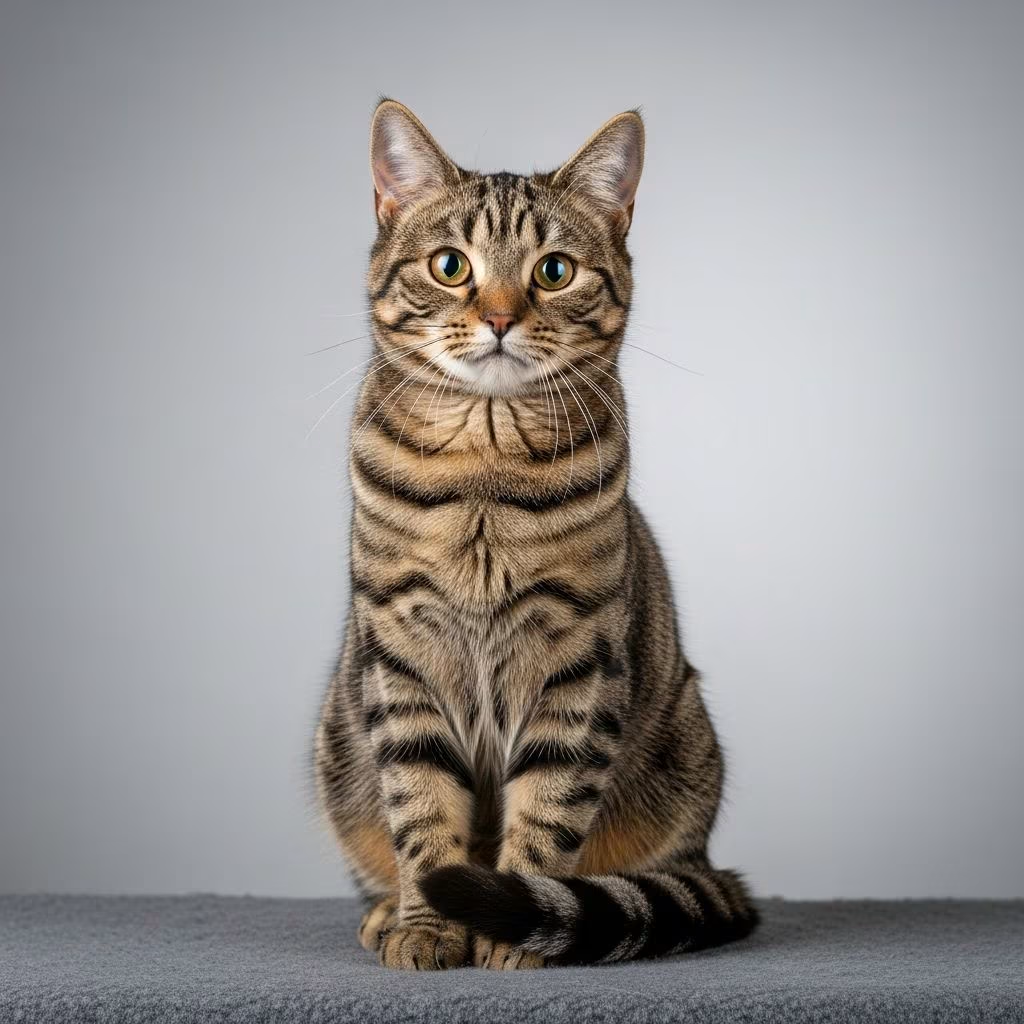
The European continent has produced some of the world’s most captivating feline companions, each with a unique story woven through centuries of history. From the rugged mountains of Scandinavia to the refined drawing rooms of France, European cat breeds embody the diverse landscapes and cultures that shaped them. These cats represent more than just pets; they are living connections to our shared past, domesticated through both deliberate breeding programs and natural selection in response to their environments.
Understanding European cat breeds requires looking beyond their striking appearances to explore the historical forces that created them. Unlike many breeds developed through intensive modern breeding programs, many European felines emerged naturally over centuries, adapting to the climates, cultures, and needs of their regions. This article explores the fascinating world of European cat breeds, their origins, distinguishing characteristics, and the roles they play in homes across the continent and beyond.
The Ancient Foundations: How Cats Arrived in Europe
The story of European cats begins long before formal breed standards or modern cat shows. Cat domestication likely began around 10,000 years ago in the Middle East, particularly in the Fertile Crescent region, though cats spread throughout Europe approximately 2,000 years ago, primarily through shipping and maritime trade. The Romans played a crucial role in this expansion, appreciating cats for their exceptional ability to control rodent populations in grain stores and cities. As Roman legions marched across Europe, they brought cats with them, establishing populations that would evolve into the breeds we recognize today.
The European Common Cat, also known as the European Shorthair, descended from crosses between the African Wildcat and the European Wildcat. This genetic foundation created a hardy, adaptable creature perfectly suited to European climates and human settlements. By the time formal breed recognition became important in the twentieth century, these cats had already established themselves as integral members of European households for centuries.
Defining Characteristics of European Cat Breeds
European cat breeds display remarkable diversity in appearance, yet many share common physical and behavioral traits shaped by their shared heritage and environmental adaptation.
Physical Attributes
European Shorthairs are medium-to-large cats with robust, muscular builds, well-developed chests, and sturdy legs that reflect their working heritage as hunters and rat-catchers. Their coats are glossy, dense, and close-lying with little undercoat, appearing in nearly all colors and patterns, though tabby (brindle) remains the most common coloration. These cats possess rounded eyes and medium-sized ears, giving them an alert yet approachable expression.
Other European breeds display more specialized physical characteristics. Norwegian Forest Cats are large, sturdy creatures adapted to harsh northern climates, while Turkish Angoras feature slim bodies, long legs, and silky coats that give them an elegant, graceful appearance. The Chartreux is known for its calm, thoughtful demeanor and distinctive appearance. These variations demonstrate how European geography and climate directly influenced breed development.
Temperamental Traits
European breeds generally exhibit temperaments forged through centuries of living alongside humans in working capacities. The European Common Cat is independent and intelligent while remaining affectionate with family members, to whom they feel strong attachment. However, these cats tend to be distrustful and shy with strangers, reflecting their selective socialization history. They possess strong hunting instincts but demonstrate remarkable capacity to adapt to household rules and learn coexistence protocols quickly.
Siberian cats are known for being friendly and social, often fitting comfortably into households with children and other animals, including friendly dogs. They maintain calm, balanced attitudes toward new people while enjoying family interaction. Norwegian Forest Cats are similarly adaptable and family-friendly, settling comfortably into homes with children or other pets, and handle new situations well with proper introductions.
Notable European Feline Breeds
The European Shorthair: Humanity’s Ancient Partner
The European Shorthair is a direct descendant of ancient Rome’s common domestic cat, making it one of Europe’s most historically significant breeds. This ancestor accompanied Roman soldiers to protect food supplies from rodents as they traveled across Europe. Known for their exceptional hunting skills, these cats were instrumental in controlling vermin populations in early settlements and on farms.
The breed developed naturally for hundreds of years without formal breeding rules. Swedish breeders created the first breed standard in the twentieth century, hoping to preserve the cats’ original Roman look. The Federation Internationale Féline recognized the European Shorthair in 1992, and it remains the national cat of Finland and very popular in Scandinavia. Today, the European Common Cat is the most common breed in European households, embodying the everyday elegance that defines many European families’ relationships with felines.
The Norwegian Forest Cat: Legend and Reality
The Norwegian Forest Cat appears in old Viking legends and stories, suggesting a long partnership with humans in northern regions. First recorded around 1000 A.D., these cats appear often in Russian folklore, woven into stories passed down for generations. The breed’s development is believed to result from natural selection rather than deliberate breeding. Vikings are believed to have brought Norwegian Forest Cats on their ships, where the cats likely kept rodents away from food stores during long sea journeys.
These large, sturdy cats naturally adapted to demanding northern climates over centuries. Life in cold climates influenced both their temperament and physical presence, creating a breed suited to survival in harsh conditions. Organized breeding programs in Norway helped restore their numbers after a serious decline during World War II, and the Norwegian Forest Cat holds the title of Norway’s official cat.
The Turkish Angora: Grace and Elegance
The Turkish Angora is a naturally occurring ancient breed originating in Ankara, Turkey, documented for hundreds of years. Early written records from France helped introduce these elegant cats to Europe. Turkish Angoras have slim bodies, long legs, and silky coats that give them a soft, graceful look. While white was historically the classic color, modern Turkish Angoras display many colors and patterns.
The Siberian Cat: Power and Personality
Siberian cats feel like creatures shaped by the land itself, sturdy, expressive, and quietly confident. These magnificent felines developed over centuries in rural Russia, naturally adapting to the region’s demanding environment. Their long history is reflected in Russian cultural traditions, where they feature prominently in folklore and stories.
The Chartreux: French Tradition
The Chartreux carries a calm, thoughtful air that sets it apart from other breeds, with history stretching back to at least the fifteenth century and early roots linked to Syria before arriving in France. Over time, the breed became closely associated with French life and culture. These distinctive cats represent the European tradition of refined companionship.
Historical Recognition and Modern Standards
The formalization of European cat breeds occurred relatively recently compared to their long histories. The European Bobcat or European Shorthair variety was not officially recognized by the International Cat Federation until 1982, despite the breed’s ancient origins. This delay reflects the historical reality that European cats were so common and widespread that formal standardization seemed unnecessary for centuries.
Breed recognition varied significantly across Europe and internationally. While European organizations like the Federation Internationale Féline established standards recognizing these breeds, no U.S. cat clubs currently recognize the European Shorthair, demonstrating how breed recognition varies by geographic region and organizational jurisdiction. This geographical variation in recognition reflects different attitudes toward breed documentation and the relative popularity of various breeds in different parts of the world.
Comparative Overview of European Breeds
| Breed | Origin Region | Size | Coat Type | Temperament |
|---|---|---|---|---|
| European Shorthair | Throughout Europe | Medium-Large | Short, dense, glossy | Independent, affectionate with family |
| Norwegian Forest Cat | Norway | Large | Long, double coat | Adaptable, family-friendly |
| Turkish Angora | Turkey | Medium | Long, silky | Graceful, intelligent |
| Siberian | Russia | Large | Long, thick double coat | Friendly, social, calm |
| Chartreux | Syria/France | Medium | Short, dense blue-grey | Calm, thoughtful, reserved |
The Role of European Cats in Modern Homes
Contemporary European cat breeds continue serving the roles their ancestors established centuries ago while adapting to modern household life. The strong hunting instincts that made European Shorthairs invaluable rat-catchers in medieval villages now manifest as playful engagement with toys and interactive games. Their capacity to adapt to household rules, established through generations of cohabitation with humans, makes them relatively straightforward companions for modern families.
The social nature of Siberian and Norwegian Forest Cats makes them particularly suited to homes with children and other pets. These breeds retained their natural friendliness toward humans while maintaining the independence necessary for cats living in challenging climates. Their calm, balanced approach to new people and situations reflects centuries of adaptation to changing human settlements and migration patterns.
Caring for European Cat Breeds
Proper care for European felines requires understanding their specific needs and heritage. Most European breeds require:
- Regular grooming: European cats with longer coats, such as Norwegian Forest Cats and Siberians, require more frequent brushing to maintain coat health and prevent matting.
- Mental stimulation: These intelligent, naturally curious cats benefit from environmental enrichment, puzzle feeders, and interactive play that engages their hunting instincts.
- Space for climbing: Cats with mountain and forest heritage, particularly Norwegian Forest Cats, require vertical spaces and climbing structures.
- Social interaction: While independent, European breeds remain attached to their families and benefit from regular, meaningful interaction and play.
- Proper nutrition: High-quality diets supporting their muscular builds and active lifestyles ensure optimal health and longevity.
FAQs About European Cat Breeds
What makes European cat breeds different from Asian or American breeds?
European breeds developed over centuries in response to specific continental climates and human settlement patterns. They evolved naturally rather than through intensive modern breeding programs, resulting in hardy, adaptable cats suited to European environmental conditions. Their temperaments reflect long histories as working cats rather than purely decorative companions.
Are European cat breeds good for families with children?
Many European breeds, particularly Siberian and Norwegian Forest Cats, are excellent family companions. They tend to be adaptable, friendly, and patient with children, though proper socialization from early kittenhood is essential for harmonious coexistence.
How large do European cat breeds typically grow?
European breeds vary considerably in size. European Shorthairs and Turkish Angoras are medium-sized, while Norwegian Forest Cats and Siberians are substantially larger, reflecting their northern heritage and the environmental advantages of larger size in cold climates.
What are the grooming requirements for European cat breeds?
Grooming needs depend on coat length. Short-haired European Shorthairs require minimal grooming, while long-haired breeds like Norwegian Forest Cats and Siberians benefit from several brushing sessions weekly to prevent matting and maintain coat health.
How long do European cat breeds typically live?
Most European breeds are hardy and live 12-17 years with proper care, though some individuals reach their early twenties. Their natural development and lack of extreme physical exaggeration typical of some modern breeds contributes to relatively good health and longevity.
The Future of European Cat Breeds
As global interest in cat breeds continues expanding, European felines are gaining recognition beyond their native continents. Organizations like the Federation Internationale Féline remain committed to preserving breed standards while maintaining the health and genetic diversity of these naturally developed breeds. The European Shorthair, once considered too common for formal recognition, now enjoys appreciation as a valuable breed connecting modern cat lovers to millennia of human-feline partnership.
The preservation of these breeds represents more than maintaining physical standards; it involves honoring the historical significance of cats that protected food supplies, controlled vermin, and provided companionship across centuries. As awareness grows regarding the importance of genetic diversity and natural breed development, European cats increasingly represent a valuable alternative to intensively bred modern varieties.
Conclusion
European cat breeds embody rich histories spanning from ancient Rome through medieval kingdoms to modern nation-states. These cats developed naturally over centuries, adapting to diverse European environments and establishing themselves as invaluable partners in human settlements. From the common European Shorthair found in households throughout the continent to the majestic Norwegian Forest Cat and elegant Turkish Angora, European breeds represent humanity’s longest partnership with felines outside Egypt.
Whether seeking a family companion, a working mouser, or a connection to ancient history, European cat breeds offer distinctive combinations of striking appearance, adaptable temperament, and proven resilience. Their continued popularity in Europe and growing international recognition reflect the enduring appeal of cats that evolved naturally alongside European civilization itself.
References
- All about the common European cat: characteristics, feeding and care — Picart Pet Care. 2022-07-12. https://picartpetcare.com/en/2022/07/12/gato-comun-europeo/
- European Shorthair Facts – Wisdom Panel™ Cat Breeds — Wisdom Panel. Accessed 2026. https://www.wisdompanel.com/en-us/cat-breeds/european-shorthair
- 7 Cat Breeds Known For Ancient Origins — World Animal Foundation. Accessed 2026. https://worldanimalfoundation.org/cats/cat-breeds-known-for-ancient-origins/
- The origins of cats — International Cat Care. Accessed 2026. https://icatcare.org/articles/the-origins-of-cats



