

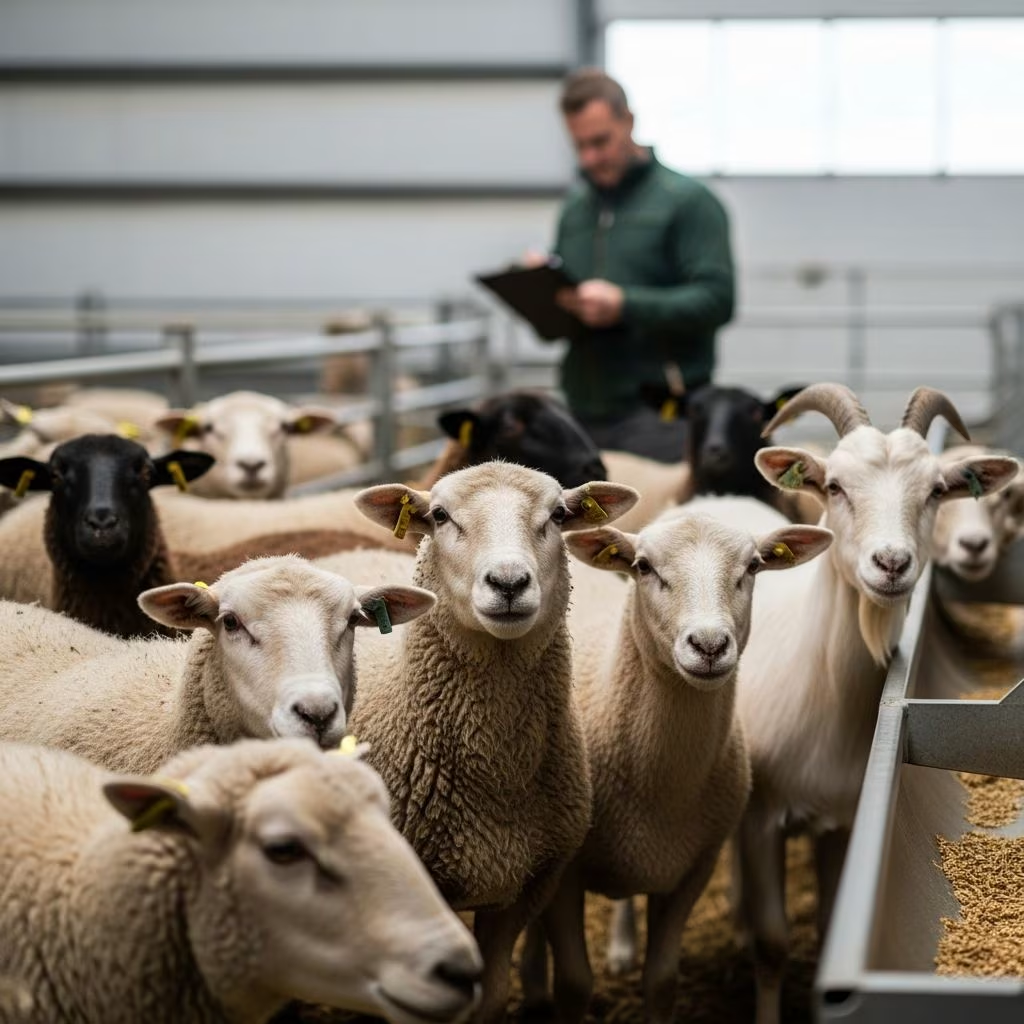
Sheep and goats, as seasonally polyestrous small ruminants, naturally exhibit peak breeding activity in fall due to shorter daylight hours. Hormonal interventions allow producers to control and synchronize estrus, facilitating artificial insemination (AI), out-of-season breeding, and uniform lambing or kidding schedules. This approach improves labor efficiency, genetic selection, and overall herd productivity by overriding natural seasonal anestrus.
Understanding the Reproductive Physiology of Small Ruminants
The estrous cycle in sheep averages 17 days (range 14-19 days), with estrus lasting 24-36 hours and ovulation occurring near the end. In goats, cycles average 21 days (18-24 days), estrus 36 hours (12-48 hours), influenced by breed, season, and male presence. Key hormones drive this cycle: GnRH from the hypothalamus triggers LH and FSH release from the pituitary; FSH stimulates ovarian follicle growth; estrogen from dominant Graafian follicles induces heat; post-ovulation, LH forms the corpus luteum producing progesterone to maintain pregnancy or suppress cycling via negative feedback.
Seasonality stems from melatonin, produced by the pineal gland during long nights, boosting GnRH and initiating cycles. Shortening nights in spring reduce melatonin, leading to anestrus. Some breeds like Dorper sheep cycle year-round in tropical climates.
- GnRH: Stimulates LH/FSH production.
- FSH: Promotes follicle development, enabling multiple ovulations in goats.
- Estrogen: Triggers sexual receptivity.
- Progesterone: Supports gestation, inhibits cycle progression.
- LH: Induces ovulation and corpus luteum formation.
Why Synchronize Estrus? Benefits for Modern Farming
Synchronization condenses breeding into a short window, easing detection of heat, timing AI, and managing large groups. Dairy goat operations benefit from out-of-season kidding to stabilize milk supply; meat producers gain from higher conception rates and litter sizes via superovulation. Non-pharmacological aids like the male effect—introducing a novel buck/ram after isolation—advance cycling and partial synchronization during transitions. Nutritional flushing (increased energy pre-breeding) boosts ovulation rates.
Progesterone-Based Protocols: The Foundation of Synchronization
Exogenous progesterone mimics the luteal phase, suppressing estrus until withdrawal, then synchronizing it. Common devices include intravaginal sponges with fluorogestone acetate (FGA) or medroxyprogesterone acetate (MAP) inserted for 9-19 days, or CIDR (controlled internal drug release) inserts for 5-14 days. Shorter protocols (5-7 days) prevent progesterone decline, improving synchrony.
Post-removal, estrus occurs 24-48 hours later. To enhance ovulation, inject PMSG (pregnant mare serum gonadotropin, eCG) or FSH 48 hours before removal, or hCG/PMSG combos (e.g., PG-600) at removal for timed AI.
| Protocol | Duration | Additives | Estrus Onset | Best Use |
|---|---|---|---|---|
| FGA/MAP Sponge | 12-14 days | PMSG 400-600 IU at removal | 36-48 hrs | Seasonal/Anestrus |
| CIDR Short | 5-7 days | hCG 100-200 IU day 0 | 24-36 hrs | Timed AI |
| Norgestomet Implant | 14 days | FSH pre-removal | 48 hrs | Superovulation |
PGF2α and Luteolysis Methods for Cyclic Animals
Prostaglandin F2α (PGF2α) or analogs like cloprostenol cause corpus luteum regression (luteolysis), effective only in cycling animals with a functional CL. Single doses induce heat in 2-5 days; for tighter synchrony, administer two doses 10-11 days apart (covering cycle variability), then detect heat via AM-PM rule (breed morning heats PM, evening heats next AM) for 7 days.
Not suitable for anestrus due to absent CLs. Combine with progestagens for year-round use.
Out-of-Season Breeding: Overcoming Anestrus
Anestrus limits production; solutions mimic short days. Melatonin implants or feed (18-36 mg/doe) induce cycling, especially with light reduction. Progestagen + eCG works in anovular does/ewes, unlike PGF2α. The male effect: Isolate females 3+ weeks, introduce teaser males for pheromone-induced ovulation waves, advancing season by weeks.
Advanced Techniques: Male Effect and Nutrition
The “ram/buck effect” leverages pheromones for LH surges, ovulations in 40-60% of anestrus females within days, followed by synchronized heats. Enhance with nutrition: Flush with 20-30% extra energy 2-3 weeks pre-intro for higher ovulation. Zeranol (growth implant, extra-label) aids, but pharmaceuticals dominate.
Practical Protocols Comparison
| Method | Applicability | Synchrony Tightness | Conception Rate | Cost/Complexity |
|---|---|---|---|---|
| PGF2α Double Dose | Cyclic only | Moderate (7-day window) | High | Low |
| Progestagen + eCG | Any season | Tight (48 hrs) | 70-90% | Medium |
| Melatonin + Male Effect | Anestrus | Variable | Moderate | Low |
| CIDR + hCG | Timed AI | Very tight | 80%+ | Medium-High |
Data adapted from studies showing 80-90% synchrony with combined protocols.
Considerations for Implementation: Safety and Regulations
Extra-label use requires vet oversight; FDA-approved for cattle/swine often adapted. Monitor residues: Observe withdrawal (e.g., 7-14 days pre-slaughter). Handle sponges hygienically to avoid infections. Breed/nutrition affects response; test small groups first.
Frequently Asked Questions (FAQs)
What is the best protocol for goats in anestrus?
Use CIDR 7 days + PG-600 at removal for estrus in 48 hours, supporting fixed-time AI.
Can synchronization increase litter size?
Yes, eCG/FSH induces superovulation, raising twins/triplets by 20-50%.
How does the male effect work?
Pheromones trigger LH pulses; isolate 3 weeks, introduce novel males for 50% ovulation rate.
Is PGF2α safe for pregnant animals?
Only effective post-implantation; avoid early pregnancy to prevent abortion.
What about sheep vs. goats differences?
Sheep respond better to male effect; goats need higher eCG doses for anestrus.
Future Directions in Reproductive Management
Ongoing research optimizes doses for tighter AI windows, reduces costs via nutrition-male combos, and explores gene editing for year-round breeders. Integrating tech like estrus monitors enhances success.
(Word count: 1678)
References
- Current concepts in synchronization of estrus: Sheep and goats — Journal of Animal Science. 1999. https://academic.oup.com/jas/article-abstract/77/suppl_E/1/4625680
- The Estrous Cycle and Seasonality in Sheep and Goats — LSU AgCenter. 2016. https://www.lsuagcenter.com/profiles/bneely/articles/page1593707272607
- Synchronization of Estrus in Goats — MSD Veterinary Manual. 2026. https://www.msdvetmanual.com/management-and-nutrition/management-of-reproduction-goats/synchronization-of-estrus-in-goats
- Breeding Sheep and Goats: How to Use Hormones to Control Timing! — YouTube (Extension Video). 2023. https://www.youtube.com/watch?v=UXfnEFKxJKs
- Hormonal control of reproduction in small ruminants — PubMed. 2012. https://pubmed.ncbi.nlm.nih.gov/22325928/



