

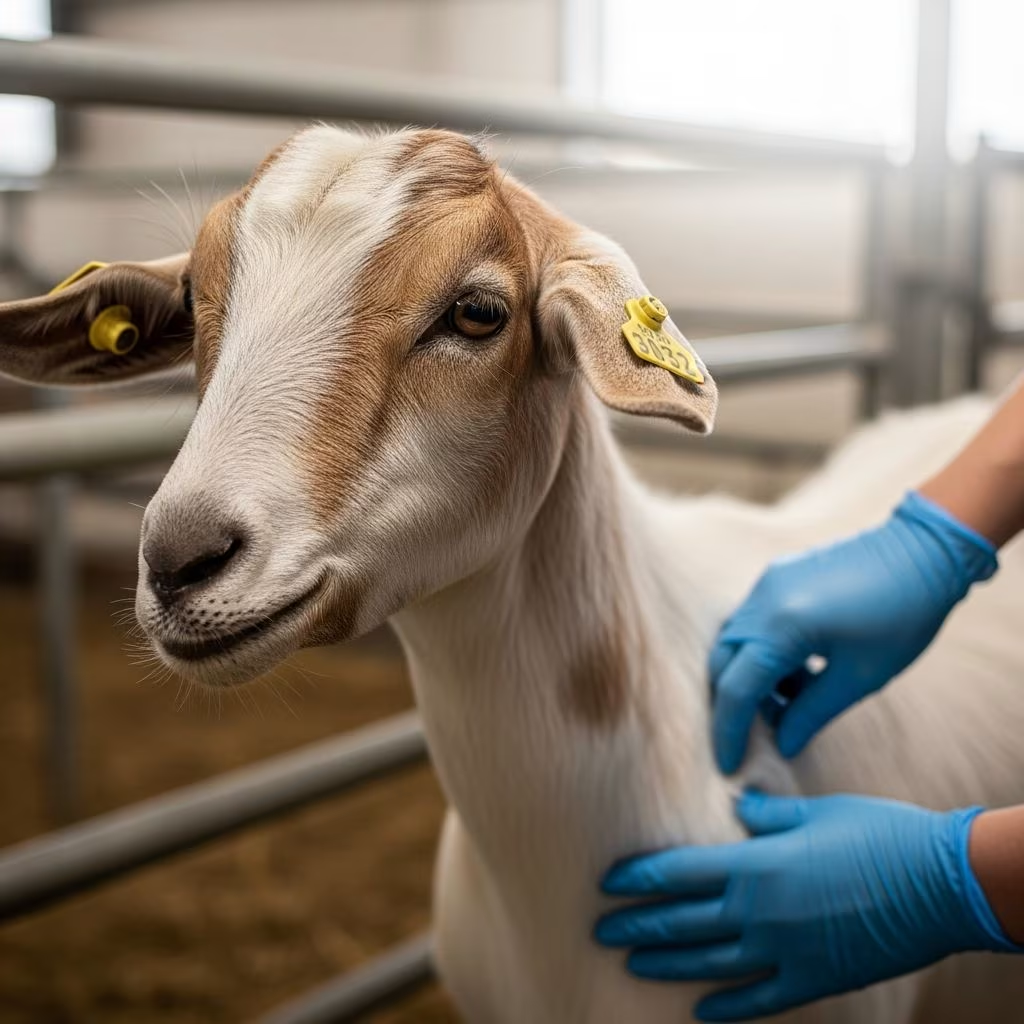
Coordinating the reproductive cycles of female goats, known as does, allows farmers to predict and manage kidding seasons with precision. This practice, called estrus synchronization, aligns heat periods across a herd, facilitating uniform births, easier labor management, and targeted genetic improvements through artificial insemination.
Why Synchronize Estrus in Goat Herds?
Goats naturally exhibit seasonal breeding, with estrus peaking in fall under shortening daylight. Synchronization overrides this by using hormones to mimic or manipulate the estrous cycle, typically 18-24 days long. Benefits include concentrated kidding for market timing, reduced monitoring needs, and compatibility with advanced breeding tools like timed AI, where ovulation is precisely controlled without daily heat checks.
In meat production, synchronized kidding matches peak demand periods, while dairy operations align freshening with high milk price seasons. Research shows these methods increase pregnancy rates and kid viability when protocols are tailored to breed and health status.
Core Hormonal Mechanisms in Goat Reproduction
The estrous cycle involves progesterone maintaining pregnancy-like states and a luteolytic drop triggering heat. Key hormones include:
- Prostaglandin F2α (PGF2α): Destroys the corpus luteum, dropping progesterone and inducing estrus in cyclic does.
- Progestogens: Via devices like CIDRs, sustain progesterone levels to suppress cycles.
- Gonadotropins (eCG/PMSG, GnRH): Stimulate follicle development and ovulation.
These mimic natural signals, with protocols combining them for 80-90% synchronization rates in healthy herds.
Popular Synchronization Protocols for Goats
Several evidence-based regimens exist, varying by farm scale and breeding goals. Below are detailed breakdowns.
Intra-Vaginal Progestogen Devices (CIDR-Based)
CIDRs, progesterone-impregnated sponges inserted for 9-12 days, create artificial luteal phases. Removal causes a progesterone crash, prompting estrus in 24-72 hours. Often paired with PGF2α pre-insertion and eCG post-removal for ovulation boost.
| Day | Action | Purpose |
|---|---|---|
| 0 | Insert CIDR + PGF2α injection | Lyze any existing corpus luteum |
| 9-12 | Remove CIDR + eCG injection | Trigger heat and ovulation |
| 10-14 post-removal | Breed (natural or AI) | Capture synchronized estrus |
Field trials report 50-70% pregnancy rates with this method, higher in Boer does. Note: CIDRs are off-label in goats in the US.
Double PGF2α Injections
Simple for smaller herds: Two PGF2α doses 10-11 days apart target cycling does. Heat follows 2-5 days after the second shot.
- Cost-effective for natural service.
- Best for does past peak anestrus.
- Combine with buck exposure for 85% response.
NC Synch for Timed Artificial Insemination
Developed at North Carolina State University, this ovulation synchronization skips heat detection. It adapts cattle Ov-Synch for goats.
| Day | Treatment |
|---|---|
| 0 | PGF2α |
| 7 | GnRH agonist |
| 14 | PGF2α |
| 17 (72h later) | GnRH + Timed AI |
Studies on Boer does showed 10-30% pregnancy rates, improving with buck contact pre-treatment. Ideal for introducing superior genetics without semen storage.
Male Effect and Non-Hormonal Aids
Introducing novel bucks post-isolation induces 60-80% estrus within days via pheromones. Enhance with light manipulation (16:8 long days) or short-day preconditioning. Useful for organic farms avoiding hormones.
Implementing Synchronization on Your Farm
Success hinges on preparation. Select does 6+ weeks post-kidding, body condition score 2.5-3.5, and free of disease. Vaccinate against reproductive pathogens and deworm.
Step-by-Step Breeding Calendar
- Weeks 1-2 Pre-Treatment: Isolate does, provide high-plane nutrition (16% protein).
- Treatment Days: Administer per protocol; use teaser bucks for detection.
- Breeding Window: AI at fixed times or natural mate 12-24h post-heat signs.
- Post-Breeding: Confirm pregnancy via ultrasound day 30 or BioPRYN blood test.
Track via apps for reminders, reducing errors.
Optimizing Heat Detection
Signs include vulvar swelling, mucus, bleating, tail wagging, and lordosis (standing for mounting). Use vasectomized teasers in paddocks; paint rumps for visual confirmation. Synchronization sharpens these, but 10-20% variability persists.
Protocol Comparison for Different Operations
| Protocol | Herd Size | Cost | Pregnancy Rate | Best For |
|---|---|---|---|---|
| CIDR + eCG | Medium-Large | Medium-High | 50-70% | Timed AI, Uniform kidding |
| Double PGF2α | Small | Low | 60-85% | Natural breeding |
| NC Synch | Any | Medium | 10-50% | Fixed-schedule AI |
| Male Effect | Small | Low | 60-80% | Organic/low-input |
Challenges and Troubleshooting
Common issues: Poor response in anestrous does (use progestogen priming), breed differences (Boers respond better), or heat stress reducing fertility. Adjust doses: 7.5-15mg PGF2α IM, 400-600 IU eCG. Monitor for injection site reactions; rotate protocols seasonally.
Pregnancy rates vary 10-70% per study; refine via records of non-responders.
Benefits for Profitable Goat Farming
- Labor Savings: Group kidding eases monitoring.
- Genetic Progress: AI accesses top sires.
- Market Alignment: Kids ready for holidays.
- Herd Health: Concentrated care periods.
Commercial herds see 20-30% productivity gains.
Frequently Asked Questions (FAQs)
Can I synchronize goats year-round?
Best in breeding season; off-season needs melatonin implants for anestrus breakthrough.
Are hormones safe for goat meat?
Withdrawals apply; FDA-approved for sheep analogs, but consult vets for goats.
How to choose between AI and natural breeding?
AI for genetics, natural for simplicity post-sync.
What if synchronization fails?
Re-treat non-responders; check nutrition and health.
Cost per doe for CIDR protocol?
$10-20 USD, offset by higher uniformity.
Future Directions in Goat Breeding Tech
Emerging: Gene-edited bucks for stronger male effects, AI robotics, and customized protocols via wearables tracking cycles. Research focuses on cost-effective, label-approved drugs for goats as a ‘minor species’.
References
- How to Synchronize Estrus(Heat) in Goats for Efficient Breeding — Bivatec. 2023. https://www.bivatec.com/blog/how-to-synchronize-estrus-in-goats
- An update on estrus synchronization in goats: a minor species — PubMed (Theriogenology). 2004-10-01. https://pubmed.ncbi.nlm.nih.gov/15471808/
- Estrus Synchronization for Timed Artificial Insemination in Goats — Goats Extension (NCSU). 2023. https://goats.extension.org/estrus-synchronization-for-timed-artificial-insemination-in-goats/
- Artificial Insemination and Embryo Transfer in Goats — NCSU Small Ruminants Extension. 2015-06. https://smallruminants.ces.ncsu.edu/wp-content/uploads/2015/06/Artificial-Insemination-and-Embryo-Transfer-in-Goats.pdf
- Synchronization of Estrus in Goats — Merck Veterinary Manual. 2023. https://www.merckvetmanual.com/management-and-nutrition/management-of-reproduction-goats/synchronization-of-estrus-in-goats



