

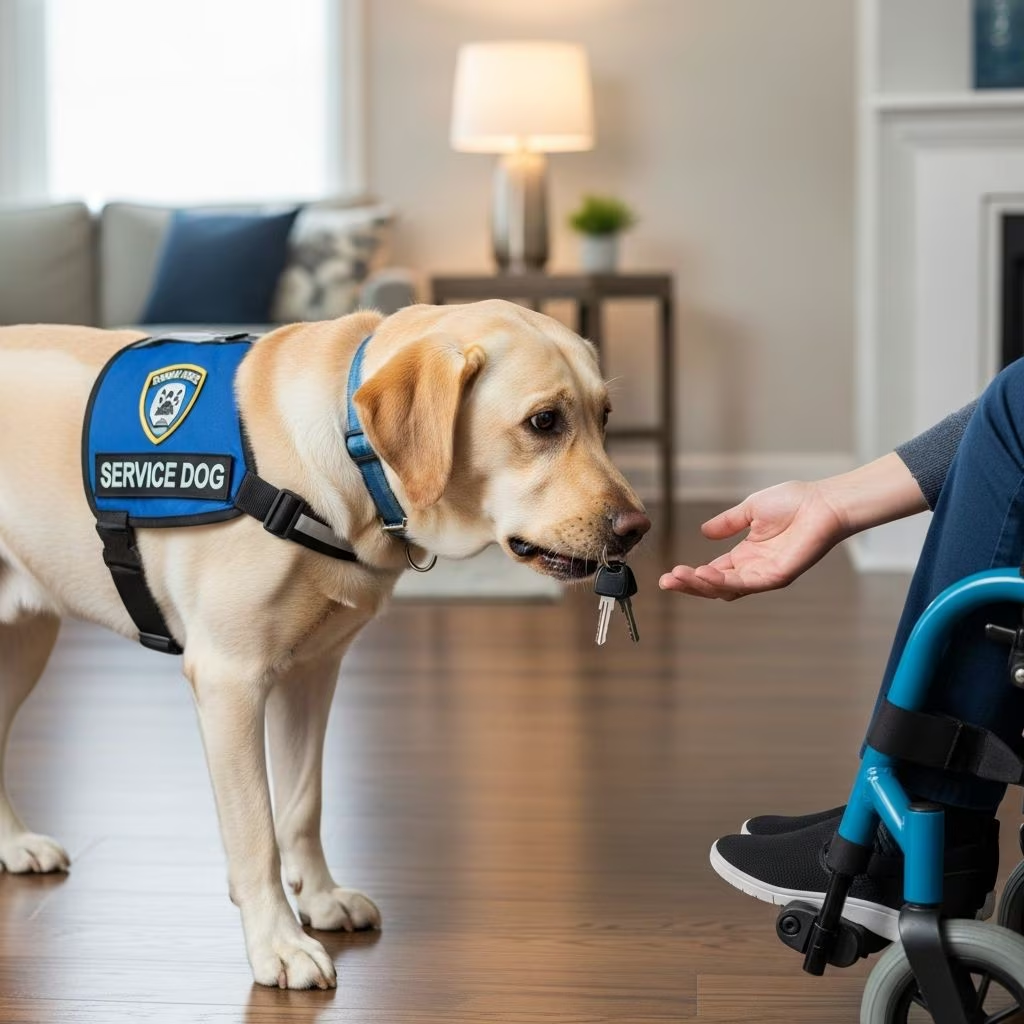
Service dogs transform lives by performing targeted tasks tailored to their handler’s unique needs. These highly trained animals assist with physical, medical, sensory, and psychological challenges, promoting greater autonomy and safety in everyday situations. Understanding the scope of these tasks reveals the depth of their partnership with humans.
Understanding the Role of Service Dogs
Service dogs are distinguished from pets or emotional support animals by their ability to execute specific, trained responses to a handler’s disability. Under laws like the Americans with Disabilities Act, they must perform work or tasks directly related to mitigating the effects of a disability. This includes everything from fetching items to detecting health crises before they escalate.
Training emphasizes reliability in public settings, with dogs maintaining calm demeanor amid distractions. Handlers often customize tasks based on personal requirements, ensuring the dog becomes an indispensable extension of their capabilities.
Mobility and Physical Support Tasks
For individuals with limited mobility, service dogs provide crucial physical assistance. These dogs are trained to act as stabilizers, retrievers, and manipulators of objects, reducing reliance on caregivers or adaptive equipment.
- Balance and Bracing: Dogs position themselves to counterbalance handlers during standing, walking, or stair navigation, preventing falls.
- Wheelchair Assistance: Pulling manual wheelchairs forward or maneuvering them in tight spaces.
- Item Retrieval: Picking up dropped objects like keys, phones, or canes from floors or shelves.
- Door and Drawer Operation: Using paws or noses to open or close doors, cabinets, and refrigerators.
- Carrying Loads: Transporting bags, laundry, or groceries in packs or saddlebags to designated spots.
These tasks demand strong, steady breeds like Labrador Retrievers or Golden Retrievers, conditioned for endurance and precision.
Medical Alert and Response Tasks
Many service dogs excel at detecting physiological changes imperceptible to humans. Through scent and behavioral cues, they alert to conditions like low blood sugar or impending seizures, enabling timely interventions.
| Condition | Dog’s Alert Method | Follow-Up Action |
|---|---|---|
| Diabetes (Hypoglycemia) | Paw on handler’s leg or insistent nudge | Retrieve glucose kit or guide to safety |
| Seizures | Lie across handler or bark for help | Summon assistance or block from harm |
| Heart Issues | Persistent staring or pawing chest | Fetch medication or call emergency |
| Allergies | Sniff and alert to contaminated food | Retrieve EpiPen or avoid allergen |
Such capabilities stem from rigorous scent discrimination training, often achieving over 90% accuracy in controlled tests.
Sensory Assistance for Visual and Hearing Impairments
Guide dogs for the visually impaired navigate obstacles, while hearing alert dogs bridge auditory gaps. These roles require acute environmental awareness.
Visual Guidance
- Leading around crowds, traffic, or elevation changes like stairs and curbs.
- Locating specific destinations, such as exits, seats, or vehicles.
- Stopping at dangers, like overhanging branches or drop-offs.
Hearing Alerts
- Notifying of doorbells, alarms, phones, or name calls via pawing or nose nudges.
- Guiding to sound sources, such as a crying baby or knocking visitor.
- Waking handler during nighttime emergencies like smoke detectors.
These dogs undergo months of orientation training in varied urban and rural settings to ensure seamless integration.
Psychiatric and Emotional Regulation Tasks
Psychiatric service dogs address mental health disabilities like PTSD, anxiety, or autism by interrupting harmful patterns and providing grounding.
- Deep Pressure Therapy: Leaning in or lying across to calm during panic or meltdowns.
- Behavior Interruption: Pawing or nudging to halt repetitive actions or self-harm urges.
- Grounding Techniques: Creating a barrier in crowds or retrieving comfort items like water.
- Social Facilitation: Encouraging interactions by positioning near others without invading space.
Smaller breeds like Poodles suit these discreet tasks, focusing on subtle cues from handler body language.
Daily Living and Household Management Tasks
Beyond medical aid, service dogs streamline routines, from laundry to waste disposal, fostering household independence.
- Depositing trash or recyclables into bins.
- Loading/unloading washers and dryers.
- Placing dishes in sinks or toys in bins.
- Operating light switches, pedals, or elevator buttons with paws.
- Delivering items between rooms or to specific people.
These utility tasks build on basic retrieval skills, progressing to complex sequencing like fetch, carry, deposit.
Training Essentials for Service Dog Tasks
Effective training combines positive reinforcement, consistency, and public access proofing. Start with foundational obedience—sit, stay, heel—before task-specific drills.
- Foundation Skills: Impulse control, targeting (nose/paw), and reliable recalls.
- Task Breakdown: Shape behaviors incrementally, e.g., nose-touch to full door open.
- Distraction Proofing: Practice in malls, parks, and vehicles.
- Handler Bonding: Ensure dog responds solely to handler cues.
- Certification: While not federally required, organizations like IAADP set standards.
Professional programs pair dogs with handlers for customized training, often spanning 1-2 years.
Legal Rights and Public Access
In the U.S., service dogs enjoy public access rights without fees or exclusions, provided they remain under control and task-trained. Handlers need not prove disability, but businesses may ask two questions: (1) Is it a service dog? (2) What task does it perform?
Violations prompt complaints to the DOJ. Internationally, rules vary, but many nations recognize similar protections.
Choosing and Maintaining a Service Dog
Select breeds with suitable temperament, health, and drive. Ongoing maintenance includes vet care, mental stimulation, and retraining to sustain task proficiency. Handlers report 20-30% higher life satisfaction with service dogs.
Frequently Asked Questions (FAQs)
What qualifies as a service dog task?
A task must directly mitigate a disability, distinguishing service dogs from pets. Examples include alerting to seizures or providing mobility support, not mere companionship.
Can any dog be trained for service work?
No, candidates need stable genetics, high trainability, and resilience. Common breeds include Labs, Goldens, and Shepherds.
How long does training take?
Typically 1-2 years, including public access manners and advanced tasks.
Are service dog vests required?
No, but they signal status and aid control.
What if my service dog misbehaves in public?
Handlers are responsible; exclusion is allowed for undisciplined dogs.
Benefits and Impact on Handlers
Service dogs reduce hospitalizations, boost employment rates, and enhance social engagement. Studies show decreased medication needs and improved emotional resilience. Their bond fosters profound mutual trust, redefining disability management.
References
- IAADP Minimum Training Standards for Public Access: Tasks Performed by Guide, Hearing and Service Dogs — International Association of Assistance Dog Partners. Accessed 2026. https://iaadp.org/membership/iaadp-minimum-training-standards-for-public-access/tasks-performed-by-guide-hearing-and-service-dogs/
- List of Service Dog Tasks — Putnam Service Dogs, Inc. Accessed 2026. https://www.putnamservicedogs.org/blog/list-of-service-dog-tasks/
- A List of All Service Dog Tasks — Service Dog Certifications. Accessed 2026. https://www.servicedogcertifications.org/service-dog-tasks/
- Service Dog Tasks — Hearts of Gold, West Virginia University. Accessed 2026. https://heartsofgold.wvu.edu/service-dogs/training-methods/service-dog-tasks
- Work and Task List — Psychiatric Service Dog Partners. Accessed 2026. https://www.psychdogpartners.org/resources/work-tasks/work-task-list



