

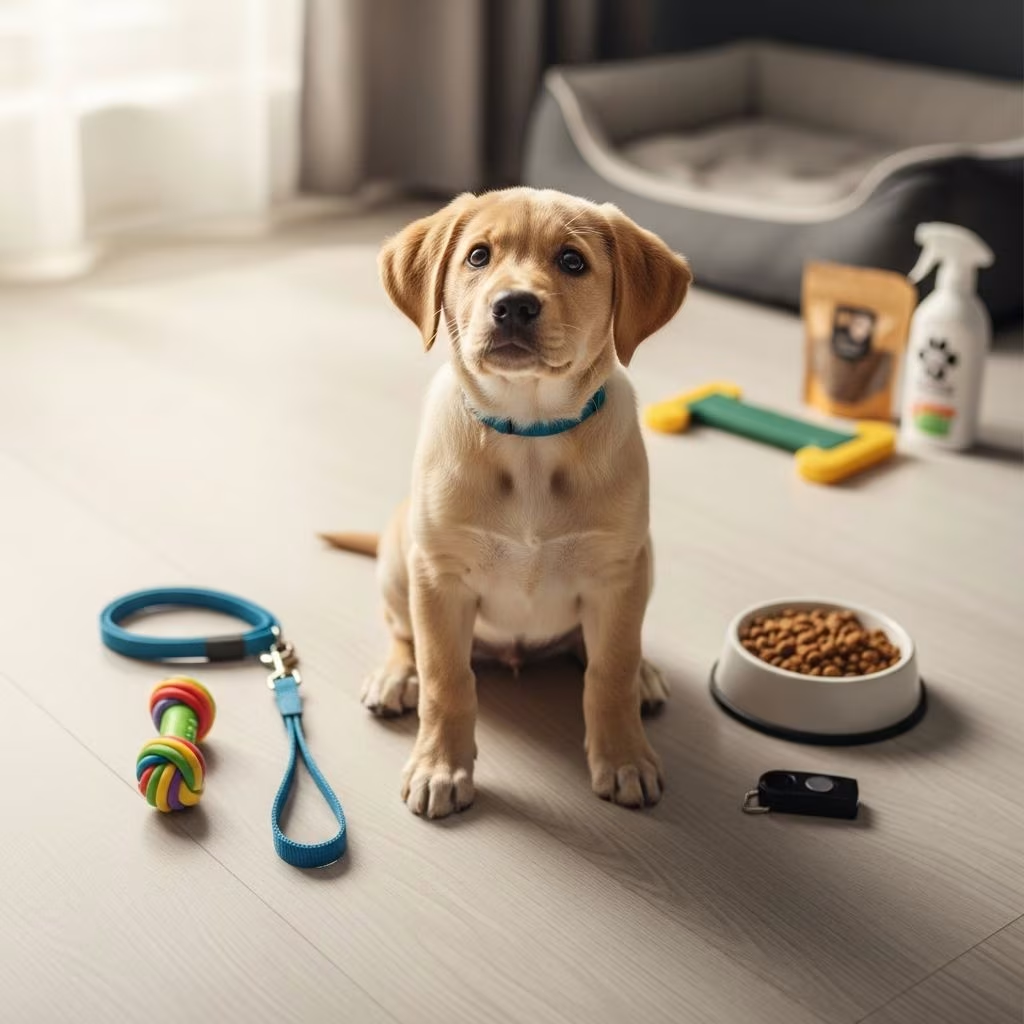
Bringing a new puppy into your home marks the start of an exciting journey filled with learning and bonding. Early training establishes good habits, ensures safety, and fosters a harmonious relationship between you and your furry friend. This guide outlines proven strategies drawn from veterinary and training expertise to help you navigate the essentials.
Why Begin Training Early
Puppies are sponges for new experiences from birth, absorbing lessons that shape their adult behavior. Starting training immediately helps prevent unwanted habits and builds confidence. According to veterinary guidelines, handling and basic exposure from the earliest weeks promote healthy development and reduce future anxiety. Delaying can lead to ingrained issues like fearfulness or poor impulse control, making correction harder later.
Focus on short, daily sessions to match a puppy’s attention span, which is typically 5-10 minutes for young ones. Consistency across family members reinforces rules, while positive methods strengthen trust without fear.
Core Principles of Effective Puppy Training
Success hinges on a few key principles supported by animal behavior science.
- Positive Reinforcement: Reward desired actions with treats, praise, or play to encourage repetition. This method outperforms punishment, avoiding long-term stress or aggression.
- Consistency: Use the same cues and responses every time. Inconsistent signals confuse puppies and slow progress.
- Short Sessions: Keep practices brief to maintain engagement. Aim for multiple 5-minute slots daily, especially during mealtimes when motivation is high.
- Socialization: Expose puppies safely to people, sounds, and environments between 3-14 weeks to build adaptability.
Housebreaking Your Puppy
One of the first milestones is teaching bladder and bowel control, typically achievable by 4-6 months with diligence. Establish a routine: feed at set times, take outside frequently (every 1-2 hours for young pups), and praise successes immediately.
Supervise indoors using baby gates or leashes to prevent accidents. Clean mishaps with enzymatic cleaners to eliminate scents that attract repeats. Signs of readiness include circling or sniffing—rush outside then. Track progress with a potty log to identify patterns.
| Age | Potty Breaks Frequency | Tips |
|---|---|---|
| 8-12 weeks | Every 1-2 hours + after meals/naps | Use crate for confinement; puppies avoid soiling sleeping areas. |
| 3-6 months | Every 2-4 hours | Increase freedom gradually; reward outdoor elimination. |
| 6+ months | 3-5 times daily | Nighttime hold improves; transition to bell-ringing for alerts. |
Mastering Foundational Obedience Commands
Basic cues form the bedrock of communication. Teach one at a time in distraction-free zones, progressing to busier settings.
Teaching ‘Sit’
The simplest starter command builds impulse control. Hold a treat above the puppy’s nose, move it back over their head saying ‘sit.’ Their rear drops naturally—reward instantly. Practice before meals or doors. Within days, most pups respond reliably.
Perfecting ‘Down’
From a sit, lure with a treat to the ground between paws, saying ‘down.’ Gently guide if needed, praising contact. This calms energetic pups and pairs well with ‘sit’ for routines.
Recall with ‘Come’
Vital for safety, start indoors: call name + ‘come’ enthusiastically, rewarding approach. Never chase—make coming fun. Advance to longer distances and mild distractions.
‘Stay’ for Self-Control
From sit or down, say ‘stay,’ step back briefly, then return with praise. Build duration and distance gradually. Combine with ‘come’ for sequences.
Leash Manners and ‘Heel’
Introduce collar/leash early. Walk in circles indoors, rewarding side-positioning. Outdoors, stop when pulling—resume on slack. Tiny steps prevent forging ahead.
Crate Training for Security and Routine
A crate mimics a den, aiding housebreaking and alone-time comfort. Select one fitting the puppy’s adult size with divider. Feed meals inside, toss treats randomly, and use for naps. Never as punishment—aim for voluntary entry.
Practice door protocols: sit before exit to teach patience. Overnight crating builds bladder control. Most pups adapt in 1-2 weeks with positivity.
Socialization and Preventing Fear
The critical window (3-16 weeks) is prime for positive exposures. Arrange puppy classes post-vaccinations for controlled play. Invite gentle visitors, expose to household noises, and short car rides. Note reactions—counter fear with treats.
Aim for 100+ varied experiences. Undersocialized pups risk reactivity; balanced ones thrive anywhere.
Addressing Common Challenges
- Biting/Chewing: Redirect to toys; yelp dramatically for mouthing. Bitter sprays deter furniture.
- Jumping: Turn away, reward four-on-floor. Teach ‘off’ by luring down.
- Pulling on Leash: Frequent stops and treats for heel position.
Patience is key—regression happens during teething or growth spurts.
Training Timeline by Age
Structure efforts around developmental stages for optimal results.
| Age Range | Focus Areas | Session Length |
|---|---|---|
| 7-12 Weeks | Name recognition, sit, crate intro, potty basics | 3-5 min, 3x/day |
| 12-16 Weeks | Come, down, leash walking, socialization | 5-10 min, 4x/day |
| 4-6 Months | Stay, heel, impulse control (wait at doors/bowls) | 10-15 min, 3x/day |
| 6-12 Months | Distraction-proof commands, loose leash, leave-it | 15 min, 2-3x/day |
Tools and Resources for Success
High-value treats (soft, smelly), clicker for precise timing, sturdy leash/harness. Enroll in AKC-approved classes for group practice. Track via apps logging sessions and milestones.
Frequently Asked Questions
When should I start training my puppy?
Immediately upon arrival, even at 8 weeks, with gentle handling and name games.
What if my puppy doesn’t listen?
Reduce distractions, shorten sessions, ensure rewards motivate. Consistency trumps repetition.
Is crate training cruel?
No, when introduced positively—it’s a safe haven mimicking natural dens.
How long until my puppy is trained?
Basics in weeks; mastery by 1 year with daily practice.
Should I use punishment?
Avoid it—positive methods yield better, lasting results without fear.
Advanced Tips for Lifelong Learning
Once basics solidify, layer in ‘leave it’ for dropped items, ‘place’ for settling on a mat, and fun tricks like spin. Proof in real-world scenarios: parks, visitors. Adolescence (6-18 months) tests gains—double down on rewards.
Monitor health; spay/neuter timing affects focus. Professional trainers help stubborn cases.
References
- Puppy Training Guide: How and When To Start — PetMD. 2023. https://www.petmd.com/dog/general-health/when-start-training-puppy
- Complete Puppy Training Schedule by Age — The Puppy Academy. 2020-08-24. https://www.thepuppyacademy.com/blog/2020/8/24/complete-puppy-training-schedule-by-age
- Basic Training for Puppies — PDSA. N/A. https://www.pdsa.org.uk/pet-help-and-advice/looking-after-your-pet/puppies-dogs/basic-training-for-puppies
- Your Guide to Mastering Basic Puppy Training — Chewy. N/A. https://www.chewy.com/education/dog/new-dog/basic-puppy-training
- Puppy Training Timeline — AKC. N/A. https://www.akc.org/expert-advice/training/puppy-training-timeline-teaching-good-behavior-before-its-too-late/
- 7 Best Dog Training Tips for Beginners — The Dog Kennel Collection. N/A. https://www.thedogkennelcollection.com/blog/dog-training-tips-for-beginners/
- Puppy Behavior and Training: Training Basics — VCA Animal Hospitals. N/A. https://vcahospitals.com/know-your-pet/puppy-behavior-and-training-training-basics



