

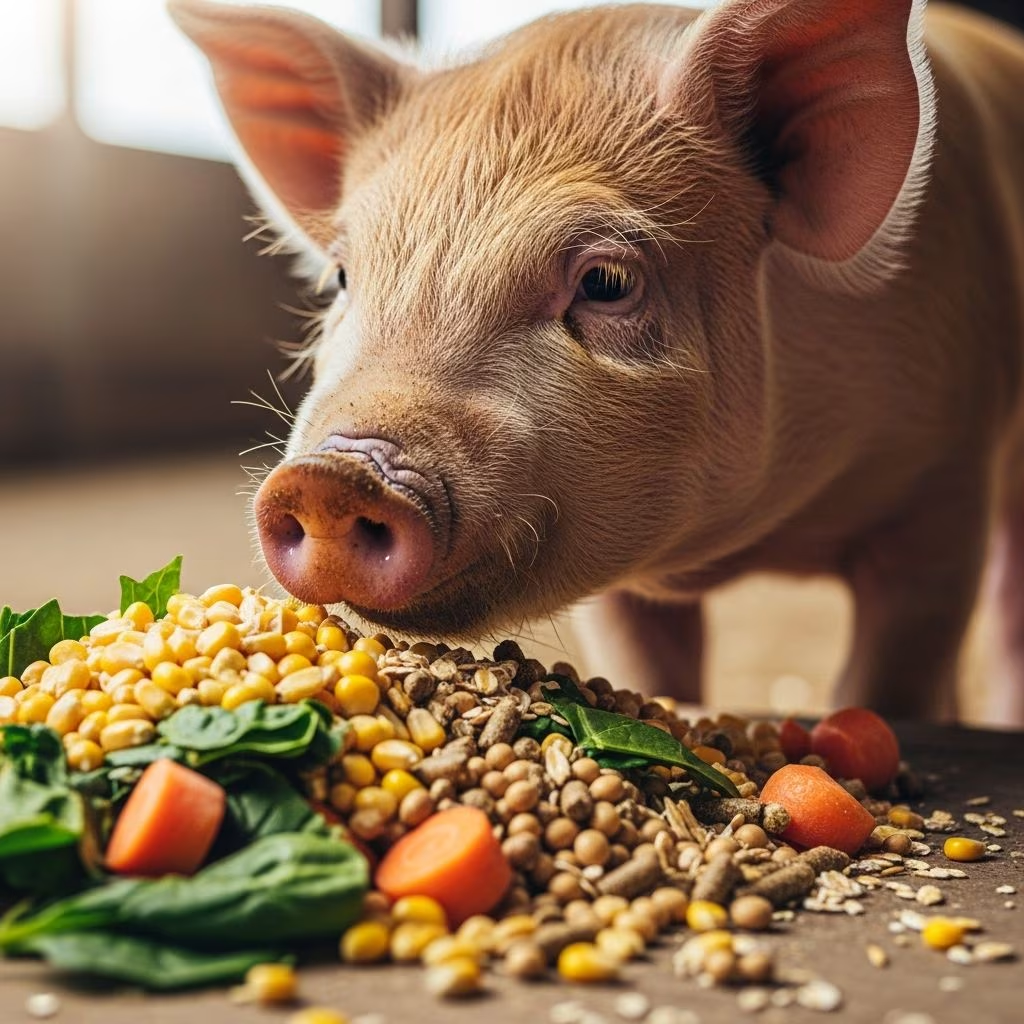
Pigs need a precise balance of nutrients to support growth, reproduction, and overall health. This includes energy from carbohydrates and fats, essential amino acids from proteins, plus vitamins, minerals, and water tailored to different life stages.
Core Components of Pig Diets
A thriving pig demands energy, amino acids, vitamins, minerals, and ample water. Energy fuels maintenance, growth, and reproduction, primarily from fats and carbohydrates, with minor contributions from amino acids. Fats deliver concentrated energy, while carbohydrates split into digestible starches and sugars versus harder-to-break-down fibers.
Amino acids form proteins vital for muscle, enzymes, immunity, and milk production. Of 22 amino acids, 10 are essential as pigs cannot produce them sufficiently: arginine, histidine, isoleucine, leucine, lysine, methionine, phenylalanine, threonine, tryptophan, and valine. Lysine often limits diets, serving as the formulation benchmark. Balance focuses on these rather than total crude protein.
Vitamins and minerals, though micronutrients, are crucial in trace amounts for metabolic functions. Premixes supplement natural feeds to prevent deficiencies impacting health and productivity.
Energy Needs Across Pig Life Stages
Energy requirements vary by age, weight, and production phase. Nursery pigs prioritize rapid growth with high-energy feeds like milk products and digestible starches. Growing-finishing pigs shift toward efficiency, balancing energy for lean gain. Breeding stock needs sustained energy for gestation and lactation.
| Life Stage | Energy Focus | Key Sources |
|---|---|---|
| Nursery (5-25 kg) | High digestibility | Whey, lactose, starches |
| Growing (25-50 kg) | Growth efficiency | Grains, fats |
| Finishing (>50 kg) | Lean deposition | Corn, soybean meal |
| Breeding sows | Reproduction support | Balanced carbs/fats |
Fiber, while low-energy, aids gut health but excess reduces digestibility. Corn oil supplies linoleic acid, an essential fatty acid at 0.1% of diet.
Protein and Amino Acid Precision
Pigs require specific amino acid profiles, not just crude protein levels. Young pigs need 15-16% crude protein, dropping to 13-14% for mature breeding stock. Low crude protein below 13% hampers grow-finish performance. Approximately 20g standardized ileal digestible (SID) lysine per kg body weight gain supports optimal results.
- Lysine: Most limiting; base for formulations.
- Methionine + Cystine: Sulfur amino acids for protein synthesis.
- Threonine: Gut health and immunity.
- Tryptophan: Supports niacin conversion.
- Valine, Isoleucine, Leucine: Branched-chain for muscle growth.
Genetically improved pigs demand higher amino acid density due to feed efficiency gains.
Mineral Essentials for Structural and Metabolic Health
Minerals maintain osmotic balance, bone strength, and enzyme functions. Calcium (Ca) and phosphorus (P) are pivotal: 0.66% Ca and 0.56% total P for 25-50 kg pigs, with optimal Ca:P ratios. Extra 0.1-0.15% boosts bone mineralization beyond growth needs.
Sodium, chloride, and potassium regulate fluids and nerves. Magnesium supports metabolism. Trace minerals like iron, zinc, copper, manganese, iodine, and selenium prevent deficiencies.
| Mineral | Function | Typical Requirement |
|---|---|---|
| Calcium | Bone, muscle | 0.66% (25-50 kg) |
| Phosphorus (total) | Energy transfer, bones | 0.56% |
| Sodium | Electrolyte balance | 0.1-0.3% |
| Iron | Hemoglobin formation | 100 mg/kg |
| Zinc | Immunity, growth | 100 mg/kg |
Vitamins: Micronutrients with Major Impacts
Pigs need 12 vitamins, with specifics varying by phase. Fat-soluble vitamins A, D, E, K store in tissues; water-soluble B-vitamins require steady supply.
Fat-Soluble Vitamins
Vitamin A aids vision and immunity. Vitamin D with Ca/P ensures bone health. Vitamin E (11-16 IU/kg growing pigs, 44 IU/kg sows) and selenium combat oxidative stress; higher in selenium-poor regions. Vitamin K supports clotting.
Water-Soluble Vitamins
Niacin (30 ppm) metabolizes carbs, fats, proteins; grains lack bioavailable forms, so supplement. Pigs inefficiently convert tryptophan. B6 (pyridoxine) handles amino acid metabolism, abundant in feeds but requirements rose for young pigs. Thiamine plentiful from grains, no supplement needed. Riboflavin, pantothenic acid, folacin, biotin, B12, and choline support energy and one-carbon transfers.
- Deficiency risks: Niacin shortfall common without premix.
- Sources: Fish by-products, yeast for natural boosts.
Water: The Overlooked Nutrient
Water comprises 80% of pig bodies, essential for digestion, temperature regulation, and nutrient transport. Growing pigs drink 2-3 times feed intake by weight; sows up to 5 times in lactation. Clean, cool water availability prevents reduced feed intake and growth.
Phase-Specific Feeding Strategies
Starter Phase (Weaning to 10 kg)
Highly digestible feeds with lactose, plasma proteins limit soybean meal initially to ease digestion. High energy/protein for gut development.
Grower Phase (10-50 kg)
Shift to grains/soybean meal; balance amino acids for lean growth. SID lysine ~1.0-1.2%.
Finisher Phase (50+ kg to market)
Lower protein (13-16%), focus efficiency. Avoid crude protein <13%.
Gestation and Lactation
Gestating sows: Controlled energy prevents obesity. Lactating: High energy/protein for milk (6-8 kg/day peak).
Formulating Balanced Rations
Use NRC guidelines or tools for precise mixes. Premixes ensure micronutrients. Monitor for imbalances: excess minerals cause toxicity, deficiencies stunt growth.
Genetic advances raise needs; ~20g SID Lys/kg gain rule aids estimations.
Common Nutritional Challenges and Solutions
- Low niacin: Add crystalline form.
- Ca/P imbalance: Maintain 1.2:1 ratio.
- Energy deficits: Boost fats in hot weather.
- Mineral toxicities: Avoid over-supplementation.
FAQs
What are the 10 essential amino acids for pigs?
Arginine, histidine, isoleucine, leucine, lysine, methionine, phenylalanine, threonine, tryptophan, valine.
How much lysine do finishing pigs need?
About 20g SID lysine per kg daily gain, typically 0.9-1.0% in diet.
Is vitamin supplementation always necessary?
Yes for niacin, often for E/selenium; others from feeds/premixes.
Why is water critical in pig nutrition?
Drives feed intake; pigs consume 2-5x feed weight daily.
Can pigs synthesize all fatty acids?
No, linoleic (0.1%) and linolenic are essential.
References
- Nutritional Requirements of Pigs — Merck Veterinary Manual. 2023. https://www.merckvetmanual.com/management-and-nutrition/nutrition-pigs/nutritional-requirements-of-pigs
- Nutrient Requirements of Pigs and Considerations for Making Diets — Ontario Ministry of Agriculture, Food and Rural Affairs. 2023. http://www.ontario.ca/page/nutrient-requirements-pigs-and-considerations-making-diets
- Swine Nutrient Requirements Fact Sheet — Kansas State University. 2023. https://www.asi.k-state.edu/extension/swine/swinenutritionguide/pdf/KSU%20Swine%20Nutrient%20Requirements%20fact%20sheet.pdf
- Nutrient Requirements of Swine: Eleventh Revised Edition — National Academies Press. 2012. https://www.nationalacademies.org/publications/13298
- Swine Nutrition Guide — University of Nebraska-Lincoln Animal Science. 2023. https://animalscience.unl.edu/sites/unl.edu.ianr.casnr.animal-science/files/media/file/swinenutrition.pdf



