
Essential Nutrition For Horses: A Complete Guide
Unlock the secrets to optimal horse health through balanced diets tailored to life stages and workloads.
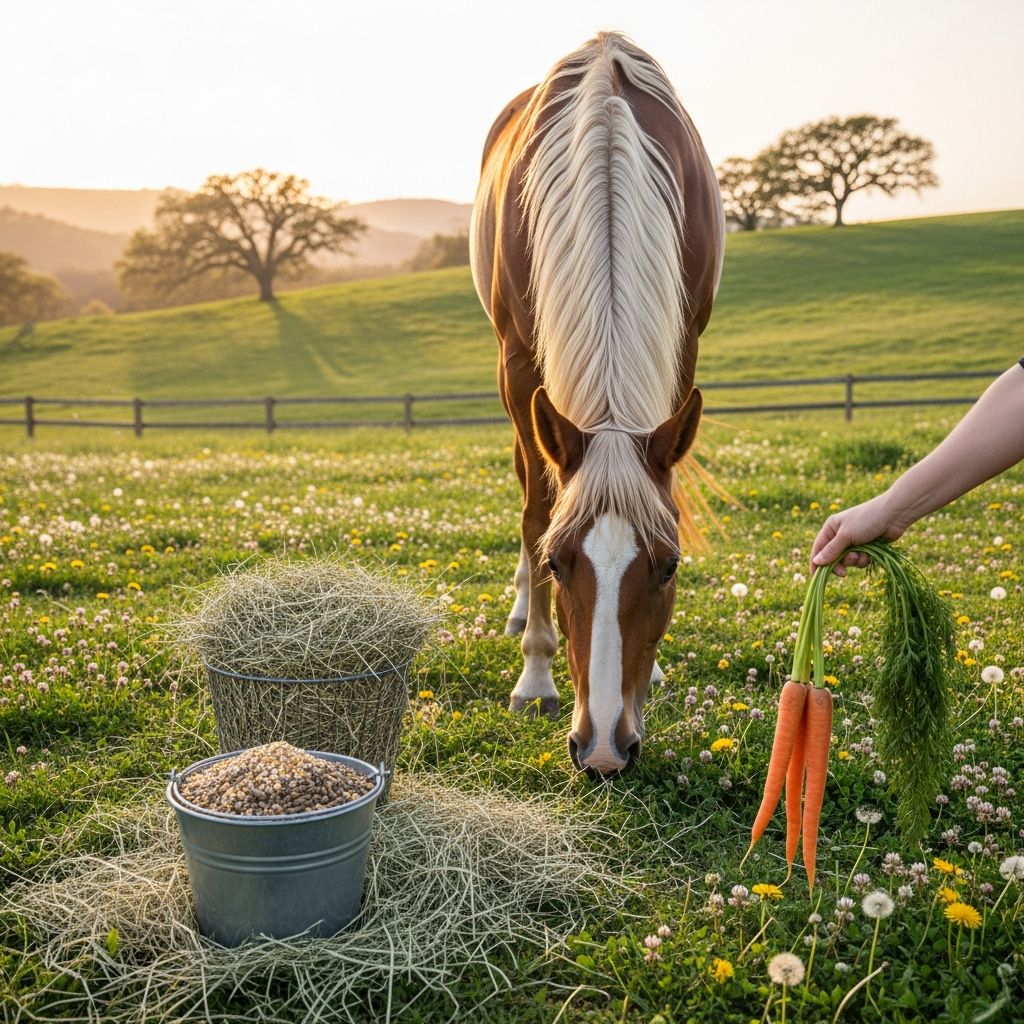
Horses thrive when provided with diets precisely matched to their physiological demands, encompassing energy sources, proteins, fats, carbohydrates, vitamins, minerals, and ample water. These nutrients support everything from basic maintenance to intense athletic endeavors, growth phases, and reproductive cycles.
Core Nutrient Categories in Equine Diets
Equine nutrition revolves around six fundamental nutrient groups that must be balanced to prevent deficiencies or excesses. Water stands out as the most critical, enabling all metabolic processes, while the others fuel energy production, tissue repair, and structural integrity.
- Water: Horses consume 25-55 liters daily, scaling with body size, temperature, exercise, and feed type. Dry hay diets demand more intake than lush pastures to aid digestion and prevent colic.
- Energy Providers (Carbohydrates and Fats): Primarily from forages and grains, these sustain activity levels. Non-structural carbohydrates should be limited to 0.5% of body weight per meal to avoid digestive upset.
- Proteins: Essential for muscle and tissue building, with lysine as the key limiting amino acid. Quality sources like soybean meal complement grains deficient in this nutrient.
- Vitamins: Fat-soluble (A, D, E, K) and water-soluble types support immunity and bone health; most are adequate in fresh forages.
- Minerals: Divided into macro (calcium, phosphorus) and trace (copper, zinc), crucial for skeletal development and metabolic functions.
Energy Demands Across Horse Activities
Horses partition energy for maintenance, growth, reproduction, or work. Idle adults need baseline calories from forage, while athletes require concentrates like oats or corn for higher density. Overfeeding grains risks laminitis, so gradual introductions and meal splitting are vital.
| Activity Level | Daily Forage (% Body Weight) | Concentrate Needs |
|---|---|---|
| Maintenance | 1.5-2% | Minimal |
| Light Work | 1-1.5% | 0.25-0.5% BW |
| Intense Exercise | 1% | 0.75-1% BW, split meals |
| Growth (Weanling) | 1.5-2% | Protein-enriched |
This table illustrates approximate guidelines; individual adjustments based on body condition scoring are essential.
Protein Quality and Requirements
Protein needs escalate for growing foals, lactating mares, and working horses, targeting 14-18% crude protein in diets. Lysine, at minimum 4-6% of protein, ensures complete amino acid profiles. Legume hays and supplements bridge gaps in cereal-based feeds. Excess protein strains kidneys, emphasizing balance.
Vital Minerals for Bone and Metabolic Health
Macrominerals like calcium (ideal 1.5-2.5:1 ratio to phosphorus) fortify bones, especially in juveniles. Sodium chloride via free-choice salt blocks meets electrolyte demands, rising to 36g daily in heavy sweaters. Trace minerals—copper, zinc, selenium—prevent orthopedic issues when imbalanced.
- Calcium & Phosphorus: 0.3-1% diet for growth; imbalance risks weak bones.
- Sodium & Chloride: 0.5% minimum; salt licks suffice.
- Trace Elements: Selenium at 0.1-3 ppm total ration averts deficiencies.
Vitamins: Supporting Immunity and Reproduction
Forages supply most vitamins, but stored hay may lack A and E. Supplementation aids stalled horses or those in heavy training. Vitamin D facilitates calcium absorption, critical for mares in late gestation.
Hydration Strategies for Optimal Performance
Clean water access is non-negotiable, with intakes doubling in heat or lactation. Electrolyte boosts during sweat loss maintain nerve function and prevent dehydration-related colic.
Tailoring Nutrition to Life Stages
Growth Phase: Foals and Yearlings
Young horses demand elevated protein (16-18%), lysine, and minerals for skeletal maturity. Feeds with 1.7-1.8% lysine support 1-2 lb daily gains without excess energy.
Reproduction: Broodmares and Stallions
Early gestation mirrors maintenance, but late stages and lactation spike needs: 1.5x energy, higher protein. Stallions in breeding season require consistent conditioning.
Performance Horses: Workload Adaptations
Endurance or speed work elevates calories 25-50%; fats from oils provide cool energy. Monitor for ties to forage base at 1% body weight.
Senior Horses: Managing Age-Related Changes
Elderly equids face reduced digestibility; senior feeds with higher fats, quality proteins, and joint-support nutrients compensate. Frequent small meals aid chewing issues.
Practical Feeding Management Tips
Forage-first approaches mimic natural grazing, comprising 60-100% of diets. High-quality hay or pasture prevents ulcers and stereotypic behaviors.
- Assess body condition biweekly using 1-9 scale; ribs palpable but not visible ideal.
- Introduce diet changes over 7-10 days to stabilize hindgut flora.
- Provide trace-mineralized salt freely; selenium-enriched for deficient regions.
- Split concentrates into 2-4 meals; max 2kg per feeding for 500kg horse.
- Weigh feeds; eyeballing leads to 20-30% errors.
Common Pitfalls and Prevention
Over-reliance on grains causes acidosis; mineral imbalances foster developmental diseases. Pasture-restricted horses risk obesity on rich spring grass—limit grazing. Regular vet checks and forage analysis ensure precision.
FAQs
How much hay does a 500kg horse need daily?
7.5-10kg (1.5-2% body weight), adjusted for work and quality.
Can horses eat too much protein?
Yes; excesses burden kidneys and elevate water needs—target precise levels.
What’s the best calcium:phosphorus ratio?
1.5-2.5:1 to support bone health without absorption interference.
Do I need vitamin supplements for pastured horses?
Usually not; sunlight and greens suffice, but test hay if stalled.
How to check if my horse is dehydrated?
Skin tenting >2 seconds, dry gums, sunken eyes; offer electrolytes proactively.
Monitoring and Adjusting Diets
Body condition scoring, manure consistency, coat quality, and energy levels signal balance. Forage testing refines mineral additions. Consult equine nutritionists for custom plans, especially growth or performance.
References
- Horse Nutritional Requirements: A Comprehensive Guide — EquiNectar. 2024-10-01. https://equinectar.com/2024/10/horse-nutritional-requirements-a-comprehensive-guide/
- The Basics of Equine Nutrition — Rutgers Equine Science Center. 2023. https://esc.rutgers.edu/fact_sheet/the-basics-of-equine-nutrition/
- Nutritional Needs of Horses (TNH-0004) — UT Institute of Agriculture. 2023-10. https://utia.tennessee.edu/publications/wp-content/uploads/sites/269/2023/10/TNH0004.pdf
- Nutrient Needs of Horses — Oklahoma State University Extension. 2023. https://extension.okstate.edu/fact-sheets/nutrient-needs-of-horses.html
- How to Feed a Horse (B-1355) — University of Georgia CAES. 2025-08. https://fieldreport.caes.uga.edu/wp-content/uploads/2025/08/B-1355_3.pdf
- Nutritional Management for Horses (AS-429) — Purdue Extension. 2023. https://www.extension.purdue.edu/extmedia/as/as-429.html
Similar Articles








Read full bio of medha deb


