

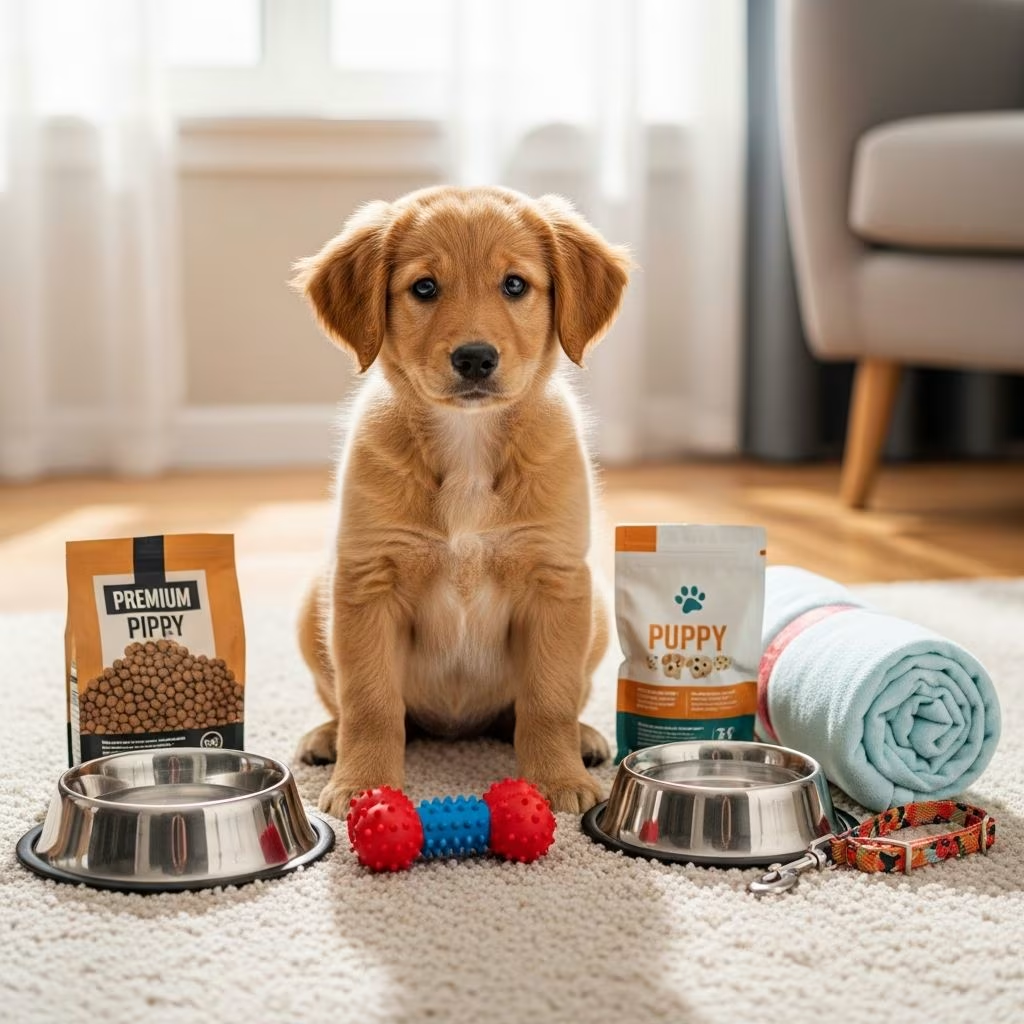
Bringing a puppy into your home marks the start of an enriching journey filled with unconditional love, playful antics, and meaningful responsibilities. New owners often face a whirlwind of excitement mixed with uncertainty about how to best support their furry companion’s growth. This guide draws from veterinary expertise and established pet care practices to outline critical steps for success, ensuring your puppy develops into a well-adjusted, healthy adult dog.
Assessing Readiness Before Adoption
Before selecting a puppy, evaluate your lifestyle to confirm it aligns with canine needs. Consider household dynamics, including work schedules, living space, and existing pets. Puppies demand consistent attention for feeding, exercise, and training, typically requiring several hours daily. Families with children or other animals should plan gradual introductions to minimize stress.
- Review daily availability for walks, play, and supervision.
- Assess space for a secure play area and future growth.
- Budget for initial costs like supplies, vet visits, and food, which can exceed $1,000 in the first year.
Research breeds matching your activity level; high-energy types like Border Collies suit active homes, while calmer breeds like Bulldogs fit apartments. Reputable breeders or shelters provide health histories, reducing risks of genetic issues.
Creating a Safe and Welcoming Environment
Puppy-proofing transforms your home into a hazard-free zone. Remove or secure items like electrical cords, toxic plants, small objects, and chemicals, as puppies explore with mouths and paws. Install baby gates to limit access and cover trash bins to prevent scavenging.
Designate a quiet resting spot with a crate lined with soft bedding. Crates mimic dens, aiding house training by leveraging puppies’ aversion to soiling sleeping areas. Place it in a family-frequented but low-traffic area for security without isolation.
| Essential Supplies | Purpose | Tips |
|---|---|---|
| Stainless steel bowls | Food and water | Durable, easy to clean; elevate for large breeds. |
| Adjustable collar and ID tag | Identification | Legal requirement; include phone number. |
| Leash, harness, crate | Training and travel | Choose crate size allowing stand-stretch-turn. |
| Chew toys, puzzle feeders | Mental stimulation | Rotate to prevent boredom; supervise use. |
| Grooming kit, puppy pads | Hygiene and training | Enzyme cleaners for accidents. |
Stock quality puppy food formulated for growth stages, transitioning gradually if switching brands to avoid digestive upset. Fresh water access is vital year-round.
Mastering the First Days and Nights
The initial 72 hours set the tone for adjustment. Keep environments calm, limiting to one or two rooms for controlled exploration. Introduce family members singly, allowing sniffing and gentle petting on neutral terms.
Establish routines immediately: feed 3-4 times daily, potty breaks every 1-2 hours, and naps in the crate. Nighttime whines are common; comfort without reinforcing dependency by taking outside first. Calming aids like pheromone diffusers ease anxiety from separation.
- Supervise constantly or use crate/playpen.
- Reward calm behavior with treats and praise.
- Track intake/output for health monitoring.
Health and Veterinary Essentials
Schedule a vet exam within 72 hours of arrival for baseline health checks, deworming, and vaccination planning. Core vaccines protect against distemper, parvovirus, and rabies; follow schedules per American Veterinary Medical Association guidelines.
Implement preventives monthly for fleas, ticks, heartworms, and intestinal parasites, starting as early as 8 weeks. Microchipping ensures recovery if lost; update contact info lifelong.
Monitor for issues like diarrhea or lethargy, common in stress transitions. Dental care begins with brushing 2-3 times weekly using dog-safe products. Discuss spay/neuter timing, ideally 6-9 months, for health benefits.
Nutrition for Optimal Growth
Puppies require nutrient-dense diets with 22-32% protein for muscle and bone development. Feed age-appropriate kibble or wet food 2-4 times daily, reducing to twice by 6 months. Portion per weight and activity; overfeeding leads to obesity.
- Choose AAFCO-labeled puppy formulas.
- Avoid human foods like chocolate, grapes, onions.
- Transition over 7-10 days: 25% new food daily increase.
Provide constant fresh water; consider puzzle bowls to slow eating and enhance engagement.
House Training and Basic Obedience
Consistency accelerates potty success. Take puppies out post-meals, naps, play; praise immediate outdoor elimination. Accidents demand cleanup without punishment to preserve trust.
Begin commands like “sit,” “stay,” “come” using positive reinforcement: treats, toys, voice. Short 5-minute sessions multiple times daily build focus without fatigue. Crate training reinforces bladder control, aiming for 4-6 hours max confinement initially.
Address nipping by redirecting to toys; time-outs in crate for persistent mouthing. Patience yields results; most master basics by 16 weeks.
Socialization: Building Confidence
The 3-14 week window is critical for exposure to stimuli without fear. Introduce diverse people, sounds, surfaces, and gentle animals positively. Puppy classes offer controlled interactions post-vaccinations.
- Daily novel experiences: car rides, vacuums, umbrellas.
- Enroll in obedience/puppy socialization courses.
- Avoid dog parks until fully vaccinated and manners-trained.
Under-socialized puppies risk fear aggression; gradual, rewarding exposures prevent this.
Exercise and Mental Enrichment
Tailor activity to age: 5 minutes per month of age, twice daily max to protect joints. Mix walks, fetch, training games; indoors suffice pre-vaccination.
Enrich with scent games, obedience drills, agility basics. Breeds vary: herders need tasks, toys suffice lap dogs. Over-exercise risks growth plate damage.
Grooming and Maintenance Routines
Weekly brushing prevents mats, distributes oils; bathe monthly with mild shampoo. Nail trims biweekly, ear checks weekly for infections. Dental routines reduce tartar.
Build tolerance via treats during handling, fostering vet-visit ease.
Common Challenges and Solutions
Chewing stems from teething (3-6 months); rotate durable toys. Separation anxiety improves with desensitization: short absences building duration.
Jumping or barking responds to ignore/reward calm; consistency across household members is key.
Long-Term Commitment
Beyond puppyhood, adapt care: adult food at 12 months, annual vet exams. Training evolves to advanced skills, exercise intensifies. Lifespan averages 10-13 years; invest accordingly for mutual joy.
Frequently Asked Questions
When can my puppy go outside?
After completing initial vaccinations, around 12-16 weeks, per vet approval.
How often should I feed my puppy?
3-4 times daily until 6 months, then twice.
Is crate training cruel?
No, when used properly as a safe space, not punishment.
What if my puppy cries at night?
Brief comfort checks, last potty; routine settles most within days.
How do I stop biting?
Redirect to toys, yelp and withdraw attention.
References
- New puppy checklist — PDSA. 2023. https://www.pdsa.org.uk/pet-help-and-advice/looking-after-your-pet/puppies-dogs/new-puppy-checklist
- Owning Your First Dog: A Comprehensive Guide for New Pet Owners — Westside Vet Center. 2023. https://westsidevetcenter.com/owning-your-first-dog-a-comprehensive-guide-for-new-pet-owners/
- New Puppy Checklist: 12 Tips to Raising a Happy and Healthy Puppy — The Dog Kennel Collection. 2023. https://www.thedogkennelcollection.com/blog/12-tips-for-new-puppy-checklist/
- Preparing for a New Puppy — American Kennel Club. 2023. http://www.akc.org/expert-advice/home-living/preparing-new-puppy/
- Caring For Your Puppy – 6 weeks to 12 months — RSPCA. 2023. https://www.rspca.org.uk/adviceandwelfare/pets/dogs/health/puppycare



