
Master Essential Dog Training Commands
Learn the fundamental commands every dog owner should teach
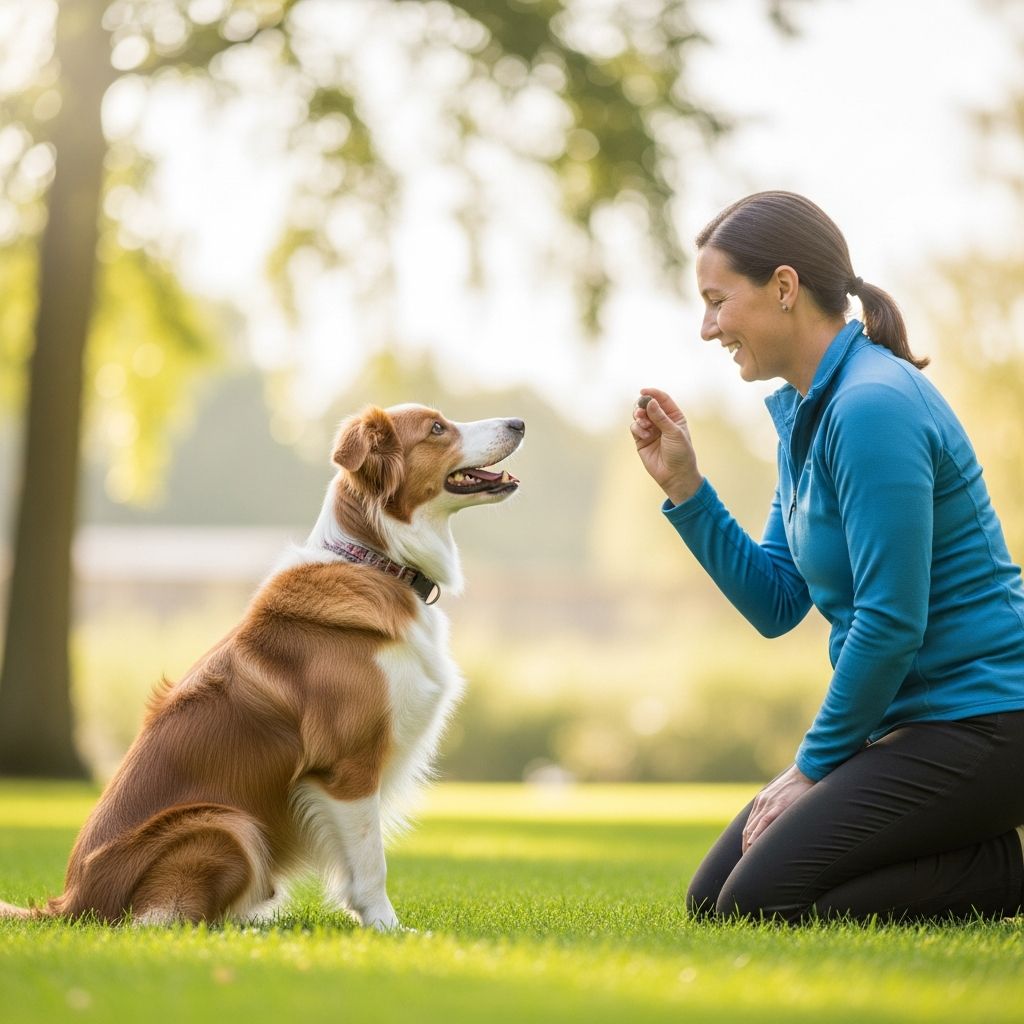
Training your dog is one of the most rewarding investments you can make as a pet owner. Beyond teaching your dog to behave appropriately, obedience training strengthens the bond between you and your canine companion while ensuring their safety in various situations. Whether you have a new puppy or an adult dog, establishing a foundation of basic commands creates a framework for communication that benefits both of you throughout your dog’s life.
Why Teaching Commands Matters for Your Dog
Dogs thrive with clear structure and guidance. When you teach your dog commands, you’re essentially creating a shared language that helps your dog understand what you expect from them in different scenarios. This clarity reduces confusion and anxiety, leading to a more confident and well-adjusted pet.
Beyond behavior management, commands serve critical safety functions. A dog that responds reliably to “come” can be prevented from running into traffic, and a dog that knows “stay” won’t dash through an open door. These skills aren’t merely conveniences—they can literally save your dog’s life.
Additionally, training sessions provide mental stimulation that keeps your dog engaged and satisfied. Most dogs enjoy the challenge of learning and the positive reinforcement that comes with successful training.
Building the Right Foundation Before Training
Before diving into teaching specific commands, set yourself up for success by establishing proper training conditions:
- Choose the right environment: Start training in a quiet, familiar space with minimal distractions. Once your dog masters commands at home, gradually introduce them in busier environments.
- Gather appropriate rewards: Identify what motivates your dog most—whether it’s high-value treats, favorite toys, or verbal praise. Use these consistently during training sessions.
- Time your sessions: Practice for 10-15 minutes at a time, two to three times daily. Short, frequent sessions are more effective than lengthy ones.
- Stay patient and positive: Training takes time. Celebrate small victories and maintain a positive attitude throughout the learning process.
- Use a marker word: Many trainers recommend using a marker word like “yes” or a clicker to precisely mark the moment your dog performs the desired behavior.
The Sit Command: The Foundation of Obedience
The “sit” command is typically the easiest command to teach and serves as the foundation for more advanced training. This command is useful in countless daily situations, from greeting guests to receiving treats or waiting at crosswalks.
Teaching the Sit Command:
- Hold a treat close to your dog’s nose
- Slowly move the treat upward and slightly backward over their head
- As their head follows the treat, their rear will naturally lower to the ground
- The moment their bottom touches the floor, use your marker word and reward immediately
- Repeat this process multiple times until your dog begins anticipating the sit position
- Once the behavior is consistent, add the verbal cue “sit” just before luring them into position
- Gradually fade the hand signal as your dog becomes reliable with the verbal command
Common mistakes include holding the treat too high (causing the dog to jump rather than sit) or introducing the verbal cue too early in the training process. Allow the behavior to become solid before adding the word.
The Down Command: Teaching Relaxation and Control
The “down” command teaches your dog to lie flat on the ground with their belly touching the floor. This position is particularly valuable when you need your dog to settle and relax, especially during moments of excitement or overstimulation.
Steps for Teaching Down:
- Begin with your dog in a sitting position
- Hold a treat with a strong smell close to your dog’s nose
- Slowly lower the treat toward the ground between their front paws
- Your dog will naturally follow the treat downward, eventually lying down
- Immediately mark this behavior and provide the reward
- Practice this multiple times until your dog reliably lies down
- Add the verbal “down” cue after the behavior becomes consistent
The down command tends to be more challenging than sit because it places your dog in a vulnerable position. Some dogs hesitate to lie down, particularly on hard or cold surfaces. Start on comfortable surfaces like carpet or a dog bed. Patience is essential when teaching this command.
The Come Command: Critical for Safety
The recall or “come” command is arguably one of the most important commands you’ll teach your dog, as it directly impacts their safety. A dog that reliably comes when called can be safely given off-leash freedom and can be prevented from dangerous situations.
Training Your Dog to Come:
- Start in a confined space or use a long leash (15-30 feet)
- Get down to your dog’s level and use an exciting, enthusiastic tone
- Say “come” while gently tugging on the leash or backing away to encourage movement
- When your dog moves toward you, immediately reward with high-value treats and praise
- Gradually increase the distance as your dog becomes more reliable
- Practice in increasingly distracting environments
This command requires consistent practice over several days or weeks. Make coming to you more rewarding than anything else your dog might want to do. Never call your dog to come if you plan to do something they dislike (like nail trimming) immediately afterward, as this can create negative associations with the command.
The Stay Command: Teaching Impulse Control
The “stay” command teaches your dog to remain in place until released, providing essential impulse control. This command prevents your dog from bolting through doors, running after distractions, or following guests around the house.
Building Stay Gradually:
- Start with your dog in a down position (more stable than sit)
- Reward your dog quickly before they move, marking the behavior with your marker word
- Gradually increase the duration of the stay before rewarding
- Once duration is solid, introduce spatial distance by taking small steps away
- Add the verbal “stay” cue after your dog consistently holds the position
- Practice in controlled environments before testing in public
A critical component of stay training is having a clear “release” word that tells your dog when they’re free to move. Many trainers use “OK” as the release command. This prevents your dog from guessing when the stay period ends.
The Off Command: Managing Unwanted Jumping
The “off” command teaches your dog to remove their paws from people, furniture, or other surfaces. This is particularly valuable for preventing jumping on guests or keeping your dog off counters and beds.
Teaching Off:
- When your dog jumps on furniture or people, remain calm
- Say “off” in a neutral (not angry) tone
- Guide or encourage your dog to move away from the surface
- Reward them immediately for moving away with treats or praise
- Be consistent—avoid rewarding the jumping behavior with attention
Jumping is often an attention-seeking behavior. Dogs don’t distinguish between positive and negative attention, so yelling at a dog for jumping can actually reinforce the behavior. Instead, reward the absence of jumping and redirect your dog to appropriate behaviors.
The Heel Command: Establishing Walking Etiquette
The “heel” command teaches your dog to walk calmly beside you, typically on your left side, while maintaining a consistent pace. This command makes walks safer and more enjoyable for both you and your dog.
Training Heel:
- Begin with your dog in a sit position beside you
- Hold a treat close to your body at chest level
- Take a few steps forward while saying “heel” in an encouraging tone
- Keep your dog close with the leash and treat position
- Reward frequently during the walk for maintaining position
- Gradually increase the duration and distance of heeling sessions
A related but distinct command is “let’s go,” which is a more casual walking command that allows your dog more freedom than heel but still maintains loose-leash walking. Teaching both gives you flexibility in different situations.
Advanced Positioning Commands
Once your dog masters the basic commands, you can introduce additional positioning commands that provide greater control:
| Command | Position | Primary Use |
|---|---|---|
| Stand | Dog stands on all four legs | Grooming, veterinary exams, obedience competitions |
| Front | Dog moves in front of you and sits | Formal heeling patterns, competitive obedience |
| Watch Me | Dog focuses attention on your face | Maintaining focus in distracting environments |
The “stand” command is taught similarly to down and sit, using a treat lure to guide your dog into standing position. The “watch me” command helps your dog focus on you rather than environmental distractions like passing cars or other animals.
Training Methods and Equipment
Effective dog training relies on understanding what motivates your individual dog and using tools that facilitate clear communication:
- Positive reinforcement: Rewarding desired behaviors with treats, toys, or praise remains the most effective training method
- Clicker training: A clicker device marks the exact moment a dog performs correctly, bridging the time between behavior and reward
- Leashes: A standard 6-foot leash is essential for teaching come, heel, and safety commands
- Long lines: A 15-30 foot leash allows practice of recall in larger spaces while maintaining control
- Training treats: High-value rewards (small, soft, smelly) motivate learning better than regular kibble
- Hand signals: Dogs often learn hand signals faster than verbal cues, so using both is recommended
Common Training Mistakes to Avoid
Understanding what doesn’t work in dog training helps you stay on track:
- Repeating commands: Saying “sit, sit, sit” teaches your dog that they don’t need to respond to the first command. Say the command once and wait.
- Adding verbal cues too early: If you use “sit” repeatedly while luring your dog into position before the behavior is solid, the word loses meaning.
- Inconsistent reinforcement: Rewarding a behavior sometimes but not others creates confusion. Be consistent until the command is reliably performed.
- Training when frustrated: Dogs pick up on your emotions. End sessions on a positive note rather than pushing when you’re frustrated.
- Punitive approaches: Using punishment can create fear and damage your relationship with your dog. Positive reinforcement is more effective and humane.
Creating a Consistent Training Schedule
Consistency is the foundation of successful dog training. Dogs learn through repetition and pattern recognition, so establishing a regular training routine yields faster results than sporadic practice sessions.
Aim for 20-45 minutes of total training time daily, divided into multiple short sessions. This might look like 10 minutes after breakfast, 10 minutes after lunch, and 15 minutes in the evening. By spacing training throughout the day, you maintain your dog’s focus and prevent fatigue.
Most dogs show noticeable improvement within 2-3 weeks of consistent practice, though full reliability in all environments may take months. Patience and consistency during this period will establish commands that last a lifetime.
Frequently Asked Questions
At what age should I start training my dog?
Dogs can begin learning commands as young as 7-8 weeks old. Puppies learn quickly, though they have shorter attention spans, so keep sessions brief. Older dogs can also learn successfully; age is not a barrier to training.
How long does it take to teach a command?
Most dogs begin showing understanding of a command within 5-10 repetitions. However, solid, reliable behavior typically takes 2-3 weeks of consistent practice across different environments.
Should I use food treats for every training session?
Food treats are highly effective for initial training. As your dog becomes more reliable, you can gradually phase in other rewards like toys, play, or verbal praise while maintaining occasional treat rewards.
Can I teach multiple commands simultaneously?
It’s best to focus on one command at a time until your dog masters it. Mixing too many commands confuses your dog and slows learning. Once a command is solid, introduce the next one.
What if my dog forgets a command?
Dogs don’t truly “forget” commands, but they may need refresher training, especially if practice stopped. Return to shorter sessions with high-value rewards to re-establish the behavior.
Moving Forward with Your Dog’s Education
Teaching your dog fundamental obedience commands is an investment in both their safety and your quality of life together. These skills form the foundation for addressing behavioral challenges, ensuring your dog’s safety in various situations, and deepening your bond through positive communication.
Start with sit, progress to down and come, then advance to stay, off, and heel as your dog demonstrates mastery. Remember that every dog learns at their own pace—celebrate progress rather than comparing your dog to others.
The time you invest in training now creates a well-mannered companion that can safely enjoy more of life’s experiences with you. Whether your dog becomes a therapy animal, a hiking companion, or simply a well-behaved family member, these fundamental commands serve as the cornerstone of your dog’s education and integration into your household.
References
- Obedience Road: My List of Commands — Obedience Road. Accessed 2026-04-01. https://www.obedienceroad.com/blog/my-list-of-commands
- Top 5 Basic Dog Commands — Best Friends Animal Society. Accessed 2026-04-01. https://bestfriends.org/pet-care-resources/top-5-basic-dog-commands
- 21 Essential Dog Commands to Teach Your Dog — Gallant. Accessed 2026-04-01. https://www.gallant.com/blog/dog-commands/
- How to Train Your Dog & Top Training Tips — RSPCA. Accessed 2026-04-01. https://www.rspca.org.uk/adviceandwelfare/pets/dogs/training
- How to pick command words: a vocabulary lessons for dogs — The Naked Dog Training. Accessed 2026-04-01. https://www.thenakeddogtraining.com/traininghowtos/2019/1/29/vocabulary-lessons-for-dogs
Similar Articles








Read full bio of Sneha Tete




