
Essential Dog First Aid Kit Guide
Build a comprehensive first aid kit for your dog with must-have essentials, practical uses, and items to skip for effective emergency preparedness.
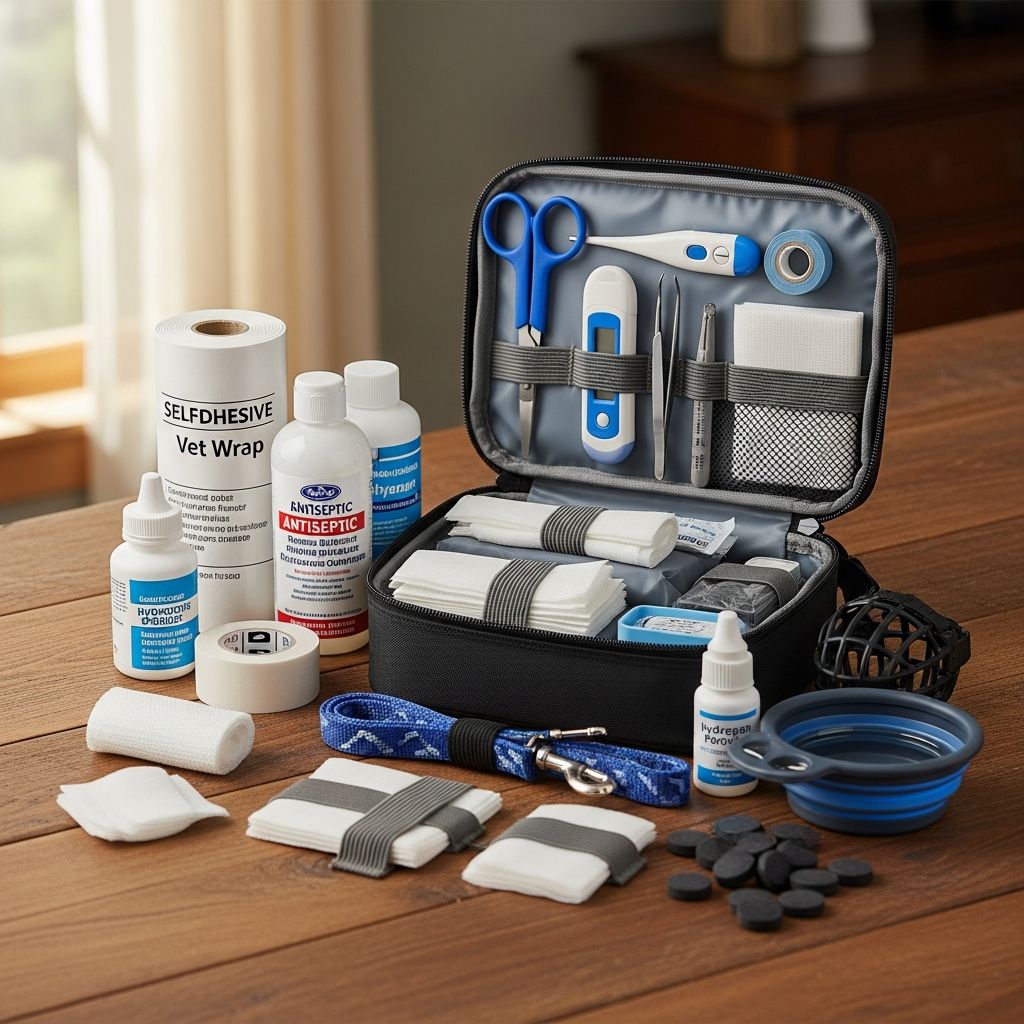
Preparing a dedicated first aid kit for your dog ensures you’re ready to handle unexpected injuries or illnesses until professional veterinary care is available. This guide outlines critical components, their applications, and strategies for maintenance, drawing from veterinary recommendations to prioritize safety and efficacy.
Why Every Dog Owner Needs a First Aid Kit
Dogs explore their surroundings with curiosity, often leading to cuts, sprains, or allergic reactions. A well-stocked kit bridges the gap between an incident and vet treatment, potentially preventing complications like infection or excessive bleeding. Veterinary organizations emphasize that basic preparedness can stabilize a pet during critical moments, such as road accidents or heatstroke.
Key benefits include immediate wound cleaning, temperature regulation, and restraint for safe handling. Regularly updating the kit maintains its reliability, especially for multi-pet households or active outdoor dogs.
Core Essentials for Wound Management
Wounds are among the most common canine emergencies, requiring prompt cleaning and protection. Stock these fundamentals to address lacerations, punctures, or abrasions effectively.
- Gauze pads and rolls: Use 4×4-inch non-stick pads for direct wound coverage and rolled gauze for secure wrapping. These absorb fluids without adhering to tissue.
- Adhesive and self-adhering tapes: Vet wrap or cohesive bandages hold dressings in place without sticking to fur, while medical tape secures outer layers.
- Antiseptic wipes and solutions: Mild soap, saline, or iodine-based wipes disinfect areas, reducing bacterial risks before bandaging.
- Antibiotic ointment: Apply thinly to minor cuts post-cleaning to promote healing and fend off infections.
For bandaging technique, layer pads over the wound, wrap snugly with gauze, add vet wrap, and secure with tape. Monitor for swelling, indicating over-tightening.
Tools for Precise Interventions
Specialized instruments enable accurate first aid without causing further harm. These tools facilitate everything from splinter removal to medication delivery.
| Tool | Primary Use | Key Features |
|---|---|---|
| Blunt-ended scissors | Cutting bandages or hair around wounds | Curved tips prevent accidental injury |
| Tweezers or tick removers | Extracting ticks, splinters, or debris | Fine tips for secure grip |
| Needleless syringe or eye dropper | Flushing wounds or administering liquids | 5-10ml capacity for controlled flow |
| Nail clippers and styptic powder | Trimming damaged nails and stopping bleeds | Guillotine style for dogs; powder clots quickly |
Always wear disposable gloves during procedures to avoid contamination and protect yourself from bites or scratches.
Safety and Restraint Equipment
Injured dogs may react defensively due to pain. Essential gear ensures safe management.
- Muzzle: Prevents bites during treatment; choose basket-style for breathing allowance. Never use if vomiting occurs.
- Slip leash and spare collar: Controls movement without relying on regular harnesses.
- Large towel or blanket: Doubles as a sling for limping dogs, warming layer for shock, or drying aid post-water incidents.
Practice fitting the muzzle on your dog during calm times to build familiarity.
Medications and Temperature Control
Consult your vet before including pharmaceuticals, as dosages vary by weight and health.
- Benadryl (diphenhydramine): For allergic reactions or insect stings; typical dose 1mg per pound of body weight.
- Buffered aspirin or vet-approved pain relievers: Only under guidance; avoid human ibuprofen or acetaminophen.
- Eye wash (sterile saline): Irrigates eyes irritated by debris or chemicals.
- Hot/cold packs: Ice for swelling, warmth for hypothermia; wrap in cloth to prevent burns.
Probiotics support gut health post-antibiotics, while a rectal thermometer monitors fever (normal range: 100-102.5°F).
Emergency Preparedness Items
Beyond immediate care, include provisions for displacement or prolonged waits.
- 3-5 day supply of food, water bowls, and medications.
- Pet health records, vaccination history, and microchip info.
- List of 24/7 vet clinics, poison control hotline (e.g., ASPCA: 888-426-4435).
- Flashlight and penlight for examining hard-to-see areas.
A compact thermal blanket reflects body heat during shock or evacuation.
Customizing for Your Dog’s Lifestyle
Tailor the kit to risks: hikers need tick removers and Epsom salts for paw soaks; city dogs benefit from splinter tools. For seniors or puppies, add joint supports or oral syringes for hydration.
Vehicle kits should include reflective triangles and seatbelt tethers. Check expiration dates biannually and restock after use.
Common Mistakes and Items to Skip
Avoid overstocking with redundancies like multiple tape types or human tourniquets, which can cause tissue damage if misapplied. Skip hydrogen peroxide for wounds—it delays healing despite old myths. Fancy pre-made kits often lack customization; build your own for cost-effectiveness.
Don’t store perishables without refrigeration plans. Prioritize training via apps or courses over gadget hoarding.
Step-by-Step: Assembling Your Kit
- Gather a waterproof container (tackle box or backpack).
- Organize into sections: wounds, tools, meds, records.
- Label contents and add instructions.
- Mount in accessible spots like garage or car.
- Test usability with a mock scenario.
First Aid Scenarios and Responses
Bleeding nail: Apply styptic powder, clip loose parts, bandage lightly.
Snake bite: Immobilize, cool area, seek immediate vet.
Heatstroke: Wet with cool water, fan, offer small water sips.
Choking: Heimlich maneuvers per size; clear airway gently.
FAQs
How often should I check my dog’s first aid kit?
Inspect every 6 months or after any use to replace expired items and verify completeness.
Can human first aid supplies work for dogs?
Many overlap like gauze and scissors, but use pet-specific sizes and avoid toxic meds like Tylenol.
What if my dog has chronic conditions?
Include extra prescriptions and consult vet for tailored additions like glucose for diabetics.
Is a commercial kit sufficient?
They’re a good start but supplement with dog-specific items like muzzles for full coverage.
How do I train my dog for first aid handling?
Use positive reinforcement during mock exams to associate care with treats, reducing stress.
Training and Long-Term Preparedness
Enroll in pet CPR classes offered by Red Cross or vet associations. Apps with step-by-step videos enhance confidence. Share kit locations with family or pet sitters.
For disasters, integrate into go-bags with ID tags and carriers. Annual vet checkups inform kit updates based on evolving health needs.
References
- First aid tips for pet owners — American Veterinary Medical Association. 2023-01-15. https://www.avma.org/resources-tools/pet-owners/emergencycare/first-aid-tips-pet-owners
- Dog First Aid Kit: 21 Must-Have Items for the Best Kit — ToeGrips. 2024-05-20. https://toegrips.com/dog-first-aid-kit/
- 10 Must-Have Items for Your Pet First-Aid Kit — PetMD. 2023-11-10. https://www.petmd.com/general-health/must-have-items-for-pet-first-aid-kit
- Emergencies and First Aid in Dogs — Blue Cross. 2024-02-28. https://www.bluecross.org.uk/advice/dog/basic-first-aid-for-dogs
- First Aid Kit for Pets — American Red Cross. 2022-07-01. https://www.redcross.org/content/dam/redcross/atg/PDF_s/Preparedness___Disaster_Recovery/Disaster_Preparedness/Home_Fire/First_Aid_Kit_for_Pets.pdf
Similar Articles








Read full bio of Sneha Tete




