

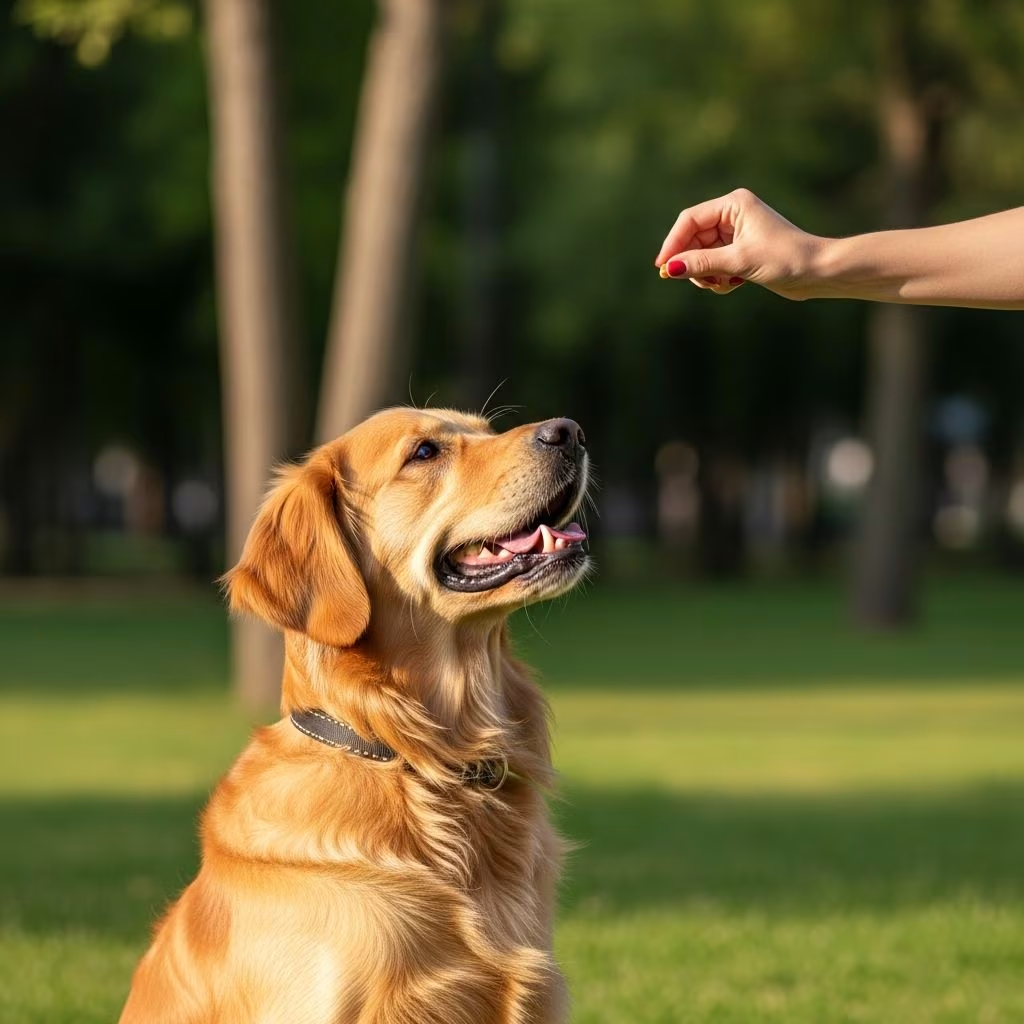
Training your dog with fundamental commands creates a foundation for a harmonious relationship, enhances safety during walks and play, and prevents behavioral issues. These skills not only promote good manners but also strengthen the trust between you and your pet, making everyday activities more enjoyable. Whether you have a energetic puppy or an adult dog, starting with these basics yields long-term benefits backed by expert recommendations from organizations like the American Kennel Club.
Why Basic Commands Matter for Every Dog Owner
Obedience training goes beyond tricks; it equips dogs to navigate real-world scenarios safely. Commands like sit and stay can halt impulsive actions near traffic, while recall cues prevent wandering into danger. According to the American Kennel Club, mastering cues such as sit, down, come, stay, and heel forms the cornerstone of puppy education, reducing common problems like jumping or pulling on leashes. Consistent practice in low-distraction environments builds reliability, gradually extending to busier settings for reliable responses.
Benefits extend to mental stimulation, curbing boredom-related destruction, and fostering confidence. Positive reinforcement—using treats, praise, and play—accelerates learning without force, aligning with modern, science-based methods endorsed by trainers worldwide.
Building a Training Toolkit: What You’ll Need
Success hinges on simple, effective tools. High-value treats like small bits of chicken or cheese motivate most dogs. A clicker provides precise timing for marking desired behaviors, bridging the gap between action and reward. Choose a quiet space free from distractions, a 4-6 foot leash for control, and sessions lasting 5-10 minutes to match short attention spans.
- Treats: Soft, smelly options for quick consumption.
- Clicker or marker word: “Yes!” or a click sound followed by treats.
- Leash and collar: Comfortable fit to avoid discomfort.
- Patience and consistency: Same words and rewards every time.
Command 1: Sit – The Gateway to Obedience
The sit command tops every trainer’s list as it’s intuitive and versatile, ideal for greetings, waiting at doors, or calming excitement. To teach it, hold a treat at nose level, slowly raise it above the head so the dog tilts back and lowers its rear naturally. Mark the moment the bottom touches the ground with your clicker or “Yes!” and deliver the treat.
Practice 5-10 reps per session, adding the verbal cue “Sit” just before the lure. Fade the treat by using hand signals alone after a week. Common pitfalls include luring too fast, causing jumping—keep movements deliberate. For stubborn dogs, gently tuck the rear while luring.
| Step | Action | Tips |
|---|---|---|
| 1 | Lure over head | Use smelly treat |
| 2 | Mark and reward | Say “Sit” clearly |
| 3 | Practice without lure | Gradual fading |
Command 2: Down – Encouraging Calmness
Following sit, down promotes relaxation during vet visits, meals, or downtime. Start from a sit, hold a treat at nose level, and lower it straight to the ground between paws. As the dog stretches forward and lies flat, mark and reward. If needed, use gentle shoulder pressure without pushing harshly.
Build duration by delaying rewards, then add distance by stepping back. This command aids impulse control, vital for high-energy breeds. Sessions in varied spots prevent location-specific learning.
Command 3: Stay – Mastering Impulse Control
Stay teaches patience, crucial for doorways, crossings, or guest arrivals. Begin with dog in sit or down, say “Stay” with an open palm signal, take one step back, then return to reward if position holds. Increase steps, duration (count silently), and distractions progressively.
First, teach a release cue like “Okay” or “Free” by tossing a treat forward after short holds, ensuring the dog learns boundaries. Reliability prevents bolting, enhancing safety per AKC guidelines.
Command 4: Come – The Lifesaving Recall
Recall, or “Come,” ensures your dog returns reliably, even off-leash in parks. Use a long line in safe areas: call enthusiastically, run backward to excite chasing, reward heavily upon arrival. Never chase or punish for slow responses, as it erodes trust.
Practice from 10 feet, rewarding every success. In distractions, pair with high-value rewards. The AKC emphasizes starting with name recognition: say name, treat for eye contact, building to full recall.
Command 5: Heel – Polite Leash Walking
Heel keeps dogs at your side without pulling, transforming walks. Start with treats at knee level; walk forward, rewarding position beside you. If pulling occurs, stop or change direction until slack returns. Progress to off-leash in fenced areas for advanced control.
Short, frequent sessions prevent fatigue. Vital Essentials notes knee-height rewards maintain focus.
Advanced Commands for Everyday Control
Leave It – Preventing Dangerous Choices
Teach dogs to ignore temptations like food drops or trash. Place a low-value item down, cover with foot, offer better treat in other hand when ignoring it. Add verbal “Leave it” and progress to drops. Essential for scavenging prevention.
Off – Curbing Jumping and Climbing
For paws on counters or people, say “Off” while luring down with treats, rewarding all-four-paws-on-ground. Turn away from jumpers to extinguish behavior.
Look/Watch Me – Capturing Attention
Say dog’s name or “Look,” hold treat near eyes until eye contact, reward. Builds focus amid distractions.
Training Schedules and Progression Tips
Train daily in 5-minute bursts, three times a day for puppies. Week 1: Sit and eye contact. Week 2: Down and stay basics. Weeks 3-4: Recall and heel. Test in new environments weekly.
- Proofing: Add distance, duration, distractions (DDD rule).
- Troubleshooting: If regressing, return to basics.
- Group classes: Socialize while reinforcing.
Frequently Asked Questions (FAQs)
How long until my dog learns these commands?
Basics like sit take 1-3 days with consistency; recall may need weeks. Patience varies by age and breed.
What if my adult dog ignores commands?
Revert to luring, increase treat value, ensure no punishment. Professional help for deep issues.
Can I train without treats?
Possible with toys/praise, but treats speed results. Fade gradually.
Best age to start?
Anytime; puppies 8 weeks ideal, but adults respond well.
What breeds learn fastest?
Working breeds like Border Collies excel, but all can with method.
Overcoming Common Challenges
Pulling: U-turn method. Distractions: High rewards. Fear: Gentle exposure. Track progress in a journal for motivation.
Incorporate play; end sessions positively. Consistency across family prevents confusion.
References
- 10 most basic commands every dog owner should know — YouTube (The Dog Guardian). Accessed 2026. https://www.youtube.com/watch?v=eHbcb2EQC88
- Vocabulary Lessons for Dogs — The Naked Dog Training. 2019-01-29. https://www.thenakeddogtraining.com/traininghowtos/2019/1/29/vocabulary-lessons-for-dogs
- Teach Your Puppy These 5 Basic Cues — American Kennel Club (akc.org). Recent. https://www.akc.org/expert-advice/training/teach-your-puppy-these-5-basic-commands/
- The Top 10 Commands To Teach Your Puppy First — Eukanuba. Recent. https://www.eukanuba.com/au/articles/training/the-top-10-commands-to-teach-your-puppy-first
- Master the 6 Basic Commands Every Dog Should Know — Vital Essentials. Recent. https://www.vitalessentials.com/raw-guide/master-the-6-basic-commands-every-dog-should-know-tips-for-training-and-communicating-with-your-canine-companion
- Top 5 Basic Dog Commands — Best Friends Animal Society. Recent. https://bestfriends.org/pet-care-resources/top-5-basic-dog-commands



