

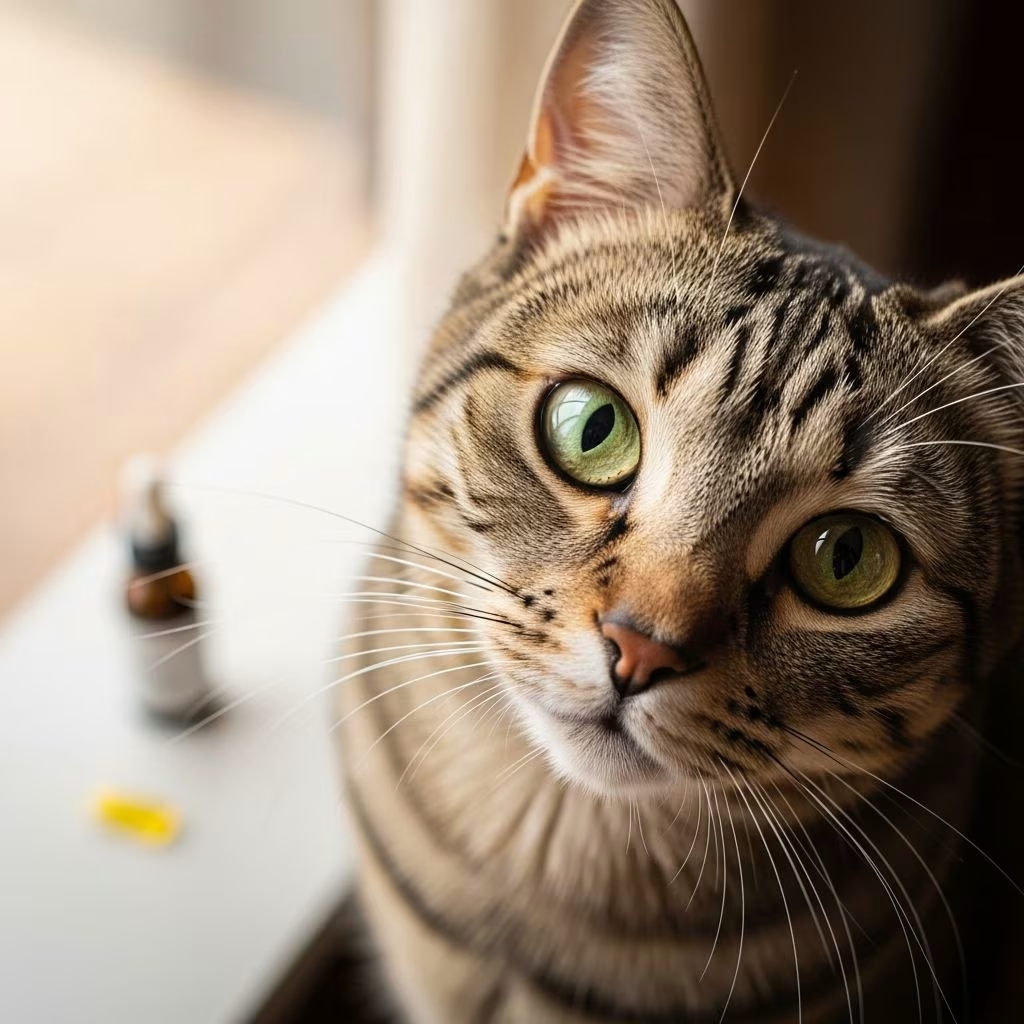
Vitamin B12, scientifically known as cobalamin, stands as one of the most critical micronutrients your feline companion requires for optimal health. Unlike many nutrients that your cat’s body can manufacture independently, B12 must be obtained through diet or supplementation. Understanding this essential vitamin and its role in your cat’s physiology empowers you to make informed decisions about their nutritional care and recognize potential health concerns before they become serious.
Understanding Cobalamin: The Basics of Feline B12
Vitamin B12 belongs to the water-soluble B-vitamin family and functions as a critical cofactor in numerous enzymatic reactions throughout your cat’s body. As obligate carnivores, cats have evolved to extract essential nutrients exclusively from animal tissues, and B12 is among the nutrients that cannot be synthesized by feline metabolism. While cats’ intestinal flora may produce trace amounts of cobalamin, these microbes reside in areas of the digestive tract where absorption cannot occur, rendering this internally produced B12 unavailable for use.
The two primary cobalamin-dependent enzymes in mammalian metabolism—methionine synthase and methylmalonyl-CoA mutase—perform indispensable functions that directly affect your cat’s daily well-being. These enzymatic systems regulate processes that extend far beyond simple nutrient processing, influencing everything from energy production to neurological function.
Critical Physiological Roles of Vitamin B12 in Feline Metabolism
Vitamin B12 participates in multiple interconnected metabolic pathways that sustain your cat’s health across several systems:
Red Blood Cell Development and Oxygen Transport
One of B12’s most fundamental roles involves the production and maturation of red blood cells. These cells serve as your cat’s primary oxygen delivery system, ensuring that every tissue and organ receives the oxygen necessary for cellular respiration and energy production. When B12 levels decline, red blood cell production becomes compromised, potentially leading to anemia—a condition characterized by insufficient oxygen-carrying capacity throughout the bloodstream.
Nervous System Integrity and Cognitive Function
Cobalamin plays an essential role in maintaining the myelin sheaths that insulate nerve fibers and facilitate rapid neural transmission. These protective fatty coverings enable your cat’s nervous system to function with precision, supporting everything from motor control to sensory perception. Additionally, B12 participates in neurotransmitter synthesis, the chemical messengers that enable communication between nerve cells.
Energy Metabolism and Nutrient Processing
Your cat’s ability to convert dietary macronutrients into usable energy depends significantly on B12-dependent metabolic pathways. This vitamin facilitates the breakdown of carbohydrates, proteins, and fats into their component parts, allowing your cat’s cells to extract and utilize energy from food. This metabolic function becomes increasingly important in senior cats, whose energy efficiency naturally declines with age.
DNA and RNA Synthesis
Cell division and tissue repair throughout your cat’s body require adequate B12 to support the synthesis of genetic material. This becomes particularly crucial during growth phases, immune system activation, and tissue regeneration following illness or injury.
Gastrointestinal Health and Digestive Function
The intestinal lining itself requires B12 for proper maintenance and function. This creates a particularly challenging situation: B12 is essential for the intestines to absorb nutrients effectively, yet damaged or inflamed intestinal tissue cannot absorb B12 efficiently. This catch-22 means that cats with gastrointestinal disease face heightened risk of B12 deficiency.
Dietary Requirements and Natural Sources of B12
Professional organizations have established specific B12 intake recommendations to maintain feline health. The American Association of Feed Control Officials (AAFCO) recommends a dietary cobalamin intake of 4.5 micrograms per 1000 kilocalories of metabolizable energy (ME) for growth, breeding, and adult maintenance. The European Pet Food Industry Federation (FEDIAF) provides similar guidance, recommending 4.5 µg per 1000 Kcal ME for breeding kittens and 4.4 µg per 1000 Kcal ME for adult cats.
For healthy, well-fed cats consuming complete and balanced commercial diets, B12 deficiency rarely develops naturally. Commercial cat foods are formulated to meet AAFCO standards and typically contain adequate B12 from animal protein ingredients. However, certain dietary approaches and health conditions can compromise B12 status:
- Homemade cooked diets may contain reduced B12 due to heat degradation, as cobalamin is thermolabile and sensitive to high temperatures
- Raw diets must be verified to contain adequate B12 to meet established recommendations
- Cats with digestive disorders or absorption issues require dietary attention to B12 content
Meat, particularly organ meats like liver, represents the richest natural source of B12 for cats. Muscle meats from chicken, turkey, and beef also provide significant amounts of this essential nutrient. When preparing homemade cat food, veterinary consultation becomes essential to ensure proper nutritional balance, including adequate B12 content.
Recognizing Vitamin B12 Deficiency in Cats
Hypocobalaminemia, the clinical term for low serum B12 levels, can develop gradually, with early signs sometimes overlooked by devoted owners. Understanding the spectrum of B12 deficiency symptoms enables early detection and intervention:
Fatigue and Lethargy
One of the earliest signs of B12 deficiency involves a general loss of energy and enthusiasm. Cats may sleep more than usual, show reduced interest in play, and move with less vigor. This fatigue stems directly from compromised energy metabolism and insufficient oxygen delivery to tissues.
Digestive Complications
The gastrointestinal system becomes particularly vulnerable to B12 deficiency. Affected cats may experience diarrhea or vomiting, sometimes alternating between the two. These digestive disturbances occur because the intestinal epithelium requires B12 to maintain its structural integrity and absorptive capacity. As intestinal function deteriorates, nutrient absorption becomes progressively more impaired, creating a vicious cycle of worsening malabsorption.
Unexplained Weight Loss
Perhaps counterintuitively, cats with B12 deficiency may experience significant weight loss despite maintaining normal or increased appetite. This occurs because their bodies cannot efficiently process and extract energy from consumed food. Fats, carbohydrates, and proteins pass through the digestive system without proper metabolic processing, resulting in net caloric loss despite apparent food intake.
Behavioral and Neurological Changes
As B12 deficiency progresses, neurological manifestations may emerge, including disorientation, impaired cognitive function, and changes in behavior. Senior cats and those with chronic health conditions remain at elevated risk for these more serious neurological complications.
Anemia-Related Symptoms
In advanced cases, reduced red blood cell production may cause visible paleness of the gums and mucous membranes, lethargy that exceeds typical fatigue, and potential shortness of breath or exercise intolerance.
Population-Specific B12 Considerations
Research has identified variations in baseline serum B12 concentrations across different feline populations. Male cats typically demonstrate significantly higher serum cobalamin concentrations than females. Additionally, pure-breed cats tend to show higher B12 levels compared to mixed-breed cats.
Young kittens present a particular consideration: serum cobalamin levels increase gradually during the first year of life as the microbiota, gastrointestinal tract, and pancreas complete their development. Senior cats warrant special attention, as aging naturally reduces B12 absorption efficiency and increases vulnerability to deficiency.
Supplementation Strategies and Treatment Options
When B12 deficiency is confirmed or suspected, several supplementation approaches are available, each with distinct advantages and considerations:
Injectable Administration
Subcutaneous or intramuscular injections of 250 micrograms per cat represent the traditional therapeutic approach, particularly for severe deficiency or cats with compromised intestinal absorption. Injectable therapy bypasses the gastrointestinal system entirely, ensuring that the B12 reaches systemic circulation without relying on intestinal absorption capacity. This approach proves especially valuable for kittens with digestive absorption issues or cats with inflammatory bowel disease who cannot reliably absorb oral supplements.
Oral Supplementation
Recent evidence demonstrates that oral cobalamin supplementation can effectively treat B12 deficiency in both dogs and cats as a less invasive alternative to injectable therapy. Methylcobalamin, the active form of B12, represents the preferred choice for feline supplementation because this form supports liver function more efficiently than other B12 variants.
A reasonable starting dose for oral feline supplementation ranges from 500 micrograms daily, with the option to increase to double this amount if needed. While this dosage may seem substantial, only a small percentage of orally administered B12 is actually absorbed, so higher doses account for poor bioavailability. The specific formulation matters: liquid supplements provide easier administration and absorption compared to tablets, particularly for cats that resist pill administration.
Dietary Optimization
For cats without underlying absorption disorders, optimizing dietary B12 content offers the most natural supplementation pathway. This involves ensuring that primary protein sources include adequate B12 and, when necessary, consulting with a veterinarian about diet-specific supplementation. Cats receiving homemade diets require particular attention to B12 fortification, as cooking reduces natural cobalamin content.
Monitoring and Expected Improvements
Response to B12 supplementation varies among individual cats, with improvements observable through both objective laboratory markers and subjective behavioral changes. Blood tests, hematology panels, and chemistry panels can quantify improvements in red blood cell counts and metabolic markers. More immediately observable changes include increased energy and reduced lethargy, improved appetite and weight gain in malnourished cats, and better cognitive function in affected seniors.
It is important to recognize that cats lack the capacity to understand illness itself; they experience only a vague sense of malaise. B12 supplementation may significantly improve your cat’s quality of life by reducing this discomfort and restoring vitality, even if complete resolution of underlying disease remains elusive.
Consulting Your Veterinarian About B12
Before implementing any B12 supplementation protocol, veterinary consultation remains essential. Your veterinarian can assess whether supplementation is appropriate for your specific cat, identify any underlying conditions that might warrant B12 deficiency, recommend suitable formulations and dosages, and establish appropriate follow-up monitoring protocols. This professional guidance ensures that supplementation addresses your cat’s actual needs rather than proceeding based on assumptions or over-the-counter recommendations.
References
- The Role of Vitamin B12 in Cat Nutrition: What You Need to Know — Doobert. Accessed January 2026. https://doobert.com/the-role-of-vitamin-b12-in-cat-nutrition-what-you-need-to-know/
- B12 For Cats Dietary Supplement — Jackson Galaxy Products. Accessed January 2026. https://www.jacksongalaxy.com/products/b12-for-cats-dietary-supplement
- Vitamin B12 in Cats: Nutrition, Metabolism, and Disease — National Institutes of Health / PubMed Central. 2023. https://pmc.ncbi.nlm.nih.gov/articles/PMC10177498/
- B12 for cats — Feline Infectious Peritonitis Care Group. Accessed January 2026. https://fipcaregroup.com/pages/B12-for-cats.html
- Vitamin B12 for Kittens — Kitten Lady. Accessed January 2026. http://www.kittenlady.org/b12
- Vitamin B12 is essential in senior cat food — Vets and Clinics. Accessed January 2026. https://www.vetsandclinics.com/fr/bibliotheque/vitamin-b12-is-essential-in-senior-cat-food-feed
- B12 Supplementation — IBDKitties. Accessed January 2026. https://www.ibdkitties.net/b12-supplementation/



