

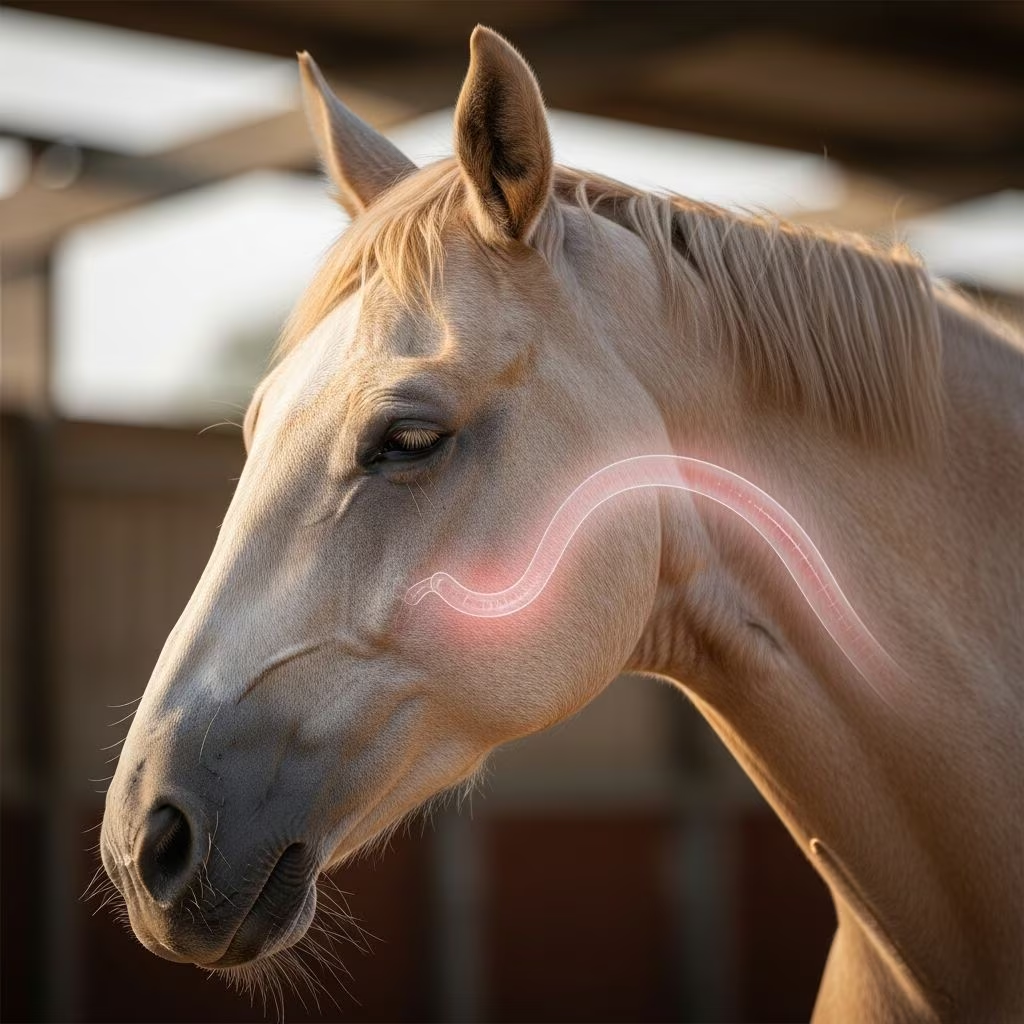
The esophagus serves as a vital conduit in a horse’s digestive system, shuttling food and water from the mouth to the stomach through coordinated muscle contractions. Understanding its function and potential problems is crucial for horse owners to maintain animal well-being.
The Role of the Esophagus in Equine Digestion
In horses, the esophagus is a long, muscular tube, typically measuring 4 to 5 feet, that runs alongside the spine from the pharynx through the neck and chest into the stomach. This structure relies on peristalsis—rhythmic waves of contraction—to propel ingested material downward. Unlike many mammals, horses possess a powerful gastroesophageal sphincter at the stomach entrance, which prevents backflow and renders vomiting impossible. This design adaptation supports their herbivorous diet but heightens vulnerability to blockages.
The foregut, encompassing the mouth, esophagus, stomach, and small intestine, handles initial breakdown of proteins, fats, and simple carbohydrates. Saliva from chewing lubricates feed, aiding smooth passage through the esophagus, which normally maintains a narrow diameter akin to a felt-tip pen but can expand up to 3 cm during swallowing. Proper mastication is essential; inadequate chewing, often seen in older horses with dental issues, increases risks of impaction.
Common Esophageal Disorders Affecting Horses
Esophageal conditions, collectively termed “choke” in equine veterinary parlance, arise when feed or fluid obstructs the tube. The most prevalent is simple choke, where dry or poorly moistened forage lodges, typically in the cervical (neck) portion. Strictures—narrowed segments from prior inflammation or injury—represent chronic complications, while megaesophagus, a dilated and atonic state, impairs motility entirely.
- Simple Choke: Acute blockage from large feed boluses, often hay or grain eaten hastily.
- Strictures: Scarring post-choke or trauma, reducing lumen diameter.
- Megaesophagus: Neuromuscular dysfunction causing esophageal dilation and poor propulsion.
- Esophagitis: Inflammation from reflux or chemical irritants.
These disorders disrupt nutrient intake, leading to dehydration, weight loss, and secondary issues like pneumonia from aspirated material.
Recognizing Symptoms of Esophageal Problems
Horses with esophageal obstructions display dramatic signs. Profuse salivation, often saliva streaming from nostrils, signals distress. Affected animals extend their necks, cough intermittently, and exhibit anxious behavior with repeated swallowing attempts yielding no success. Feed may protrude from the nose alongside saliva, and in severe cases, respiratory distress emerges from airway compression or aspiration.
| Symptom | Description | Severity Indicator |
|---|---|---|
| Excessive Salivation | Clear, frothy discharge from mouth/nostrils | Primary sign |
| Neck Extension | Stretched posture to relieve pressure | Moderate |
| Coughing/Gagging | Attempts to clear blockage | High, with aspiration risk |
| Feed from Nostrils | Partial regurgitation | Emergency |
Chronic issues like strictures manifest subtly: recurrent choke episodes, poor appetite, and gradual weight loss. Megaesophagus may present with repeated choking unrelated to feed type.
Factors Contributing to Esophageal Blockages
Several predispositions heighten risk. Bolting feed—rapid consumption without sufficient chewing—stems from stress, isolation, or inadequate hay access. Dry, coarse forage without water exacerbates impactions. Dental abnormalities hinder particle size reduction, while systemic conditions like colic or neuromuscular diseases impair peristalsis.
Breeds such as Thoroughbreds may face higher incidences due to conformation or management practices. Recent anesthesia or intubation can traumatize the esophagus, fostering strictures. Poor husbandry, including infrequent dental checks or rushed feeding routines, compounds vulnerabilities.
Diagnostic Approaches for Esophageal Conditions
Veterinarians employ endoscopy as the gold standard, inserting a flexible tube with a camera to visualize obstructions, inflammation, or strictures directly. Radiography with contrast agents delineates blockages or motility deficits. Ultrasonography assesses neck swelling or fluid pockets externally.
History-taking is pivotal: onset timing, recent diet changes, and prior episodes guide differentials. Laboratory tests rule out systemic contributors like electrolyte imbalances.
Immediate Response to Suspected Choke
Upon observing symptoms, isolate the horse to minimize stress and prevent further intake. Withhold food and water initially, but offer small sips if no nasal reflux occurs. Avoid forceful interventions like stomach tubing without professional oversight, as they risk perforation.
Contact a veterinarian promptly. Sedation facilitates nasogastric passage of lubricants or fluids to dislodge blockages gently. In persistent cases, IV fluids combat dehydration while monitoring for complications like laminitis from grain choke.
Treatment Strategies for Acute and Chronic Cases
Acute choke resolution often involves passing a stomach tube alongside the obstruction to instill mineral oil or water, softening the mass for natural passage. Systemic antibiotics and anti-inflammatories mitigate secondary infections or esophagitis. Hospitalization ensures monitoring for pneumonia via auscultation and endoscopy.
Chronic strictures necessitate balloon dilation or bougienage under sedation, sometimes repeatedly. Nutritional support via liquid diets bypasses the esophagus temporarily. Megaesophagus management focuses on upright feeding positions and small, frequent meals to leverage gravity.
Preventive Measures for Esophageal Health
Proactive strategies curtail incidences. Ensure constant hay access to encourage slow eating, mimicking natural foraging. Soak or wet feeds, especially for greedy eaters or seniors. Schedule biannual dental floats to optimize chewing efficiency.
- Provide ample fresh water near feeding stations.
- Feed in quiet, non-competitive environments.
- Monitor body condition and fecal output regularly.
- Use slow-feed nets to extend mealtimes.
Vaccinations and deworming maintain overall vitality, indirectly supporting digestive function.
Complications and Prognosis
Untreated choke invites aspiration pneumonia, esophageal rupture, or laminitis. Strictures recur in 30-50% of cases post-dilation, demanding vigilant follow-up. Prognosis for simple choke excels with prompt care—over 90% resolve fully—while megaesophagus carries guarded outlooks due to persistent regurgitation risks.
Long-term, affected horses thrive with tailored management, though some retire from performance.
FAQs on Equine Esophageal Disorders
What should I do if my horse is choking?
Keep calm, remove feed, and call your vet immediately. Do not force water or manipulate the throat.
How long does choke typically last?
Most resolve within hours of treatment, but monitoring spans 24-48 hours.
Can horses recover from esophageal strictures?
Yes, with repeated dilations and dietary adjustments, many regain normal function.
Is choke painful for horses?
Yes, it causes significant discomfort, evidenced by distress behaviors.
How can I prevent choke in my horse?
Promote slow eating, regular dentistry, and moistened feeds.
Nutritional Adjustments Post-Esophageal Event
Transition to complete pelleted feeds soaked into mashes, gradually reintroducing hay. High-fiber, low-starch formulations minimize future risks. Consult equine nutritionists for customized plans balancing energy needs with safety.
References
- The Horse’s Digestive System: Anatomy, Physiology & … — Mad Barn. 2023. https://madbarn.com/horse-digestive-anatomy/
- Maintaining a Healthy Equine Digestive Tract: Mouth and … — Kentucky Equine Research. 2022-10-15. https://ker.com/equinews/maintaining-healthy-equine-digestive-tract-mouth-and-esophagus/
- Understanding Choke in Horses and How Acupressure Can Help — Poll to Pastern. 2023. https://www.polltopastern.com/post/understanding-choke-in-horses-and-how-acupressure-can-help
- Equine Gastrointestinal Series: The Esophagus and Stomach — Immubiome. 2024. https://www.immubiome.com/blogs/horse-resources-and-education/equine-gastrointestinal-series-the-esophagus-and-stomach
- Did you know that the esophagus of horses has the diameter of a felt-tip pen — Ask Heltie. 2023. https://askheltie.com/en/articles/heltiehorse/did-you-know-that-the-esophagus-of-horses-has-the-diameter-of-a-felt-tip-pen



