

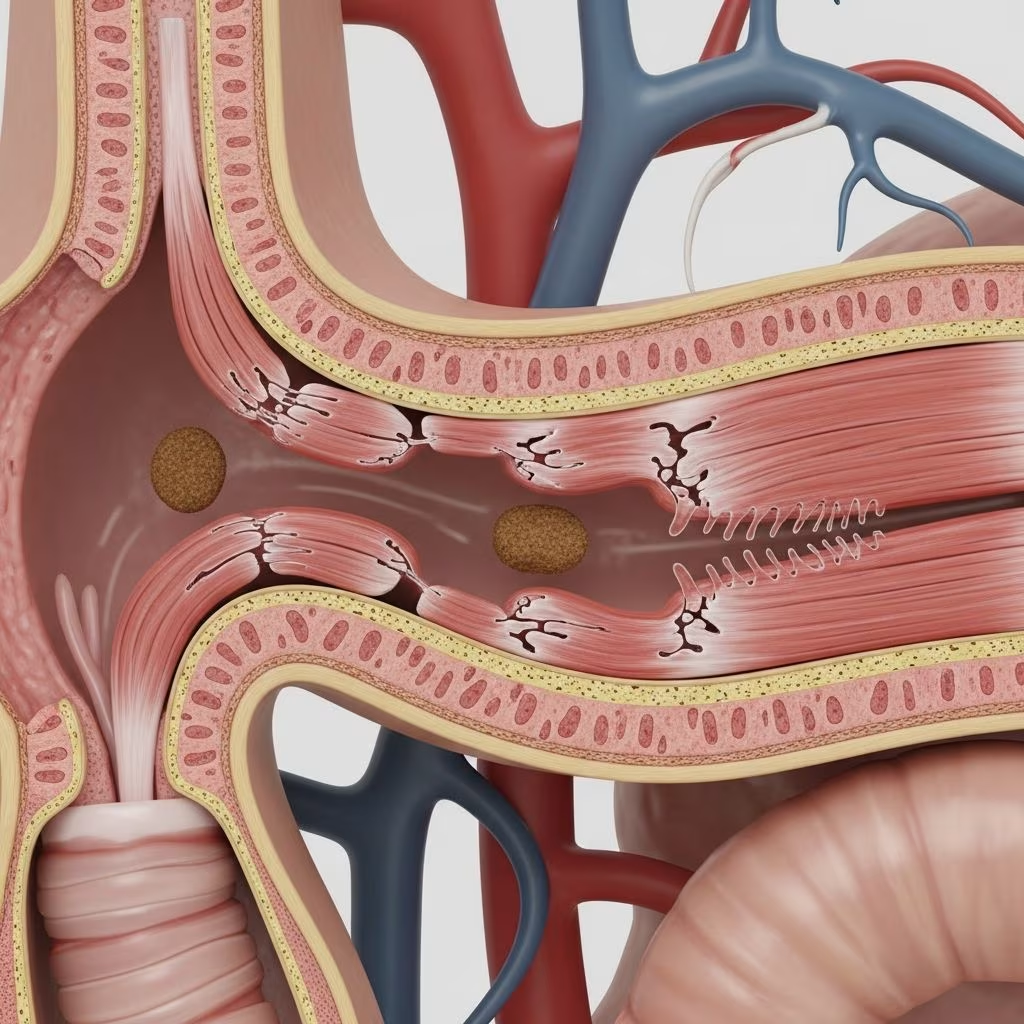
Esophageal dysmotility refers to impaired movement within the esophagus, the muscular tube that transports food from the mouth to the stomach in dogs and cats. This condition disrupts normal peristalsis, the wave-like contractions essential for swallowing, leading to potential regurgitation and nutritional challenges. While it shares similarities with megaesophagus—a dilation of the esophagus—dysmotility can occur without visible enlargement, particularly in young animals.
Understanding the Esophagus in Small Animals
The esophagus functions through coordinated primary and secondary peristaltic waves. Primary peristalsis initiates during swallowing, while secondary waves clear residual material. Dysfunction here results in food retention, increasing risks like aspiration pneumonia. In small animals, this issue often manifests early in life or secondary to other conditions.
- Primary Peristalsis: Triggered by swallowing bolus.
- Secondary Peristalsis: Clears remnants without swallow reflex.
- Upper Esophageal Sphincter (UES): Prevents reflux from pharynx.
- Lower Esophageal Sphincter (LES): Guards stomach contents.
Disruptions in these mechanisms can stem from neuromuscular immaturity or pathology, affecting pet quality of life profoundly.
Common Clinical Manifestations
Pet owners frequently notice regurgitation—passive expulsion of undigested food—distinguishing it from vomiting, which involves gastric contents and retching. Other signs include excessive salivation, gagging, repeated swallowing attempts, dysphagia (difficulty swallowing), and odynophagia (painful swallowing). Weight loss, anorexia, or lethargy may follow, with aspiration pneumonia presenting as cough, fever, rapid breathing, and dyspnea.
| Symptom | Description | Associated Risks |
|---|---|---|
| Regurgitation | Effortless food return shortly after eating | Aspiration into lungs |
| Dysphagia | Struggling or pain during swallowing | Dehydration, malnutrition |
| Excessive Salivation | Increased drooling | Esophagitis |
| Gagging/Retching | Throat-clearing motions | Secondary infections |
These symptoms mimic megaesophagus but require specific diagnostics to differentiate.
Breed and Age Predispositions
Young dogs, especially terriers (e.g., median age 9 months), show high prevalence. A study of eight symptomatic dogs found six terriers with global or segmental motility reduction; symptoms often improved after three months. Asymptomatic young terriers (4/5 tested) also exhibited dysmotility, suggesting delayed maturation. German Shepherds, Irish Setters, and Labrador Retrievers face risks from vascular anomalies, while brachycephalics like Bulldogs have hiatal issues.
Cats experience idiopathic, congenital, or secondary forms, with fewer breed specifics noted.
Potential Causes and Underlying Factors
Causes vary: congenital in young pets, idiopathic, or secondary to myasthenia gravis, mediastinal masses, vascular rings, dysautonomia, or strictures. Esophagitis from reflux or foreign bodies exacerbates motility loss. In terriers, it may represent immature neuromuscular development resolving over time.
- Congenital: Present at birth, common in puppies/kittens.
- Neurologic: Myasthenia gravis impairs nerve-muscle signals.
- Structural: Strictures narrow lumen; vascular rings constrict.
- Inflammatory: Esophagitis from anesthesia or reflux.
Diagnostic Approaches
Diagnosis starts with history and physical exam, noting cervical distension or pneumonia signs. Survey radiographs detect megaesophagus or complications, but normal findings necessitate contrast esophagram or videofluoroscopy—the gold standard for motility assessment.
Videofluoroscopy evaluates peristalsis intensity, coordination, sphincter function dynamically. Criteria include wave progression, bolus clearance, and segmental activity. Endoscopy visualizes inflammation or strictures, sometimes allowing intervention.
- Thoracic radiographs for aspiration pneumonia.
- Barium swallow for static views.
- Videofluoroscopy for dynamic motility.
- Endoscopy for mucosal evaluation.
Treatment and Management Strategies
Many cases, especially in young dogs, improve spontaneously. Terrier puppies often resolve regurgitation and motility with age. Medical therapy includes prokinetics like metoclopramide to enhance peristalsis, sucralfate for mucosal protection, and H2-blockers for acid reduction.
Feeding elevated (Bailey chair position) prevents reflux; slurried diets ease passage. For strictures, balloon dilation succeeds in 85% of cases. Surgery addresses vascular rings or masses.
- Conservative: Elevated feeding, small frequent meals.
- Medical: Sucralfate, metoclopramide, PPIs.
- Interventional: Dilation, bougienage for strictures.
Prognosis and Long-Term Outlook
Prognosis excels in idiopathic young terriers, with 4/6 showing motility gains. Persistent cases risk pneumonia. Cats respond well to meds; strictures manageable but recurrent. Regular monitoring via fluoroscopy tracks progress.
Preventive Measures for Pet Owners
Avoid bones/toys causing foreign bodies. Prompt anesthesia esophagitis treatment prevents strictures. Early intervention in regurgitation cases averts complications.
FAQs
What distinguishes regurgitation from vomiting in pets?
Regurgitation is passive, undigested food expulsion; vomiting is active with abdominal effort and digested material.
Can esophageal dysmotility resolve without treatment?
Yes, particularly in young terrier dogs, where maturation improves motility over months.
Is videofluoroscopy safe for diagnosing this?
Yes, it uses low radiation for dynamic swallowing assessment.
What feeding tips help manage symptoms?
Upright positioning, soft foods, small meals multiple times daily.
Are certain breeds more prone?
Terriers in dogs; breed risks vary for secondary causes.
Recent Research Insights
Studies confirm dysmotility in asymptomatic young dogs improves with time, supporting conservative management initially. Ongoing work explores genetic factors in predisposed breeds.
References
- Esophageal dysmotility in young dogs — Bexfield et al. Journal of Veterinary Internal Medicine. 2006-11-01. https://pubmed.ncbi.nlm.nih.gov/17186843/
- Esophageal Dysmotility in Young Dogs — Bexfield. Journal of Veterinary Internal Medicine (Wiley). 2006. https://onlinelibrary.wiley.com/doi/abs/10.1111/j.1939-1676.2006.tb00744.x
- Esophageal Dysmotility in Small Animals — Merck Veterinary Manual. Recent update. https://www.merckvetmanual.com/digestive-system/diseases-of-the-esophagus-in-small-animals/esophageal-dysmotility-in-small-animals
- Regurgitation, dysphagia, and esophageal dysmotility (Proceedings) — dvm360. N/A. https://www.dvm360.com/view/regurgitation-dysphagia-and-esophageal-dysmotility-proceedings
- Esophagitis and Esophageal Strictures — VetFolio. Recent. https://www.vetfolio.com/learn/article/esophagitis-and-esophageal-strictures



