
Esophageal Diverticula In Small Animals: Diagnosis & Care
Understanding pouch-like outpouchings of the esophagus in dogs and cats
Introduction to Esophageal Diverticula
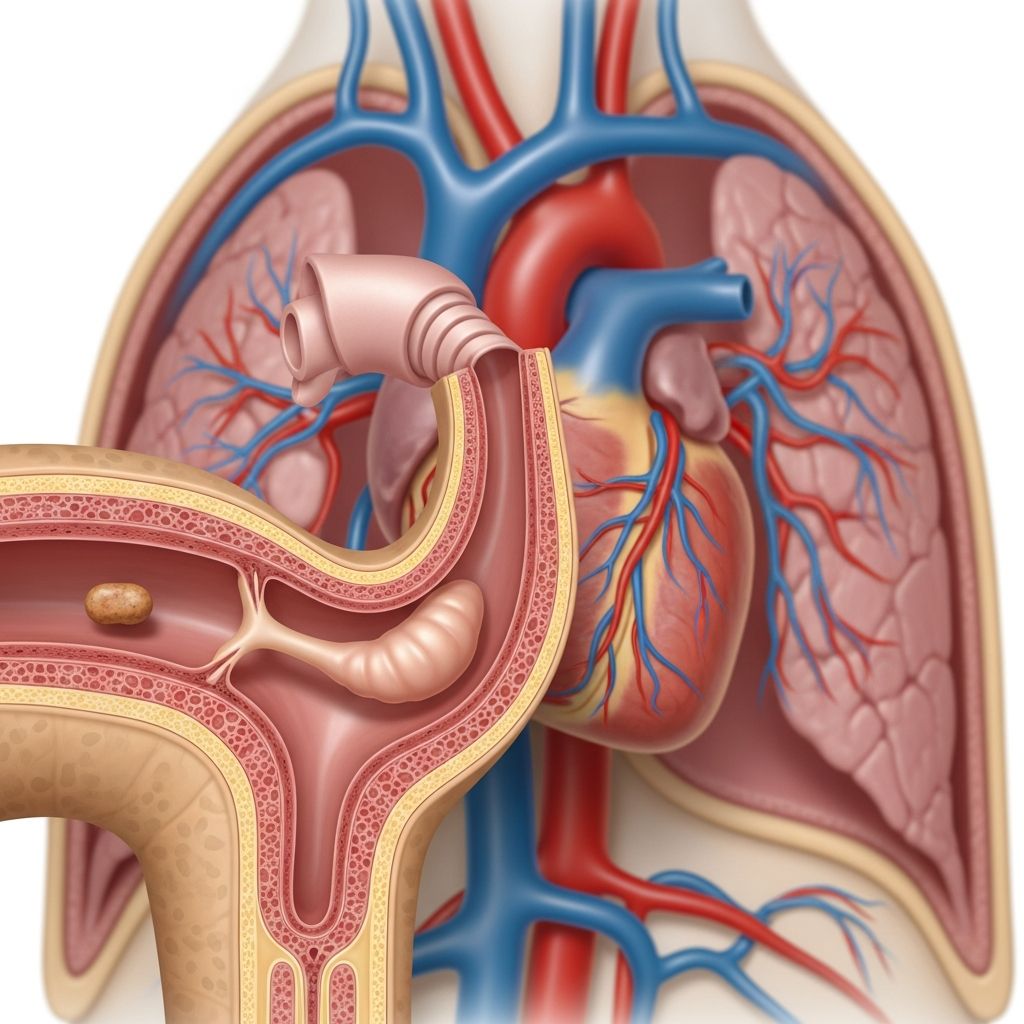
Esophageal diverticula represent an important but uncommon condition affecting the digestive tract of small animal patients. These lesions manifest as abnormal pouch-like expansions or outpouchings along the esophageal wall, creating structural deformities that can interfere with normal swallowing and food transport mechanisms. While rare in clinical practice, the condition carries significant implications for patient welfare and requires prompt recognition and intervention. Understanding the pathophysiology, clinical presentation, and management strategies is essential for veterinarians treating dogs and cats with esophageal disease.
Classification and Pathophysiological Mechanisms
Esophageal diverticula are classified into two primary categories based on their origin and formation mechanisms. This distinction is critical for understanding disease progression and selecting appropriate therapeutic interventions.
Pulsion Diverticula
Pulsion diverticula develop through the outward bulging of the esophageal wall, driven by increased intraluminal pressure from within the esophageal lumen. This increased pressure occurs when the esophageal muscles fail to function properly or when physical obstructions impede normal food transport. Common causes include esophageal foreign body ingestion, neurogenic dysfunction affecting muscular contractions, and primary motility disorders. The diverticulum essentially represents a “weak point” in the esophageal wall that yields to chronic pressure gradients.
Traction Diverticula
Traction diverticula develop through a fundamentally different mechanism involving external forces pulling the esophageal wall outward. These lesions typically occur secondary to inflammatory processes affecting neighboring structures, including the trachea, lungs, mediastinal lymph nodes, or gastric lining. The inflammatory response triggers fibrosis and tissue contraction around the esophagus, gradually creating an outpouching. Unlike pulsion diverticula, traction diverticula result from pull rather than push mechanisms.
Congenital Versus Acquired Presentation
Esophageal diverticula may present as either congenital malformations present at birth or as acquired lesions developing later in life. Congenital cases likely represent embryonic developmental anomalies of the esophageal wall structure, though specific genetic bases have not been definitively established. Acquired diverticula develop secondary to trauma, inflammation, or chronic pressure abnormalities. No specific breed or gender predisposition has been documented, suggesting that the condition occurs relatively uniformly across the small animal population.
Anatomical Location and Clinical Significance
The anatomical location of esophageal diverticula significantly impacts clinical presentation and management decisions. Diverticula most frequently occur at two critical sites: the pharyngeal inlet region at the beginning of the esophagus and the hiatal region near the diaphragm. These locations are particularly prone to trapping food material as it travels from the oral cavity toward the stomach. Diverticula positioned at the pharyngeal inlet may interfere with swallowing initiation, while those near the diaphragm can obstruct food passage at the gastroesophageal junction.
Clinical Manifestations and Patient Presentation
The clinical presentation of esophageal diverticula varies considerably depending on diverticulum size and whether food material becomes impacted within the pouch.
Primary Clinical Signs
Small diverticula may remain asymptomatic and be discovered incidentally during diagnostic imaging for unrelated conditions. However, clinically significant diverticula produce characteristic signs related to impaired food transport and aspiration risk. Regurgitation following meal consumption represents the most common clinical manifestation, occurring when food becomes trapped in the diverticulum rather than advancing to the stomach. Dysphagia, or difficulty swallowing, frequently accompanies regurgitation as the abnormal esophageal structure interferes with normal swallowing mechanics.
Secondary Manifestations
Progressive nutritional consequences often develop as the disease advances. Anorexia or reduced appetite may occur due to discomfort associated with swallowing or regurgitation episodes. Weight loss develops when food intake becomes consistently impaired and nutritional absorption decreases. Respiratory signs emerge as a particularly serious complication when regurgitated material aspirates into the respiratory tract, potentially triggering aspiration pneumonia—a life-threatening secondary condition. Animals with this complication present with coughing, respiratory distress, and increased respiratory rate.
Oral and Respiratory Complications
Halitosis may develop as retained food material undergoes bacterial fermentation within the diverticulum. Excessive salivation or drooling can occur secondary to esophageal irritation or dysphagia. Some animals exhibit signs of pain or discomfort during swallowing, particularly after consuming hard or dry foods.
Diagnostic Approaches and Imaging Techniques
Accurate diagnosis requires a systematic approach combining clinical assessment with imaging modalities that directly visualize the esophageal lesion.
Contrast Radiography
Esophageal diverticula are diagnosed using contrast radiographic studies, where barium sulfate or water-soluble contrast media is administered orally. As the contrast medium flows through the esophagus, the diverticulum fills with radiopaque material, creating a characteristic outpouching visible on radiographic images. Contrast studies provide information regarding diverticulum location, size, and the presence of retained food material. Fluoroscopic examination adds dynamic information about esophageal motility and whether food material moves normally through the affected region.
Endoscopic Evaluation
Esophagoscopy using a flexible fiber optic endoscope allows direct visualization of the diverticulum and assessment of the surrounding esophageal mucosa. This technique enables the veterinarian to evaluate for ulceration, scarring, inflammation, or secondary masses that may be associated with the diverticulum. Endoscopy can guide therapeutic interventions and provide tissue samples if neoplasia is suspected. The actual pouch structure, esophageal wall integrity, and any associated pathology become directly visualizable through this approach.
Additional Diagnostic Considerations
Thoracic radiography remains essential for evaluating the presence of aspiration pneumonia, a serious secondary complication. Standard thoracic radiographs may reveal characteristic infiltrates in dependent lung lobes if aspiration has occurred. Esophageal ultrasound can provide supplementary information about wall thickness and surrounding tissues in some cases.
Treatment Strategies and Management Approaches
Treatment decisions depend primarily on diverticulum size and the severity of clinical signs.
Conservative Medical Management
Small diverticula not causing significant clinical signs may be managed conservatively without surgical intervention. Dietary modification represents the cornerstone of conservative management, with patients receiving soft, bland food formulations that are easier to transport through the abnormal esophagus. Feeding should be performed with the animal positioned in an upright posture, elevating the forelegs higher than the hind limbs, such as using a raised feeding platform or ramp. This elevated position facilitates gravity-assisted food transport toward the stomach. Patients should maintain this upright position for a period after eating to allow time for food progression before returning to normal activity. Frequent, small meals may be better tolerated than large meals.
Pharmacological Support
Medications are selected based on concurrent conditions and complications. Proton pump inhibitors or H2-receptor antagonists may reduce gastroesophageal reflux-associated inflammation. Antibiotics become necessary if aspiration pneumonia develops, requiring aggressive therapy to prevent life-threatening progression. Metoclopramide or other prokinetic agents may improve esophageal motility in some cases, though evidence for their specific benefit in diverticula is limited.
Surgical Intervention
Large diverticula or those causing persistent clinical signs require surgical resection. Surgical management involves removal of the diverticulum and reconstruction of the esophageal wall to restore normal anatomy and function. The surgical approach depends on diverticulum location; cranial esophageal lesions may be accessed through a cervical incision, while more caudal lesions require thoracotomy. The excised diverticulum is removed completely, and the esophageal wall is reconstructed using multiple suture layers to ensure proper healing and prevent postoperative complications.
Prognosis and Long-term Outcomes
The prognosis for esophageal diverticula varies considerably based on clinical presentation and treatment approach. Small, asymptomatic diverticula discovered incidentally carry an excellent prognosis with conservative management. Patients with large diverticula causing obvious clinical signs present a guarded prognosis, particularly if aspiration pneumonia has already developed.
Surgical patients demonstrate fair to good outcomes in appropriately selected cases, with successful resolution of clinical signs following proper healing. However, postoperative complications can occur, including wound infection, incisional rupture during the early healing period, and stricture formation at the surgical site. These complications require intensive monitoring and may necessitate additional interventions. Animals with evidence of aspiration pneumonia require aggressive supportive care including fluid therapy, antibiotics, and nutritional support via feeding tubes.
Complication Management and Prevention
Preventing complications is essential for optimizing patient outcomes. Aspiration pneumonia represents the most serious potential complication, developing when regurgitated material enters the respiratory tract. Prevention requires strict dietary management and careful monitoring for any signs of respiratory compromise. If aspiration occurs, immediate aggressive therapy becomes necessary, including appropriate antibiotic selection based on culture results when possible, supportive oxygen therapy, and nutritional support through alternative routes.
Food impaction within the diverticulum can lead to esophageal perforation—a potentially fatal complication. Diverticula complicated by impaction are at particular risk for stricture development during healing, leading to chronic obstruction. Postoperative patients require careful monitoring for signs of incisional breakdown or leakage, particularly during the critical early healing period.
Monitoring and Follow-up Care
Ongoing monitoring is essential for all patients with esophageal diverticula, regardless of treatment approach. Veterinary assessments should occur regularly to evaluate for evidence of infection, aspiration pneumonia development, nutritional status changes, and treatment response. Owners must maintain vigilance for clinical sign recurrence, including new onset regurgitation, coughing, or respiratory distress. Maintaining positive nutritional balance throughout the disease process remains a consistent management priority.
Surgical patients require particular attention during the postoperative period, typically involving restricted activity, modified feeding protocols, and scheduled recheck examinations to assess healing progression. Any signs of postoperative complications should prompt immediate veterinary evaluation.
Differential Diagnosis and Distinguishing Features
Several esophageal conditions produce similar clinical signs and must be differentiated from esophageal diverticula. Megaesophagus, representing generalized esophageal dilation, typically produces regurgitation but lacks the localized pouch appearance. Esophageal foreign bodies cause acute clinical signs and may be visible on standard radiography. Esophageal strictures produce progressive dysphagia and can be distinguished through the characteristic narrowed appearance on contrast studies. Neoplastic lesions affecting the esophagus may present with similar signs but demonstrate mass effects on imaging. Proper imaging and endoscopic evaluation help establish the correct diagnosis and guide appropriate management.
Summary and Clinical Implications
Esophageal diverticula, though uncommon in small animal practice, represent a clinically significant condition requiring prompt recognition and appropriate intervention. The condition manifests as pouch-like outpouchings of the esophageal wall with diverse etiologies and anatomical presentations. Clinical signs range from asymptomatic incidental findings to severe regurgitation and aspiration risk. Diagnosis relies on contrast imaging and endoscopic visualization, while treatment depends on lesion size and clinical severity. Conservative management with dietary modification and elevated feeding works well for small, asymptomatic lesions, while larger lesions causing persistent clinical signs require surgical resection. Prognosis varies from excellent for incidentally discovered lesions to guarded for advanced cases with secondary complications. Close monitoring and appropriate follow-up care optimize outcomes and minimize the risk of serious complications such as aspiration pneumonia.
References
- An oesophageal diverticulum in a dog — PubMed/National Center for Biotechnology Information. 1976. https://pubmed.ncbi.nlm.nih.gov/111663/
- Esophageal Diverticula in Dogs — PetMD. 2024. https://www.petmd.com/dog/conditions/digestive/c_multi_esophageal_diverticula
- Disorders of the Esophagus in Dogs — MSD Veterinary Manual. 2024. https://www.msdvetmanual.com/dog-owners/digestive-disorders-of-dogs/disorders-of-the-esophagus-in-dogs
- Gastroesophageal Diverticula — Wiley Online Library. 2019. https://onlinelibrary.wiley.com/doi/10.1002/9781119376293.ch28
- EP 252: Esophageal Diverticula in Pets | Pet Care Partners Podcast — Pet Care Partners. 2025. https://www.youtube.com/watch?v=DNJfqzISbpw
Similar Articles








Read full bio of medha deb


