

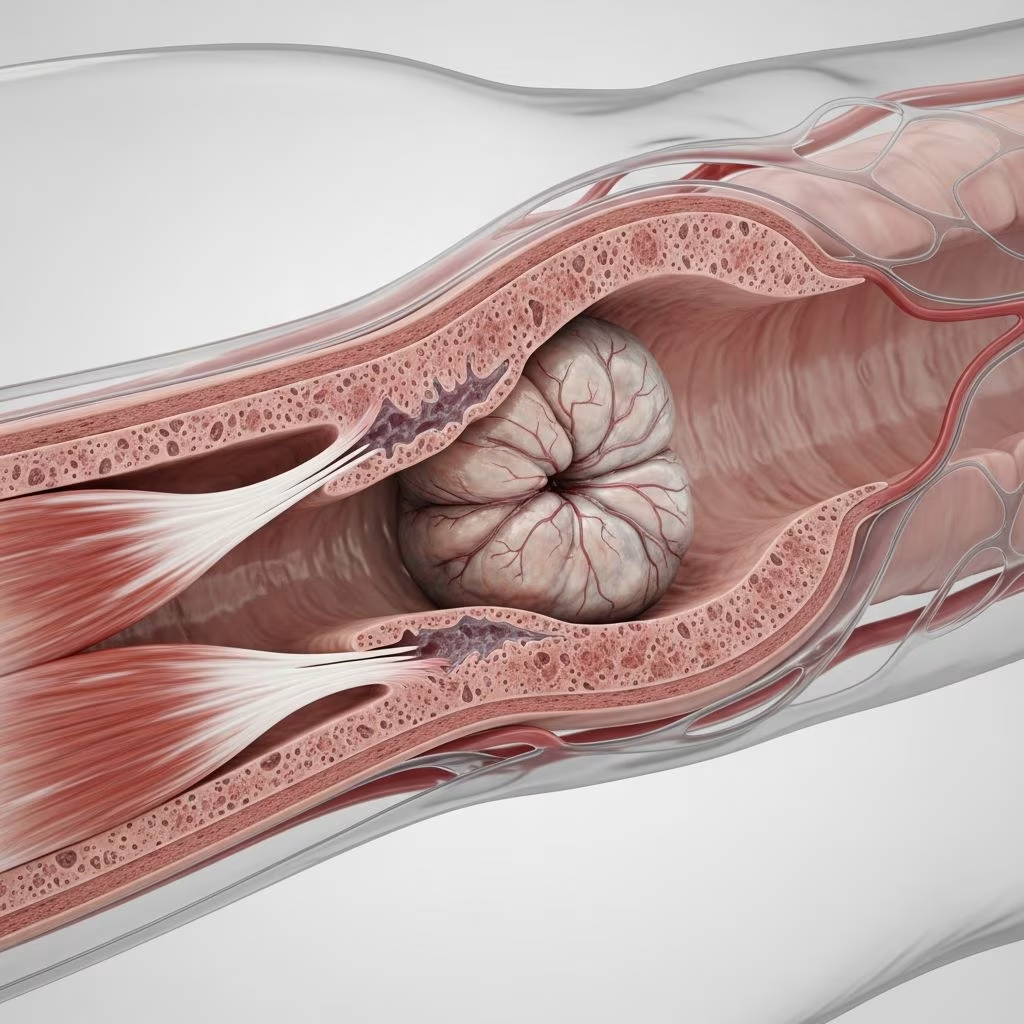
Esophageal cancer represents a rare yet challenging condition in dogs, affecting the muscular tube that transports food from the mouth to the stomach. These tumors can disrupt normal swallowing, leading to severe complications if not addressed promptly. While uncommon, early detection through vigilant observation of symptoms can significantly influence management strategies and survival outcomes.
Recognizing the Signs of Esophageal Tumors
Dogs with esophageal tumors often exhibit subtle initial symptoms that mimic other gastrointestinal issues. Common indicators include difficulty swallowing, known as dysphagia, and regurgitation of undigested food shortly after eating. Weight loss occurs due to reduced food intake and inefficient nutrient absorption. Additional signs encompass lethargy, chest pain manifesting as reluctance to eat, and respiratory distress from aspiration pneumonia, where food particles enter the lungs.
- Regurgitation: Passive expulsion of food, unlike vomiting which is more forceful.
- Dysphagia: Pain or hesitation during swallowing, often leading to drooling or gagging.
- Weight loss: Progressive despite normal appetite initially.
- Respiratory issues: Coughing, dyspnea, or panting from secondary infections.
- Pain on swallowing: Behavioral cues like pawing at the mouth or neck stiffness.
These symptoms can vary based on tumor location and size, with caudal thoracic masses sometimes presenting primarily as chronic cough or breathing difficulties.
Types of Esophageal Tumors in Canine Patients
Esophageal neoplasms in dogs are predominantly malignant, though benign forms like leiomyomas exist. Squamous cell carcinomas (SCC) and sarcomas, including leiomyosarcomas, are most frequent. Leiomyomas, smooth muscle tumors, are typically benign and responsive to surgical removal. Malignant variants often invade locally or metastasize to lungs or lymph nodes, complicating treatment.
| Tumor Type | Characteristics | Prevalence | Behavior |
|---|---|---|---|
| Leiomyoma | Benign, smooth muscle origin | Rare | Curable with enucleation |
| Leiomyosarcoma | Malignant, low-grade often | Common sarcoma | Good survival post-surgery |
| Squamous Cell Carcinoma | Epithelial malignancy | Most common | Poor response to therapy |
| Other Sarcomas | Fibrosarcoma, etc. | Less common | Variable, often aggressive |
Diagnostic Approaches for Accurate Identification
Diagnosis begins with a thorough history and physical exam, focusing on swallowing patterns and respiratory status. Radiographs reveal masses or narrowed lumens, while contrast studies highlight obstructions. Endoscopy provides direct visualization, allowing biopsies for histopathological confirmation. Advanced imaging like CT scans delineates tumor extent, aiding surgical planning. In one case, CT identified a caudal thoracic esophageal mass in a bichon frise with chronic cough.
- Survey radiographs: Initial screening for masses or megaesophagus.
- Barium swallow: Assesses motility and strictures.
- Endoscopy: Biopsy collection and mucosal evaluation.
- CT/MRI: Tumor margins and metastasis check.
- Fine-needle aspiration: Cytology for rapid prelim diagnosis.
Histopathology is crucial, distinguishing benign from malignant and guiding prognosis.
Surgical Interventions: The Primary Treatment Modality
Surgery remains the cornerstone for resectable esophageal tumors, particularly benign leiomyomas. Techniques include enucleation, where the tumor is shelled out without resecting the esophagus, preserving function. For sarcomas, partial esophagectomy with primary closure has yielded survival from 2 to over 20 months in Spirocerca-induced cases. En bloc resection offers excellent local control with over 50% long-term survival in select patients.
Postoperative care involves IV fluids, soft diets, pain management (e.g., meloxicam, hydromorphone), and activity restriction. Chest tubes manage pleural effusion, removed within 24-48 hours. One successful case saw a dog resume normal function two weeks post-enucleation via thoracotomy.
Adjunctive Therapies and Emerging Options
Chemotherapy protocols are not standardized but may follow surgery for malignant tumors, with median survival of 267 days for sarcomas. Radiation targets inoperable masses or palliation. Photodynamic therapy, using photofrin, achieved partial response and 9-month survival in an SCC case. Doramectin has managed related granulomas. Supportive measures like gastrostomy tubes bypass swallowing issues for nutrition.
- Chemotherapy: Investigational, post-surgical adjuvant.
- Radiation: Symptom relief, tumor shrinkage.
- Photodynamic therapy: Novel for SCC.
- Feeding tubes: Esophagotomy or gastrostomy for nutrition.
Prognosis and Factors Influencing Outcomes
Prognosis varies by tumor type: benign leiomyomas often curative, with no recurrence in months post-enucleation. Malignant tumors carry guarded outlooks; esophageal sarcomas post-surgery and chemo average 267 days, leiomyosarcomas over 400 days. SCC responds poorly, with advanced cases having grim prognoses due to inaccessibility and metastasis. Early intervention improves quality of life, even if curative resection isn’t feasible.
Factors include tumor grade, location, metastasis, and patient health. Resection over 3-5 cm risks dehiscence, favoring conservative approaches.
Preventive Measures and Risk Reduction
While genetic predispositions exist, minimizing risks involves controlling chronic esophagitis, GERD with antacids, and prompt foreign body removal. Regular exercise and anti-inflammatory diets may help. Breeds like dachshunds show SCC susceptibility. Routine vet checks catch issues early.
Living with an Esophageal Tumor Diagnosis
Pet owners face emotional challenges; palliative care emphasizes comfort with soft foods, elevated feeding, and pain relief. Monitor for aspiration pneumonia via small, frequent meals. Multidisciplinary veterinary teams optimize outcomes.
Frequently Asked Questions (FAQs)
What causes esophageal cancer in dogs?
Exact causes are unclear, but chronic inflammation, Spirocerca lupi infection, and breed factors contribute. No strong environmental links established.
Can esophageal tumors be benign?
Yes, leiomyomas are benign and often fully excised surgically without recurrence.
Is surgery always possible?
No, extensive or metastatic tumors may preclude surgery; palliation or adjunct therapies are alternatives.
How long can a dog live with esophageal cancer?
Varies: benign cases years; malignant 200-400+ days with treatment.
What diet helps post-surgery?
Soft, small frequent meals for 7-14 days, transitioning to normal under vet guidance.
References
- Esophageal Tumors — Veterinary Society of Surgical Oncology (VSSO). 2023. https://vsso.org/esophageal-tumors
- A challenging case: Esophageal leiomyoma in a dog — dvm360. 2023. https://www.dvm360.com/view/challenging-case-esophageal-leiomyoma-dog
- Esophageal Tumors – VCA Animal Hospitals — VCA. 2024. https://vcahospitals.com/know-your-pet/esophageal-tumors
- Esophageal Cancer in Dogs — National Canine Cancer Foundation. 2023. https://wearethecure.org/learn-more-about-canine-cancer/canine-cancer-library/esophageal-cancer-in-dogs/
- GI Tumors – Esophageal — Dr. Julius M. Liptak, Animal Cancer Surgeon. 2024. http://www.animalcancersurgeon.com/gi-tumors-esophageal



