
Esophageal Birth Defects In Animals: What You Need To Know
Exploring congenital esophageal anomalies in pets and livestock: causes, symptoms, diagnosis, and life-saving treatments for better animal health.
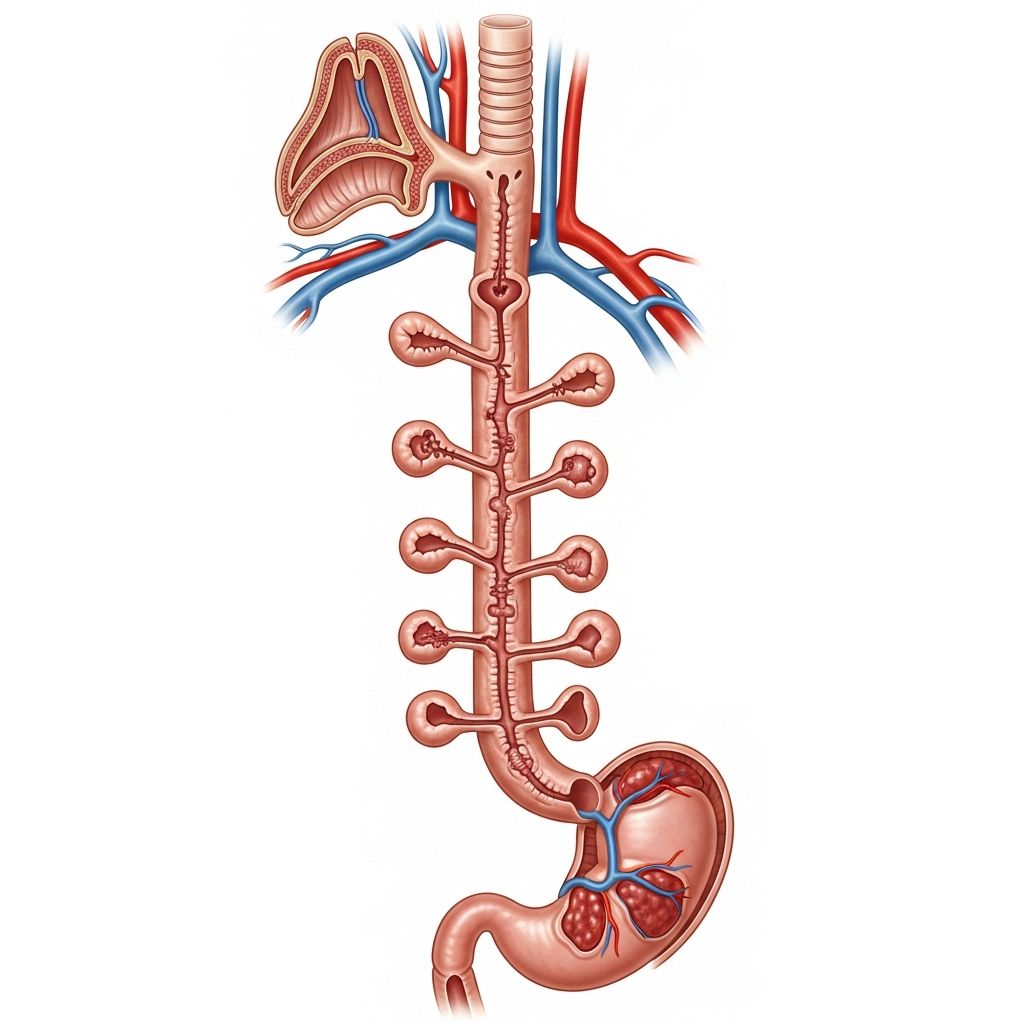
Congenital anomalies of the esophagus represent a significant challenge in veterinary practice, affecting swallowing and nutrition from an early age in various species. These birth defects disrupt normal food passage, leading to regurgitation, weight loss, and secondary complications like pneumonia. Understanding their types, detection methods, and interventions is crucial for improving survival rates.
Common Types of Esophageal Anomalies
Esophageal defects at birth vary by species and mechanism. Vascular ring anomalies occur when embryonic blood vessels encircle the esophagus, compressing it. Persistent right aortic arch stands out as the predominant form in companion animals, trapping the esophagus between major vessels.
Megaesophagus involves abnormal dilation of the esophagus, impairing motility. Congenital forms appear soon after weaning in breeds like Wire-haired Fox Terriers and Miniature Schnauzers, while acquired cases emerge later.
Stenosis, or narrowing, arises from developmental malformations such as fibromuscular hypertrophy or tracheobronchial remnants. These intrinsic issues mimic strictures but stem from birth rather than injury.
Less frequent are bronchoesophageal fistulas, abnormal connections between esophagus and airways, noted in breeds like Cairn Terriers.
Clinical Signs and Early Detection
Regurgitation post-weaning signals many anomalies, distinguishing from vomiting by passive food return. Puppies and kittens fail to thrive, showing poor weight gain and recurrent respiratory issues from aspiration.
In livestock like sheep, stunted growth and inability to swallow prompt urgent care, as seen in cases requiring novel surgeries.
- Persistent regurgitation of undigested food
- Weight loss despite normal appetite
- Coughing or pneumonia episodes
- Halitosis from food retention
Early owner awareness aids prompt veterinary consultation, enhancing prognosis.
Diagnostic Approaches
Diagnosis combines history, imaging, and endoscopy. Survey radiographs reveal megaesophagus dilation or air-fluid levels. Contrast studies highlight stenoses or vascular compressions via focal narrowings.
Fluoroscopy assesses motility, distinguishing congenital from acquired dysfunction. CT-angiography rules out extraluminal causes like vascular rings.
Endoscopy visualizes intrinsic lesions, such as muscular sphincters in stenosis cases, excluding inflammation or strictures.
| Anomaly Type | Key Imaging Finding | Confirmatory Test |
|---|---|---|
| Vascular Ring | Dilation cranial to heart base | CT-angiography |
| Megaesophagus | Esophageal dilation | Fluoroscopy for motility |
| Stenosis | Focal narrowing | Endoscopy/Histopathology |
Species-Specific Presentations
Dogs: Frequent Vascular and Motility Issues
Dogs, especially terriers, suffer megaesophagus and vascular rings. Labrador Retrievers show fibromuscular stenosis with weaning-onset regurgitation resolving via diet. Boston Terriers and others face severe growth impacts without intervention.
Cats: Rare but Notable Stenoses
Feline cases include suspected congenital stenoses treated endoscopically with balloon dilation. Siamese predispose to megaesophagus.
Large Animals: Surgical Innovations
Sheep and foals endure vascular rings, historically fatal. Minimally invasive ligament dissection succeeds, enabling normal eating and averting euthanasia.
Treatment Strategies
Management spans conservative to surgical. Dietary elevation prevents reflux in megaesophagus, with some pups outgrowing by 6 months.
Vascular rings demand surgery: thoracotomy ligates the ligamentum arteriosum. Minimally invasive endoscopy-based cuts reduce recovery time in large animals.
Stenoses respond to bougienage or balloon dilation in mild cases; severe ones need resection. Conservative diet adjustments succeeded long-term in a Labrador.
- Upright feeding: Bailey chair positions aid gravity flow.
- Soft diets: Blended foods minimize obstruction.
- Prokinetics: Enhance motility where applicable.
Prognosis and Long-Term Care
Outcomes vary: congenital megaesophagus carries guarded prospects due to pneumonia risks, though juveniles improve. Surgical vascular ring correction yields excellent results post-recovery.
Stenosis cases thrive conservatively if mild, as in adults reaching normal condition without procedures. Monitoring prevents complications like fibrosis.
Preventive Measures and Breeding Considerations
Hereditary predispositions in terriers and schnauzers warrant genetic screening. Breeders avoid affected lines to curb incidence.
Veterinary education on weaning signs promotes early intervention, boosting survival.
FAQs
What causes regurgitation in puppies?
Often congenital esophageal defects like megaesophagus or vascular rings, starting post-weaning.
Can esophageal anomalies be cured?
Surgical correction for vascular rings; medical management for others, with variable success.
Is megaesophagus fatal?
Guarded prognosis, but manageable with care; aspiration pneumonia is main threat.
How is vascular ring diagnosed?
Imaging shows cranial dilation; CT confirms vascular encirclement.
Do cats get esophageal birth defects?
Yes, including stenoses treatable by dilation.
References
- Congenital esophageal stenosis in a Labrador retriever — PMC/NCBI. 2022. https://pmc.ncbi.nlm.nih.gov/articles/PMC9648477/
- Once unable to swallow, sheep’s congenital throat defect repaired — Cornell University College of Veterinary Medicine. 2023-05-12. https://www.vet.cornell.edu/about-us/news/20230512/once-unable-swallow-sheeps-congenital-throat-defect-repaired-novel-approach
- Disorders of the Esophagus in Dogs — Merck Veterinary Manual. Accessed 2026. https://www.merckvetmanual.com/dog-owners/digestive-disorders-of-dogs/disorders-of-the-esophagus-in-dogs
- Megaesophagus — VCA Animal Hospitals. Accessed 2026. https://vcahospitals.com/know-your-pet/megaesophagus
- Diagnosing and treating esophageal diseases in dogs and cats — dvm360. Accessed 2026. https://www.dvm360.com/view/diagnosing-and-treating-esophageal-diseases-dogs-and-cats-proceedings
- Suspected congenital oesophageal stenosis in a cat — BVA Journals/Wiley. 2025. https://bvajournals.onlinelibrary.wiley.com/doi/full/10.1002/vrc2.70093
Similar Articles








Read full bio of medha deb


