

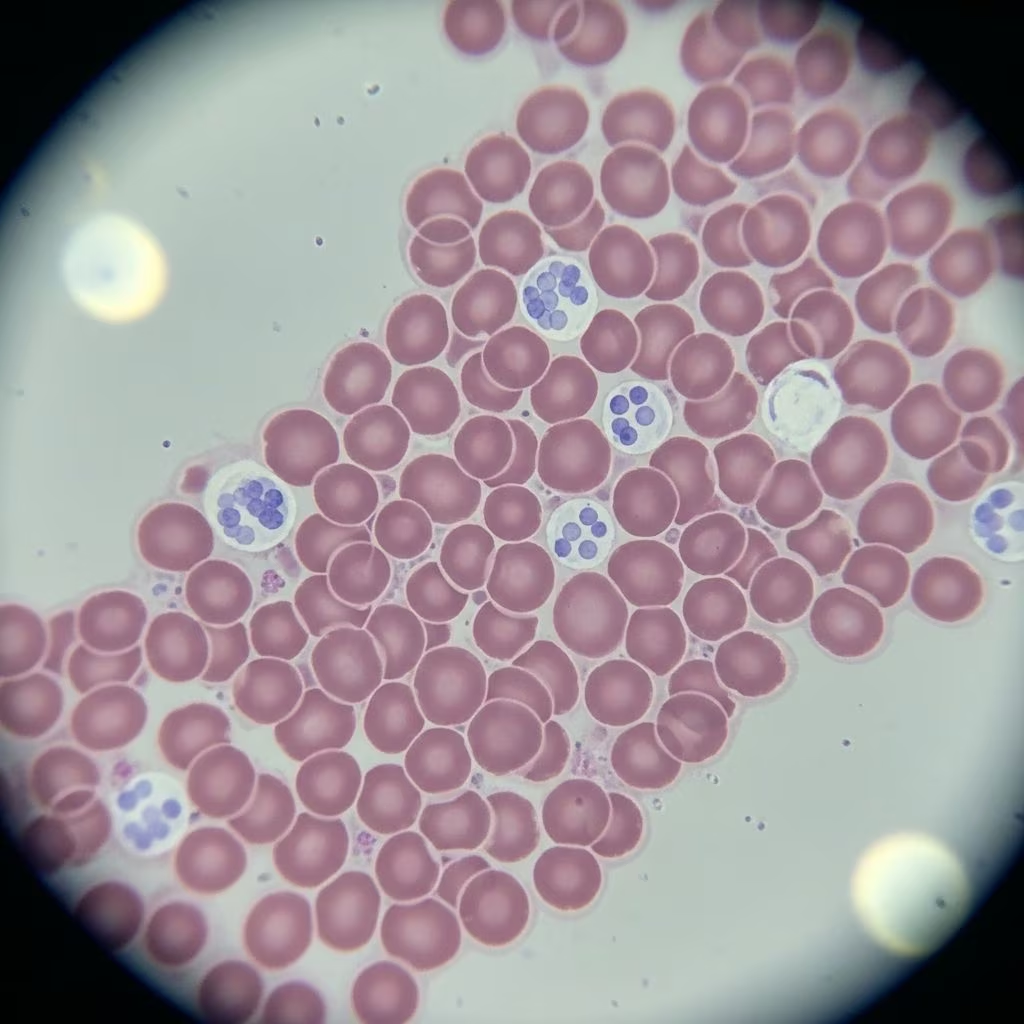
Erythrocytosis, also known as polycythemia, refers to an abnormal elevation in red blood cell (RBC) mass or concentration in horses. This condition can manifest in relative or absolute forms, each with distinct underlying mechanisms and implications for equine health. Recognizing and addressing erythrocytosis promptly is crucial, as it can lead to hyperviscosity syndrome, impairing circulation and oxygen delivery.
Defining Erythrocytosis and Its Types in Equine Medicine
In horses, erythrocytosis is characterized by increased packed cell volume (PCV), often exceeding 55-60%, detected via hematocrit measurements. Relative erythrocytosis arises from hemoconcentration due to fluid loss or splenic contraction during stress or exercise, without a true increase in RBC production. Absolute erythrocytosis, rarer in equines, involves genuine RBC overproduction and subdivides into primary (autonomous bone marrow proliferation) and secondary (driven by erythropoietin or EPO-like stimuli) categories.
Primary forms stem from neoplastic or idiopathic bone marrow disorders, while secondary types respond to hypoxia or tumors. Horses at high altitudes or with chronic respiratory issues may develop appropriate secondary erythrocytosis as a compensatory mechanism.
Common Causes Behind Elevated RBC Counts in Horses
Relative erythrocytosis predominates in clinical practice, triggered by dehydration from diarrhea, colic, or endurance events. Splenic contraction releases stored RBCs, transiently boosting PCV up to 60% in excited horses.
Absolute erythrocytosis includes:
- Appropriate secondary: Tissue hypoxia from congenital heart defects, pulmonary fibrosis, or high-altitude living stimulates EPO release from kidneys.
- Inappropriate secondary: EPO-secreting tumors (e.g., renal nephroblastoma) or liver diseases like fibrosis aberrantly produce EPO.
- Primary: Rare myeloproliferative disorders or idiopathic stem cell clones independent of EPO.
Endocrine influences, such as pheochromocytoma-induced catecholamines, can mimic absolute increases without true RBC mass expansion.
Clinical Manifestations and Recognition in Horses
Horses with mild erythrocytosis (PCV <60%) may appear normal, but severe cases exhibit hyperviscosity signs. Mucous membranes turn brick-red or purple, with sluggish capillary refill.
| Symptom | Description | Severity Indicator |
|---|---|---|
| Lethargy and Exercise Intolerance | Reduced energy, reluctance to move | PCV >55% |
| Weight Loss | Progressive cachexia despite appetite | Chronic cases |
| Neurological Signs | Ataxia, blindness, seizures | PCV >65% |
| Bleeding Tendencies | Epistaxis, petechiae, GI hemorrhage | Thrombosis risk |
| Mucous Membrane Changes | Deep red, tortuous vessels on retina | Hyperviscosity hallmark |
Dark, viscous blood on venipuncture and tachycardia further signal complications. Thrombotic events like laminitis or renal infarcts can ensue.
Diagnostic Pathways for Confirming Erythrocytosis
Initial evaluation starts with complete blood count (CBC) showing elevated RBC, hemoglobin, and PCV. Differentiate types via:
- Clinical assessment: Dehydration signs (tacky gums, skin tent) suggest relative form.
- Response to fluids: IV hydration normalizes relative PCV within hours.
- Plasma protein: Elevated in dehydration, normal/low in absolute.
- Arterial blood gas: Hypoxemia indicates appropriate secondary.
- EPO assay: High in secondary, low/normal in primary.
- Imaging/Bone marrow: Rule out tumors, assess marrow hyperplasia.
Horses under 1 year may have physiologic highs; recheck post-maturity.
Therapeutic Strategies and Management Protocols
Treatment targets the root cause while mitigating hyperviscosity.
Relative Erythrocytosis: Aggressive fluid therapy (e.g., isotonic crystalloids at 20-40 mL/kg/hr) and correct dehydration source.
Absolute Forms:
- Phlebotomy: Remove 10-20 mL/kg blood, replace with colloids/saline to target PCV 50-55%. Repeat as needed.
- Hydroxyurea: 15-30 mg/kg PO q24h for primary, titrate to effect; monitor CBC.
- Secondary appropriate: Treat hypoxia (oxygen therapy, address cardiac/pulmonary issues).
- Inappropriate secondary: Excise tumors surgically or via chemo/radiation.
Supportive care includes anti-thrombotics if clotting occurs. Prognosis varies: excellent for relative, guarded for primary neoplasms.
Preventive Measures and Long-Term Monitoring
Endurance horses benefit from hydration protocols pre/post-exercise. High-altitude stables should screen for hypoxemia. Regular CBCs (q3-6 months) track chronic cases, adjusting phlebotomy frequency. Owners note behavioral changes early.
Prognostic Factors Influencing Outcomes
Early intervention yields best results. Relative forms resolve fully; secondary appropriate may persist if hypoxia uncorrectable. Primary carries poor prognosis due to progression. PCV >70% signals crisis.
Frequently Asked Questions (FAQs)
What is the most common cause of erythrocytosis in horses?
Dehydration-induced relative erythrocytosis is most prevalent, especially in athletic horses.
Can erythrocytosis be fatal in equines?
Yes, untreated severe cases lead to thrombosis, organ failure, or stroke from hyperviscosity.
How often should phlebotomy be performed?
Based on serial PCV; typically every 1-4 weeks until stable below 55%.
Is hydroxyurea safe for long-term use in horses?
Limited data, but effective in other species; requires cytopenic monitoring.
Do foals commonly show high PCV?
Yes, physiologic up to 50-55% normalizes by weaning.
This overview equips veterinarians and owners with actionable knowledge on erythrocytosis management in horses, emphasizing multidisciplinary approaches for superior outcomes.
References
- Erythrocytosis (Polycythemia) in Animals — MSD Veterinary Manual. 2023. https://www.msdvetmanual.com/circulatory-system/erythrocytosis-polycythemia/erythrocytosis-polycythemia-in-animals
- Blood: polycythemia – primary in Horses — Vetlexicon Equis. 2024. https://www.vetlexicon.com/equis/internal-medicine/articles/blood-polycythemia-primary/
- Erythrocytosis — eClinpath. 2023. https://eclinpath.com/hematology/polycythemia/
- Appropriate secondary absolute erythrocytosis in a horse — Mad Barn (citing Vet Rec 2011). 2011-12-03. https://madbarn.com/research/appropriate-secondary-absolute-erythrocytosis-in-a-horse/
- Hematopoietic Neoplasias in Horses — PMC/NCBI. 2014. https://pmc.ncbi.nlm.nih.gov/articles/PMC4013965/
- Interpretation of Alterations in the Horse Erythrogram — Journal of Horse Research. 2023. https://savvysciencepublisher.com/jms/index.php/jhr/article/view/390



