

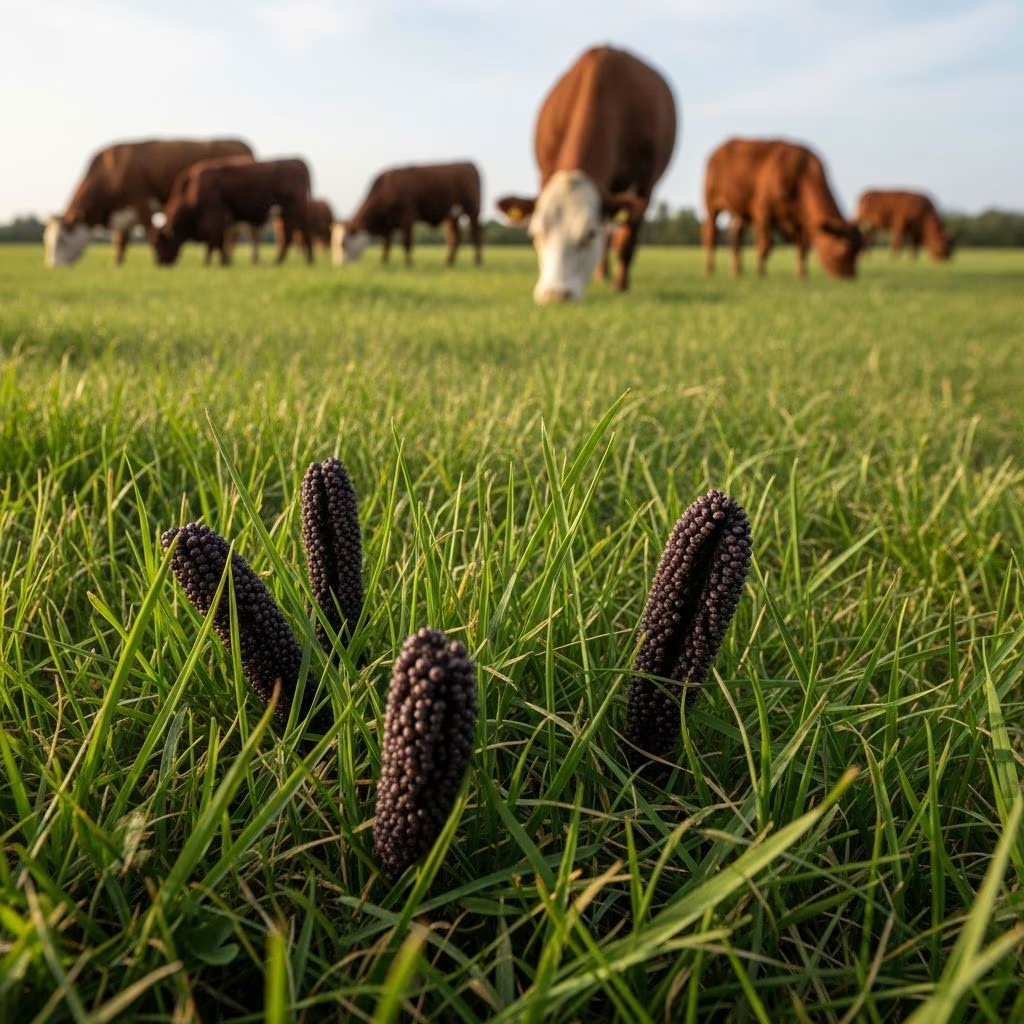
Ergotism represents a significant yet often overlooked mycotoxicosis affecting various livestock species, triggered by ingestion of ergot alkaloids produced by fungi in the Claviceps genus. These toxins induce vasoconstriction, leading to devastating effects like tissue necrosis, reproductive failures, and reduced productivity. Farmers and veterinarians must recognize this condition to mitigate economic losses through vigilant feed management and early intervention.
The Biological Culprit: Understanding Ergot Fungi
Ergot fungi thrive in cereal crops and grasses, replacing developing seeds with hard, dark sclerotia packed with potent alkaloids such as ergovaline, ergotamine, and ergocornine. These sclerotia, resembling grains in size and maturing alongside them, contaminate hay, silage, and pasture during harvest or grazing. Cool, moist conditions favor fungal proliferation, making wet seasons prime for outbreaks.
Over 40 ergot alkaloids exist, varying in toxicity by type and concentration. Sclerotia can harbor 0.01% to 0.21% alkaloids, with total levels in feed as low as 200 ppb causing subclinical harm like suppressed growth or delayed estrus. Repeated exposure heightens sensitivity, lowering the threshold for clinical disease.
Mechanisms of Toxicity: How Ergot Poisons Animals
Ergot alkaloids primarily act as vasoconstrictors, binding dopamine receptors in vascular smooth muscle to reduce blood flow, particularly to extremities. Chronic exposure damages endothelium, promoting thrombosis and ischemic necrosis. Cold amplifies this by further constricting vessels, while heat stress compounds intolerance.
Neurological effects include initial CNS stimulation followed by depression, manifesting as tremors or ataxia. Reproductive impacts stem from prolactin inhibition, halting mammary development and milk let-down. In pregnant animals, alkaloids disrupt embryonic implantation, causing abortions or weak offspring.
| Species | Recommended Limit | Notes |
|---|---|---|
| Cattle, Sheep, Horses | <1 ppm | Horses highly sensitive; avoid in pregnant mares. |
| Weaned Piglets | <1 ppm | Finishing pigs tolerate up to 2 ppm. |
| Poultry | <2 ppm | Most tolerant species. |
Symptoms Across Species: Recognizing the Signs
Cattle: Gangrenous Extremities and Hyperthermia
In cattle, symptoms emerge 2-6 weeks post-exposure, starting with hindlimb lameness progressing to forelimbs. Affected animals show elevated temperature, pulse, and respiration, often with hypersalivation. Necrosis sloughs tips of tails, ears, and hooves; coronary bands darken before sloughing. Pregnant cows abort or deliver weak calves, with rough coats and weight loss signaling chronic cases. Epidemic hyperthermia mimics fescue toxicosis during heat waves.
- Early indicators: Reluctance to move, arched back.
- Advanced: Dry gangrene, 40% herd lameness in severe outbreaks.
- Production hits: Reduced milk yield, poor feed efficiency.
Swine: Subtle Yet Costly Effects
Pigs exhibit feed refusal and stunted growth from low-level contamination. Necrosis rarely affects more than ear or tail tips. In sows, agalactia leads to tiny litters that starve post-farrowing due to absent milk and underdeveloped udders. No overt lesions beyond occasional snout sloughing distinguish porcine ergotism.
Horses: Heightened Vulnerability
Horses rank among the most susceptible, with pregnant mares prone to abortions and lactation failure. Lameness, tail/ear loss, and heat intolerance dominate, exacerbated by exercise demands. Even trace alkaloids disrupt thermoregulation, causing dyspnea.
Poultry and Other Species: Milder Manifestations
Chickens and turkeys tolerate higher doses but suffer wattles, combs, beaks, and foot necrosis. Reduced egg production and growth lag occur alongside poor feathering. Sheep mirror cattle symptoms but with less frequency.
Case Studies: Real-World Outbreaks
Documented incidents underscore ergotism’s severity. One outbreak saw steers refuse feed at 2900 ppb alkaloids, developing hoof coronet necrosis from ergotamine and ergocornine. Another January case with 6000 ppb caused near-starvation, while 12,000 ppb prompted 40% herd euthanasia due to sloughed hooves, tails, and ears.
In northern U.S. cattle, 62,000 ppb led to three-quarters hoof loss, necessitating sacrifice despite mild weather. These highlight that alkaloid equivalence (e.g., ergotamine-adjusted totals) better predicts risk than raw concentrations.
Diagnosis: Confirming Ergot Exposure
Veterinarians rely on history of ergoty feed, clinical gangrene, and lab confirmation. Visual sclerotia in feed prompts alkaloid quantification via liquid chromatography-mass spectrometry (LC-MS), targeting ergovaline and others. Necropsy reveals ischemic tissues without bacteria, distinguishing from frostbite or infections. Blood prolactin assays support prolactin suppression in agalactia cases.
- Feed analysis threshold: >0.2-1 ppm triggers action.
- Differential diagnoses: Fescue toxicosis, blackleg, laminitis.
Treatment Strategies: Supportive Care Essentials
No antidote exists; halt contaminated feed immediately. Provide deep bedding, warmth (avoid extremes), and NSAIDs for pain/inflammation. Vasodilators like acepromazine aid circulation in mild cases. Nutritional support counters weight loss; separate affected animals to prevent bullying. Recovery hinges on early detection, with full regeneration possible if necrosis halts.
Prevention: Proactive Feed Management
Scout fields for sclerotia pre-harvest; dilute contaminated lots with clean feed. Clean seed stock, rotate crops, and use certified ergot-free grains. Store hay dry to curb fungal growth. Test suspect feeds routinely, especially post-wet summers. Regulatory limits guide blending: keep totals under species-specific ppm.
Breeding resistant varieties and fungal biocontrols offer long-term promise, but vigilance remains key amid climate variability.
FAQs: Common Questions on Ergotism
What triggers ergot outbreaks in livestock?
Cool, humid weather promotes Claviceps infection in rye, wheat, barley, and fescue, contaminating feed with alkaloid-rich sclerotia.
Can low ergot levels harm animals?
Yes, 200 ppb causes subclinical issues like reduced gains, delayed breeding, and lower milk output over time.
How do I test for ergot alkaloids?
Submit feed to labs using LC-MS for precise quantification of multiple alkaloids.
Are there seasonal risks?
Winter cold worsens gangrene; summer heat induces dyspnea and drops milk production.
What species suffer most from ergotism?
Horses and cattle show severe gangrene; swine face agalactia; poultry tolerate best.
Conclusion
Ergotism demands respect as a multifaceted toxicosis eroding livestock health and farm profitability. Through education, monitoring, and swift response, producers can safeguard herds against this enduring fungal foe.
References
- Ergotism in Animals — MSD Veterinary Manual. 2023. https://www.msdvetmanual.com/toxicology/mycotoxicoses/ergotism-in-animals
- Beware of Ergot-contaminated Livestock Feeds — NDSU Agriculture (ND State University). 2019-09-16. https://www.ag.ndsu.edu/news/newsreleases/2019/sept-16-2019/beware-of-ergot-contaminated-livestock-feeds
- Cases of ergotism in livestock and associated ergot alkaloid concentrations in feed — PMC/NCBI (Peer-reviewed). 2015-02-06. https://pmc.ncbi.nlm.nih.gov/articles/PMC4332362/
- Ergot: A Potential Livestock Poisoning Problem — SDSU Extension (South Dakota State University). 2023. https://extension.sdstate.edu/ergot-potential-livestock-poisoning-problem
- Impacts of Cereal Ergot in Food Animal Production — Frontiers in Veterinary Science (Peer-reviewed). 2016-04-11. https://www.frontiersin.org/journals/veterinary-science/articles/10.3389/fvets.2016.00015/full



