

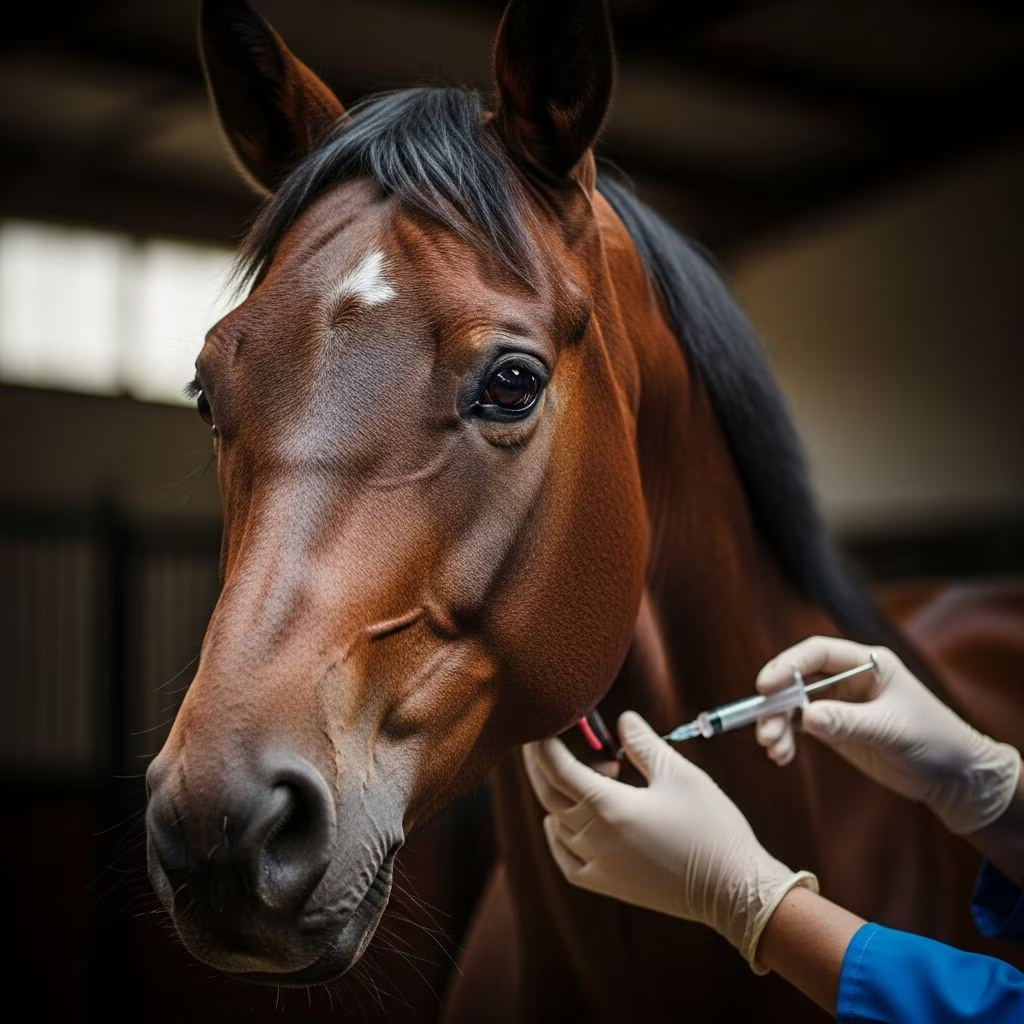
Equine viral arteritis (EVA) represents a significant health concern in equine populations, characterized by its ability to provoke respiratory distress, vascular inflammation, and reproductive complications. Caused by the equine arteritis virus (EAV), this RNA virus from the Arteriviridae family spreads efficiently among horses, donkeys, and related species, often leading to outbreaks in breeding facilities or during transport.
The Nature and Origins of Equine Viral Arteritis
EVA stems from a single serotype of EAV, though genetic variations influence disease severity. The virus targets vascular endothelium, inciting widespread inflammation that manifests in diverse clinical presentations. While most infections resolve without intervention, certain strains, like the highly pathogenic Bucyrus variant, can prove lethal, particularly in neonates.
Historically, EVA gained prominence after a 1984 outbreak in Kentucky, underscoring its economic toll through abortion storms and fertility disruptions. Global prevalence persists, exacerbated by international horse and semen trade.
Pathways of Transmission in Horse Herds
EVA propagates via multiple routes, amplifying its contagious potential. Respiratory aerosols from coughing infected horses facilitate close-contact spread during shows or stables. Venereal transmission predominates, with virus shedding in semen from carrier stallions persisting indefinitely post-infection.
- Aerosolized droplets: Primary in naive populations, effective over short distances.
- Semen shedding: Carrier stallions transmit during natural breeding or artificial insemination.
- Fomites: Contaminated tack, buckets, and trailers harbor viable virus.
- Vertical spread: Rare, but possible in utero, leading to foal infections or abortions.
Stallions up to 70% may become carriers after primary infection, serving as reservoirs without outward signs. Mares typically clear the virus within weeks.
Recognizing Clinical Manifestations Across Age Groups
Symptom severity varies by strain virulence, host immunity, age, and stress. Many exposures yield subclinical infections, detected only via serology. Overt cases emerge 3-14 days post-exposure.
| Category | Common Signs | Affected Groups |
|---|---|---|
| Respiratory | Fever (up to 106°F), cough, nasal discharge, dyspnea | All ages |
| Vascular/Edema | Limb, scrotal, preputial swelling; ventral edema | Stallions, adults |
| Ocular | Conjunctivitis, epiphora, photophobia, periorbital edema | All |
| Reproductive | Abortion (last trimester), subfertility | Pregnant mares, stallions |
| Neurologic/GI | Ataxia, diarrhea, jaundice (rare) | Foals, severe cases |
In foals, interstitial pneumonia dominates, with fatality rates soaring in those under one week old due to pulmonary edema and infarcts.
Pathological Changes and Disease Progression
EAV invades endothelial cells, triggering cytokine storms (IL-1β, IL-6, TNF-α) that erode vessel walls. Necrotizing vasculitis ensues, peaking at day 10, yielding edema, petechiae, and serosanguinous effusions in body cavities.
Gross pathology reveals subcuticular hemorrhages, lymph node swelling, and GI congestion. Microscopically, fibrinoid necrosis, thrombosis, and lymphocytic cuffing hallmark affected arterioles. Resolution occurs by day 28 in non-carriers, but stallions retain viral RNA in ampullae.
Diagnostic Approaches for Accurate Confirmation
Timely diagnosis hinges on integrating clinical suspicion with lab assays. Acute phase detection favors virus isolation from nasopharyngeal swabs, blood, urine, or semen via cell culture or RT-PCR. Serology via SN or ELISA tracks antibody rises, distinguishing naive from exposed horses.
- RT-PCR: Gold standard for viremia detection, sensitivity peaks days 7-14.
- Virus isolation: From fluids/tissues, confirmatory but slower.
- Serology: Paired sera (acute/convalescent) show 4-fold titer hikes.
- Histopathology: Vasculitis in aborted fetuses or necropsies.
Differentials encompass EHV-1/4, influenza, EIA, and purpura hemorrhagica; EVA seropositivity aids exclusion.
Management Strategies and Supportive Care
No antiviral eradicates EAV; recovery relies on innate immunity. Supportive measures suffice for most, emphasizing hydration, nutrition, and monitoring.
- Antipyretics (flunixin meglumine) for fever.
- Anti-inflammatories and diuretics for edema, especially scrotal in stallions to avert transient infertility.
- Isolation, rest, and gradual reintroduction to work/breeding.
- Antibiotics for secondary bacterial complications.
For persistent stallion carriers, only castration eliminates shedding risk; vasectomy fails.
Vaccination and Biosecurity for Prevention
Modified-live (North America) and inactivated (Europe) vaccines mitigate clinical disease, abortions, and carrier status. Administer pre-breeding to seronegatives, avoiding pregnant mares.
Biosecurity pillars include:
- Quarantine newcomers 3 weeks with testing.
- Semen EVA-testing prior to AI.
- Stallion serostatus disclosure.
- Disinfect fomites; limit commingling.
Outbreak response: Halt breeding, vaccinate susceptibles, trace carriers.
Special Considerations for Breeding Operations
Breeding sheds bear the brunt, with carrier stallions fueling epidemics. Mandatory EVA testing in many regions (e.g., EU semen export) mandates seronegative status or vaccination. Abortion rates hit 30-70% in naive herds; vaccination slashes this.
Foal monitoring post-outbreak prevents pneumonia fatalities via early supportive care.
Frequently Asked Questions (FAQs)
What is the incubation period for EVA?
Typically 3-14 days, with viremia from days 3-14.
Can EVA be fatal?
Rare in adults; up to 50% in young foals with pneumonia.
How long do stallions shed virus in semen?
Indefinitely in 10-70% carriers without intervention.
Is there a cure for carrier stallions?
No medical cure; castration is definitive.
Should I vaccinate my horse against EVA?
Yes, for breeding stock or high-risk environments; consult vet.
Long-Term Implications and Economic Impact
EVA disrupts racing, showing, and breeding via quarantines and trade bans. Annual global losses stem from abortions, fertility checks, and culls. Proactive serosurveillance and vaccination yield herd immunity, curbing reservoirs.
Research advances target antivirals and DIVA vaccines, but management remains cornerstone.
References
- Equine Viral Arteritis – Horse Owners — MSD Veterinary Manual. 2023. https://www.msdvetmanual.com/horse-owners/infectious-diseases-of-horses/equine-viral-arteritis
- Equine Viral Arteritis – Generalized Conditions — Merck Veterinary Manual. 2023. https://www.merckvetmanual.com/generalized-conditions/equine-viral-arteritis/equine-viral-arteritis
- Equine Viral Arteritis: Symptoms, Treatment, and Prevention Options — PetMD. 2023. https://www.petmd.com/horse/conditions/systemic/equine-viral-arteritis
- Equine Viral Arteritis Factsheet — Center for Food Security and Public Health, Iowa State University. 2022. https://www.cfsph.iastate.edu/Factsheets/pdfs/equine_viral_arteritis.pdf
- AAEP Infectious Disease Guidelines: Equine Viral Arteritis — American Association of Equine Practitioners. 2023-12-01. https://aaep.org/wp-content/uploads/2024/02/EVA_DZ_Guidelines_Final_2023.pdf
- Equine Viral Arteritis — USDA APHIS. 2024. https://www.aphis.usda.gov/livestock-poultry-disease/equine/viral-arteritis



