

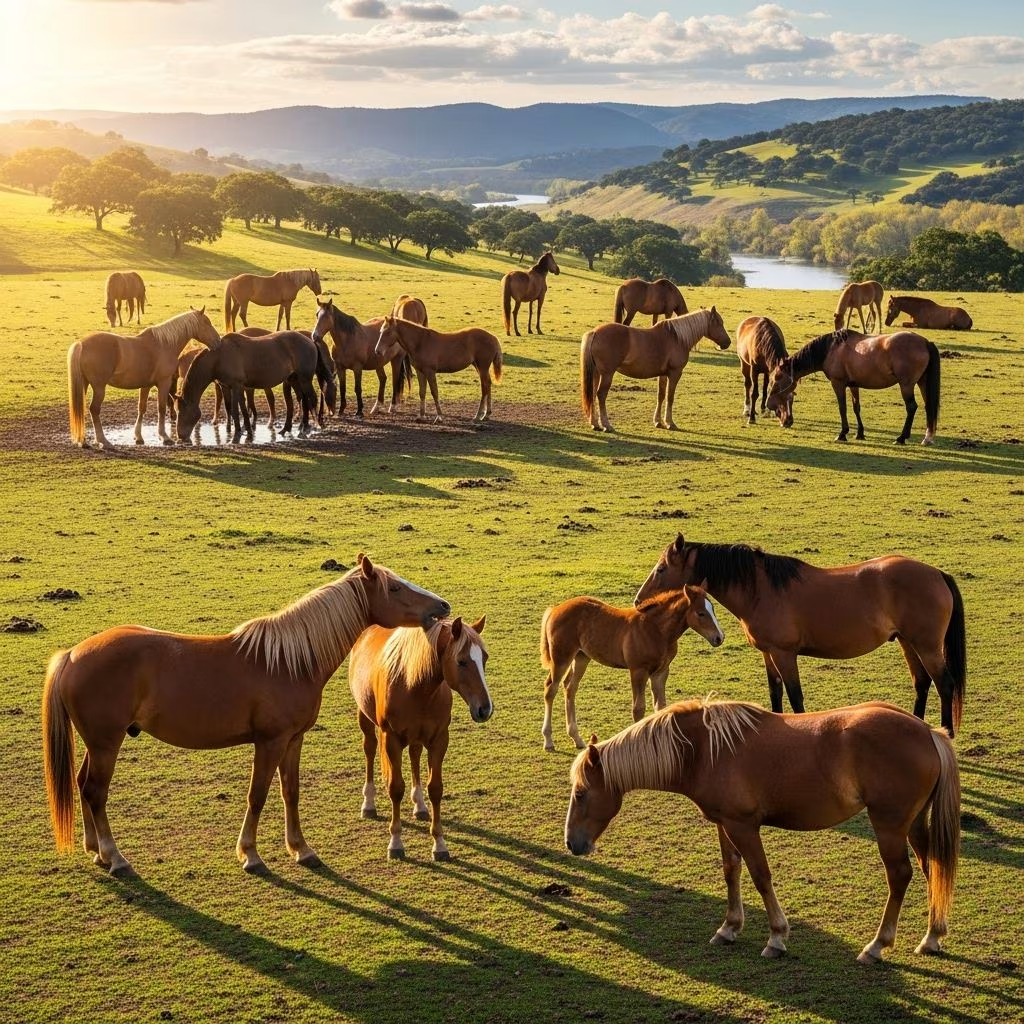
Horses thrive as highly social creatures, naturally forming stable groups that foster long-term bonds essential for their emotional and physical well-being. These dynamics, rooted in evolutionary adaptations, persist even in domesticated settings, influencing everything from daily interactions to overall health.
The Foundations of Horse Group Living
In their natural habitat, horses organize into structured bands typically led by a dominant mare, accompanied by several mares, their offspring, and occasionally a stallion. This setup, known as a harem or band, promotes stability through overlapping home ranges and synchronized activities like grazing and migration. Juveniles remain with the group until around 2-3 years, after which males often join bachelor bands with fluid memberships, while females may shift to nearby groups, maintaining spatial familiarity.
Such arrangements underscore horses’ preference for consistent companionship. Solitary existence is rare, as even displaced stallions seek out peers, highlighting the innate drive for affiliation over isolation. Domestication has not erased these instincts; instead, it often disrupts them, leading to welfare concerns when social needs go unmet.
Building and Maintaining Bonds
Affiliative behaviors form the cornerstone of equine relationships. Mutual grooming, or allogrooming, stands out as a key ritual where horses nibble at each other’s coats, reducing stress and reinforcing ties. Studies show horses favor specific partners, influenced by familiarity and similarity, spending more time in proximity and engaging in grooming with these preferred associates.
Proximity maintenance and play further solidify bonds. Young horses, in particular, engage in vigorous play involving chasing and mock fights, which hones social skills and physical coordination. Pair bonds can endure lifelong, offering mutual vigilance—such as standing head-to-tail to ward off insects—and emotional support. These interactions peak in foalhood, with nursing nuzzling evolving into broader group engagements by the first month’s end.
- Mutual grooming: Lowers heart rate, signals trust, and strengthens reciprocity.
- Play behaviors: Develops hierarchy awareness and motor skills in juveniles.
- Proximity preference: Horses cluster with familiar companions for security.
Dominance and Hierarchy in Herds
Equine societies rely on a nuanced dominance structure rather than constant aggression. Hierarchies emerge through subtle deference, where lower-ranking individuals yield space or resources without overt conflict. Mares often dictate group movement by leading toward food or water, their authority stemming from resource needs rather than force.
Recent insights challenge the strict linear hierarchy model, revealing more flexible, reinforcement-based communication in free-ranging groups. Agonistic acts—like threats, chases, or bites—primarily establish personal space and occur infrequently in stable bands, contrasting with the emphasis in some research. Stallions maintain peripheral roles, fending off rivals while deferring to mares in daily decisions.
| Hierarchy Element | Key Behaviors | Primary Function |
|---|---|---|
| Mare Leadership | Grazing ahead, group direction | Resource access, stability |
| Stallion Role | Peripheral guarding | Male defense, band protection |
| Juvenile Integration | Snapping, play submission | Learning rank, socialization |
Communication Through Body Language
Horses convey intentions via a rich repertoire of signals. Ears pinned back or tail swishing signal irritation, while relaxed postures invite affiliation. During feeding, hierarchy shines through: dominant individuals claim prime spots, subordinates retreat to edges, minimizing scraps.
Foals employ snapping—clacking teeth together—to appease adults, reducing aggression risks as they explore. Nuzzling and gentle nudges denote comfort and bonding, especially between dams and offspring. Owners attuned to these cues can preempt stress, fostering harmonious environments.
Developmental Stages of Socialization
Foals begin life tethered to their mothers, with interactions limited to nursing and initial play. By week four, they venture further, forming peer bonds through roughhousing that mimics adult disputes. This progression builds resilience and rank awareness.
As puberty nears, dispersal occurs: males form loose bachelor groups, practicing dominance displays; females join adjacent bands, leveraging natal ties. Adulthood solidifies stable hierarchies, with affiliative networks buffering conflicts via post-dispute grooming.
Challenges in Domestic Environments
Modern stabling often isolates horses, curtailing grooming and stable partnerships critical for welfare. Frequent group reshuffles disrupt hierarchies, spiking aggression as individuals renegotiate ranks. Space constraints exacerbate tensions, trapping subordinates without escape routes.
Social deprivation manifests in stereotypes like cribbing or weaving, absent in wild counterparts. Yet, group housing mimicking natural bands—allowing choice in companions and ample space—mitigates these issues, slashing stress markers.
Optimizing Social Welfare for Horses
To align management with innate needs, prioritize compatible groupings based on age, sex, and temperament. Pasture access enables natural foraging and bonding, while visual/ tactile contact in stalls bridges isolation gaps.
Monitor feeding to respect hierarchies, using multiple sites to diffuse competition. Introduce newcomers gradually, supervised, to forge bonds sans chaos. Such strategies enhance longevity and performance, underscoring sociality’s role in equine thriving.
Frequently Asked Questions
Why do horses groom each other?
Mutual grooming fosters bonds, relieves itch, and signals affiliation, preferentially with close partners.
How does dominance work in horse herds?
Through deference and subtle cues, not fights; mares lead via resource initiative.
Can isolated horses be healthy?
Prolonged isolation risks stress behaviors; companionship is vital for welfare.
What role does play serve in young horses?
It builds social skills, strength, and hierarchy knowledge.
How to manage multi-horse feeding?
Provide ample feeders respecting hierarchy to curb aggression.
References
- Equine Social Behaviour: Love, War and Tolerance — PMC. 2023-05-10. https://pmc.ncbi.nlm.nih.gov/articles/PMC10177386/
- Social Behavior in Horses – Equine Research Database — Mad Barn. 2024-01-15. https://madbarn.com/research-topics/social-behavior/
- Companionship and Socialising — British Horse Society. 2023-08-22. https://www.bhs.org.uk/horse-care-and-welfare/behaviour/companionship-and-socialising/
- Social Behavior Among Horses at Feeding Time — Kentucky Equine Research. 2022-11-05. https://ker.com/equinews/social-behavior-among-horses-feeding-time/
- Social Behavior of Horses — MSD Veterinary Manual. 2025-02-01. https://www.msdvetmanual.com/behavior/behavior-of-horses/social-behavior-of-horses
- The Basics of Equine Behavior — Rutgers Equine Science Center. 2023-06-12. https://esc.rutgers.edu/fact_sheet/the-basics-of-equine-behavior/



