

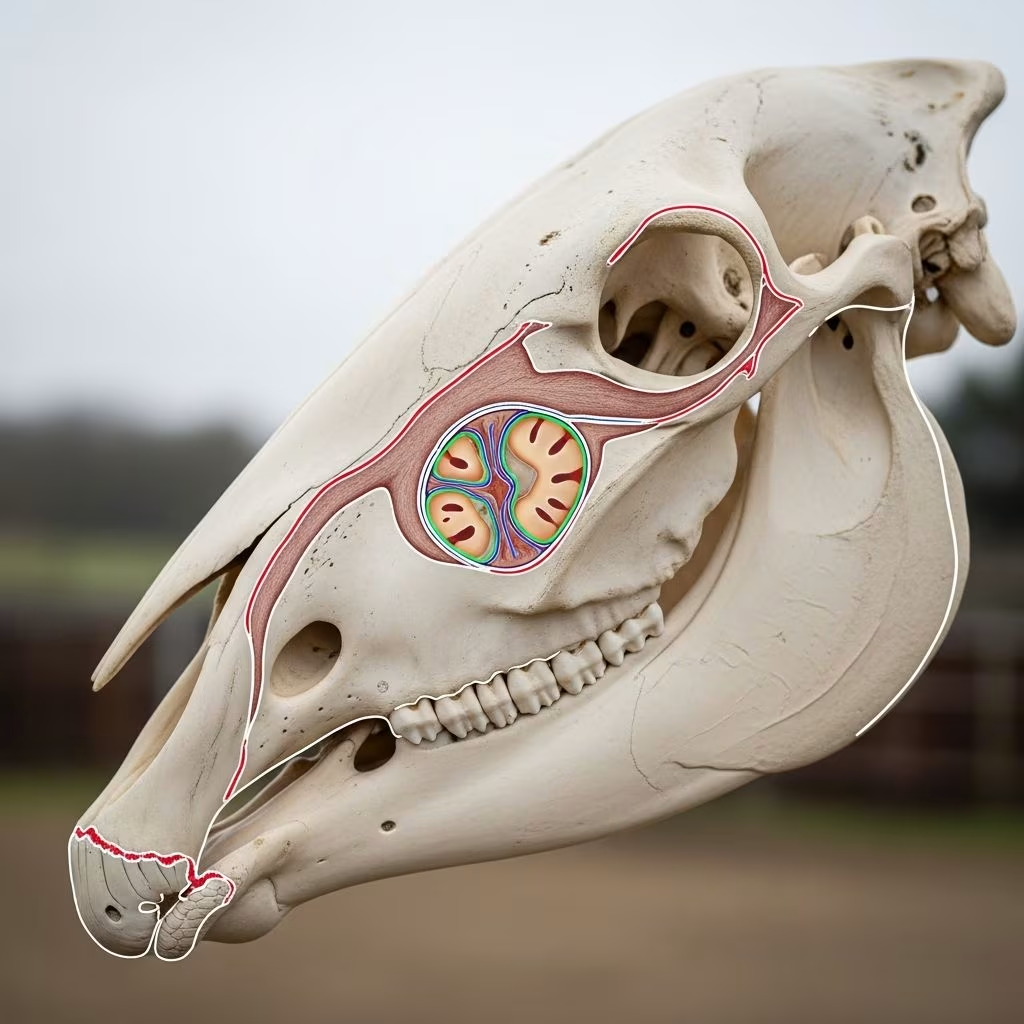
The paranasal sinuses of horses represent one of the most intricate anatomical systems within the equine head. These air-filled cavities play a significant role in respiratory function and overall head structure. When dysfunction or disease develops in these spaces, it can substantially impact an animal’s health, performance, and quality of life. This guide provides veterinary professionals and horse owners with detailed information about the anatomy, pathophysiology, and management of equine sinus disorders.
The Complex Architecture of Equine Sinus Systems
The paranasal sinuses in horses consist of a sophisticated network of interconnected air-filled compartments within the skull. Understanding this anatomical arrangement is essential for comprehending how disease develops and spreads within these structures. The system comprises seven distinct sinus compartments organized into two primary sinus systems, each with unique anatomical features and clinical significance.
Primary Sinus Compartments and Their Functions
The rostral paranasal sinus system contains the rostral maxillary sinus and ventral conchal sinus, which are separated from the caudal system by the maxillary septum. The caudal paranasal sinus system encompasses a more expansive group of compartments including the caudal maxillary sinus, dorsal conchal sinus, middle conchal sinus, frontal sinus, and sphenopalatine sinus.
The maxillary sinus represents the largest component of this system and serves as a central hub for drainage and communication. This sinus divides into rostral and caudal portions, with the rostral division containing the root of the first maxillary molar tooth and the caudal division accommodating the roots of the second and third molars. The frontal sinus typically constitutes approximately 56.7 percent of total sinus volume and maintains extensive communication with the dorsal conchal sinus, forming what is clinically termed the conchofrontal sinus.
The dorsal and ventral conchae are divided into rostral and caudal compartments, with the rostral portions functioning as air-filled turbinates within the nasal passage and the caudal compartments forming separate sinus spaces. The sphenopalatine sinus, though smallest, maintains critical communication with the caudal maxillary sinus and plays an important role in the overall drainage pathways.
Communication Pathways and Drainage Mechanisms
The functionality of equine paranasal sinuses depends critically on the sinonasal channels that connect these compartments to the nasal cavity. Two primary communication routes exist: the rostral sinonasal channel ventilates the rostral paranasal sinus system, while the caudo-lateral sinonasal channel opens into the caudal paranasal sinus system. These channels converge at the nasomaxillary aperture, which serves as the common entrance point for drainage and ventilation.
The rostral sinonasal channel exhibits considerable anatomical variation between individual animals, influenced by the angulation of the channel and the elasticity of the ventral conchal lamella. In contrast, the caudal sinonasal channel demonstrates greater anatomical consistency and consistently connects to the caudal maxillary sinus in all equine subjects studied.
Effective sinus drainage depends on multiple physiological factors beyond simple anatomical patency. These factors include the integrity of communication pathways, the rate and character of secretion production, the quality of secretions themselves, the activity of ciliary epithelium, and the resorptive capacity of sinus tissues. Disruption of any component can compromise drainage and precipitate disease development.
Common Pathological Conditions Affecting the Equine Sinuses
Equine sinus disease encompasses multiple conditions ranging from infectious to non-infectious etiologies. The interconnected nature of the sinus system means that disease in one compartment frequently extends to involve adjacent structures, complicating both diagnosis and treatment.
Sinusitis: Primary and Secondary Forms
Sinusitis represents the most common primary sinus disorder in horses, characterized by inflammation of the sinus mucosa that can be triggered by various underlying causes. Primary sinusitis may develop from direct microbial invasion, while secondary sinusitis often results from dental pathology, particularly involving the molar tooth roots that project into the maxillary sinus compartments.
The anatomical relationship between tooth roots and sinus tissue creates a predisposition to odontogenic complications. When dental disease such as periapical abscess or tooth fracture occurs, infection readily extends into adjacent sinus compartments, initiating inflammatory cascades that impair normal drainage mechanisms.
Infectious and Inflammatory Processes
Bacterial colonization of compromised sinus tissue leads to purulent discharge accumulation, further obstructing drainage pathways and perpetuating infection. The complexity of the sinus system means that pathogens may seed multiple compartments, requiring comprehensive treatment strategies that address the entire affected system rather than isolated compartments.
Fungal infections, while less common than bacterial disease, can develop in horses with prolonged antibiotic therapy or immunocompromise. These infections often prove more resistant to conventional treatment and may require extended therapeutic protocols.
Anatomical and Structural Abnormalities
Congenital anatomical variations in sinonasal communication can predispose certain individuals to recurring sinus disease. Deviation of the maxillary septum or abnormal configuration of the nasomaxillary aperture may compromise drainage efficiency, creating environments favorable to pathogen colonization.
Traumatic injury to the head can result in sinus septum fractures, bone fragmentation, or disruption of normal drainage pathways. These injuries frequently lead to sinus hemorrhage and subsequent organization of blood clots within sinus compartments, predisposing to secondary infection.
Clinical Presentation and Diagnostic Approaches
Horses with sinus disease typically present with characteristic clinical signs that reflect the primary location of inflammation and the degree of drainage obstruction.
Observable Clinical Signs
- Unilateral or bilateral nasal discharge, frequently purulent or serosanguineous in character
- Facial swelling or asymmetry localized to the affected sinus region
- Fetid odor associated with purulent material accumulation
- Coughing, particularly when the horse lowers its head
- Subtle head position abnormalities or reluctance to lower the head
- Performance deterioration or exercise intolerance
- Fever in cases of acute bacterial infection
Diagnostic Imaging and Examination Techniques
Computed tomography represents the gold standard for equine sinus disease diagnosis, providing three-dimensional anatomical detail that permits identification of affected compartments, disease extent, and anatomical variations. Conventional radiography offers limited diagnostic utility due to overlapping anatomical structures but can identify gross pathology in advanced cases.
Physical examination includes palpation of facial landmarks and percussion of suspected sinus regions. Thermographic imaging may identify subtle temperature variations associated with underlying inflammation. Endoscopic examination permits direct visualization of nasal passages and discharge characteristics while allowing collection of samples for culture and sensitivity testing.
Treatment Strategies and Clinical Management
Successful management of equine sinus disease requires addressing the underlying cause while reestablishing normal drainage patterns and eliminating causative organisms.
Medical Management Approaches
Antimicrobial therapy forms the foundation of medical management, with selection based on culture results when available. Broad-spectrum antibiotics provide initial coverage pending culture results, with transition to targeted therapy based on organism identification and susceptibility patterns.
Systemic non-steroidal anti-inflammatory agents reduce sinus mucosa inflammation and discomfort. Mucoactive agents may improve drainage efficiency by altering secretion viscosity. Supportive care including stall rest and environmental modification minimizes secondary respiratory stress.
Surgical Interventions and Therapeutic Procedures
Surgical intervention becomes necessary when medical management fails to resolve disease or when anatomical obstruction prevents adequate drainage. Trephination techniques permit direct access to affected sinus compartments, allowing removal of purulent material, necrotic tissue, and foreign objects.
Surgical reconstruction aims to maintain or restore normal sinonasal communication pathways, restoring physiologic drainage. In cases of dental-origin sinusitis, extraction of the offending tooth may be necessary to eliminate the infection source and permit sinus healing.
Advanced techniques including endoscopic-guided lavage permit therapeutic delivery directly into affected compartments while minimizing surgical trauma. These minimally invasive approaches are increasingly preferred for management of select sinus pathology.
Prognosis and Long-Term Outcomes
Prognosis for equine sinus disease varies based on disease etiology, anatomical extent, and timeliness of intervention. Simple sinusitis responsive to medical management generally carries favorable prognosis. Complex or chronic disease, particularly when multiple compartments are involved or when significant tissue damage has occurred, may result in persistent clinical signs despite aggressive treatment.
Recurrent sinus disease is not uncommon, particularly when underlying anatomical predispositions exist or when the causative factor is incompletely addressed. Long-term follow-up imaging may be warranted to confirm disease resolution and identify subclinical disease progression.
Frequently Asked Questions About Equine Sinus Disease
What causes sinus disease in horses?
Sinus disease develops from multiple potential causes including bacterial or fungal infection, dental pathology with secondary infection, traumatic head injury, anatomical abnormalities affecting drainage, or persistent inflammation from environmental irritants. The interconnected nature of the sinus system means disease in one area frequently spreads to involve adjacent compartments.
How is equine sinusitis diagnosed?
Diagnosis combines clinical examination findings with advanced imaging, particularly computed tomography, which provides definitive identification of affected compartments and disease extent. Endoscopic examination allows visualization of nasal passages and collection of samples for culture and sensitivity testing, essential for guiding antimicrobial selection.
Can sinus disease affect riding performance?
Yes, sinus disease substantially impacts respiratory function and performance. Nasal discharge obstruction increases airway resistance, and associated inflammation compromises normal respiratory mechanics. Affected horses frequently demonstrate exercise intolerance, reluctance to perform, and subtle gait abnormalities.
What is the typical treatment duration?
Treatment duration varies considerably based on disease severity and etiology. Medical management typically requires 4 to 8 weeks of antimicrobial therapy combined with supportive care. Surgical cases may require extended recovery periods of 8 to 12 weeks before return to full function. Chronic or recurrent disease may necessitate even longer treatment protocols.
Is surgical treatment always necessary?
Not all sinus disease requires surgical intervention. Uncomplicated sinusitis responsive to medical management may resolve with antimicrobial therapy, anti-inflammatory agents, and supportive care. However, cases involving anatomical obstruction, retained foreign material, significant necrotic tissue, or dental-origin disease typically require surgical intervention for complete resolution.
Conclusion
The equine paranasal sinus system represents a complex anatomical arrangement whose integrity is essential for normal respiratory function. Disease affecting this system ranges from straightforward medical problems to complicated surgical conditions requiring specialized intervention. Understanding the intricate anatomy, recognizing clinical signs, and selecting appropriate diagnostic and therapeutic approaches are essential for veterinary professionals managing horses with sinus disease. With comprehensive evaluation and timely intervention, most affected horses can achieve successful disease resolution and return to normal function.
References
- The sinonasal communication in the horse: examinations using computed tomography — PubMed Central, National Center for Biotechnology Information. 2014. https://pmc.ncbi.nlm.nih.gov/articles/PMC3995307/
- Two- and Three-Dimensional Anatomy of Paranasal Sinuses of a Foal — PubMed Central, National Center for Biotechnology Information. 2013. https://pmc.ncbi.nlm.nih.gov/articles/PMC3979937/
- Clinical Anatomy of the Paranasal Sinuses in the Horse — CAB Abstracts, CAB International. 2009. https://www.cabidigitallibrary.org/doi/pdf/10.5555/20073166570
- Diseases of the Paranasal Sinuses in Horses — Merck Veterinary Manual, Merck & Co., Inc. 2024. https://www.merckvetmanual.com/respiratory-system/respiratory-diseases-of-horses/diseases-of-the-paranasal-sinuses-in-horses
- Equine paranasal sinusitis: Aetiopathogenesis, clinical signs — British Equine Veterinary Association Online Library. 2010. https://beva.onlinelibrary.wiley.com/doi/abs/10.1111/j.2042-3292.2010.00176.x
- Paranasal sinus anatomy and trephination technique — DVM360, Veterinary Information Network. 2012. https://www.dvm360.com/view/paranasal-sinus-anatomy-and-trephination-technique-proceedings



