

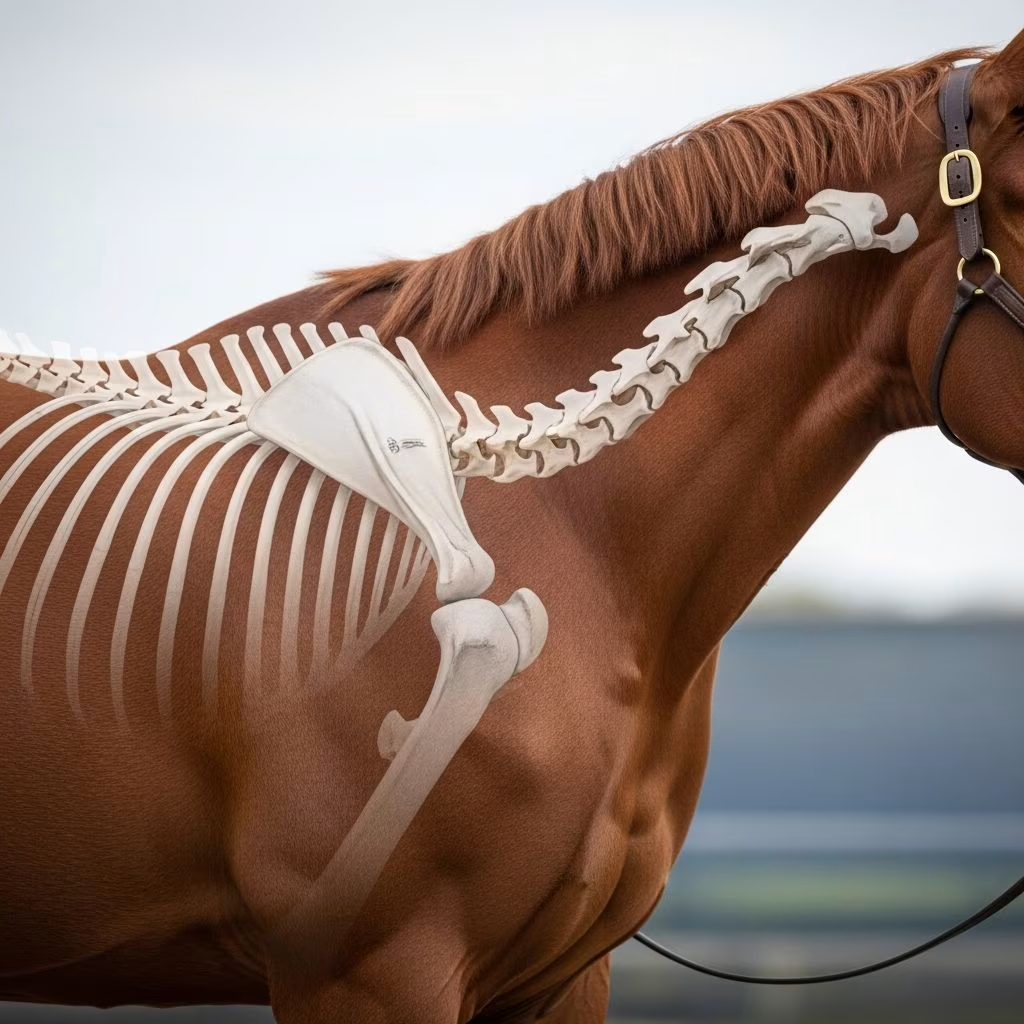
The shoulder joint in horses is a critical structure enabling powerful forward propulsion and stability during movement. Composed primarily of the scapula and humerus forming the scapulohumeral joint, it relies on robust musculature like the supraspinatus and infraspinatus for support. Disorders here can drastically impair performance, cause severe lameness, and affect quality of life. This article delves into major shoulder pathologies in equines, drawing from veterinary expertise to outline causes, clinical presentations, diagnostic approaches, management strategies, and preventive measures.
Understanding the Horse Shoulder Anatomy
Before exploring disorders, grasping basic anatomy is essential. The equine shoulder lacks a true joint capsule, depending instead on ligaments, tendons, and muscles for stability. Key components include the glenoid cavity of the scapula articulating with the humeral head, the biceps brachii tendon within its bursa, and the suprascapular nerve innervating stabilizing muscles. Trauma, repetitive stress, or developmental flaws can disrupt this delicate balance, leading to a spectrum of conditions from subtle lameness to catastrophic failure.
Developmental Abnormalities in the Shoulder Joint
Young horses, particularly weanlings and yearlings, are prone to developmental orthopedic diseases (DOD) affecting the shoulder. Osteochondrosis dissecans (OCD) and subchondral cystic lesions (SCLs) top the list, often targeting the glenoid or humeral head. These arise from faulty endochondral ossification, where cartilage fails to mineralize properly, forming flaps or cysts that incite inflammation and lameness.
- OCD Characteristics: Cartilage defects detach, creating joint fragments that cause pain and effusion. Common in rapidly growing breeds like Warmbloods.
- SCL Features: Bone cysts erode subchondral bone, leading to persistent lameness unlike other sites where symptoms may resolve spontaneously.
- Miniature Horse Specific: Joint dysplasia from hypoplastic surfaces induces instability and early arthritis, unique to this breed.
Diagnosis hinges on clinical signs like moderate to severe lameness worsening with flexion, joint distension, and radiographic confirmation using oblique views to spot lesions. Prognosis remains guarded; arthroscopic debridement offers the best outcomes but recurrence risks persist.
Traumatic Fractures of the Shoulder Region
Fractures represent acute emergencies, stemming from high-impact events like falls, kicks, or collisions. Scapular fractures, especially supraglenoid tubercle avulsions, and humeral physeal fractures (Salter-Harris types I/II) predominate. Racing Thoroughbreds suffer stress fractures from repetitive loading.
| Fracture Type | Common Causes | Key Signs | Treatment Options |
|---|---|---|---|
| Supraglenoid Tubercle | Kicks, falls | Severe lameness, swelling, crepitus | Conservative rest or tension-band wiring |
| Proximal Humerus | High-speed impacts | Non-weight bearing, hematoma | Stall confinement, surgery if displaced |
| Stress Fractures | Racing overload | Insidious lameness | Rest, scintigraphy for detection |
Multiple radiographic projections are mandatory for delineation, as fractures may be obscured. Muscle stabilization often prevents displacement in physeal cases, favoring conservative management with 3-6 months stall rest. Surgical intervention suits comminuted or articular fractures, though joint involvement worsens prognosis.
Suprascapular Neuropathy: The Leading Shoulder Pathology
Known colloquially as “sweeney,” suprascapular neuropathy is the predominant shoulder affliction, marked by atrophy of supraspinatus and infraspinatus muscles. Direct nerve trauma—from kicks, ill-fitting tack, or repetitive compression in working horses—triggers denervation, culminating in a characteristic “wasted” appearance with prominent scapular spine.
Acute cases manifest suddenly post-injury with lameness, shoulder luxation tendencies, and gait abnormalities like toe-dragging. Chronic forms, historically linked to draft horse harnesses, show bilateral symmetry. Instability arises as weakened muscles fail to counter abduction forces.
- Symptoms: Muscle hollowing, scapular prominence, joint popping, reluctance to protract limb.
- Diagnosis: Physical asymmetry comparison, radiographs to exclude bony issues, electromyography for confirmation.
Treatment prioritizes neuroprotection and muscle preservation: stall rest (4-6 weeks), NSAIDs (phenylbutazone, firocoxib), electrostimulation to maintain tone, and physical therapy including massage and controlled exercise. Corticosteroid injections target neuritis. Surgery debulks compressive scars in refractory cases. Recovery spans 6-12 months, with 80% non-surgical success, though cosmetic deficits linger.
Inflammatory Conditions: Bursitis and Septic Arthritis
Bicipital bursitis involves inflammation of the biceps tendon sheath, often secondary to direct trauma or OCD. Horses exhibit cranial shoulder swelling, lameness exacerbated by flexion, and pain on deep palpation. Ultrasonography reveals bursal effusion and tendon thickening; contrast arthrography aids delineation.
Septic shoulder arthritis, rarer but devastating, follows penetrating wounds or hematogenous spread. Purulent synovitis causes explosive lameness, fever, and marked effusion. Aggressive lavage, antibiotics (systemic and regional perfusion), and immobilization are cornerstones, with guarded prognoses due to poor vascularity.
Degenerative Joint Disease: Shoulder Osteoarthritis
Osteoarthritis (OA) erodes cartilage via chronic wear, yielding periarticular osteophytes and subchondral sclerosis visible radiographically. Lameness progresses from intermittent to constant, with joint stiffness post-rest. Intra-articular therapies like hyaluronan, polysulfated glycosaminoglycans, or biologics (PRP, stem cells) palliate symptoms alongside systemic anti-inflammatories. No cure exists; management focuses on slowing progression.
Diagnostic Approaches for Shoulder Lameness
Pinpointing shoulder origins demands systematic evaluation. Start with lameness grading, limb flexion tests, and comparative thermography. Flexion intensifies shoulder pain markedly. Proceed to blocks (deep branch median nerve) before imaging: radiography (15+ views), scintigraphy for stress lesions, ultrasound for soft tissues, MRI/CT for occult issues. Arthrocentesis assesses synovial fluid.
Management and Rehabilitation Strategies
Multimodal care optimizes outcomes. Acute phases emphasize rest and analgesia; subacute incorporate therapy. Electrotherapy stimulates denervated fibers, aquatreadmills build strength sans concussion, and farriery adjusts angles for offloading. Nutritional support with omega-3s and antioxidants curbs inflammation.
Prevention Tactics for Equine Shoulder Health
- Balanced nutrition avoiding excessive energy in juveniles to curb DOD.
- Proper tack fitting, especially collars in drafts.
- Controlled exercise ramp-ups in athletes.
- Regular veterinary lameness screens in performance horses.
- Secure fencing to minimize trauma.
Frequently Asked Questions (FAQs)
What causes the most common horse shoulder problem?
Suprascapular neuropathy (sweeney) from nerve trauma is prevalent.
Can shoulder fractures heal without surgery?
Yes, many respond to conservative rest, especially non-displaced ones.
Is sweeney reversible?
Functional recovery occurs in 80% with prompt care, but muscle bulk may not fully restore.
How is osteochondrosis in foals treated?
Arthroscopic removal of lesions yields fair results.
What’s the prognosis for septic shoulder?
Guarded due to joint inaccessibility.
References
- Disorders of the Shoulder in Horses — Merck Veterinary Manual. 2023. https://www.merckvetmanual.com/musculoskeletal-system/disorders-of-the-shoulder-and-the-elbow-in-horses/disorders-of-the-shoulder-in-horses
- How Your Veterinarian Can Help with Sweeney Shoulder — Animal Clinic of Bay Ridge Brooklyn. 2023. https://www.animalclinicofbayridgebrooklyn.net/articles/997605-september-newsletter-how-your-veterinarian-can-help-with-sweeney-shoulder
- The Rundown on Equine Shoulder Sweeney — Texas A&M University College of Veterinary Medicine. 2023. https://vetmed.tamu.edu/news/pet-talk/the-rundown-on-equine-shoulder-sweeney/
- Sweeney Shoulder in Horses — PetMD. 2023. https://www.petmd.com/horse/conditions/musculoskeletal/sweeney-shoulder-horses
- Disorders of the Shoulder and Elbow in Horses – Horse Owners — Merck Veterinary Manual. 2023. https://www.merckvetmanual.com/horse-owners/bone-joint-and-muscle-disorders-in-horses/disorders-of-the-shoulder-and-elbow-in-horses



