

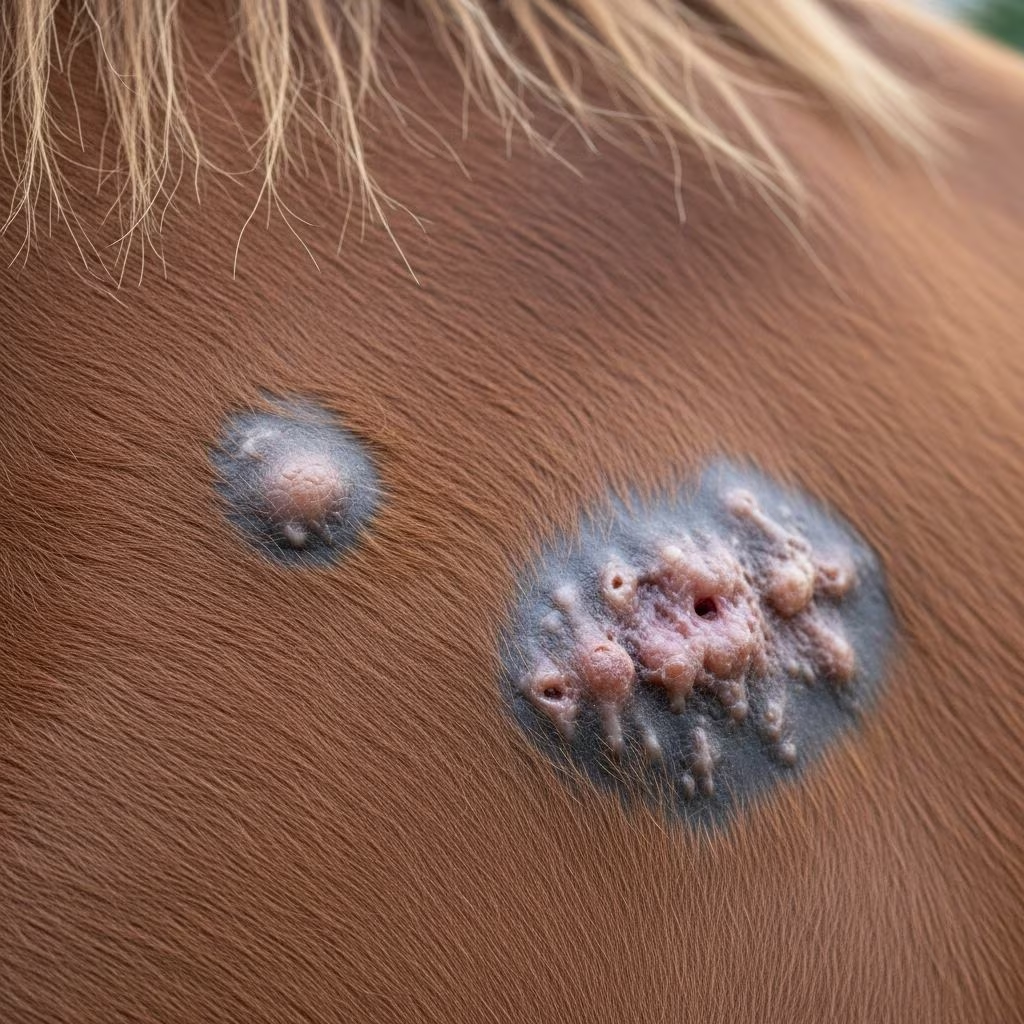
Equine sarcoids represent the most frequently encountered skin neoplasms in horses, donkeys, and other equids. These tumors arise from fibroblasts in the dermis and exhibit locally invasive behavior without metastasizing to distant organs. Affecting horses of all ages, breeds, and sexes, sarcoids pose significant challenges due to their persistence, recurrence potential, and interference with daily activities like riding or harnessing. Understanding their pathology enables timely intervention, preserving equine welfare and functionality.
Origins and Risk Elements of Sarcoid Development
The precise etiology of equine sarcoids remains under investigation, but compelling evidence implicates bovine papillomavirus (BPV) types 1 and 2 as primary initiators. Genetic predisposition plays a crucial role, with certain equine leukocyte antigen (ELA) haplotypes, particularly those linked to the major histocompatibility complex (MHC), heightening susceptibility. Horses inheriting specific MHC class II alleles show markedly increased risk, explaining familial clustering observed in herds.
- Viral Trigger: BPV penetrates via skin wounds, transforming dermal fibroblasts into neoplastic cells. Unlike true cancers, sarcoids do not spread systemically but expand aggressively at the site.
- Trauma Association: Lesions frequently emerge at injury sites, old scars, or areas prone to rubbing, such as girth lines or eyelids.
- Genetic Vulnerability: Breeds like Quarter Horses, Appaloosas, and Arabians exhibit higher incidence, tied to heritable immune response deficiencies.
- Environmental Factors: Fly irritation, poor wound management, and shared pastures with cattle amplify exposure to BPV.
Transmission occurs indirectly through contaminated tack, grooming tools, or flies, though direct horse-to-horse contagion is unproven. Preventive fly control and hygiene mitigate risks in endemic areas.
Classifying Sarcoid Variants
Veterinarians recognize six primary sarcoid morphologies, often overlapping in mixed presentations. Classification guides prognosis and therapy selection, as aggressive forms demand prompt action.
| Type | Description | Common Sites | Aggressiveness |
|---|---|---|---|
| Occult | Subtle, circular, hairless plaques with flaky, gray skin; minimal elevation. | Face, neck, body | Low |
| Verrucous | Wart-like, scaly growths with irregular surfaces; may ulcerate mildly. | Head, sheath, trunk | Moderate |
| Nodular | Firm, spherical lumps beneath intact skin; movable, 0.5-20 cm diameter. | Eyelids, groin, limbs | Moderate to High |
| Fibroblastic | Fleshy, pedunculated or sessile masses; prone to bleeding and fly strike. | Girth, ventral abdomen | High |
| Mixed | Combination of above features in one or clustered lesions. | Variable | Variable |
| Malevolent | Invasive, multifocal tumors infiltrating lymphatics; rapid spread locally. | Jaw, limbs, face | Very High |
Progression can occur, e.g., occult evolving to fibroblastic post-trauma. Early detection hinges on vigilance for subtle changes like persistent alopecia.
Observing Clinical Manifestations
Sarcoids manifest diversely, complicating initial recognition. Benign-appearing patches may conceal aggressive undercurrents. Key indicators include:
- Hairless, thickened skin patches resembling ringworm or scars.
- Raised nodules or warts causing cosmetic disfigurement.
- Ulcerated, bleeding surfaces attracting insects and secondary infections.
- Functional impairments: lameness from leg lesions, tack intolerance on trunk/girth, eye issues from periocular growths.
- Behavioral shifts: rubbing, biting at sites, restlessness from irritation.
Lesions favor head (ears, eyelids, nostrils—40% cases), paraxial regions (sheath, mammary gland), ventral abdomen, and medial limbs. Multiple sites affect up to 50% of cases, complicating management. While rarely fatal, unchecked growth erodes quality of life, especially in working equids.
Diagnostic Approaches for Confirmation
Diagnosis relies on clinical acumen augmented by histopathology, as sarcoids mimic habronemiasis, proud flesh, or melanoma. Steps include:
- Visual and Palpation Exam: Assess size, texture, mobility, ulceration.
- Biopsy: Punch or excisional samples reveal fibroblastic proliferation with viral inclusions; avoids false negatives from heterogeneous tissue.
- Imaging: Ultrasonography delineates depth in nodular types; rare for routine use.
- BPV Testing: PCR detects viral DNA in 70-90% lesions, supporting etiology.
Differential diagnoses encompass squamous cell carcinoma, papillomas, and bacterial granulomas. Avoid unnecessary biopsies on small lesions to prevent aggravation.
Therapeutic Modalities and Outcomes
Treatment success varies (50-90% resolution), hinging on type, site, size, and owner compliance. Recurrence plagues 30-50% cases, often more virulent. Multimodal strategies prevail.
Surgical Interventions
Wide excision with margins offers 70% success for pedunculated fibroblastic types but risks seeding in nodular/malevolent forms. Laser ablation minimizes hemorrhage, ideal for eyelids.
Cryo and Radiation Therapies
Cryotherapy freezes lesions via liquid nitrogen (2-4 cycles), effective for small, superficial sarcoids (80% clearance). Radiation suits periocular sites, though cost and availability limit use.
Immunomodulatory and Topical Agents
- BCG immunotherapy: Intralesional injection stimulates local immunity; 75% efficacy but anaphylaxis risk mandates epinephrine readiness.
- Cisplatin: Injectable or topical chemotherapy beads; high response in resistant cases.
- Imiquimod cream: Immune stimulant for occult/verrucous types.
Emerging and Supportive Care
Photodynamic therapy and oral retinoids show promise in trials. Wound management, fly repellents, and nutrition bolster recovery. No cure-all exists; monitor post-treatment quarterly.
Prognostic Insights and Management Strategies
Favorable for occult/verrucous (self-resolve 20%); guarded for malevolent (amputation occasionally required). Euthanasia rare, reserved for intractable facial/perineal invasion. Holistic prevention encompasses genetic screening, BPV vaccination research, and trauma minimization.
Frequently Asked Questions (FAQs)
Are sarcoids cancerous in horses?
No, they are benign yet locally invasive fibroblastic tumors without metastasis.
Can sarcoids spread to other horses?
Not directly; viral fomites pose indirect risk. Isolate affected animals during treatment.
How preventable are equine sarcoids?
Not fully, but hygiene, fly control, and avoiding cattle contact reduce incidence.
What home remedies work for sarcoids?
None reliably; veterinary intervention essential to avert progression.
Do sarcoids resolve spontaneously?
Some occult types (10-20%) regress, but monitoring is advised.
References
- Sarcoids in Horses — PetMD. 2023. https://www.petmd.com/horse/conditions/cancer/sarcoids
- Sarcoids | School of Veterinary Medicine — University of California, Davis (.edu). 2024. https://ceh.vetmed.ucdavis.edu/health-topics/sarcoids
- Equine sarcoids — PubMed (Peer-reviewed). 1998-11. https://pubmed.ncbi.nlm.nih.gov/9891727/
- Sarcoids in Horses – Causes, Treatment and Associated Conditions — Vetster. 2023. https://vetster.com/en/conditions/horse/sarcoids
- Equine Sarcoids – Integumentary System — Merck Veterinary Manual. 2024. https://www.merckvetmanual.com/integumentary-system/tumors-of-the-skin-and-soft-tissues/equine-sarcoids



