

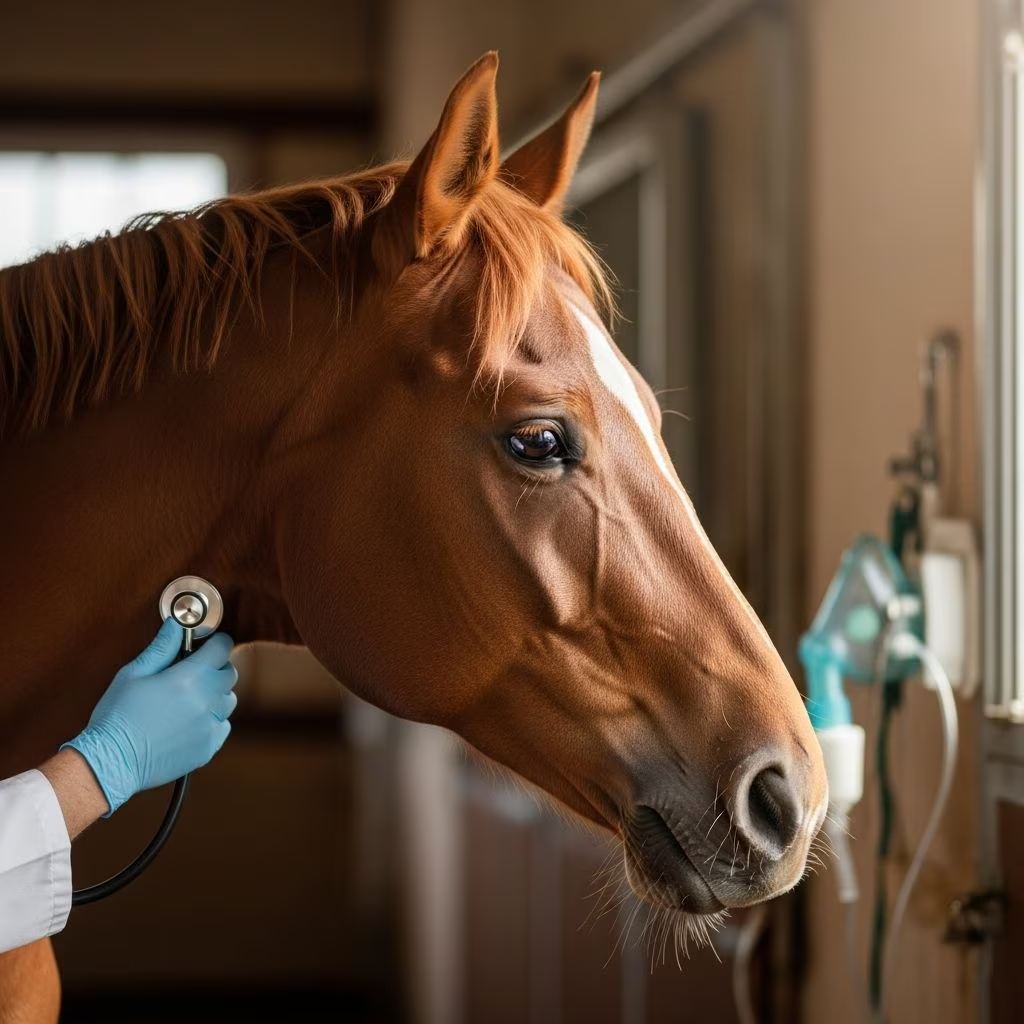
Equine asthma represents one of the most prevalent chronic respiratory conditions affecting domesticated horses worldwide. This heterogeneous disease encompasses a range of airway inflammatory responses that significantly impact horse performance, welfare, and quality of life. Understanding the underlying pathophysiology, recognizing clinical manifestations, and implementing comprehensive management strategies are essential for horse owners and veterinarians seeking to optimize respiratory health in affected animals.
Defining Equine Asthma and Its Pathophysiological Characteristics
Equine asthma is characterized by three interconnected pathophysiological features that distinguish it from other respiratory conditions. All horses diagnosed with this condition share common features of airway inflammation, airway hyperresponsiveness, and airway remodeling. These three components work synergistically to compromise normal respiratory function and create the clinical signs observed in affected animals.
The inflammatory process initiates when horses inhale environmental allergens and irritants, which trigger an exaggerated immune response within the airways. This inflammatory response in the airways involves recruitment of specific immune cells, particularly neutrophils, which accumulate in abnormally high numbers within the lung tissue. The presence of these inflammatory cells drives significant mucus production, creating thick secretions that obstruct airflow and contribute to respiratory distress.
Airway hyperresponsiveness develops as a consequence of chronic inflammation. Inflammatory mediators, bronchospasm, and dysfunction in airway smooth muscle relaxation create a state where the airways become hypersensitive to various triggers. This heightened reactivity means affected horses may experience severe respiratory symptoms following exposure to stimuli that would not bother healthy animals.
In more severe or long-standing cases, airway remodeling occurs. Chronic inflammation causes recurrent injury to and remodeling of the airway walls which ultimately results in narrowing of the airway lumen. Critically, these changes are irreversible in longstanding or severe cases of equine asthma. The magnitude of airway wall remodeling correlates most consistently with the magnitude of airway hyperreactivity, meaning severe cases with extensive remodeling tend to exhibit the most pronounced airway sensitivity.
Environmental Triggers and Causative Factors
Environmental exposure represents the primary driver of equine asthma development and exacerbation. Equine asthma is primarily caused by inhalation of environmental allergens and irritants, which trigger an inflammatory response in the airways. Identifying and understanding these triggers is fundamental to effective disease management.
Common environmental triggers include:
- Dusty bedding and hay – Among the most significant contributors to airway irritation
- Mold spores – Fungal elements from damp bedding, hay storage, or barn conditions
- Ammonia from urine-soaked stalls – Accumulates in poorly managed stall environments
- Pollen – Particularly problematic for horses at pasture during active growing seasons
- Air pollutants such as smoke or exhaust – Environmental contaminants that irritate sensitive airways
The severity and presentation of equine asthma varies seasonally in many regions. Asthma exacerbations generally begin in summer (July), persisting until temperature and humidity decrease (October/November). This seasonal pattern reflects changes in pollen counts, hay dust from harvesting, and fungal spore concentrations in the environment.
While allergic predisposition increases susceptibility, any horse can experience asthma symptoms after exposure to dust and other airborne irritants. Prior bacterial and viral infections also contribute to disease development, creating long-term airway vulnerability.
Diagnostic Approaches and Clinical Evaluation
Establishing a definitive diagnosis of equine asthma requires systematic clinical evaluation combined with specialized diagnostic procedures. Diagnosis of equine asthma is most often based on clinical signs and cytological evaluation of bronchoalveolar lavage fluid.
Initial assessment begins with a thorough history and physical examination. Horses presenting with a cough or increased respiratory rate at rest or following exercise typically undergo further diagnostic procedures. Clinical signs may include chronic coughing, exercise intolerance, nasal discharge, and labored breathing patterns. A history of prior seasonal cough and exercise intolerance provides valuable diagnostic clues.
A definitive diagnosis for any form of asthma requires a veterinarian to perform a bronchoalveolar lavage, a procedure that collects a lung sample for cytology testing, which looks closely at the cells and body fluids. This procedure involves inserting an endoscope into the airways and retrieving fluid samples containing cells and inflammatory mediators. Laboratory analysis of these samples reveals the type and severity of airway inflammation, distinguishing equine asthma from other respiratory conditions.
Additional diagnostic tools may include endoscopic examination to visualize airway structures and assess mucosal changes, rebreathing evaluations to measure airway resistance, and specialized imaging to determine the extent of airway involvement. The procedure and cytology testing can specifically determine the severity of asthma present, which can help veterinarians make more appropriate recommendations for managing asthma symptoms.
A key diagnostic feature in certain geographic regions is rapid improvement following isolation from environmental irritants. Improvement within hours to days of isolation from pasture particulates in a stall environment is a key diagnostic feature, particularly in equine pasture asthma cases in certain regions.
Medical Management and Pharmaceutical Interventions
Once diagnosis is confirmed, veterinarians develop individualized treatment plans tailored to disease severity. Medical management includes treatment with systemic or inhaled corticosteroids and bronchodilators. Medication selection and administration routes depend on asthma classification and individual patient factors.
Corticosteroid Therapy
Corticosteroids decrease inflammation, while bronchodilators act in the lung to open up the airways of horses experiencing respiratory distress. Corticosteroids can be administered orally, via injection, or through inhalation. Inhaled corticosteroids result in faster improvement of clinical signs and lung function as compared to environmental management alone. Improved clinical signs, decreased airway hyperresponsiveness, and reduced pulmonary inflammation are usually detectable within two weeks of therapy.
Bronchodilator Medications
Bronchodilators represent another essential medication class for managing equine asthma. These drugs work through multiple mechanisms to relax airway smooth muscle and restore normal airflow. Aminophylline and theophylline, administered every 12 hours improves lung function and clinical signs in up to 50% of affected horses.
Emerging and Adjunctive Therapies
Beyond traditional corticosteroids and bronchodilators, several supplementary approaches show promise for managing asthma symptoms. Omega-3 Polyunsaturated Fatty Acid (PUFA) Supplements may offer a simple management strategy, with research demonstrating that coughing improved by 60 percent and respiratory effort decreased by 48 percent in horses participating in a study published in the Journal of Veterinary Internal Medicine in 2015. In that study, horses were fed a hay-free pellet diet and received PUFA supplements every day for two months.
Intravenous magnesium sulfate represents another therapeutic option for acute asthma episodes. In a study funded by the Morris Animal Foundation, horses were given intravenous magnesium sulfate during asthma attacks. The medication relaxed the airways and improved breathing without causing any long-term negative effects.
Low-dose interferon alpha therapy also demonstrates clinical benefit in specific situations. Oral administration of low-dose (50–150 U q24 hours) interferon alpha (IFNα) for five days reduces neutrophil, macrophage, lymphocyte, and total nucleated cell counts in the BALF of racehorses with mild asthma, as well as cough for at least two weeks.
Environmental Management as the Foundation of Treatment
While pharmaceutical interventions provide symptomatic relief, environmental modification represents the cornerstone of effective equine asthma management. The most important part of asthma treatment is environmental management to remove the triggers for asthma. Without this critical measure, drug therapies will not work. This principle cannot be overemphasized—without addressing environmental triggers, even optimal medication regimens will fail to produce sustained improvement.
Reducing allergen exposure is essential in managing horses with asthma. Two primary approaches help reduce airway exposure to respirable particles. The first involves using feedstuffs and bedding that generate low dust levels. The second approach focuses on improving ventilation to increase removal of airborne particles from the barn or stall environment.
Practical Environmental Modifications
Specific environmental management strategies include:
- Switching to dust-free or steamed hay – Eliminates a major source of respiratory irritation
- Improving barn ventilation – Increases air circulation and removes accumulated irritants
- Using low-dust bedding – Replaces conventional straw or shavings that generate fine particles
- Turning out horses as much as possible – Pasture provides significantly lower dust exposure than stabled environments
- Immersing hay in water prior to feeding – Reduces dust particles released during feeding
The ideal environment for horses with severe asthma is pasture because exposure to dust is significantly less than in the stalls. If continuous pasture maintenance is not feasible, if the horse cannot be kept on pasture, ventilation in the barn and stall, the type of bedding, feedstuffs, and general management should be scrutinized to minimize allergen exposure.
The degree of environmental modification required depends on asthma severity. Horses with mild disease may improve with basic modifications such as soaking hay and improving stall ventilation, while severe cases may require year-round pasture turnout or relocation to climate-controlled facilities.
Long-Term Prognosis and Disease Progression
The long-term trajectory of equine asthma varies substantially based on disease severity, consistency of environmental management, and individual horse factors. Most horses demonstrate clinical improvement with consistent, comprehensive care combining environmental modification and appropriate medication.
However, without adequate environmental management, disease severity is progressive and responsiveness to parenteral corticosteroids decreases. This observation underscores the critical importance of sustained environmental control efforts throughout the horse’s life.
Most horses improve with consistent care, though severe or long-standing disease can leave structural airway changes that affect long-term performance. Horses with extensive airway remodeling from chronic inflammation may experience persistent exercise intolerance even with optimal management, as the structural narrowing of airways cannot be reversed.
Comparison of Asthma Severity and Management Intensity
| Asthma Severity | Primary Characteristics | Environmental Management | Typical Medications |
|---|---|---|---|
| Mild | Occasional cough, minimal exercise intolerance | Soaked hay, improved ventilation | Inhaled corticosteroids as needed |
| Moderate | Frequent cough, noticeable exercise limitations | Low-dust bedding, regular pasture turnout | Regular inhaled corticosteroids, bronchodilators |
| Severe | Persistent respiratory distress, significant airway remodeling | Year-round pasture or climate-controlled facilities | Systemic corticosteroids, frequent bronchodilators, adjunctive therapies |
Frequently Asked Questions About Equine Asthma
Can equine asthma be cured completely?
Equine asthma cannot be cured permanently, but symptoms can be effectively managed through lifelong environmental control and appropriate medication. Severe cases with extensive airway remodeling may have residual effects on respiratory performance even with optimal management.
Is equine asthma the same as heaves?
Equine asthma is a modern diagnostic term encompassing what was previously called heaves or recurrent airway obstruction. The condition represents a spectrum of inflammatory airway disease with varying severity and clinical presentations.
How quickly do medications work in acute asthma episodes?
Bronchodilators can provide relief within minutes to hours during acute respiratory distress. Corticosteroids typically require 7-14 days to demonstrate maximal anti-inflammatory effects, though some improvement may be apparent within days.
Why is environmental management emphasized so heavily?
Environmental triggers directly cause airway inflammation and symptoms. Without removing or reducing exposure to these triggers, medications provide only temporary symptomatic relief without addressing the underlying problem, leading to progressive disease.
Can pasture-kept horses develop equine asthma?
Yes, horses maintained entirely at pasture can develop equine asthma in response to pollen, mold spores, and dust from harvesting activities. However, pasture-based horses typically experience milder disease than stabled horses due to reduced dust exposure.
Conclusion
Equine asthma represents a complex, multifactorial condition requiring comprehensive, individualized management approaches. Success depends on combining thorough diagnostic evaluation, appropriate pharmaceutical therapy, and—most importantly—consistent environmental modification to minimize airway irritant exposure. Horse owners and veterinarians working together to implement these strategies can effectively manage even severe asthma cases and maintain reasonable quality of life and performance in affected animals.
References
- Equine Asthma — Veterinary Medical Centre, Western College of Veterinary Medicine, University of Saskatchewan. https://vmc.usask.ca/care/equine-health/resources/equine-asthma.php
- Asthma in Horses – Respiratory System — Merck Veterinary Manual. https://www.merckvetmanual.com/respiratory-system/respiratory-diseases-of-horses/asthma-in-horses
- How to Best Manage and Treat Equine Asthma — Florida Veterinary Medical Association (FVMA). https://fvma.org/how-to-best-manage-and-treat-equine-asthma/
- Equine Asthma: Current Understanding and Future Directions — National Center for Biotechnology Information (NCBI/PMC). 2020. https://pmc.ncbi.nlm.nih.gov/articles/PMC7438831/
- Helping Horses With Equine Asthma Breathe Easier — Texas A&M College of Veterinary Medicine and Biomedical Sciences. https://vetmed.tamu.edu/news/pet-talk/equine-asthma/
- Be A Dust Buster: Equine Asthma Treatment & Management — American Association of Equine Practitioners (AAEP). https://aaep.org/post/be-a-dust-buster-equine-asthma-treatment-management-hinges-on-reducing-respirable-particles-in-the-environment/



