

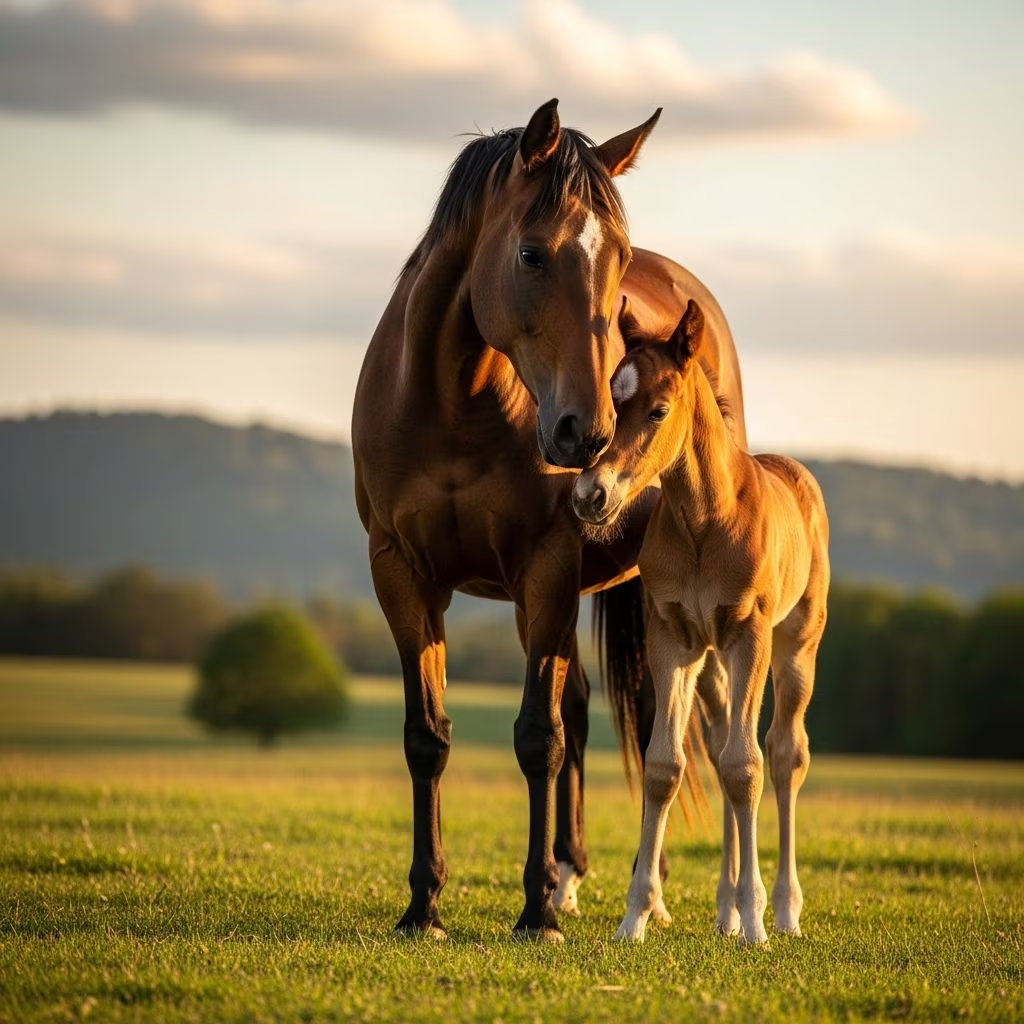
The reproductive system of horses operates within a highly regulated framework of hormonal signals and seasonal patterns that have evolved to maximize breeding success during optimal environmental conditions. Understanding these biological mechanisms is essential for horse owners, breeders, and veterinary professionals seeking to manage reproduction effectively or troubleshoot breeding challenges. The mare’s capacity to produce offspring is intrinsically tied to photoperiod (daylight exposure), complex endocrine interactions, and precise follicle development patterns that repeat in predictable cycles during the breeding season.
Seasonal Patterns and the Non-Breeding Period
Horses are seasonally polyestrous animals, meaning they only express reproductive receptivity and ovulate during specific times of the year. In the Northern Hemisphere, the transition from winter to spring marks a critical shift in reproductive physiology. During the winter months when daylight hours are short, mares enter a physiological state called anestrus, characterized by reproductive inactivity. During this phase, the ovaries remain small and quiescent, with no active follicular development or corpus luteum formation, and plasma concentrations of reproductive hormones are minimal.
As daylight duration increases during late winter and early spring, the longer exposure to light triggers neurological pathways in the hypothalamus and pituitary gland. This photoperiod-driven stimulation initiates a transition period known as vernal transition, during which the ovaries gradually become more metabolically active and begin preparatory development. Mares typically establish regular, predictable cycling patterns by mid-April as spring progresses, though the exact timing varies by individual and geographic location.
Hormonal Architecture of the Breeding System
The endocrine control of equine reproduction involves a cascade of signaling molecules originating from the brain and directed toward the ovaries. When photoperiod conditions trigger breeding season onset, the hypothalamus secretes gonadotropin-releasing hormone (GnRH), which stimulates the pituitary gland to produce two critical hormones: follicle-stimulating hormone (FSH) and luteinizing hormone (LH).
FSH initiates follicle development at the beginning of each reproductive cycle, encouraging multiple small follicles to emerge within the ovary. These follicles secrete estrogen, which provides crucial negative and positive feedback to the pituitary gland, controlling the concentrations of FSH and LH in circulation. As the cycle progresses, LH concentrations rise and direct the development of a dominant follicle to maturity, capable of ovulation. The rising estrogen from the maturing follicle also directly influences the mare’s behavioral receptivity and induces cervical softening and uterine tone changes that facilitate breeding.
After ovulation, the residual follicular tissue transforms into a corpus luteum (CL), which secretes progesterone for approximately 12-14 days. Progesterone maintains the pregnancy-supporting environment by suppressing the hormonal signals that would drive continued cycling. If pregnancy does not occur, the uterine endometrium releases prostaglandin (PGF2α), which destroys the corpus luteum and allows the cycle to restart.
The Complete Estrous Cycle: Duration and Phases
The typical equine estrous cycle spans 21-22 days from ovulation to ovulation, with variation of only a few days considered normal. This cycle is divided into two distinct phases with different physiological characteristics and durations.
The Estrus Phase: Receptivity and Preparation for Ovulation
Estrus represents the shorter phase of the cycle, typically lasting 3-8 days depending on individual variation and time within the breeding season. During this phase, estrogen concentrations are elevated, creating a state of behavioral and physiological receptivity. Mares display characteristic behavioral signs that communicate fertility to stallions, including tail elevation, clitoral winking (eversion when squatting), frequent urination and squatting postures, and vocalizations such as squealing.
The duration of estrus varies somewhat during the breeding season. Early in the season, estrous periods may be more prolonged and less predictable, while well-established summer cycles tend toward consistent 5-7 day intervals. During estrus, the reproductive tract undergoes physical changes: the cervix relaxes and opens, uterine tone decreases, and endometrial folds become swollen with fluid (edematous), all changes that support gamete transport and eventual embryo implantation if breeding occurs.
At the cellular level, the ovary typically undergoes two waves of follicle development during each complete cycle. The first wave occurs during the preceding diestrus phase and regresses without ovulation. The second wave, occurring after luteolysis, is associated with estrus and contains the follicle destined for ovulation. The dominant follicle grows to approximately 30 millimeters or larger in diameter before softening and releasing its oocyte through the ovulation fossa—the anatomically specialized opening in the ovary where ovulation occurs. Most mares (approximately 85%) ovulate during days 20-22 of the cycle, most commonly in the final 24-48 hours of the estrous period.
The Diestrus Phase: The Progesterone-Dominant Period
Diestrus constitutes the longer portion of the estrous cycle, lasting 14-16 days and commencing 1-2 days after ovulation. During this phase, the hormonal profile shifts dramatically. Estrogen concentrations drop as the ovulated follicle no longer secretes this hormone, and behavioral receptivity ceases accordingly. The mare’s sexual behavior returns to baseline non-receptive states, and the cervix closes and regains tonicity, creating a barrier to sperm ascent.
The corpus luteum reaches full functional capacity by approximately day 5 after ovulation and becomes responsive to prostaglandin stimulation at about this same timepoint. It secretes progesterone at increasing concentrations throughout diestrus, with maximum production occurring from days 5-12 post-ovulation. If a viable pregnancy has been established, the developing embryo prevents prostaglandin release through mechanisms that remain incompletely understood, thus preserving the corpus luteum and maintaining pregnancy-supporting progesterone concentrations.
Follicular Wave Dynamics and Selection of Dominant Follicles
Research into equine ovarian dynamics has revealed that follicle development does not occur in a simple sequential manner but rather in coordinated waves of growth and regression. Most mares experience one to two follicular waves per estrous cycle, though this pattern can be influenced by pregnancy status, seasonal timing, age, and breed characteristics.
During the first wave (occurring in diestrus), multiple small follicles grow to a moderate size but then undergo atresia (programmed regression) without ovulating. The second wave begins after the corpus luteum degenerates through prostaglandin action and is the wave associated with estrus and eventual ovulation. Within each wave, one follicle (or occasionally two or three in some mares) outpaces its cohorts and becomes dominant, continuing to enlarge while subordinate follicles regress. This selection mechanism ensures that typically one oocyte is ovulated per cycle, though some mares naturally produce multiple ovulations.
Vernal Transition: The Spring Breeding Preparation
The vernal transition represents a critical but sometimes problematic bridging period between anestrus and regular cycling. As daylight gradually increases during late winter, mares do not immediately establish normal cycling but instead enter a phase characterized by prolonged, irregular estrous periods without ovulation. During this transition, mares may exhibit receptive behavior toward stallions for extended periods (3-4 prolonged intervals), but the ovaries remain developmentally immature, incapable of generating the LH surge necessary for ovulation.
The transition terminates when an LH surge occurs, triggering the first ovulation of the breeding season and initiating the regular 21-day interovulatory cycle. The unpredictability of this transition can frustrate breeding programs, as mares may appear ready for breeding based on behavioral indicators, yet ovulation has not occurred. Ultrasound monitoring and hormone testing can help veterinarians identify when this critical transition has completed.
Pregnancy Establishment and Early Gestational Physiology
When breeding results in fertilization, the resulting embryo must traverse the reproductive tract and establish maternal recognition through specific mechanisms. The fertilized ovum forms an embryo that enters the uterus approximately 6 days after ovulation. It then moves through the uterine lumen and must attach to the endometrial (uterine) lining around day 17 post-ovulation. This attachment timeframe is critical for the mare’s immune system to recognize the pregnancy as viable rather than a pathological growth.
A significant event occurs around day 45 of gestation when specialized embryonic tissues called endometrial cups form at the placental-uterine interface. These cups produce equine chorionic gonadotropin (ECG), a hormone that stimulates continued progesterone production beyond what the original corpus luteum can supply. This hormonal supplementation becomes crucial because the endometrial cups naturally regress around day 120 of pregnancy; without their ECG production, progesterone would decline and pregnancy maintenance would be jeopardized.
Post-Partum Reproductive Cycling
The postpartum period presents unique reproductive challenges and opportunities for breeders seeking to maintain tight yearly breeding schedules. Approximately 7 days after parturition, mares typically ovulate during what breeders call “foal heat,” the first estrous cycle after delivering a foal. This timing reflects rapid reinitiation of cyclic ovarian activity following the dramatic hormonal changes of pregnancy and parturition.
Foal heat represents a contentious decision point in breeding management. The uterus is still recovering from the demands of gestation and lactation, and endometrial inflammation from the birthing process may persist. Breeding during foal heat carries elevated risks of reduced embryonic survival or pregnancy failure compared to waiting for subsequent cycles. However, mares that conceive during foal heat can deliver foals within a tight 12-month interval. Many reproductive specialists recommend allowing at least one additional cycle to pass before rebreeding to permit complete uterine involution and recovery.
Practical Applications in Breeding Programs
Understanding these biological patterns enables more effective breeding management. Veterinarians and breeders can monitor mares through ultrasound examination to track follicle development and time insemination with ovulation. Many breeding programs employ synchronization protocols that use hormones (such as prostaglandin or GnRH analogs) to time ovulation in mares bred via artificial insemination. For example, some protocols initiate treatment when mares are in estrus and anticipate ovulation approximately 36-48 hours after insemination on specific days of the cycle.
Knowledge of the typical 85% ovulation rate occurring on days 20-22 of the cycle allows breeders to schedule inseminations strategically to maximize the probability of gamete contact. Additionally, recognizing that mares cycle only seasonally permits year-round management planning and supports decisions about when to expose mares to light therapy to advance the onset of spring cycling for early-season breeding.
Hormonal Variations Within and Across Seasons
Research demonstrates that FSH secretion patterns vary across the breeding season in ways that may influence follicle dynamics and breeding outcomes. Early in the breeding season (spring and early summer), FSH exhibits a bi-modal secretion pattern with two distinct peak periods, while later in the summer and fall, FSH secretion may shift to a uni-modal pattern with a single peak. These variations suggest that the physiological mechanisms governing reproduction adapt subtly as the season progresses and may explain variations in cycle characteristics and breeding success across different times of year.
Factors Influencing Cycle Characteristics
Individual variation in reproductive cycle length, estrous duration, and follicle development patterns is normal and influenced by multiple factors beyond simple genetics. Age affects reproductive performance, with younger and older mares sometimes showing different cycle characteristics compared to mares in their prime reproductive years. Nutritional status, body condition, and overall health status can modulate cycle regularity and fertility. Environmental factors beyond photoperiod, such as temperature and social interactions with other horses, may also exert subtle influences on reproductive timing.
References
- Horse Breeding Cycles: Everything You Need to Know — PetMD, Dr. Courtnee Morton. Accessed February 2026. https://www.petmd.com/horse/horse-breeding-cycles-everything-you-need-know
- The Reproductive Cycle of Horses – Management and Nutrition — Merck Veterinary Manual. Accessed February 2026. https://www.merckvetmanual.com/management-and-nutrition/management-of-reproduction-horses/the-reproductive-cycle-of-horses
- Broodmare Basics: An Overview of Managing the Mare’s Cycle — Stone Ridge Equine Care. Accessed February 2026. https://stoneridgeequine.com/news/broodmare-basics-an-overview-of-managing-the-mares-cycle
- Hormones of the Mare’s Estrous Cycle — Equine-Reproduction.com. Accessed February 2026. https://equine-reproduction.com/articles/mares/estrous-cycle
- Understanding Reproductive Events in the Mare for Successful Breeding Programs — University of Georgia College of Agricultural and Environmental Sciences. Accessed February 2026. https://fieldreport.caes.uga.edu/publications/B1434/understanding-reproductive-events-in-the-mare-for-successful-breeding-programs/



