
Understanding Equine Reproductive Anatomy
A comprehensive guide to mare and stallion reproductive systems
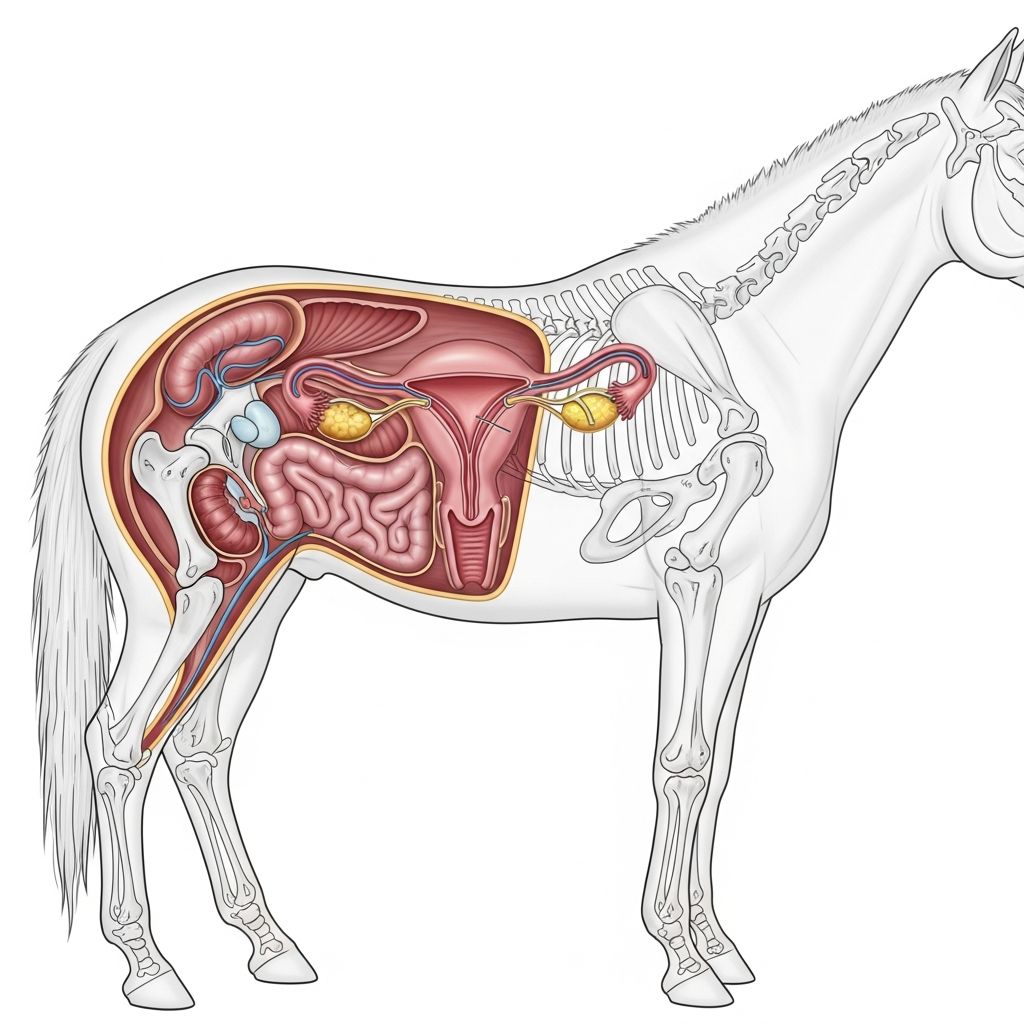
The reproductive system in horses is a sophisticated biological network that governs breeding capability, fertility, and overall health. Whether managing mares for breeding purposes or understanding stallion physiology, comprehensive knowledge of equine reproductive anatomy is essential for horse owners and breeders. This guide explores the structural components and functional aspects of both female and male reproductive systems in horses.
The Female Reproductive Framework
A mare’s reproductive system comprises multiple interconnected organs that work in harmony to regulate the estrous cycle, facilitate conception, and support pregnancy. The system extends from the external vulva through the vagina, cervix, uterus, oviducts, and finally to the ovaries. Understanding how each component functions provides insight into breeding management and reproductive health.
External and Vaginal Structures
The vulva represents the outermost component of the female reproductive tract, functioning as the external opening protected by specialized skin and tissue. This structure serves a dual purpose: it acts as the copulatory organ during breeding and forms the terminal portion of the birth canal during foaling. The vulva connects directly to the vagina, a muscular and elastic tube measuring approximately 12 to 15 centimeters in length. The vaginal walls possess considerable elasticity, allowing expansion during breeding and parturition.
The structural integrity of vaginal and vulvar tissues significantly impacts reproductive success. Mares exhibiting poor function of these external structures face increased vulnerability to contamination of the upper reproductive tract. Such contamination frequently results in chronic uterine infections and subsequent infertility. Veterinary assessment of these structures is therefore crucial in evaluating reproductive soundness, particularly in mares with a history of breeding difficulties.
The Cervix: Guardian of the Uterus
Located between the vagina and uterus, the cervix measures approximately 5 to 7 centimeters in length and serves as a critical barrier against ascending infections. The cervical interior features longitudinal folds that allow expansion to permit passage of a foal during delivery. Despite this capacity for expansion, the cervix maintains its protective function by limiting bacterial contamination under normal conditions.
The cervix undergoes dynamic changes throughout the estrous cycle. During estrus (heat), the cervix relaxes and opens, facilitating sperm passage and creating an environment receptive to breeding. Outside of estrus, the cervix contracts and remains sealed, providing maximal protection to the uterine environment. This cyclical behavior is essential for both fertility and infection prevention.
The Uterine System and Pregnancy Support
The equine uterus possesses a unique bipartite structure, consisting of two distinct horns that converge into a unified body. Each uterine horn measures approximately 20 to 25 centimeters in length, while the uterine body spans 18 to 20 centimeters. This two-horned configuration distinguishes equine reproductive anatomy from that of many other mammalian species.
The uterus functions as the primary organ for pregnancy establishment and maintenance. Proper uterine function depends on intact structural and immunological components. Following ovulation, the fertilized egg descends through the oviducts and implants within the uterine lining. The uterine tissue then undergoes dramatic changes to support fetal development over the 11 to 12-month gestation period.
Infections contracted during breeding represent a primary cause of female infertility in horses. These infections disrupt the delicate uterine environment required for conception and pregnancy maintenance. Veterinarians employ multiple diagnostic approaches to evaluate uterine health, including physical examination, ultrasonography, hormonal assessment, uterine culture analysis, and histological biopsy of the uterine lining.
The Oviducts and Embryonic Environment
The oviducts function as critical pathways connecting the ovaries to the uterine horns, measuring just a few centimeters in length. These delicate tubes possess specialized internal structures, including the ampulla region lined with microscopic hair-like projections called fimbrae. The ciliary cells lining the oviductal interior create currents that transport the ovum toward the uterus.
Beyond simple transport, the oviducts create a specialized microenvironment essential for reproductive success. The oviductal epithelium secretes protein-rich fluids that nourish the mature egg and provide an optimal environment for fertilization. During the critical first days following fertilization, the oviductal environment supports embryonic development before the embryo descends into the uterus. Any compromise to oviductal function can result in infertility or early embryonic loss.
Ovarian Function and Reproductive Cycling
The ovaries represent the foundation of female reproductive function. Located in the dorsal (upper) portion of the abdominal cavity just posterior to the kidneys, the paired ovaries typically measure 7 to 8 centimeters in length and 3 to 4 centimeters in thickness. As mares age, ovarian size tends to diminish, which may correlate with declining fertility in older animals.
Hormonal Production and Regulation
The ovaries serve dual reproductive functions: producing both eggs and regulatory hormones. The primary hormones generated by ovarian tissue include estrogen and progesterone, each playing distinct roles in reproductive physiology. These hormones orchestrate the estrous cycle, regulate mating behavior, and prepare the reproductive tract for conception and pregnancy.
Puberty marks the beginning of ovarian cyclicity in fillies, typically occurring around 12 months of age. Once reproductive maturity is achieved, the ovaries undergo continuous size and morphological changes in response to hormonal fluctuations and follicular development.
The Estrous Cycle: A Monthly Rhythm
The equine estrous cycle demonstrates seasonal variation, occurring predominantly from April through October in the Northern Hemisphere, with individual mares showing variable cycle lengths. The average estrous cycle spans 21 days, though significant individual variation exists. The cycle divides into two primary phases: estrus and diestrus.
Estrus represents the period of heat when mares display behavioral receptivity to stallions. This phase typically lasts 5 to 7 days and is characterized by rising estrogen levels. During estrus, mares exhibit distinctive behavioral changes including tail elevation, backing toward stallions, and vulvar swelling.
Diestrus encompasses the remainder of the cycle when the mare rejects stallion advances. During this phase, progesterone levels dominate, suppressing the behavioral and physiological changes associated with heat.
Follicular Development and Ovulation
Within the ovarian tissue, specialized cell populations form follicles, with each follicle surrounding a developing egg. The initiation of follicular growth occurs when follicle-stimulating hormone (FSH) from the pituitary gland stimulates the ovaries. As follicles enlarge, they produce increasing quantities of estrogen, which generates feedback to the brain.
When estrogen levels reach critical thresholds, the brain releases a surge of luteinizing hormone (LH), triggering ovulation. Ovulation represents the release of the mature egg from the ovary, typically occurring 24 to 48 hours before the mare exits the estrous period. In horses, ovulation occurs at a specialized region called the ovulation fossa, distinguishing equine anatomy from species in which ovulation occurs across the entire ovarian surface.
Post-Ovulation Changes and the Corpus Luteum
Following egg release, the remaining follicular tissue transforms into the corpus luteum, a hormone-secreting structure that dominates the ovary during diestrus. The corpus luteum produces progesterone, which suppresses further follicular development and behavioral estrus while simultaneously preparing the uterus for potential pregnancy.
If pregnancy does not occur, the corpus luteum eventually degenerates, progesterone levels decline, and the mare returns to estrus. This cyclical pattern continues throughout the breeding season until conception occurs or the seasonal anestrus period begins.
Male Reproductive Anatomy and Function
While the search results provided limited detail regarding stallion reproductive structures, the male genital tract encompasses organs specialized for sperm production, maturation, and delivery. The testicles function as the primary male gonads, producing both sperm cells and testosterone, the dominant male hormone.
Sperm Production and Transport Pathway
Sperm cells originate within the testicles and progress through the epididymis, a coiled structure where sperm mature and are stored until ejaculation. The epididymis connects to the ductus deferens, a muscular tube that transports sperm toward the urethra during breeding. This anatomical pathway ensures that only mature, viable sperm reach the ejaculate, improving fertility outcomes.
Reproductive Health Assessment and Diagnostic Approaches
Veterinary evaluation of reproductive soundness employs multiple complementary diagnostic techniques:
- Physical Examination: Palpation of reproductive structures and assessment of external genitalia provide baseline information regarding anatomical integrity and symmetry.
- Ultrasonography: Real-time ultrasound imaging reveals detailed information about ovarian structures, follicular development, uterine content, and pregnancy status.
- Hormonal Testing: Blood hormone analysis quantifies estrogen, progesterone, and other reproductive hormones, providing insight into ovarian function and cycle phase.
- Uterine Culture: Microbiological analysis of samples obtained from the uterine lumen identifies pathogenic organisms contributing to infertility.
- Uterine Biopsy: Histological examination of uterine tissue samples assesses the extent of endometrial changes and predicts pregnancy potential.
Factors Influencing Reproductive Success
Multiple anatomical and physiological factors determine breeding success in horses. Proper vulvar and vaginal function prevents contamination and ascending infections. Intact cervical structure maintains barrier protection. A healthy uterine lining with adequate blood supply supports embryonic development. Patent and functional oviducts permit egg transport and fertilization. Responsive ovaries that produce mature eggs and appropriate hormone levels complete the framework for successful reproduction.
Environmental stressors, nutritional deficiencies, age-related changes, and systemic diseases can compromise any component of this integrated system. Comprehensive understanding of how these anatomical structures function individually and collectively enables targeted interventions to optimize breeding outcomes.
Seasonal Considerations in Equine Breeding
The seasonal nature of equine reproductive cycling reflects the evolutionary adaptation to birth timing advantageous in wild populations. The emergence of estrous cycling in spring correlates with improving pasture quality and favorable environmental conditions for foal rearing. Understanding this natural rhythm assists breeders in planning breeding programs and managing reproductive expectations throughout the calendar year.
Frequently Asked Questions
At what age do fillies reach reproductive maturity?
Fillies typically reach sexual maturity and begin estrous cycling around 12 months of age, though considerable individual variation exists.
How long is the equine estrous cycle?
The average equine estrous cycle lasts 21 days, with estrus (heat) typically lasting 5 to 7 days.
When does ovulation occur during the estrous cycle?
Ovulation typically occurs 24 to 48 hours before the mare goes out of heat (before the end of estrus).
What is the gestation length in horses?
The gestation period in horses ranges from 11 to 12 months.
Why is the cervix important for fertility?
The cervix serves as a barrier against infection while remaining receptive during estrus to permit sperm passage. Its proper function is essential for preventing ascending uterine infections that cause infertility.
References
- The Gonads and Genital Tract of Horses — Merck Veterinary Manual. https://www.merckvetmanual.com/horse-owners/reproductive-disorders-of-horses/the-gonads-and-genital-tract-of-horses
- Equine Anatomy — Wikipedia. https://en.wikipedia.org/wiki/Equine_anatomy
- Female Urogenital – Equine — Willamette Veterinary Hospital. https://wilvet.com/interactive-animal/equine/female-urogenital/
- The Reproductive Anatomy of the Mare — CABI Digital Library. https://www.cabidigitallibrary.org/doi/pdf/10.5555/20083315480
- Breeding From Your Mare — Central Equine Vets Edinburgh. https://www.centralequinevets.co.uk/BreedingYourMare1532.html
- Anatomy, Physiology and Reproduction in the Mare — Government of Ontario. http://www.ontario.ca/page/anatomy-physiology-and-reproduction-mare
Similar Articles








Read full bio of medha deb


