
Equine Reproduction Management: Comprehensive Guide For Breeders
Master stallion care, mare selection, and breeding techniques for optimal foal production.
Introduction to Equine Breeding Management
Successful horse breeding requires comprehensive understanding of reproductive physiology, proper facility management, and selection of appropriate breeding techniques. Whether operating a small breeding operation or managing larger herds, understanding the fundamentals of equine reproduction is essential for achieving high foal production rates and maintaining the health of breeding animals. This guide explores the critical components of managing horse reproduction, from initial mare evaluation through post-breeding care.
Selecting Breeding Stock: Foundation for Success
The foundation of any successful breeding program begins with careful selection of mares and stallions. When considering which mares to breed, several important factors must be evaluated. Mares between the ages of 4 and 12 years demonstrate optimal breeding performance, as this age range typically offers the easiest breeding outcomes. Beyond age considerations, prospective breeding females should be in good physical condition—neither underweight nor excessively fat—as body condition significantly impacts fertility and conception rates.
Comprehensive veterinary evaluations should precede any breeding decisions. This assessment should include:
- Detailed reproductive history and previous breeding outcomes
- Physical examination of reproductive structures
- Assessment of overall health status and nutrition
- Evaluation of temperament and handling characteristics
- Genetic screening for breed-specific concerns
Stallion selection carries equal importance. The chosen male should demonstrate proven fertility, sound temperament, and genetic traits that complement the mare’s characteristics. Stallions should be healthy, properly trained, and capable of safe breeding interactions.
Understanding the Mare’s Reproductive Cycle
Effective breeding management depends on recognizing and interpreting the mare’s reproductive cycle. The estrous cycle guides the timing of breeding attempts and determines optimal breeding windows. Regular evaluation of reproductive status enables breeders to identify the precise moment when a mare is most receptive to breeding.
During the breeding season, mares should be evaluated consistently using various methods to detect heat. This involves presenting mares to a teaser stallion or observing behavioral indicators of estrus. Consistent evaluation, conducted daily or every other day during the breeding season, helps identify the optimal breeding window. Knowing each individual mare’s cycle characteristics—including cycle length, duration of estrus, and behavioral patterns—allows breeders to time breeding efforts effectively.
Understanding hormonal triggers proves valuable for optimized breeding management. The cascade of hormonal events initiating ovulation includes the decline of progesterone levels, follicle growth stimulated by follicle-stimulating hormone, and the surge of luteinizing hormone that induces the final maturation and release of the egg.
Breeding Methods: Traditional and Modern Approaches
Three primary approaches to horse breeding exist, each with distinct advantages and considerations:
Pasture Breeding
In pasture breeding, mares and stallions are turned out together in a controlled pasture environment, allowing natural mating behavior to occur. This method minimizes handler intervention and relies on the animals’ natural mating instincts. While pasture breeding can be practical in certain operations and reduces some stress associated with human handling, it provides less control over breeding records and verification of successful mating.
Hand Breeding in Controlled Settings
Controlled hand breeding involves bringing mares to a specialized breeding facility where supervised mating occurs. In this system, handlers maintain close supervision throughout the breeding process, with one handler managing the mare and multiple handlers controlling the stallion. This method provides several advantages: breeders can confirm that mating occurred, separate the animals immediately if aggressive behavior develops, and reduce injury risk to either animal.
Prior to hand breeding, the mare’s hindquarters should be cleaned using mild soap and thoroughly rinsed, with the tail secured using a roller bandage to prevent contamination. The stallion should mount calmly from directly behind the mare, and breeders should never permit rough behavior during the breeding process. For safety, removing the stallion’s front shoes before the breeding season reduces injury risk.
During copulation, the stallion typically ejaculates after 6 to 8 pelvic thrusts. Understanding this timeline helps handlers recognize when breeding has likely been completed.
Artificial Insemination
Artificial insemination represents the most controlled breeding method and enables significant intensification of breeding programs. This technique involves collecting semen from the stallion and introducing it directly into the mare’s reproductive tract. Artificial insemination allows a single stallion to breed substantially more mares than would be possible through natural mating—estimates suggest expansion from natural breeding of 5 mares to potential breeding of up to 300 mares when using artificial insemination techniques.
Semen Collection and Processing
Successful artificial insemination begins with proper semen collection and handling. Stallions are typically trained to mount a phantom or dummy mare and collected using an artificial vagina heated to simulate mare reproductive anatomy. The artificial vagina includes a filter system and collection area designed to capture the ejaculate for laboratory processing.
Once collected, semen undergoes processing to evaluate quality and determine appropriate handling and storage methods. Fresh semen can be used immediately or diluted for chilled storage, extending usability for several hours. For longer-term preservation, semen is frozen at extremely low temperatures using liquid nitrogen (-196°C), allowing storage for extended periods and transportation across geographic distances.
The freezing process requires careful protocols. Semen is first diluted to manage the sample, centrifuged to eliminate seminal fluid, and then resuspended in a specialized diluent containing egg yolk and glycerol as a cryoprotectant. The cooled samples are packaged in 0.5 ml straws and gradually frozen at a controlled rate of approximately -1°C per second until reaching -140°C, after which they can be immersed in liquid nitrogen for storage.
Insemination Techniques and Timing
Proper insemination technique is critical for conception success. When the mare is determined to be in heat and approaching ovulation, semen is introduced directly into the uterus using a syringe and pipette. The timing of insemination relative to ovulation significantly impacts pregnancy rates.
After insemination, the sperm begins its journey through the reproductive tract. Sperm must swim through the uterus and enter the oviduct, a process requiring approximately 4 hours. Fertilization occurs within the oviduct. The resulting embryo remains in the oviduct for approximately 5 to 5.5 days, allowing the uterus time to clear excess fluid and contaminants while preparing for embryo implantation.
During this critical period, the single-celled zygote undergoes multiple cell divisions. By the time the embryo enters the uterus from the oviduct, it has often already reached the blastocyst stage of development.
Advanced Reproductive Technologies
Embryo Transfer
Embryo transfer represents one of the most significant advances in equine reproductive technology. This technique allows intensive use of valuable breeding mares by enabling the collection of embryos and their transfer to recipient mares. The process involves flushing the fertilized embryo from the donor mare’s uterus approximately 6 to 8 days after ovulation and transferring it to a carefully synchronized surrogate mare.
The surrogate mare must be in the same phase of the estrous cycle as the donor mare, ensuring proper uterine conditions for embryo implantation and gestation. This technique dramatically increases the breeding productivity of superior females—embryo transfer allows production of multiple foals from the same mare within a single year. While average production remains slightly above one foal per year (compared to 0.65 foals per year for mares carrying their own pregnancies), this technology enables record horses and mares to produce multiple offspring without the physical demands of carrying successive pregnancies.
Gamete Intrafallopian Transfer
Gamete intrafallopian transfer (GIFT) represents another advanced reproductive technique. In GIFT, both the mare’s egg and the stallion’s sperm are deposited directly into the oviduct of a surrogate dam. This technique proves particularly valuable for subfertile stallions, as the direct placement of gametes in the oviduct requires fewer sperm cells, allowing males with lower sperm counts to successfully reproduce.
Emerging Technologies
Research continues to develop additional reproductive technologies. In vitro fertilization—combining oocytes and sperm in laboratory conditions to produce embryos for subsequent transfer—remains largely experimental, with only limited successful cases documented to date. As reproductive science advances, these emerging techniques may become more practical for broader breeding applications.
Post-Breeding Management and Pregnancy Verification
After breeding, attentive management supports successful pregnancy establishment. Regular evaluation of mares following breeding helps identify those that may return to heat, indicating unsuccessful conception. Breeders should tease mares regularly after breeding to detect any returns to estrus.
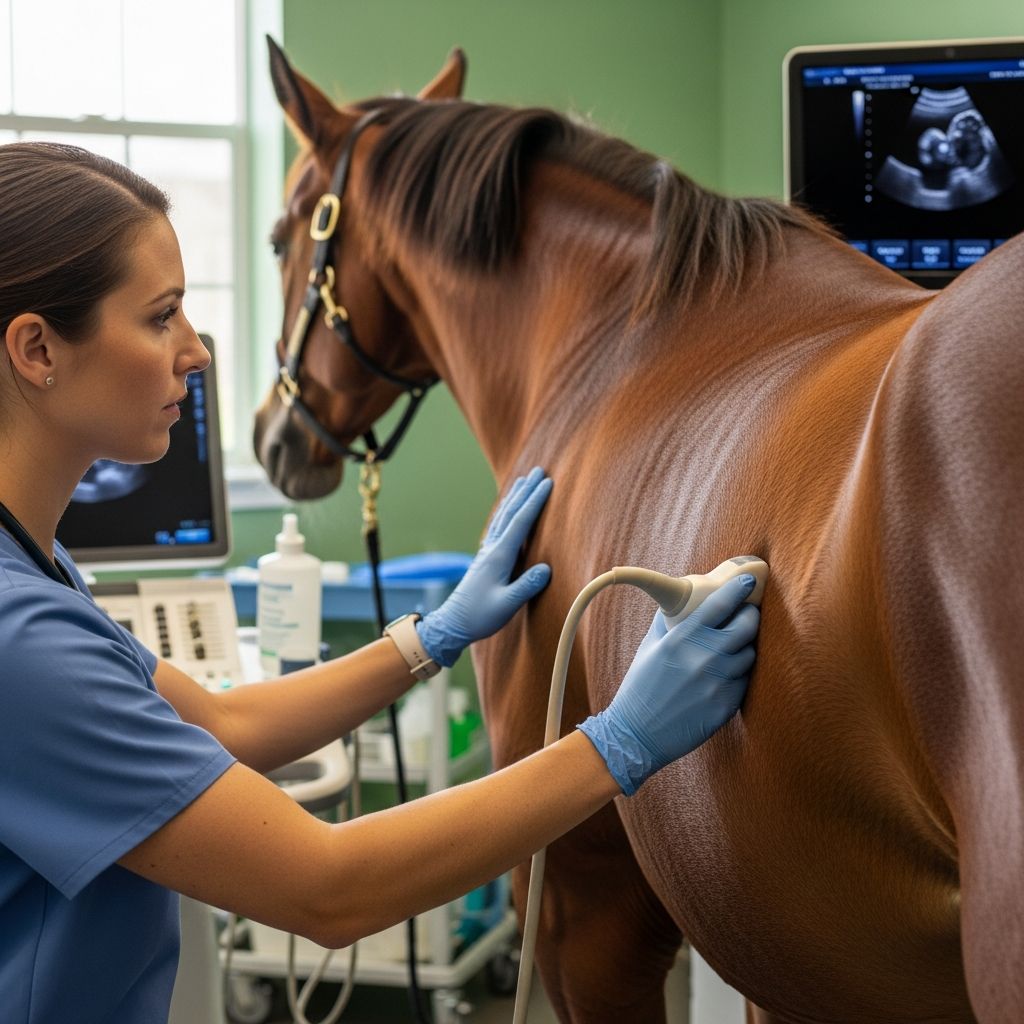
Professional veterinary evaluation confirms pregnancy status. Competent veterinary examination provides accurate pregnancy determination, allowing breeders to plan subsequent breeding attempts for unsuccessful mares or prepare for foaling for pregnant animals.
Important breeding practices to maximize conception success include:
- Breeding only healthy animals with documented fertility
- Breeding as frequently as possible within heat cycles
- Utilizing pasture breeding when practical for the operation
- Avoiding breeding at foal heat (the heat cycle immediately following foaling)
- Maintaining mares in optimal body condition before breeding
Facility Considerations and Infrastructure
Appropriate facilities prove essential for safe, effective breeding operations. Breeding facilities should include specialized areas designed for handler safety and animal welfare. Well-constructed breeding stalls provide secure environments where handlers can safely manage both mare and stallion during controlled breeding. The facility design should accommodate multiple handlers who can quickly respond to aggressive behavior or injury risks.
Beyond breeding areas, facilities should include teasing stalls for estrus detection activities. These structures allow safe evaluation of mares’ reproductive status without risk of injury. Seeking recommendations from experienced local breeders and veterinarians familiar with equine reproduction can guide facility selection and construction decisions.
Health Monitoring and Veterinary Involvement
Successful breeding depends on strong collaboration with veterinary professionals experienced in equine reproduction. While reproductive work may represent a small seasonal component of many veterinary practices, specialized equine reproduction expertise ensures optimal outcomes. Veterinarians should conduct thorough pre-breeding evaluations, monitor breeding progress, verify pregnancies, and manage any reproductive complications that arise.
Regular teasing and estrus detection, combined with professional veterinary monitoring, maximizes foal crop percentages and breeding efficiency. This integrated approach—combining careful animal selection, understanding of reproductive physiology, appropriate facility design, and professional veterinary oversight—creates the foundation for successful equine breeding operations regardless of scale or specialization.
References
- Horse Breeding — Wikipedia. Accessed February 2026. https://en.wikipedia.org/wiki/Horse_breeding
- The Different Techniques of Horse Reproduction — Royal Horse. Accessed February 2026. https://www.royal-horse.com/techniques-horse-reproduction/
- Horse Breeding Basics — University of Florida IFAS Extension. Accessed February 2026. https://horses.extension.org/horse-breeding-basics/
- First Steps in Breeding a Mare — Equine-Reproduction.com. Accessed February 2026. https://equine-reproduction.com/articles/mares/mare-pre-breed
- Breeding Steps: Conception Matters — University of Florida IFAS Extension. 2003. https://extadmin.ifas.ufl.edu/media/extadminifasufledu/cflag/image/docs/fl-equine-institute/2003/BreedingSteps.pdf
- The Reproductive Cycle of Horses — Merck Veterinary Manual. Accessed February 2026. https://www.merckvetmanual.com/management-and-nutrition/management-of-reproduction-horses/the-reproductive-cycle-of-horses
Similar Articles








Read full bio of medha deb


