

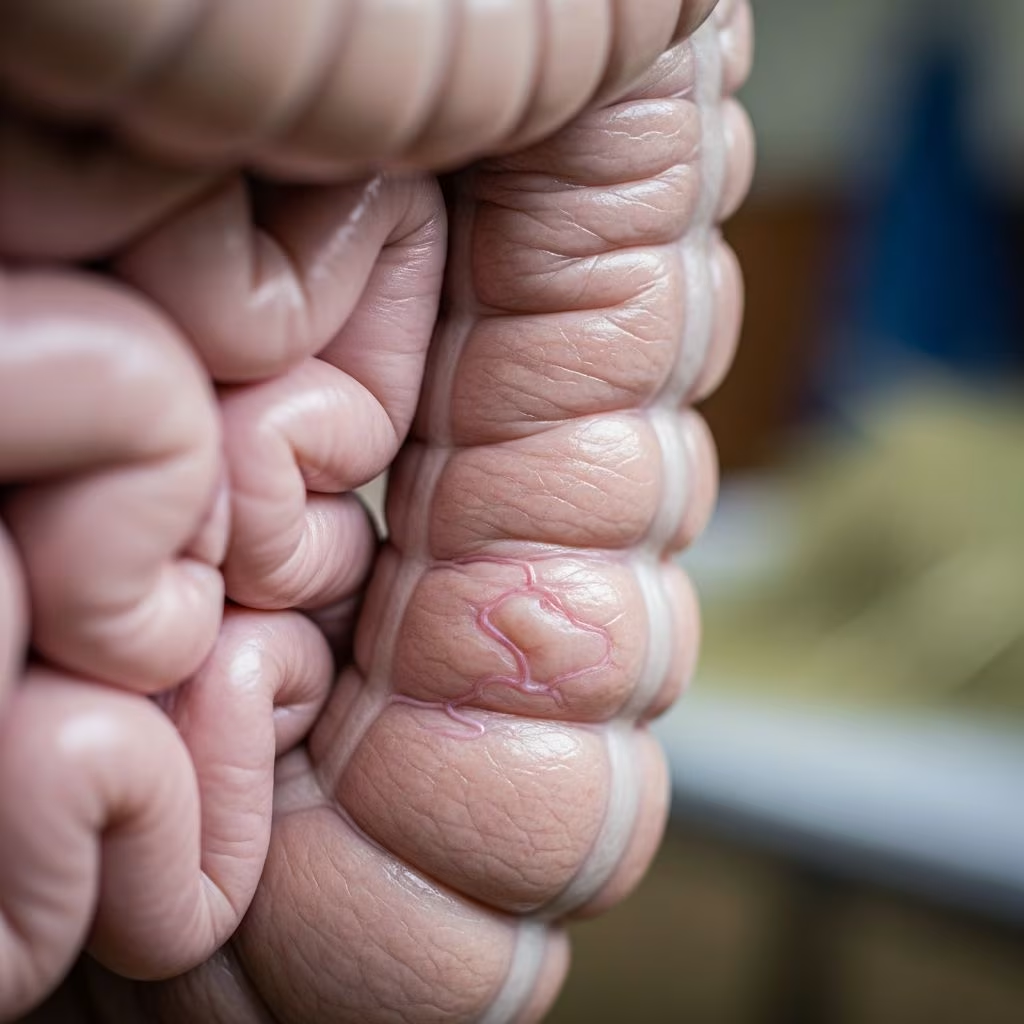
Horses rely on a balanced diet to maintain peak performance, reproduction, and overall vitality. Imbalances in energy, proteins, minerals, or vitamins can trigger serious health problems, ranging from digestive disturbances to skeletal deformities. This article delves into the primary nutritional disorders seen in equids, drawing on veterinary insights to help owners recognize early signs and implement corrective feeding practices.
Understanding the Impact of Dietary Imbalances
Equine digestive systems are designed for high-fiber, low-starch diets, mimicking natural grazing patterns where horses consume forage for 50-70% of their day. Deviations, such as sudden concentrate overloads or prolonged poor-quality hay feeding, disrupt this balance, leading to conditions like colic or laminitis. Mature horses face risks from both under- and over-nutrition, while growing foals are particularly vulnerable to rapid growth-related issues.
Nutrient needs vary by age, workload, lactation status, and environment. For instance, performance horses in hot climates require more salt, while sedentary ponies on lush pasture risk obesity. Regular body condition scoring—aiming for a 5-6 on a 9-point scale—helps monitor adequacy.
Energy-Related Nutritional Challenges
Insufficient Caloric Intake
Undernutrition manifests as weight loss, dull coats, and lethargy, especially in hard-working or lactating animals. Foals may exhibit stunted growth and weakened immunity. Causes include inadequate forage quantity or poor digestibility of low-quality feeds. Recovery involves gradually increasing digestible energy via quality hay and balanced grains, targeting 2-3% of body weight in daily dry matter intake.
Excess Energy and Obesity
Overfeeding concentrates or unrestricted pasture access leads to fat accumulation, reducing heat tolerance, exercise capacity, and increasing laminitis risk via insulin dysregulation. Obese horses develop pedunculated lipomas—fatty tumors that strangulate intestines, causing severe colic. Prevention: Limit non-structural carbohydrates (NSC) to under 12% in feeds for at-risk ponies; use slow-feed nets to mimic grazing.
| Condition | Symptoms | Risk Factors | Management |
|---|---|---|---|
| Energy Deficiency | Weight loss, poor coat, inappetence | Poor hay, high workload | Increase forage quality/quantity |
| Obesity | Cresty neck, laminitis predisposition | High-sugar pasture, overfeeding | Calorie restriction, exercise |
Protein and Amino Acid Shortfalls
Low protein intake or missing essential amino acids like lysine results in rough hair, slow hoof growth, muscle wasting, and reduced milk yield in mares. Immunity suffers, increasing infection susceptibility. Grass hay with unfortified grains exacerbates this. Feed analysis and supplementation with alfalfa or soybean meal restore balance; aim for 10-14% crude protein in growing horse diets.
Critical Mineral Imbalances
Calcium and Phosphorus Disorders
Imbalanced Ca:P ratios (ideally 1.5-2:1) from bran-heavy diets or oxalate-rich grasses cause nutritional secondary hyperparathyroidism (NSH), or \”big head disease.\” Symptoms include shifting lameness, bone swelling, and pica (dirt-eating). Serum phosphorus rises, while calcium stays normal due to bone resorption. Phosphorus alone deficiency in high-need horses prompts soil consumption and weak bones.
Sodium Chloride (Salt) Shortages
Working horses in heat lose sodium via sweat, leading to fatigue, anhidrosis (no sweating), muscle cramps, and reduced milk. Chronic cases show thirst and pica. Provide free-choice salt blocks; supplement 1-2 oz daily for heavy sweaters.
Trace Minerals: Copper, Zinc, Selenium
Copper deficiency ties to weak bones and poor coat pigmentation; often paired with excess iron. Selenium lack causes white muscle disease—stiff gait, high CK/AST enzymes—and ties to exertional rhabdomyolysis. Excess selenium (>5 ppm) erodes manes, tails, and hooves. Soil variability dictates needs; test forages and blood levels.
- Copper: Supports bone and connective tissue; deficiency mimics physitis.
- Zinc: Aids skin health; low levels delay healing.
- Selenium: Antioxidant; pairs with vitamin E against myopathies.
Vitamin Deficiencies in Equids
Vitamin A Insufficiency
Prolonged poor hay feeding depletes stores, causing night blindness, tearing eyes, rough corneas, pneumonia proneness, and brittle hooves. Fresh pasture or quality hay prevents this; supplement if bleach hay used >6 months.
Vitamin E Depletion
As an antioxidant, low vitamin E from stored feeds links to tying-up, immune weakness, and foal weakness. Pasture provides ample amounts; add fresh oils or stabilized supplements for stalled horses.
Nutrition-Linked Metabolic and Digestive Issues
Laminitis and Insulin Resistance: Excess starch/insulin spikes inflame laminae, causing hoof pain and rotation. Ties to obesity, EMS, and Cushing’s (PPID). Soak hay, use low-NSC feeds (<10%), and metformin if needed.
Colic Risks: Low fiber or abrupt changes cause impactions/twists. Lipomas in fat horses worsen strangulation. Feed >1.5% BW forage; introduce changes over 7-10 days.
Developmental Orthopedic Disease (DOD): Rapid growth from energy excess imbalances Cu/Zn/Ca/P, leading to physitis, OCD. Slow growth with balanced minerals.
Genetic conditions like HYPP (muscle paralysis) and PSSM (tying-up) worsen with potassium or starch excesses.
Prevention Strategies for Optimal Equine Health
Core principles:
- Forage-first: 1.5-2.5% BW in hay/pasture.
- Balance rations: Use extension tools for Ca:P, trace minerals.
- Monitor: Monthly BCS, annual bloodwork.
- Avoid excesses: No >0.5% BW concentrates daily.
- Water/salt: Unlimited access.
Consult equine nutritionists for custom plans, especially for breeds like Arabians (lipomas) or QHs (HYPP).
Frequently Asked Questions (FAQs)
What causes big head disease in horses?
NSH from low calcium/high phosphorus diets, leading to bone resorption and facial swelling.
How do I prevent laminitis nutritionally?
Limit NSC <12%, maintain ideal weight, avoid lush grass.
Signs of selenium deficiency?
Muscle stiffness, elevated enzymes, mane/tail loss if excess.
Can obesity cause colic?
Yes, via lipomas strangling intestines.
Best vitamin E sources for stalled horses?
Fresh pasture or supplemented feeds; avoid long-stored hay.
References
- Nutritional Management for Horses — Purdue Extension. 2023. https://www.extension.purdue.edu/extmedia/as/as-429.html
- Nutritional Diseases of Horses and Other Equids — Merck Veterinary Manual. 2025-02-01. https://www.merckvetmanual.com/management-and-nutrition/nutrition-horses/nutritional-diseases-of-horses-and-other-equids
- Horse Husbandry–Nutrition, Management and Welfare — PMC/NCBI (Peer-reviewed). 2023-01-15. https://pmc.ncbi.nlm.nih.gov/articles/PMC9817810/
- Top 7 Nutrient Deficiencies in Horses — Mad Barn (Veterinary nutrition site). 2024. https://madbarn.com/nutrient-deficiencies-in-horses/
- Diseases of Dietary Origin — The Horse (AAEP-affiliated). 2022-06-01. https://thehorse.com/15049/diseases-of-dietary-origin/



