

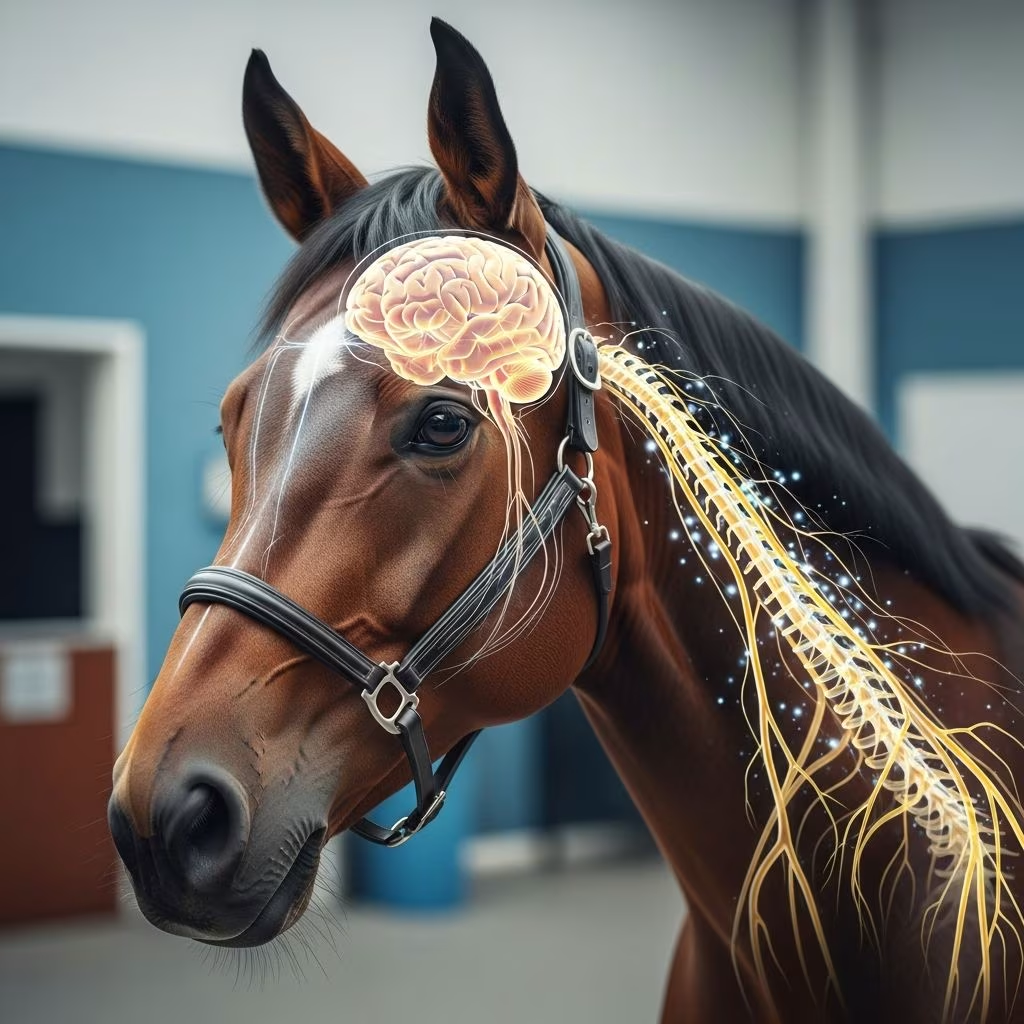
The nervous system in horses is a complex network responsible for coordinating movement, behavior, reflexes, and vital functions. Disorders affecting this system can dramatically impact a horse’s quality of life, performance, and safety. This guide delves into the anatomy of the equine nervous system, common disorders, clinical signs, diagnostic approaches, treatment strategies, and preventive measures. Understanding these conditions empowers horse owners and caretakers to act swiftly, potentially improving outcomes.
Understanding the Equine Nervous System
Horses rely on a sophisticated nervous system divided into the central nervous system (CNS)—comprising the brain, brainstem, and spinal cord—and the peripheral nervous system, which includes nerves extending to muscles and organs. The CNS processes sensory input and directs responses, while peripheral nerves transmit signals. Disruptions, whether from infection, trauma, genetics, or nutrition, can lead to incoordination, weakness, or behavioral changes.
Key components include:
- Brain: Controls cognition, balance, and cranial nerve functions like vision and swallowing.
- Spinal cord: Relays signals for limb movement and proprioception (spatial awareness).
- Peripheral nerves: Manage reflexes and muscle control.
Neurological issues often mimic lameness or training problems, making early recognition crucial.
Common Neurological Disorders in Horses
Several conditions dominate equine neurology, with three non-contagious disorders—cervical vertebral stenotic myelopathy (CVSM or wobbler syndrome), equine protozoal myeloencephalitis (EPM), and equine degenerative myeloencephalopathy (EDM)—being most prevalent, especially in young horses. Infectious causes like equine herpesvirus myeloencephalopathy (EHM) also pose risks.
Cervical Vertebral Stenotic Myelopathy (Wobbler Syndrome)
Wobbler syndrome involves spinal cord compression in the neck due to vertebral narrowing or instability. It affects young, fast-growing horses (Type I) from developmental issues and older horses (Type II) with arthritis-induced stenosis.
Symptoms progress from subtle hindlimb ataxia to severe four-limb incoordination, tripping, circling difficulties, and a rigid neck posture. Horses may drag toes, stumble downhill, or show muscle atrophy.
| Age Group | Common Causes | Key Signs |
|---|---|---|
| Young Horses | Developmental orthopedic disease, rapid growth | Hindlimb weakness, toe dragging, worse on turns |
| Older Horses | Osteoarthritis, bony overgrowth | Neck stiffness, lameness, poor topline muscling |
Equine Protozoal Myeloencephalitis (EPM)
EPM, caused primarily by Sarcocystis neurona protozoa from opossum feces, inflames the brain and spinal cord. Horses ingest the parasite via contaminated feed or water, with only some developing clinical disease.
Asymmetric signs include muscle wasting on one side, stumbling, head tilting, facial drooping, swallowing issues, or tail weakness. Early stages resemble poor training.
Equine Degenerative Myeloencephalopathy (EDM)
EDM/eNAD is a genetic-nutritional disorder in young horses, causing symmetric ataxia without pain. It stems from vitamin E deficiency and hereditary factors, leading to brainstem and spinal cord degeneration.
Horses exhibit wide-based stances, pacing gaits, limb spasticity, and body sway, often affecting all limbs equally.
Other Notable Conditions
- Equine Herpesvirus Myeloencephalopathy (EHM): EHV-1 reactivation causes vasculitis, hindlimb ataxia, urine dribbling, and dog-sitting posture.
- Trauma and Inflammation: Falls or immune-mediated neuritis lead to nerve root pain and deficits.
Recognizing Clinical Signs
Neurological deficits vary by lesion location:
- Ataxia: Wobbling, crossing limbs, worse on curves or backing.
- Weakness: Knuckling, recumbency, or limb dragging.
- Cranial Nerve Issues: Facial asymmetry, blindness, or dysphagia.
- Behavioral Shifts: Aggression, depression, or circling.
Red flags include sudden onset, asymmetry, or progression despite rest. Video affected gaits for vets.
Diagnostic Approaches
Diagnosis starts with history and neurologic exams assessing gait, reflexes, and menace response. Advanced tools include:
- Myelography/CT/MRI: Visualize spinal compression for wobbler.
- Cerebrospinal Fluid (CSF) Analysis: Detect EPM antibodies.
- Blood Tests: Rule out infections or vitamin deficiencies.
- Endoscopy/Ultrasound: Check guttural pouches or neck joints.
Differentiating from lameness requires blocking nerves systematically.
Treatment and Management Strategies
Treatments target underlying causes:
| Disorder | Treatment Options | Prognosis |
|---|---|---|
| Wobbler Syndrome | Surgery (fusion), anti-inflammatories, rest | Guarded; better in mild cases |
| EPM | Antiprotozoals (ponazuril), supportive care | Good if early; 60-80% improve |
| EDM | Vitamin E supplementation, antioxidants | Stable if addressed early |
| EHM | Antivirals, fluids, isolation | Variable; fatalities possible |
Supportive care involves stall rest, slings for recumbent horses, and physiotherapy.
Prevention and Risk Reduction
Minimize risks through:
- Vaccination: Core shots for EHV-1.
- Feed Management: Avoid opossum-contaminated hay; use vitamin E-rich diets.
- Stable Design: Non-slip floors, wide aisles to prevent trauma.
- Nutrition: Balanced growth for youngsters to curb developmental issues.
- Monitoring: Regular exams for performance horses.
When to Call a Veterinarian
Seek immediate help for acute ataxia, recumbency, seizures, or cranial deficits. Delays worsen prognosis.
Frequently Asked Questions (FAQs)
What causes most equine neurological problems?
Common culprits include protozoal infections like EPM, spinal compression, and degenerative conditions influenced by genetics and nutrition.
Can neurological disorders be cured?
Many are manageable; early EPM treatment yields high success, while wobbler may require surgery.
Is wobbler syndrome hereditary?
Partially; select against it in breeding tall, fast-growing breeds.
How do I differentiate neurology from lameness?
Neurologic signs are inconsistent, bilateral, and worsen with head movement; lameness is rhythmic.
Can diet prevent EDM?
Vitamin E supplementation in at-risk foals halts progression.
This guide equips you with knowledge for proactive care. Consult equine specialists for tailored advice.
References
- 3 Neurologic Equine Diseases to Know — The Horse. 2023. https://thehorse.com/1104475/3-neurologic-equine-diseases-to-know/
- The Equine Nervous System — Horse Education Online. 2024. https://www.horseeducationonline.com/post/the-equine-nervous-system
- Neurologic conditions in the sport horse — PMC – NIH. 2022-05-26. https://pmc.ncbi.nlm.nih.gov/articles/PMC9197298/
- Neurological Health Education — Boehringer Ingelheim Horse Owner. 2025. https://horseowner.boehringer-ingelheim.com/us/education-center/neurological-health



