

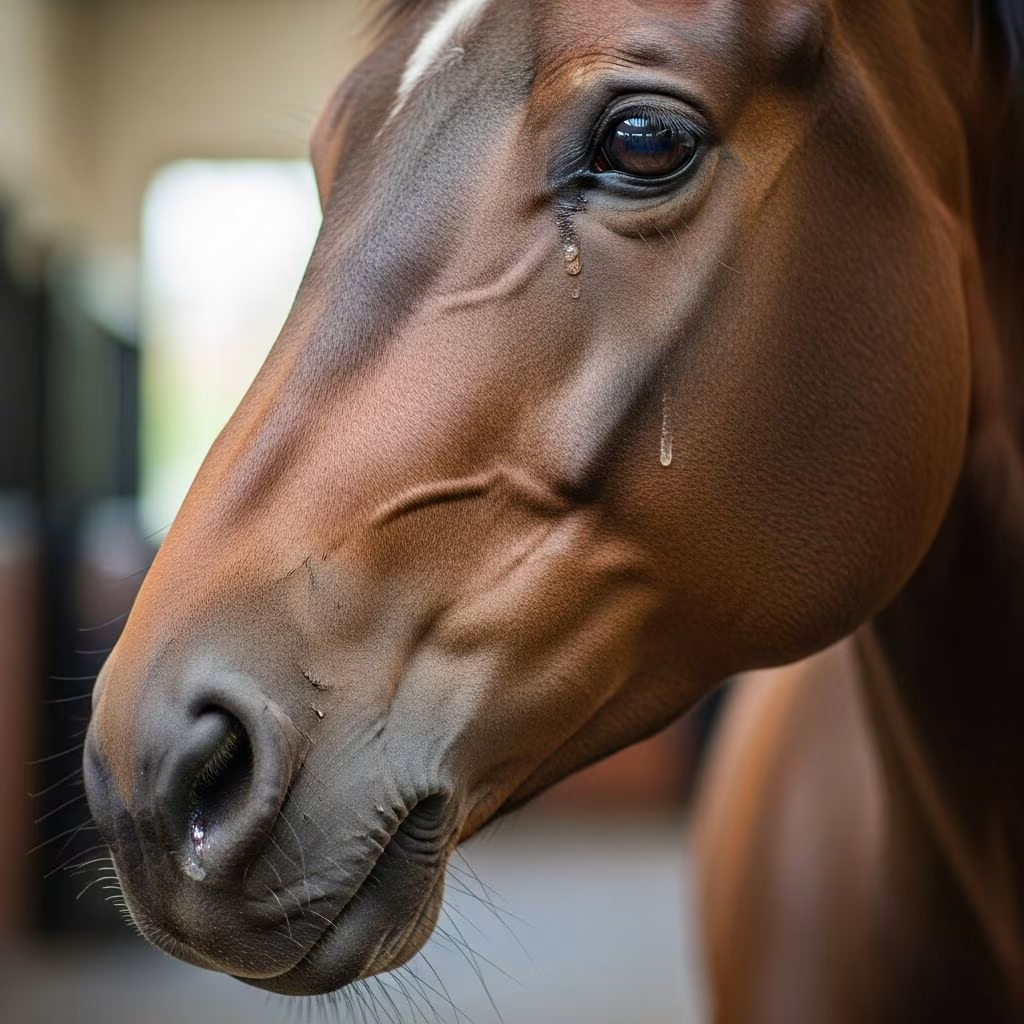
The nasal cavity and tear drainage system play critical roles in equine ocular health, facilitating tear production and removal to prevent irritation and infection. Disruptions in these structures can lead to significant discomfort and vision impairment in horses. This article delves into the anatomy, common pathologies, diagnostic approaches, and management strategies for these conditions, drawing from veterinary research and clinical practices.
Understanding the Anatomy of the Equine Tear Drainage System
The equine nasolacrimal apparatus consists of several interconnected components that ensure proper tear flow. Tears originate from the lacrimal and nictitating membrane glands, draining through upper and lower lacrimal puncta located at the medial canthi of the eyes. These puncta connect to canaliculi, which merge into the lacrimal sac and then the nasolacrimal duct—a slender tube approximately 2-3 cm in diameter that extends from the orbit, through the nasal bone, and into the nasal cavity, exiting via the nasal puncta near the nasal septum.
Radiographic studies using barium contrast dacryocystorhinography have precisely mapped this duct’s course, revealing its tortuous path and narrow segments prone to obstruction. The duct’s intraosseous portion runs within bony canals, while the membranous part navigates the nasal mucosa, ending beneath the inferior nasal meatus. This design, similar to human anatomy, explains why excessive tearing often accompanies nasal discharge during emotional stress or irritation.
- Lacrimal puncta: Small openings at the eye corners collecting tears.
- Canaliculi: Short channels leading to the lacrimal sac.
- Nasolacrimal duct: Primary drainage pathway, roughly 30-35 cm long in adults.
- Nasal puncta: Exit points inside the nostrils.
Healthy function relies on unobstructed flow, with daily tear production around 10-15 mL per eye to lubricate the cornea and flush debris.
Common Clinical Signs and Symptoms
Horses with nasal or tear duct issues often present with epiphora—persistent overflow of tears onto the face, causing wet cheeks, skin crusting, and secondary dermatitis. Owners may notice a dry nasal puncta despite ocular discharge, indicating blockage upstream. Other signs include:
- Swollen eyelids or conjunctiva.
- Excessive blinking or squinting.
- Mucopurulent discharge from the eye or nostril.
- Facial swelling over the lacrimal sac area.
- Unilateral or bilateral involvement, depending on the cause.
Inflammatory debris from concurrent eye conditions like conjunctivitis can overwhelm the system, leading to acute presentations. Chronic cases may show pigment dilution around the eyes or fly attraction to damp areas, exacerbating irritation.
Primary Causes of Nasal Cavity and Tear Duct Problems
Obstructions arise from diverse etiologies, categorized as congenital, infectious, traumatic, or neoplastic.
| Cause Category | Examples | Prevalence in Horses |
|---|---|---|
| Congenital | Imperforate puncta, duct atresia | Foals, often bilateral |
| Infectious/Inflammatory | Bacterial (Streptococcus, Pseudomonas), viral, allergies | Most common in adults |
| Traumatic | Fractures, foreign bodies, iatrogenic from sinus surgery | Post-injury or procedural |
| Neoplastic | Tumors, polyps obstructing duct | Rare, older horses |
| Other | Inspissated debris, mucus plugs | Secondary to dry environments |
Infectious agents thrive in stagnant tears, forming biofilms that resist initial flushing. Trauma from kicks or embedding plant material like burdock seeds can scar the duct, while tumors progressively narrow the lumen.
Diagnostic Approaches for Accurate Assessment
Veterinarians employ a stepwise protocol starting with physical examination. Key steps include:
- Fluorescein staining: To rule out corneal ulcers mimicking epiphora.
- Puncta inspection: Using magnification to check patency; dry nasal openings suggest obstruction.
- Duct flushing: Saline infusion from the nasal puncta retrograde to the eye confirms blockages if fluid fails to exit.
- Dacryocystorhinography: Contrast radiography visualizes the duct’s full course, identifying strictures or diverticula.
- Endoscopy/Nasoscopy: Visualizes nasal exit and rules out neoplasia.
- Culture/Sensitivity: For purulent cases to guide antibiotics.
Advanced imaging like CT scans may delineate bony involvement in trauma cases. Bloodwork assesses systemic inflammation or allergies.
Therapeutic Interventions and Management
Treatment targets the underlying cause while restoring drainage.
Conservative Measures
Initial flushing with sterile saline or balanced electrolyte solutions clears debris. Owners can assist under guidance: insert a catheter into the nasal puncta, gently infuse 10-20 mL fluid, observing exit from the eye. Repeat daily until resolved. Topical antibiotics (e.g., triple antibiotic ointment) and anti-inflammatories reduce secondary infection.
Surgical Options
Persistent obstructions necessitate procedures like:
- Cannulation and stenting: Indwelling tubes maintain patency for weeks.
- Dacryocystotomy: Incision into the lacrimal sac for flushing and biopsy.
- Conjunctivorhinostomy: Creates a new drainage pathway bypassing the duct.
- Ductectomy: Rarely, excision of scarred segments with anastomosis.
Post-operative care includes flushing, systemic antibiotics, and fly protection. Success rates exceed 80% for inflammatory cases but drop with neoplasia.
Preventive Strategies for Horse Owners
Proactive care minimizes risks:
- Maintain clean, dust-free stables to reduce irritants.
- Regular eye exams during routine vet checks.
- Prompt removal of facial wounds or foreign bodies.
- Fly control with masks and repellents.
- Nutritional support for immune health, including omega-3s.
Foals with congenital issues benefit from early probing to prevent chronic scarring.
Prognosis and Long-Term Monitoring
Most cases resolve with prompt intervention, though recurrent blockages signal chronic issues like allergies or tumors. Owners should monitor for epiphora recurrence, documenting photos for vet review. Annual ophthalmologic exams are advisable for performance horses.
Frequently Asked Questions (FAQs)
What causes tears to overflow in my horse’s eye?
Typically, blockages in the nasolacrimal duct from debris, infection, or trauma prevent normal drainage, leading to epiphora.
Can I flush my horse’s tear duct at home?
Yes, with vet instruction using saline, but consult first to avoid injury. Professional flushing is safer for complex cases.
Is surgery always needed for blocked tear ducts?
No, many respond to flushing and medications; surgery is reserved for refractory or structural obstructions.
How do I know if it’s a tear duct issue versus an eye infection?
A dry nasal puncta with facial tearing suggests duct blockage; purulent discharge indicates infection. Vet exam differentiates.
Are certain horse breeds more prone?
Appaloosas with white facial markings may show epiphora more visibly, but no breed predisposition exists for duct disorders.
Emerging Research and Future Directions
Recent studies explore antimicrobial peptides for biofilm disruption and regenerative endoscopy for duct repair. Genetic screening for congenital defects is under development, promising earlier interventions.
References
- Radiographic and gross anatomy of the nasolacrimal duct of the horse — C A Latimer et al. American Journal of Veterinary Research. 1984-03. https://pubmed.ncbi.nlm.nih.gov/6711973/
- Flushing a Tear Duct on a horse! — Beasley Equine Clinic (YouTube). 2024-10-16. https://www.youtube.com/watch?v=cMo7mRTPn3A
- Watery Eye Dry Nasal Tear Duct Opening — Horse Side Vet Guide. Accessed 2026. https://horsesidevetguide.com/drv/Observation/48/watery-eye-dry-nasal-tear-duct-opening/
- Nasolacrimal duct — Kenhub. Accessed 2026. https://www.kenhub.com/en/library/anatomy/nasolacrimal-duct
- Nasolacrimal and Lacrimal Apparatus in Animals — Merck Veterinary Manual. Accessed 2026. https://www.merckvetmanual.com/eye-diseases-and-disorders/ophthalmology/nasolacrimal-and-lacrimal-apparatus-in-animals



