

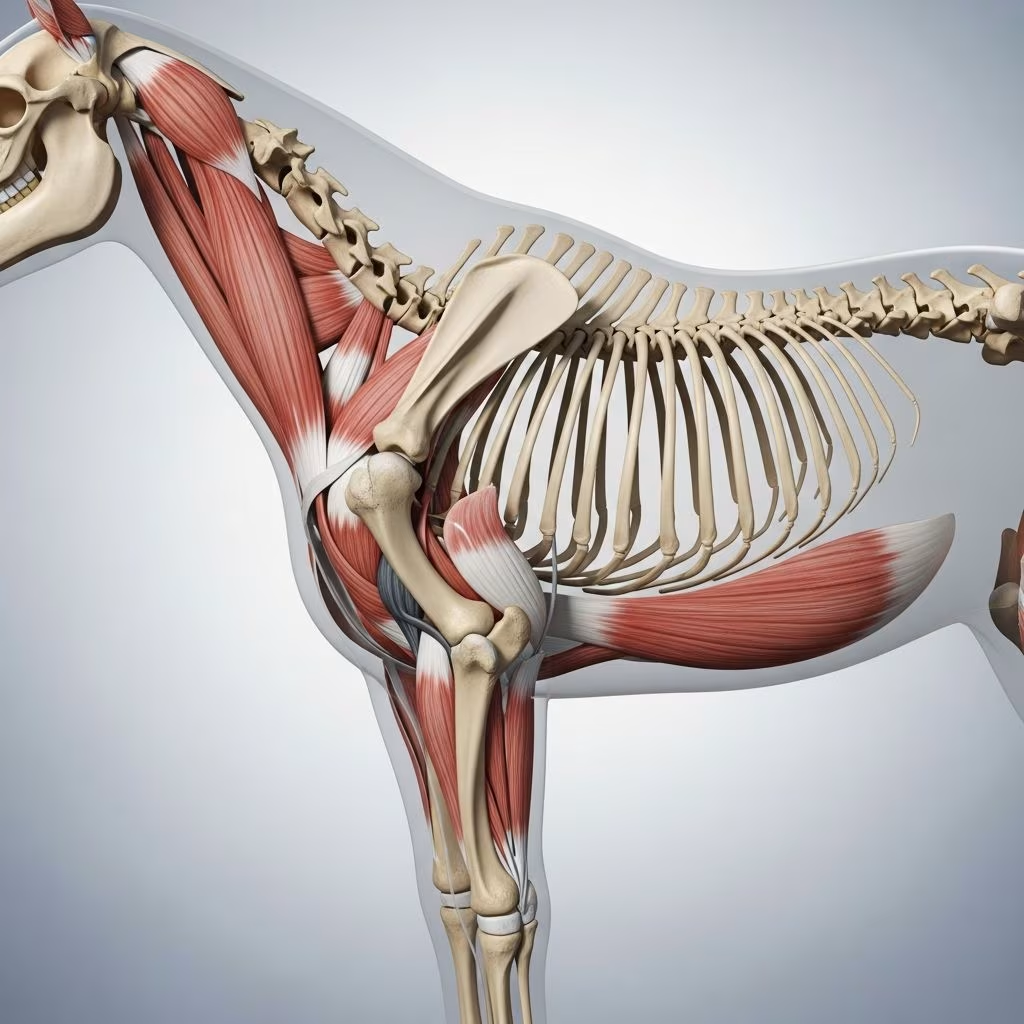
The musculoskeletal system in horses represents one of the most critical physiological components determining an animal’s capacity for movement, performance, and overall quality of life. Given that horses are frequently engaged in work activities, athletic pursuits, or carry riders, the demand placed on their skeletal structures, joints, and muscular tissues is substantial and continuous. This heightened physical stress, combined with natural aging processes and environmental factors, creates an environment where musculoskeletal complications become increasingly prevalent among equine populations.
Understanding the complexity of these conditions requires knowledge of how various anatomical components interact, what biological mechanisms underlie common disorders, and what clinical indicators alert owners to potential problems requiring veterinary intervention.
The Anatomical Foundation: Understanding Joint Structure and Function
Equine joints represent sophisticated biological structures composed of multiple interdependent components working in concert to facilitate movement while maintaining structural integrity. The fundamental architecture of a synovial joint includes the articular cartilage, which provides a smooth surface for bone-on-bone interaction; the synovial membrane, which produces lubricating fluid; the joint capsule, which encloses and protects the joint; and surrounding ligaments and tendons that provide stability and enable muscular control.
The synovial fluid within joints serves multiple essential functions: it lubricates articular surfaces to reduce friction, nourishes the avascular cartilage, absorbs shock during movement, and removes metabolic waste products from the joint environment. When any component of this system becomes compromised through injury, infection, or degenerative processes, the entire joint’s functional capacity diminishes.
Different joint types throughout the equine body provide varying ranges of motion. The fetlock joint, for example, functions as a relatively simple hinge joint allowing primary flexion and extension, while the shoulder and hip joints permit more complex three-dimensional movement patterns. Understanding these anatomical distinctions helps explain why certain conditions preferentially affect specific joints and why clinical presentations vary depending on location.
Traumatic Injury-Related Joint Complications
Traumatic arthritis represents a significant category of joint dysfunction resulting from acute or chronic injury patterns. This condition encompasses multiple pathological processes occurring simultaneously within the injured joint. When trauma occurs, the synovial membrane and joint capsule undergo inflammatory changes, fluid accumulates within the joint space creating swelling and heat, and structural components including cartilage and bone may sustain direct damage.
Ligamentous injuries within or adjacent to joints represent particularly common traumatic events. Ligament sprains range from microscopic tearing of individual fibers to complete ligamentous rupture, with severity determining the immediate functional consequences and long-term healing potential. Similarly, meniscus tears within joints like the stifle create mechanical dysfunction and contribute to secondary cartilage damage through altered joint biomechanics.
The clinical progression of traumatic arthritis follows a somewhat predictable pattern. During the acute phase, affected horses display obvious lameness, and examination reveals warm, swollen joints with pain upon manipulation. As time progresses, inflammatory exudate becomes more organized, connective tissues thicken and scar, and the joint’s range of motion becomes progressively restricted. This chronic remodeling process may stabilize at various points, with some horses achieving functional recovery while others progress toward degenerative conditions.
Athletic horses face substantially elevated risk for traumatic joint injuries due to the high-impact nature of their work. The repetitive forces experienced during jumping, racing, cutting, or western performance events create cumulative microtrauma that may eventually exceed the joint’s reparative capacity.
Degenerative Joint Disease: The Progressive Pathway
Osteoarthritis, commonly referred to as degenerative joint disease, represents the endpoint of many different pathological joint processes and stands as the most prevalent joint disorder affecting horses. This progressive condition involves the gradual deterioration of articular cartilage combined with abnormal bone remodeling, thickening of joint membranes, and eventual loss of joint function.
The pathogenesis of osteoarthritis follows a somewhat stereotypical pattern regardless of the initiating cause. The articular cartilage, composed primarily of collagen and proteoglycans, gradually loses its structural integrity. As the protective cartilage layer thins, underlying bone experiences increased mechanical stress. The body responds by producing additional synovial fluid and initiating bone remodeling processes that create characteristic bony outgrowths visible on radiographic imaging.
Causative factors leading to osteoarthritis in horses include aging processes, previous joint injuries, developmental abnormalities, infections, and metabolic imbalances. Overweight horses demonstrate accelerated joint degeneration, suggesting that biomechanical loading significantly influences disease progression. Once established, osteoarthritis remains progressive, though the rate of deterioration varies considerably between individuals and joint locations.
Clinical signs of osteoarthritis encompass lameness of variable severity, joint stiffness particularly evident after rest periods, reluctance to engage in normal activities, and visible joint enlargement or deformation in advanced cases. Diagnostic imaging reveals characteristic changes including narrowed joint spaces, osteophyte formation, subchondral bone hardening, and evidence of soft tissue inflammation.
Developmental Joint Conditions in Young Horses
Osteochondrosis represents a developmental disorder affecting the juvenile equine population, typically manifesting before one year of age. This condition involves incomplete ossification of the growth cartilage combined with separation between cartilage and underlying bone. When synovial fluid enters the space created by this separation, it promotes cartilage undermining and potential cyst formation.
The cartilaginous flap may remain attached as a hinged fragment or separate completely, creating what practitioners term “joint mice”—loose bone or cartilage fragments floating within the joint cavity. These loose fragments cause mechanical irritation and perpetual inflammation within the affected joint. Common sites for osteochondrosis include the stifle joint, hock, fetlock, and shoulder.
Early identification of osteochondrosis through advanced imaging allows for potential surgical intervention before extensive joint damage occurs. Many affected horses demonstrate excellent prognosis following surgical fragment removal, provided that secondary degenerative changes have not progressed substantially.
Soft Tissue Disorders and Tendon Pathology
Tendon and ligament structures in horses endure tremendous mechanical stress, particularly the superficial and deep flexor tendons of the lower limbs. Acute tendinitis represents an inflammatory response to traumatic injury affecting the tendon substance itself. Horses with acute tendinitis present with severe lameness, pronounced swelling, heat over the affected region, and obvious pain upon palpation.
Chronic tendinitis develops following inadequate healing or repeated reinjury of previously damaged tendons. The healing process in chronic cases involves formation of fibrous scar tissue that bonds fibers together, creating areas of structural weakness within the tendon. Paradoxically, horses with chronic tendinitis may appear sound during walk and trot but demonstrate lameness when galloped or asked to perform at higher speeds, as the scarred tissue cannot accommodate increased tensile forces.
Synovitis affecting the tendon sheaths that surround and protect tendons creates lameness and swelling patterns distinct from direct tendon inflammation. This condition involves increased synovial fluid production within the sheath, creating visible enlargements and mechanical dysfunction. When infection complicates tenosynovitis, the clinical presentation becomes more severe, with marked lameness and systemic signs potentially evident.
Bursitis and Localized Inflammation
Bursae represent fluid-filled sacs positioned throughout the musculoskeletal system that function to reduce friction between moving structures. Bursitis can develop acutely with sudden swelling, heat, and tenderness, or progress as chronic swelling that persists over extended periods. Repeated trauma and abnormal tissue remodeling drive chronic bursitis development, though the associated swellings often do not severely interfere with function unless they become markedly enlarged.
Various anatomical sites develop characteristic bursal problems. The withers region, points of the hip, and shoulder areas frequently experience bursitis in horses subjected to poor saddle fitting or trauma. While these conditions may appear cosmetically significant, functional impairment correlates more directly with the degree of swelling and associated pain rather than visible enlargement alone.
Muscle Disorders and Performance Implications
Equine muscle pathology encompasses diverse conditions ranging from inflammatory myositis to inherited metabolic disorders affecting muscle fiber function. These conditions present with variable clinical signs including stiffness, pain, weakness, atrophy, and exercise intolerance. The specific presentation depends upon which muscle groups are involved and whether the primary pathology affects the muscle fibers themselves or the surrounding connective tissues.
Chronic exertional rhabdomyolysis represents a particularly important muscle disorder, especially in performance horses. Multiple episodes of muscle breakdown occurring after seemingly minimal exertion characterize this condition, with some forms demonstrating genetic inheritance patterns. Affected horses require careful management and may benefit from modified exercise programs and specialized nutrition.
Fibrotic and ossifying myopathy, observed particularly in working Quarter Horses, results from injury to muscle tissue in the inner thigh region, often following traumatic events or intensive work requiring abrupt directional changes. Progressive thickening and scarring of connective tissue causes the muscle fibers to bond together and eventually harden, creating a distinctive jerky gait pattern. Surgical intervention can improve function in many affected horses, though complete recovery does not occur in all cases.
Immune-mediated myositis represents a serious condition characterized by rapid muscle decay in the back and hindquarters following blood vessel injury. This condition may develop as a consequence of certain systemic infections and predominantly affects specific age groups within particular breeds.
Clinical Recognition and Diagnostic Approaches
Recognizing musculoskeletal disorders requires familiarity with normal equine movement patterns and behavioral signs indicating discomfort or dysfunction. Lameness represents perhaps the most obvious clinical indicator, manifesting as an altered gait that may range from subtle to severe non-weight-bearing presentations.
Beyond lameness, additional signs include joint swelling and heat, reluctance to engage in normal activities, muscle stiffness or wasting, gait abnormalities, or behavioral changes reflecting pain or discomfort. Some conditions produce enlargement of affected areas, while others present primarily with functional limitations apparent only during specific activities.
Diagnostic evaluation typically begins with comprehensive history and physical examination, followed by specialized imaging studies. Radiography reveals bony changes, joint space alterations, and structural abnormalities. Ultrasound provides detailed visualization of soft tissue structures including tendons, ligaments, and joint capsules, allowing detection of otherwise non-apparent lesions. Advanced imaging modalities including endoscopy allow direct visualization of joint cartilage surfaces and detailed assessment of intra-articular pathology.
Bloodwork and joint fluid analysis sometimes provide diagnostic information, particularly when infection is suspected. Muscle biopsies help characterize muscle disorders and identify inherited versus acquired pathology.
Prevention and Long-Term Management Strategies
While some musculoskeletal disorders result from unavoidable aging processes or inherent conditions, many conditions can be prevented or their severity minimized through appropriate management practices. Maintaining optimal body weight reduces mechanical stress on joints and supporting structures. Balanced exercise programs that gradually condition the musculoskeletal system promote tissue adaptation and reduce injury risk.
Proper nutrition supports musculoskeletal health throughout the horse’s lifespan. Adequate protein, appropriate mineral ratios, and inclusion of supportive supplements in horses with existing conditions may slow degenerative processes. Quality hoof care and proper shoeing maintain appropriate limb biomechanics and reduce abnormal stresses.
Environmental management including appropriate footing, timely farrier visits, and equipment fitting significantly influences musculoskeletal health. Regular veterinary examinations allow early detection of emerging problems before they progress to stages requiring intensive intervention.
Conclusion
Musculoskeletal disorders represent an intricate category of equine health challenges reflecting the anatomical and functional demands placed on horses used for work and performance. Successful management depends upon understanding fundamental disease processes, recognizing clinical indicators of problems, and implementing evidence-based preventive and therapeutic strategies. Through informed ownership and appropriate veterinary partnership, horses can maintain optimal musculoskeletal health and continue functioning at their intended purposes throughout extended productive lifespans.
References
- Joint Disorders in Horses — Merck Veterinary Manual. 2024. https://www.merckvetmanual.com/horse-owners/bone-joint-and-muscle-disorders-in-horses/joint-disorders-in-horses
- Muscle Disorders in Horses — MSD Veterinary Manual. 2024. https://www.msdvetmanual.com/horse-owners/bone-joint-and-muscle-disorders-in-horses/muscle-disorders-in-horses
- 8 Common Musculoskeletal Problems in Horses — Poll to Pastern. 2024. https://www.polltopastern.com/post/8-common-musculoskeletal-problems-in-horses
- Equine Joint Anatomy & Common Conditions – Complete Guide — Mad Barn. 2024. https://madbarn.ca/horse-joint-anatomy/
- Musculoskeletal Disorders: Types, Causes, Diagnostics and Treatment — Vet Times. 2024. https://www.vettimes.com/news/vets/equine/musculoskeletal-disorders-types-causes-diagnostics-and-treatment
- Introduction to Bone, Joint, and Muscle Disorders in Horses — Merck Veterinary Manual. 2024. https://www.merckvetmanual.com/horse-owners/bone-joint-and-muscle-disorders-in-horses/introduction-to-bone-joint-and-muscle-disorders-in-horses
- Equine Musculoskeletal Pathologies: Clinical Approaches — PubMed Central. 2024. https://pmc.ncbi.nlm.nih.gov/articles/PMC11126110/



