
Middle and Inner Ear Infections in Horses
Comprehensive overview of otitis media and interna diagnosis, symptoms, and treatment protocols for horse owners
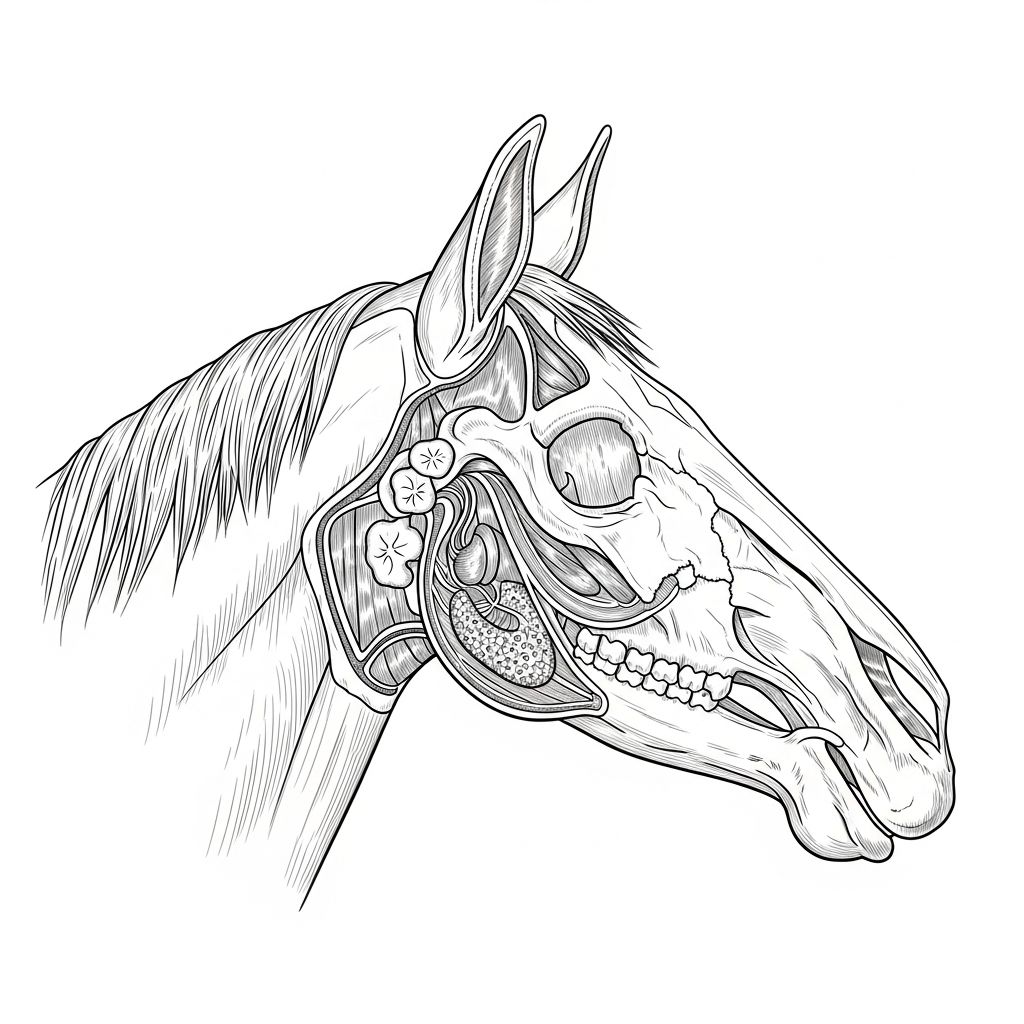
Ear infections affecting the middle and inner ear structures represent a significant clinical challenge in equine practice. These conditions, collectively referred to as otitis media and otitis interna, can develop insidiously and progress to serious complications if not identified and managed appropriately. Understanding the pathophysiology, recognition of clinical presentations, and implementation of evidence-based treatment strategies are essential for veterinarians and horse owners seeking to preserve hearing function and prevent neurological sequelae.
Distinguishing Otitis Media from Otitis Interna
The middle ear, or tympanic bulla, represents the space located behind the tympanic membrane where sound vibrations are transmitted through the ossicular chain. Otitis media refers to inflammation and infection of these middle ear structures. In contrast, otitis interna involves inflammation of the inner ear, which contains the vestibular system responsible for balance and the cochlea responsible for hearing.
While otitis media can exist independently, untreated infection may progress to involve the inner ear structures, creating a more complex clinical situation. The distinction between these two conditions carries significant prognostic implications, as inner ear involvement typically results in permanent neurological deficits.
Recognizing Clinical Manifestations in Affected Horses
The presentation of middle ear disease varies depending on the stage of infection and extent of inflammation. Head shaking may represent the only observable clinical sign during early disease stages, making recognition particularly challenging. As the condition progresses, horses may demonstrate additional clinical indicators.
Signs Associated with Middle Ear Involvement
- Recurrent or persistent otitis externa that resists standard topical therapy
- Head shaking or persistent head tilting toward the affected side
- Difficulty with mastication or reluctance to close the mouth completely
- Pain on palpation of the ear base or vertical ear canal
- Facial nerve paralysis or drooping of facial structures on the affected side
- Horner syndrome, characterized by reduced pupil size, eye retraction, and drooping eyelid
- Dry eye condition or keratoconjunctivitis sicca secondary to facial nerve involvement
- Reduced hearing acuity or complete hearing loss in the affected ear
Signs Associated with Inner Ear Involvement
When inflammation extends to the inner ear, additional vestibular signs become apparent. The horse may demonstrate head tilt positioning maintained toward the affected side, spontaneous eye movements in horizontal or rotary patterns (nystagmus), and loss of normal balance and coordination (vestibular ataxia). These signs reflect involvement of cranial nerve VIII, which carries both vestibular and auditory information.
A Unique Equine Complication: Temporohyoid Osteoarthropathy
Horses with chronic otitis media/interna face a distinctive complication absent in other species: temporohyoid osteoarthropathy (THO). This degenerative condition develops when prolonged inflammation leads to arthritic changes in the temporohyoid joint. As cartilage degenerates and bone remodels, ankylosis (fusion) of the joint may occur, transferring excessive biomechanical stress to the adjacent petrous temporal bone. This stress frequently results in stress fractures of the temporal bone, which can be catastrophic.
The development of THO underscores the importance of early intervention in equine otitis media/interna, as preventing joint fusion eliminates the risk of subsequent temporal bone fracture.
Diagnostic Approaches and Imaging Modalities
Clinical suspicion based on presenting signs should be supported by objective diagnostic imaging. Otoscopic examination provides visualization of the external canal and tympanic membrane but cannot directly assess middle ear structures or identify inner ear pathology.
Advanced Imaging Techniques
Computed tomography (CT) and magnetic resonance imaging (MRI) represent the gold standard for confirming otitis media and interna diagnosis. These modalities allow detailed visualization of the bulla, identification of fluid accumulation, assessment of bone remodeling associated with THO, and detection of inner ear involvement. CT imaging is particularly valuable for evaluating bony changes and determining whether the tympanic membrane remains intact.
Radiography offers less sensitivity but may reveal gross bony changes suggestive of THO in advanced cases. Radiographic findings can include proliferative bone lesions around the temporohyoid joint and evidence of temporal bone fractures.
Treatment Foundation: Extended Antibiotic Therapy
Medical management represents the first-line approach for most cases of equine otitis media/interna. Unlike acute external ear infections, middle ear involvement requires substantially prolonged antibiotic courses. Treatment duration typically extends for 6 to 8 weeks, with some cases necessitating continuation for 12 weeks or longer.
Systemic Antibiotic Selection
Broad-spectrum systemically administered antibiotics form the foundation of therapy. Initial empirical selection should cover the most likely pathogens while cultures and sensitivities are obtained from middle ear fluid if accessible. Common bacterial isolates include gram-negative organisms, particularly Pseudomonas species, along with gram-positive cocci and anaerobes.
Fluoroquinolone antibiotics achieve excellent penetration into the tympanic bulla and have become preferred agents for many practitioners. Aminoglycoside antibiotics also provide good tissue penetration when administered parenterally. Beta-lactam antibiotics including amoxicillin-clavulanate combination products offer broad coverage, though penetration into the bulla may be suboptimal.
Topical Treatment Considerations
When the tympanic membrane is ruptured or perforated, direct topical instillation of antimicrobial agents into the middle ear can achieve very high local concentrations. Solutions combining antibiotics with EDTA (ethylenediaminetetraacetic acid) enhance effectiveness against gram-negative organisms. However, if the tympanic membrane remains intact, systemic therapy alone should be relied upon, as topical medications cannot penetrate the intact membrane.
Managing Inflammation and Secondary Complications
Beyond antimicrobial therapy, controlling the inflammatory response within the bulla facilitates healing and reduces pain. Systemic corticosteroids are frequently employed to decrease the intense inflammation characteristic of middle ear disease. These agents not only reduce swelling but also decrease the volume and viscosity of exudative fluid accumulating within the bulla, potentially improving medication penetration and epithelial healing.
Pain management should not be overlooked, as chronic ear pain significantly impacts quality of life. Multimodal analgesic approaches combining different classes of pain medication often provide superior pain control compared to monotherapy.
Monitoring Progress and Adjusting Therapy
Frequent reassessment during treatment is critical for detecting response to therapy and identifying cases requiring treatment modification. Many equine practitioners recommend clinical reevaluation every 2 to 4 weeks during the initial treatment period. Imaging studies should be repeated periodically to document resolution of fluid within the bulla and identify any progression toward THO.
Some cases demonstrate incomplete response to initial therapy or develop recurrent infection after apparent resolution. These refractory cases may require prolonged therapy, alternative antibiotic combinations, or consideration of surgical intervention.
Surgical Options for Refractory Cases
When medical management fails to resolve infection after adequate treatment duration, or when complications such as THO with temporal bone fractures develop, surgical intervention becomes necessary. Bulla osteotomy provides access to the tympanic bulla for drainage of infected material and allows thorough flushing of the middle ear cavity.
Complications arising from chronic otitis media/interna, particularly those related to THO and temporal bone fractures, may carry grave prognoses despite surgical management. Some horses with severe THO-related complications may warrant euthanasia on humane grounds.
Prognosis and Long-Term Outcomes
Early identification and treatment initiation significantly improve the likelihood of complete resolution. When diagnosis occurs during early disease stages and aggressive treatment is pursued promptly, many horses recover without permanent sequelae.
However, if facial nerve or vestibular involvement has been present for several weeks before treatment initiation, permanent neurological deficits may persist despite successful infection resolution. Head tilt and facial paresis can become fixed deficits, affecting the horse’s quality of life and functional abilities.
The unique risk of THO development in horses means that long-term radiographic monitoring may be warranted even after successful infection resolution, particularly in cases requiring extended treatment duration.
Prevention and Early Recognition Strategies
Since many cases of otitis media develop secondary to chronic external ear infection, diligent management of external ear disease represents the most effective preventive approach. Horses with persistent external ear infections should receive thorough diagnostic evaluation to identify underlying causes such as allergies, foreign bodies, or abnormal ear canal anatomy.
Owners should maintain awareness of subtle clinical signs such as head shaking, as early recognition and veterinary evaluation can lead to diagnosis before severe complications develop. Any horse demonstrating persistent head shaking unresponsive to routine fly control measures warrants otoscopic examination and consideration of advanced imaging.
References
- Otitis Media and Interna in Animals — MSD Veterinary Manual. Last updated 2024. https://www.msdvetmanual.com/ear-disorders/otitis-media-and-interna/otitis-media-and-interna-in-animals
- Diagnosis and Management of Otitis Media (Proceedings) — DVM360. https://www.dvm360.com/view/diagnosis-and-management-otitis-media-proceedings
- Otitis Media/Interna: An Interview With Dr. Lori Thompson — Today’s Veterinary Practice. https://todaysveterinarypractice.com/dermatology/treatotitis-mediainternaan-interview-dr-lori-thompson/
- Otitis Media and Interna and Temporohyoid Osteoarthropathy — PubMed Central, National Institutes of Health. https://pubmed.ncbi.nlm.nih.gov/9106341/
- Otitis Media/Interna and Neurologic Deficits — MSPCA-Angell Animal Medical Center. https://www.mspca.org/angell_services/otitis-media-interna-and-neurologic-deficits/
Similar Articles








Read full bio of Sneha Tete


