

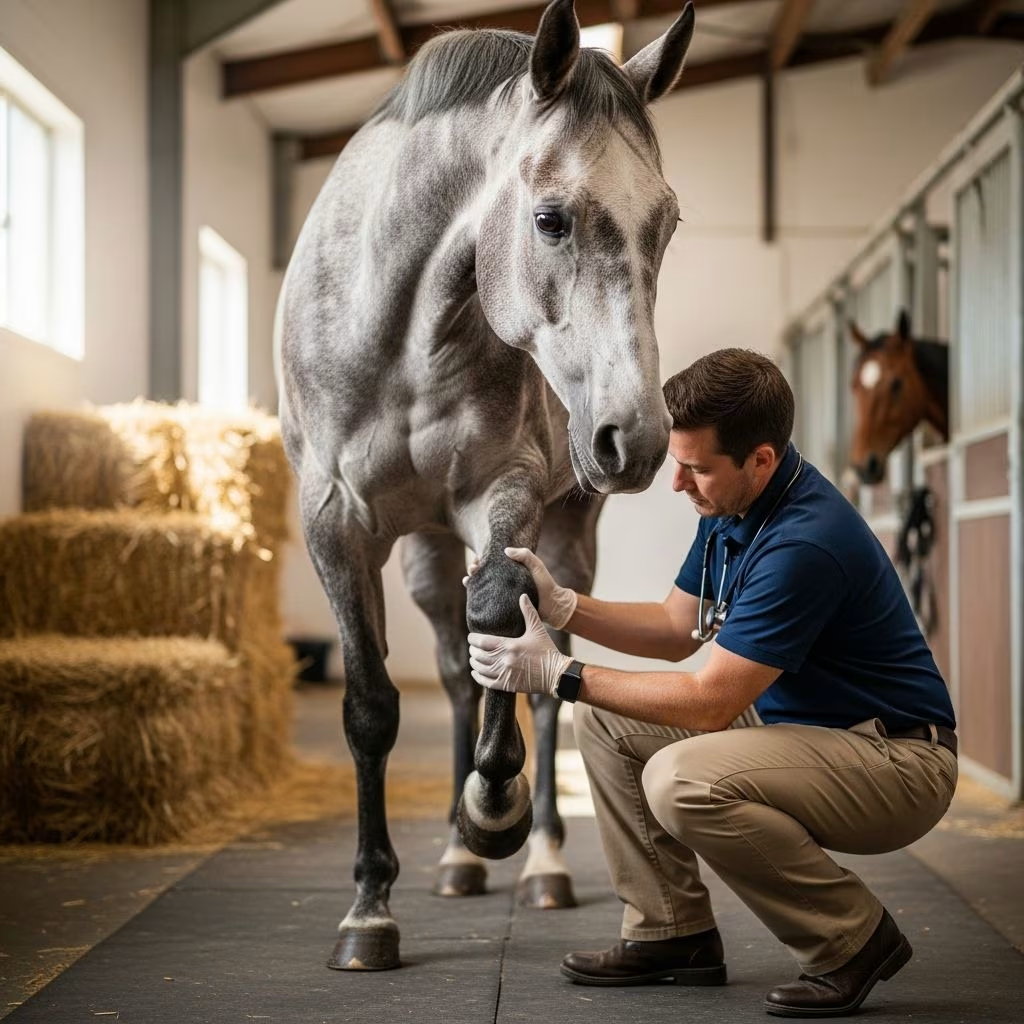
Equine lameness represents one of the most common concerns in horse health, requiring a systematic and thorough approach to diagnosis. Lameness fundamentally involves abnormal movement patterns resulting from pain, injury, or neurological dysfunction affecting one or more limbs. A proper assessment demands that veterinarians follow structured examination protocols combining visual observation, hands-on palpation, specialized testing procedures, and advanced diagnostic imaging to pinpoint the underlying cause.
Initial Assessment: The Standing Examination
The diagnostic process begins before the horse moves, with careful observation of the animal standing at rest. During this initial phase, veterinarians conduct a comprehensive visual inspection of the entire body, paying particular attention to structural symmetry and any visible abnormalities. This foundational step provides critical baseline information about the horse’s posture, weight distribution, and overall conformation.
Physical Palpation Techniques
Systematic hands-on examination forms an essential component of early lameness assessment. Veterinarians perform thorough palpation of multiple anatomical structures to identify pain sources and tissue abnormalities:
- The pastern region, fetlock joint, and cannon bone areas receive detailed assessment for heat, swelling, and pain responses
- Higher limb joints including the knee, hock, and shoulder are evaluated for signs of inflammation or effusion
- Spinal structures, particularly the sacroiliac region and cervical spine, are palpated to rule out axial skeletal involvement
- Muscle tissue is carefully examined for scarring, spasm, atrophy, or areas of localized weakness
- The entire foot structure requires assessment for conformation irregularities, hoof cracks, improper wear patterns, and internal pathology
This comparative examination emphasizes evaluating one side of the body against the contralateral side, as asymmetries often indicate the location of pain or dysfunction. Veterinarians may perform this hands-on examination either before or after observing the horse in motion, depending on individual clinical preferences and the severity of lameness present.
Dynamic Gait Evaluation: Observing Movement Patterns
Visual assessment of the horse in motion represents perhaps the most critical diagnostic element, as movement patterns directly reveal the underlying problem. The degree of lameness severity influences the specific observations performed, with severely lame horses requiring only brief walking assessment, while subtle or complex cases demand more extensive evaluation protocols.
Linear Motion Assessment
Straight-line trotting provides the most reliable method for detecting forelimb lameness. Veterinarians observe the horse trotting in hand while positioned to view the animal from multiple angles—front, back, and both lateral sides. During forelimb lameness, the horse’s head rises as the affected limb strikes the ground, reducing the impact load. This head-nod phenomenon increases in amplitude relative to lameness severity, with greater excursion indicating more significant dysfunction. The test remains effective whether the horse moves in a straight line or circles.
Hind limb lameness demands different analytical approaches than forelimb problems. Evaluating the vertical motion of the torso provides the most sensitive method for detecting hind limb issues, as reduced ground reaction forces during weight-bearing directly translate to altered torso movement. The vertical excursion of the entire pelvis offers a more reliable assessment than other pelvic movement methods, with less potential for diagnostic errors.
Comprehensive Movement Observation Protocols
Complete lameness evaluation incorporates multiple movement scenarios to avoid misinterpretation. Natural asymmetries in head and pelvic movements frequently appear in sound horses during lunging but disappear during straight-line trotting. Directional asymmetries may vary between leftward and rightward movement. To establish accurate diagnoses, veterinarians assess the horse under several conditions:
- Walking and trotting in straight lines at consistent speeds
- Executing circular movements at various diameters and gaits
- Cantering and transitioning between different gait speeds
- Performing under saddle when lameness remains subtle or complicated
- Moving on both hard and soft surfaces to identify surface-dependent patterns
Observation from multiple viewpoints reveals subtle movement deviations including limb winging or paddling, improper landing mechanics, weight-shifting patterns, stride shortening, stiffness, and irregular foot placement.
Specialized Testing Procedures
Flexion Testing Protocol
Flexion tests effectively reveal lameness sources that may not manifest during routine gait observation. The veterinarian manually flexes the horse’s limb, holding the joint in the flexed position for a predetermined duration ranging from five to sixty seconds. Upon releasing the leg, the handler immediately trots the horse in a straight line while the veterinarian observes the trot departure. This testing method may unmask pain, stiffness, improper weight distribution, or irregular movement patterns not apparent during normal gaiting.
Neurological Examination
When obvious painful or mechanical causes of lameness remain unidentified, comprehensive neurological assessment becomes necessary. The examination evaluates cranial nerve function and both upper and lower motor neuron status. Specialized tests help determine whether reduced proprioception, muscular weakness, or spasticity contributes to movement dysfunction. These assessments include:
- Observing the horse during stopping, backing, and curb negotiation
- Evaluating turning maneuvers in tight circles
- Assessing walking uphill and downhill
- Testing reflex responses
- Evaluating positioning responses when limbs are placed in abnormal locations
- Examining visual field function and ophthalmoscopic findings
- Testing skin sensation
Further diagnostic work may include cerebrospinal fluid analysis, vitamin E level measurement, and genetic testing to identify known neurological conditions.
Advanced Diagnostic Imaging
Radiographic Evaluation
Radiography represents the primary advanced imaging modality for equine lameness diagnosis, providing detailed visualization of bone and joint structures. X-ray examination reveals fractures, degenerative joint changes, bone chips, or other structural abnormalities that correlate with lameness sources identified during physical and gait examination.
Ultrasonographic Assessment
Ultrasound imaging excels at identifying soft tissue pathology affecting muscles, tendons, and ligaments. During the procedure, veterinarians apply transmission gel to the skin surface and direct the ultrasound probe across affected structures. The ultrasound waves generate real-time images revealing soft tissue irregularities. For suspected upper limb or axial skeletal lameness, rectal ultrasound permits visualization of structures within the pelvis and upper hindquarters, detecting fractured vertebrae, muscle inflammation, pelvic fractures, hip disorders, sacroiliac dysfunction, or vascular abnormalities.
Additional Imaging Modalities
Thermography, magnetic resonance imaging, and computed tomography provide supplementary diagnostic information in complex cases when conventional imaging fails to explain observed lameness or when advanced soft tissue visualization becomes necessary.
Diagnostic Nerve and Joint Blocks
Diagnostic nerve blocks represent the gold standard tool for localizing lameness sources. This technique involves injecting local anesthetic agents adjacent to specific nerves, progressively eliminating sensation in targeted anatomical regions. As anesthesia takes effect, the veterinarian re-evaluates the horse’s gait. Improvement or resolution of lameness indicates that the pain source lies within the desensitized area. This systematic process of progressive desensitization narrows the diagnosis to increasingly specific structures. Similar blocking protocols applied to individual joints help pinpoint synovial involvement when joint pathology is suspected.
Pre-Purchase Examination Considerations
When evaluating horses for purchase, lameness assessment follows specific protocols addressing soundness evaluation at the time of examination. The pre-purchase exam combines physical examination, gait evaluation under various conditions, and flexion testing. Blood samples screen for pain-masking medications such as phenylbutazone or tranquilizing agents that might conceal underlying lameness. Radiographic imaging may reveal anatomical abnormalities with potential to cause future problems. However, the examination documents only how the horse moved during that specific evaluation and cannot reliably predict future soundness.
Interpreting Diagnostic Results
Accurate lameness diagnosis requires integration of findings across multiple assessment components. Physical examination findings must correlate with observed movement abnormalities. Imaging results must logically explain the lameness pattern identified during gait analysis. When individual findings create conflicting interpretations, additional testing or diagnostic nerve blocks help clarify the primary pain source. Many horses demonstrate multiple anatomical abnormalities, requiring the veterinarian to distinguish which lesion actually causes the current lameness versus incidental findings unrelated to current movement dysfunction.
Common Lameness Etiologies
Understanding typical lameness causes informs diagnostic decision-making. Common lameness sources include musculoskeletal strains, laminitis, infectious conditions, and neurological disorders. Forelimb lameness frequently involves the foot, pastern, fetlock, or knee structures. Hind limb problems often implicate the hock, stifle, or sacroiliac region. Axial skeletal dysfunction may present as subtle bilateral lameness or asymmetrical weight-shifting patterns. Neurological conditions produce characteristic gait abnormalities distinct from pain-related lameness.
Case Documentation and Communication
Thorough documentation of all examination findings, test results, and interpretations creates a comprehensive medical record. Clear communication with the horse owner regarding findings, treatment recommendations, and prognosis helps establish realistic expectations. When diagnosis remains uncertain after initial evaluation, discussing the need for additional diagnostic work or referral to specialized practitioners ensures appropriate progression toward definitive answers.
Conclusion: Systematic Approach to Equine Lameness
Equine lameness diagnosis demands methodical evaluation combining standing examination, physical palpation, gait analysis under varied conditions, specialized testing procedures, and advanced imaging when indicated. By following structured diagnostic protocols and integrating findings from multiple assessment components, veterinarians accurately identify lameness sources and establish appropriate treatment plans that relieve pain and support long-term soundness in equine patients.
References
- An approach to diagnosing lameness in equine patients — Vet Times. 2024. https://www.vettimes.com/news/vets/equine/an-approach-to-diagnosing-lameness-in-equine-patients
- Lameness Exams & Scale: How to Diagnose a Lame Horse — Mad Barn. 2025. https://madbarn.com/lameness-exam-for-horses/
- The most sensitive method of detecting and evaluating hind limb lameness in horses — DVM360. 2024. https://www.dvm360.com/view/most-sensitive-method-detecting-and-evaluating-hind-limb-lameness-horses-proceedings
- Lameness Examination — Redtail Equine Veterinary Service. 2025. https://www.redtailequine.com/lameness-examination
- The Lameness Examination in Horses – Musculoskeletal System — Merck Veterinary Manual. 2025. https://www.merckvetmanual.com/musculoskeletal-system/lameness-in-horses-overview-and-examination/the-lameness-examination-in-horses
- Equine Lameness Evaluations — Pacific Crest Equine. 2025. https://www.pacificcrestequine.com/site/equine-veterinary-san-joaquin-valley/lameness-evaluation-treatment
- Lameness Exams — Waller Equine Hospital. 2025. https://wallerequine.com/lameness-exams/



