

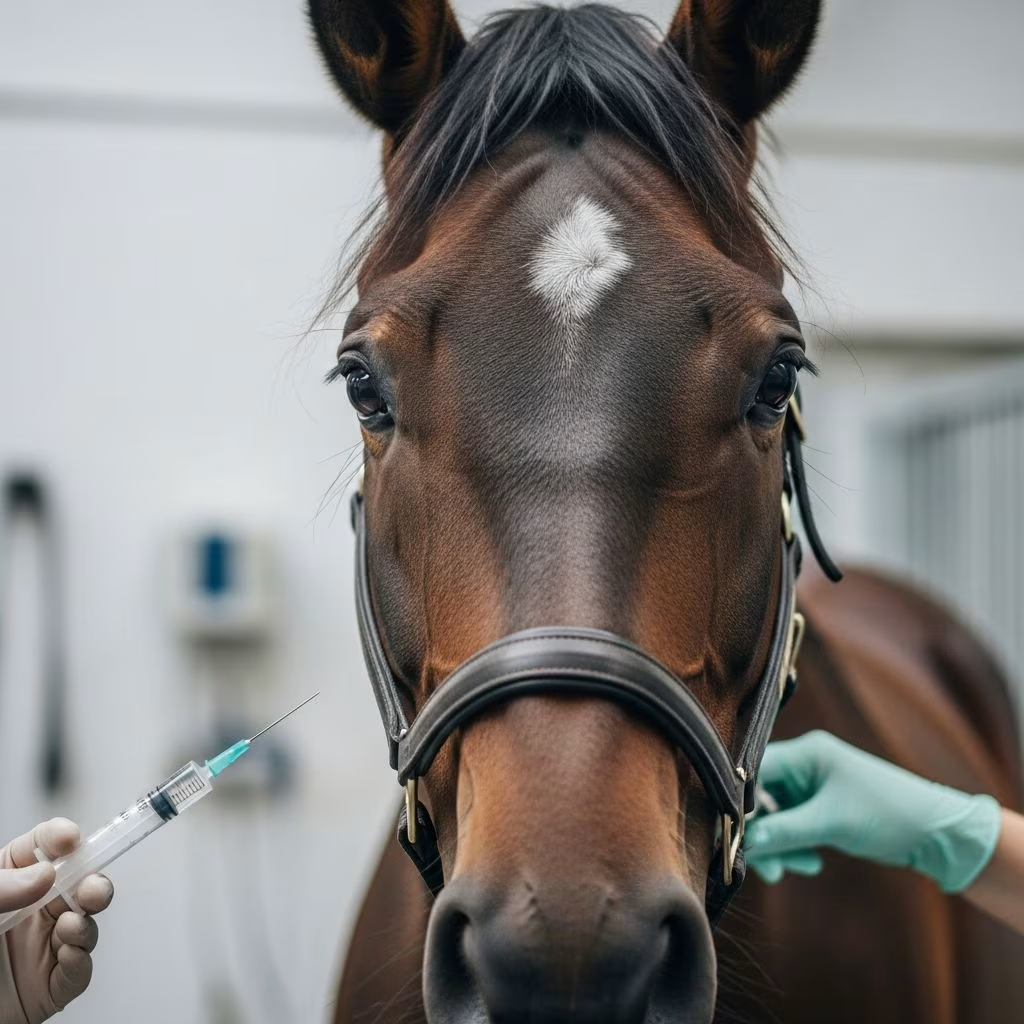
Equine infectious anemia (EIA), also known as swamp fever or Coggins disease, represents a significant health concern for horses, donkeys, and other equids worldwide. Caused by a retrovirus, this condition leads to lifelong infection with no available cure or vaccine, making prevention through rigorous testing and management essential. Horses infected with EIA can appear healthy yet remain carriers capable of spreading the virus, underscoring the need for vigilant biosecurity practices in equine facilities.
The Viral Culprit Behind EIA
The pathogen responsible for EIA is Lentivirus equinfane, a member of the Retroviridae family previously known as equine infectious anemia virus. This RNA virus integrates its genetic material into the host’s DNA, evading complete immune clearance and establishing persistent infection. Upon entry into macrophages, the virus disrupts normal cell functions, triggering excessive production of proinflammatory cytokines such as TNF-alpha, IL-1, IL-6, and TGF-beta. These mediators drive the disease’s hallmark symptoms, including fever from prostaglandin E2 release, thrombocytopenia via platelet destruction, and anemia through suppressed red blood cell production.
Immune responses further exacerbate pathology: immune complexes contribute to vasculitis, glomerulonephritis, and edema, while antibody-coated platelets lead to splenomegaly and hepatomegaly. The virus’s ability to mutate its envelope proteins allows it to periodically escape adaptive immunity, resulting in recurrent clinical episodes in some horses.
Pathways of Virus Transmission
EIA spreads primarily through mechanical vectors like tabanid flies (horseflies) and deer flies, which transmit infected blood between horses during feeding. Unlike true biological vectors, these insects transfer virus-laden blood directly from one animal’s wound to another. However, iatrogenic transmission—human-mediated via contaminated equipment—poses an even greater risk in many regions. Reusing needles, syringes, dental floats, surgical tools, or administering blood products without sterilization can disseminate the virus efficiently, as it survives up to 96 hours on needles.
Other routes include vertical transmission from mare to foal via colostrum or placenta, and rarely, direct contact with infected blood or saliva. The global prevalence persists due to these covert spread mechanisms, with cases reported in nearly every country except Iceland and Japan. In the U.S., regulatory programs have reduced incidence, but outbreaks still occur, often linked to untested horses at events.
Recognizing the Diverse Clinical Presentations
Following an incubation period of 15-45 days (or longer), EIA manifests in three overlapping phases: acute, subacute/chronic, and inapparent carrier states. Most infections (over 90%) are subclinical, with horses shedding virus intermittently without obvious illness.
- Acute Phase: High fever (up to 106°F), depression, thrombocytopenia, and lethargy dominate for 1-3 days. Some horses suffer epistaxis, mucosal hemorrhages, or sudden death.
- Subacute/Chronic Phase: Recurrent fevers, progressive anemia, weight loss, ventral edema, jaundice, tachycardia, tachypnea, and muscle weakness. Petechial hemorrhages appear on mucous membranes, and petechiation affects organs like spleen and kidneys.
- Inapparent Carrier State: Lifelong asymptomatic infection with periodic viral replication under stress, allowing silent spread.
Symptom severity depends on viral strain, dose, and host factors. Stressors like transport, foaling, or concurrent illness can trigger flare-ups in carriers.
Pathological Changes in Affected Equids
Post-mortem examinations reveal consistent gross lesions: splenomegaly, hepatomegaly, lymphadenopathy (especially abdominal nodes), dependent edema, and widespread hemorrhages. Chronic cases show emaciation, pale mucosae, thrombosis, and ventral edema. Microscopically, immune complex deposition causes glomerulonephritis and vasculitis. Anemia stems from hemolysis, phagocytosis of antibody-coated erythrocytes, and erythropoiesis inhibition by cytokines.
| Phase | Gross Lesions | Microscopic Findings |
|---|---|---|
| Acute | Spleen/liver enlargement, edema, mucosal bleeds | Immune-mediated platelet destruction, cytokine surge |
| Chronic | Emaciation, petechiae on organs, limb edema | Glomerulonephritis, vasculitis, RBC phagocytosis |
| Carrier | Minimal; occasional splenomegaly | Proviral integration in macrophages |
Accurate Diagnosis Through Serology
Definitive diagnosis relies on detecting antibodies via the Coggins test (agar gel immunodiffusion, AGID) or ELISA, both highly sensitive for horses over 45 days post-exposure. AGID is the gold standard for confirmation, while ELISA screens large populations. Positive results mandate reporting to authorities, as EIA is notifiable in most jurisdictions.
Viral isolation or PCR is research-oriented due to technical demands. Clinical signs alone are nonspecific, mimicking piroplasmosis, leptospirosis, or purpura hemorrhagica. Paired sera testing confirms recent infection. In foals, maternal antibodies complicate interpretation until 6 months of age.
Testing Recommendations
- Annual Coggins for travel, shows, breeding.
- Pre-purchase screening.
- Quarantine newcomers for 45+ days with testing.
Management Options: Limited but Critical
No antiviral therapy cures EIA; infected equids are lifelong carriers. Standard protocols recommend euthanasia to prevent spread, though lifelong quarantine (≥200 yards from other equids) with fly control is an alternative in some areas. Supportive care during acute episodes includes fluids, anti-inflammatories, and blood transfusions, but these do not eradicate the virus.
Prognosis varies: acute fatalities occur in <10%, but carriers pose ongoing risks. Quarantined horses require perpetual monitoring and insect barriers.
Comprehensive Prevention and Control Strategies
Control hinges on identification, removal/isolation of positives, and breaking transmission chains:
- Mandatory testing before events, sales, breeding.
- Single-use needles; sterilize shared equipment.
- Fly control: screens, repellents, manure management.
- Quarantine protocols for new arrivals.
U.S. states enforce “negative Coggins” requirements, coordinated by USDA APHIS. International movement demands health certificates. Owners should consult veterinarians for accredited labs like those at UC Davis or state facilities.
Frequently Asked Questions (FAQs)
What is the Coggins test?
The Coggins test detects EIA antibodies via AGID, required for horse travel and events.
Can EIA be cured?
No, it’s a persistent infection; euthanasia or quarantine is advised.
How long does the virus survive outside the horse?
Up to 96 hours on contaminated needles.
Is EIA zoonotic?
No, it affects only equids.
What flies spread EIA?
Tabanids (horseflies, deer flies) mechanically transmit via blood.
Global Impact and Research Directions
EIA burdens equine industries economically through testing costs, quarantines, and losses. Ongoing research explores antiviral drugs, vaccines targeting conserved epitopes, and improved diagnostics like PCR for early detection. Despite progress, no commercial vaccine exists due to viral antigenic variation.
Horse owners play a pivotal role: routine testing, hygiene, and awareness curb outbreaks. By prioritizing prevention, the equine community can minimize EIA’s threat.
References
- Equine Infectious Anemia — Merck Veterinary Manual. 2023. https://www.merckvetmanual.com/generalized-conditions/equine-infectious-anemia/equine-infectious-anemia
- Equine Infectious Anemia — UC Davis School of Veterinary Medicine. 2023-10-01. https://ceh.vetmed.ucdavis.edu/health-topics/equine-infectious-anemia
- Disease Alert: Equine Infectious Anemia — USDA APHIS. 2024. https://www.aphis.usda.gov/livestock-poultry-disease/equine/infectious-anemia
- Equine Infectious Anemia (EIA) — University of Tennessee College of Veterinary Medicine. 2022. https://vetmed.tennessee.edu/wp-content/uploads/sites/4/UTCVM_EquineInfectiousAnemia-EIA.pdf
- Equine Infectious Anemia — American Association of Equine Practitioners (AAEP). 2023. https://aaep.org/resource/equine-infectious-anemia/
- Equine Infectious Anemia — Equine Disease Communication Center. 2024. https://www.equinediseasecc.org/equine-infectious-anemia



